

Learning Objectives
- Outline the energy gained and lost by systems using the law of thermodynamics
- Outline photosynthesis and respiration as connected systems
- Outline producers and types of consumers in ecosystem
- Outline and calculate GP and NP
- Outline how to measure biomass and its energy
Part 1: Roles of Organisms – Terminologies
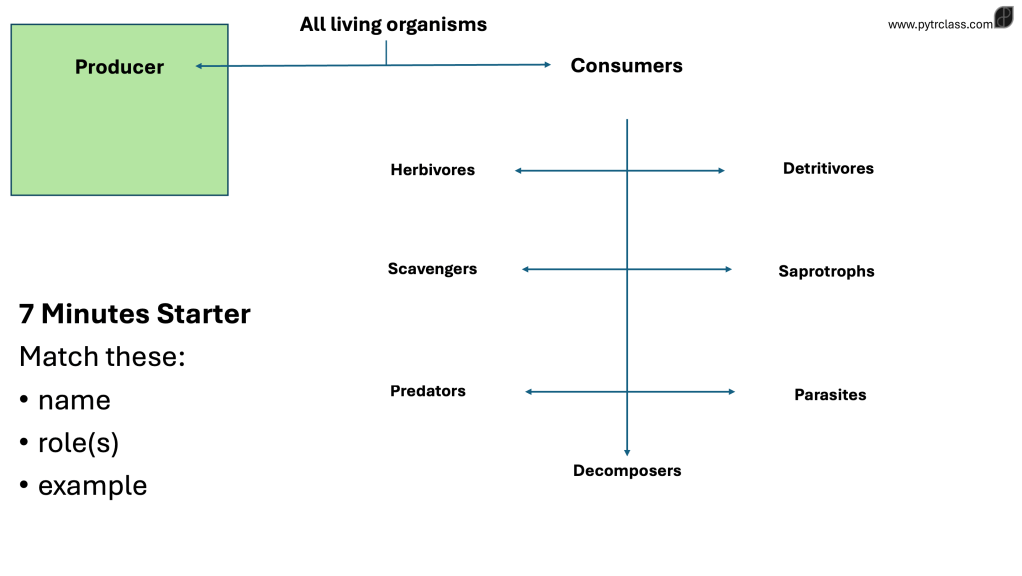
Activity 1: Download the following file. Cut the boxed and try to match the roles of organisms with its terminology.
Subscribe to get access
Read more of this content when you subscribe today.
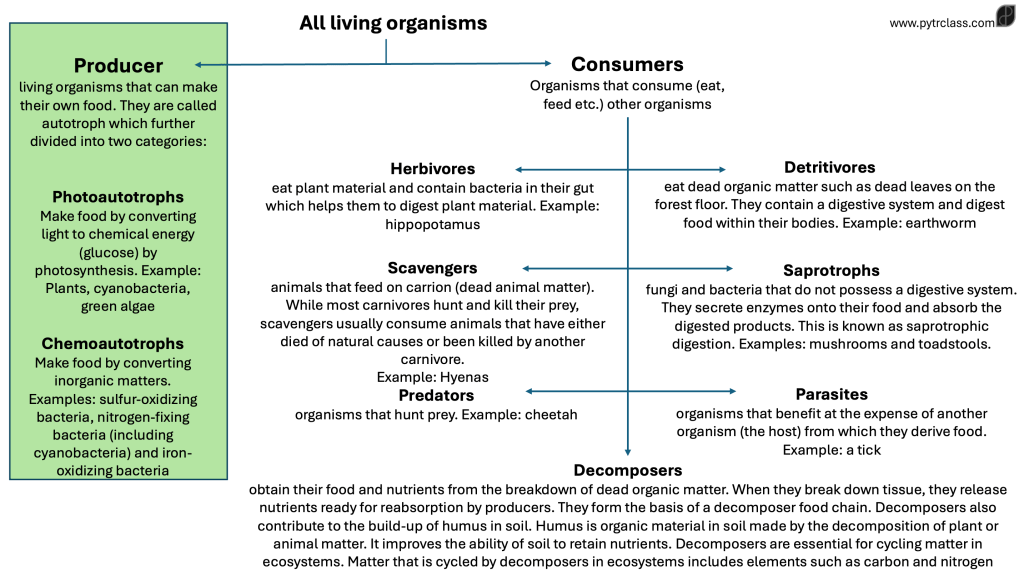
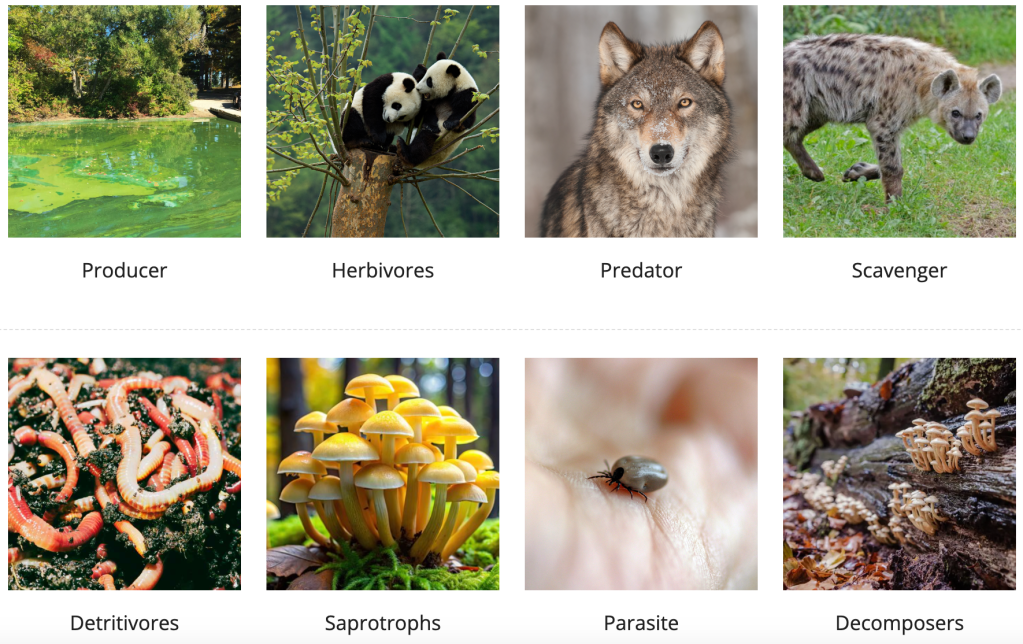
Alternative activity 1: Define the following roles of organisms with examples
Part 2: Law of Thermodynamics

Photosynthesis and Respiration
Photosynthesis & Cellular Respiration in Ecosystems
- Energy & Matter Flow: Ecosystems require continuous inputs of energy and matter to sustain life.
- Key Processes: Photosynthesis and cellular respiration regulate energy flow within ecosystems.
- Photosynthesis: Converts light energy into chemical energy, which is stored as biomass.
- Cellular Respiration: Occurs in all cells (including plant cells), releasing stored energy for biological processes like movement.
- Energy & Matter Transformations: Both processes involve inputs, outputs, and transformations of energy and matter through chemical reactions.
Equation of photosynthesis:

Equation of respiration:

Part 3: Productivity
Productivity
- The term ‘productivity’ in ecology refers to the rate of accumulation of new biomass
- Productivity can further be divided into gross productivity (GP) and net productivity (NP)
- NP is the gain in energy or biomass per unit area per unit time remaining after allowing for respiratory losses (R).
- NP represents the energy that is incorporated into new biomass and is therefore available for the next trophic level
Formula:
GP = NP + R
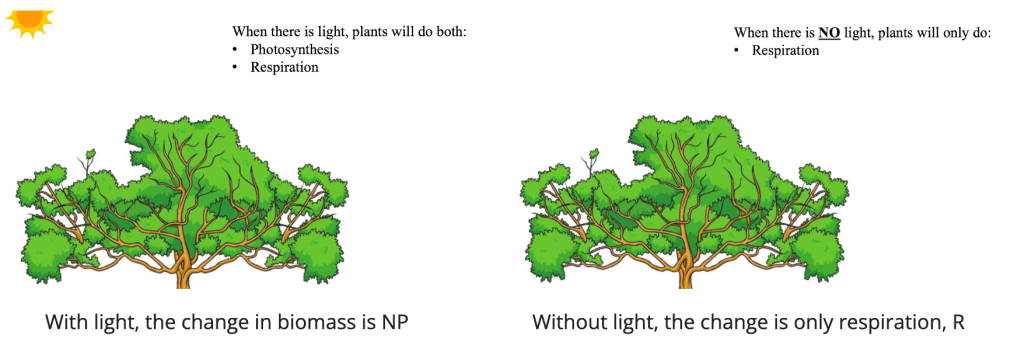
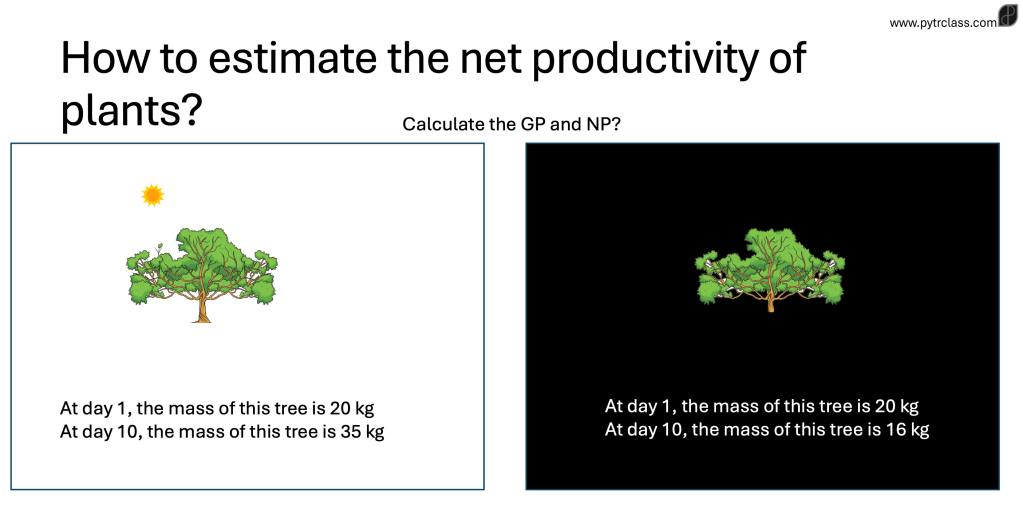
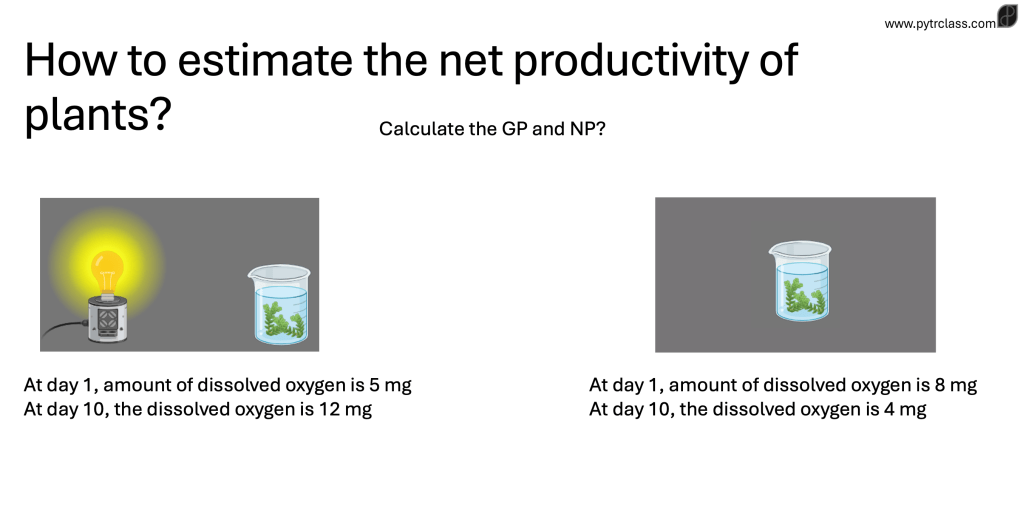
In AHL, productivity the GP is further explored as GPP (for producers) and GSP (for consumers) whilst NP is further explored as NPP (for producers) and NSP (for consumers).
Part 4: Measuring Energy of Biomass
Biomass is measured at each trophic level to estimate the total energy available in an ecosystem. Since measuring the mass of all organisms is impractical, an extrapolation method is used: the mass of a single organism or the average mass of a few is multiplied by the total population. Biomass reflects the energy stored in biological molecules, as their bonds contain energy. The greater the biomass, the more energy is present. To ensure accuracy, biomass is measured as the dry mass of an organism, excluding water content, since water does not store energy.
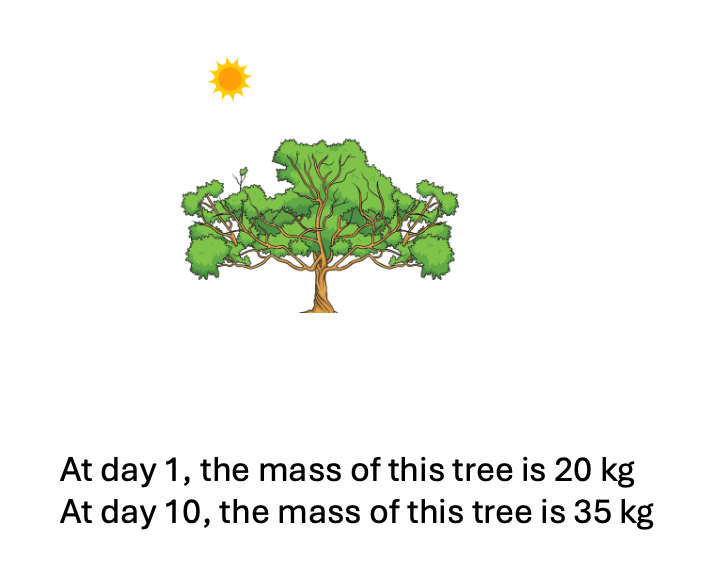
In the above figure, it is shown that the tree increased its mass from 20 kg to 35 kg. This 15 kg increase is a mixture of biomass and water. To measure the biomass, this three will have to be cut down or at least some parts of it.
Calorimeter
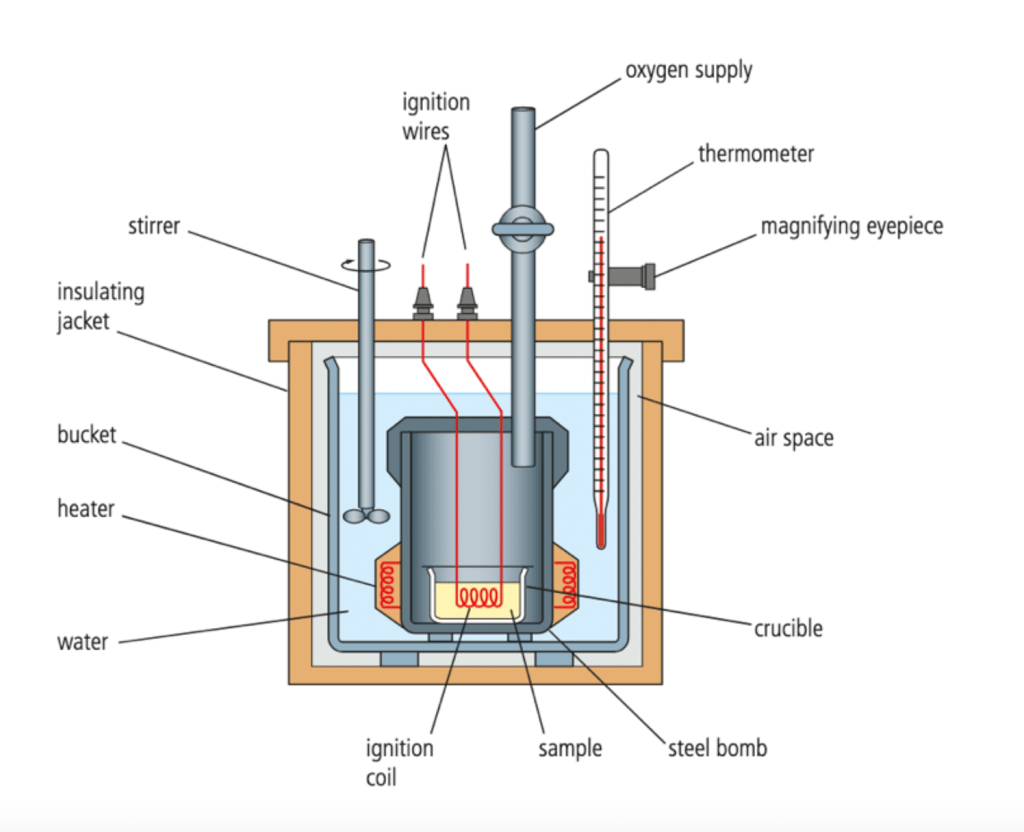
- Once dry biomass has been obtained, the combustion of samples under controlled conditions gives quantitative data about the amount of energy contained per unit sample (e.g. per gram) in the material
- One criticism of this method is that it involves killing living organisms.
- It is also difficult to measure the biomass of very large plants, such as trees.
- There are further problems in measuring the biomass of roots and underground biomass because these are difficult to remove from the soil.
![ESS 8.1.3 [AHL] Biocapacity and Environmental Migration](https://mypytrclass.com/wp-content/uploads/2025/12/image-4.png?w=1024)



![ESS 8.3.4 [AHL] Photochemical Smogs and Tropospheric Ozone](https://mypytrclass.com/wp-content/uploads/2025/12/image-1.png?w=1024)
 PYTR Class