
Learning Objectives
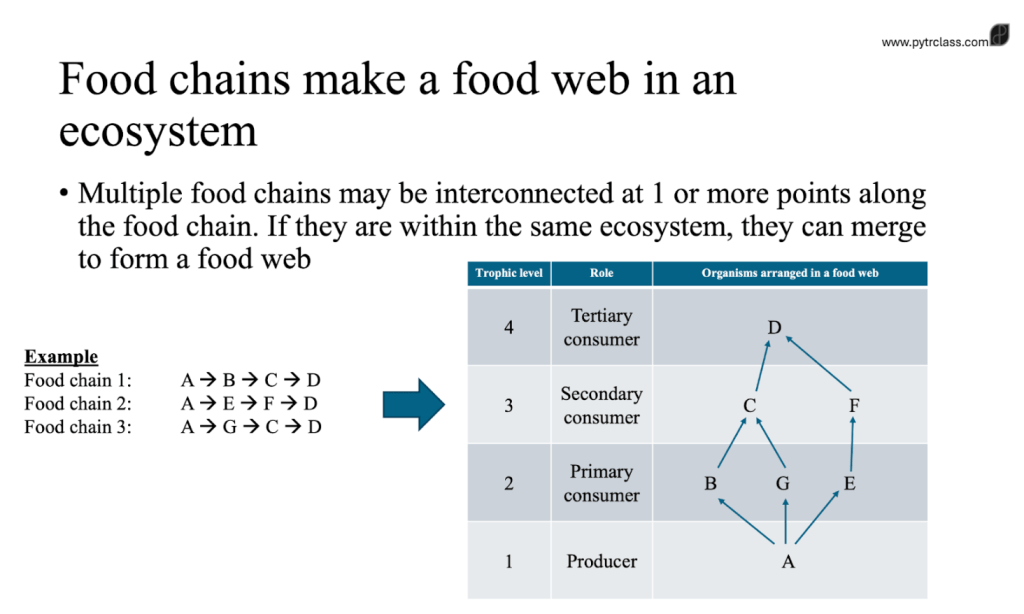
- Construct a food web by identifying food chains
- Identify organisms in each trophic level
- Summarise ecological pyramids
Part 1: Food Chains and Food Web
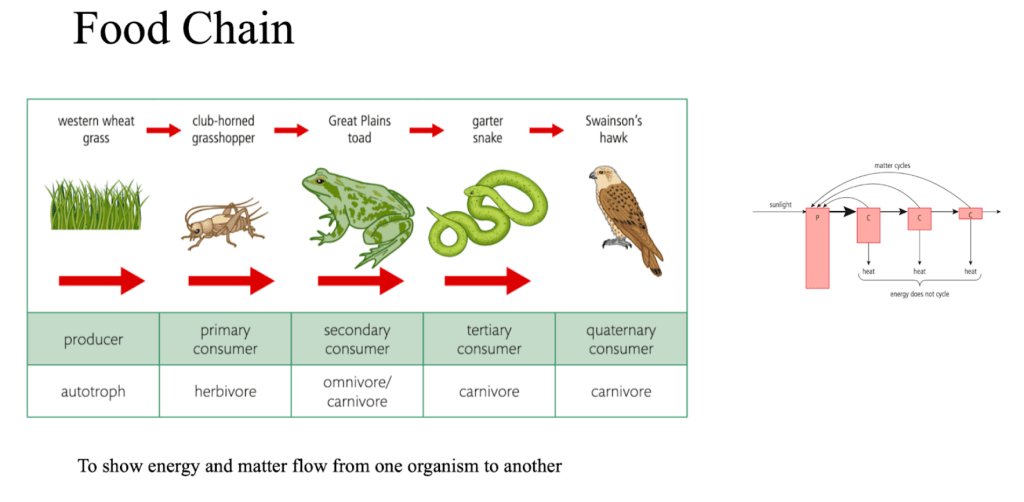
A trophic level is a stage of position of a organism in a food chain. From the above example, the organisms can be placed into these trophic levels:
Trophic level 1 = grass
Trophic level 2 = grasshopper
Trophic level 3 = toad
Trophic level 4 = snake
Trophic level 5 hawk
Subscribe to get access
Activity 1: Construct 8 food chains, then consolidate the food chains into a food web
Question 1: Outline the roles of decomposers
Question 2: Describe the efficiency of energy transfer in an open ecosystem
Part 2: Ecological Pyramids
Types of Ecological Pyramids
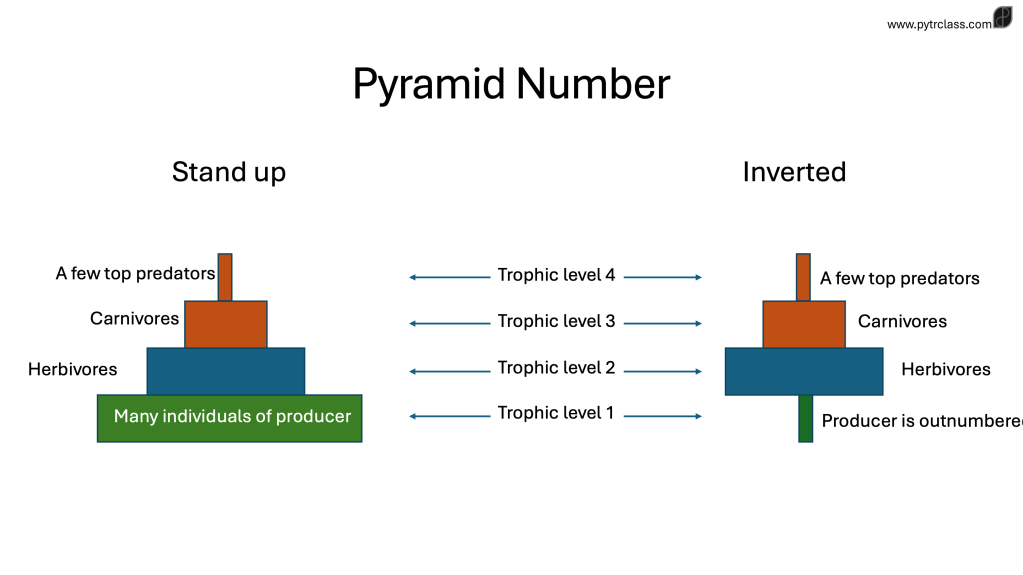
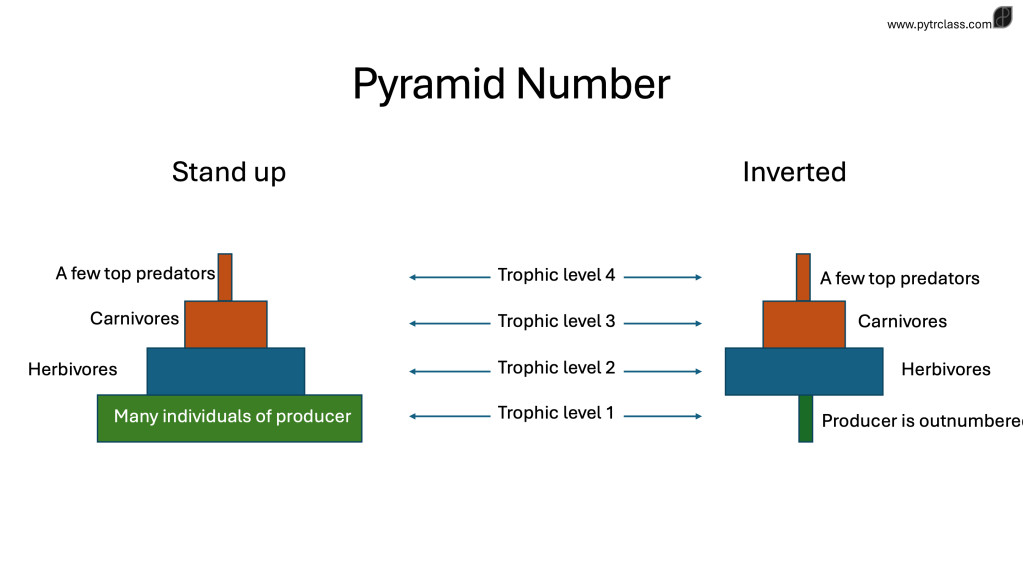
- Pyramid of Numbers
- Represents the number of producers and consumers in an ecosystem.
- Constructed by counting organisms at each trophic level.
- Pyramid of Biomass
- Measures the amount of biomass at each trophic level at a specific point in time.
- Expressed in grams per square meter (g m⁻²) or joules per square meter (J m⁻²).
- Typically pyramidal in shape but can be inverted if higher trophic levels have more biomass.
- Biomass pyramids reflect standing stock, not productivity, making them a snapshot of an ecosystem.
- Example: Intensively grazed pastures may show lower grass biomass but higher productivity than ungrazed ones.
- Pond ecosystems often have inverted pyramids because fast-reproducing phytoplankton have less standing biomass than consumers.
- Seasonal variations can also cause inversions in biomass pyramids.
- Pyramid of Energy (Productivity)
- Represents the rate of energy production over a period of time.
- Each level indicates energy per unit area per unit time.
- Shows the total energy flow through an ecosystem over a year.
- Never inverted, as energy decreases at each successive trophic level.
- Helps compare energy flow across different ecosystems.
![ESS 8.1.3 [AHL] Biocapacity and Environmental Migration](https://mypytrclass.com/wp-content/uploads/2025/12/image-4.png?w=1024)


![ESS 8.3.4 [AHL] Photochemical Smogs and Tropospheric Ozone](https://mypytrclass.com/wp-content/uploads/2025/12/image-1.png?w=1024)
 PYTR Class