
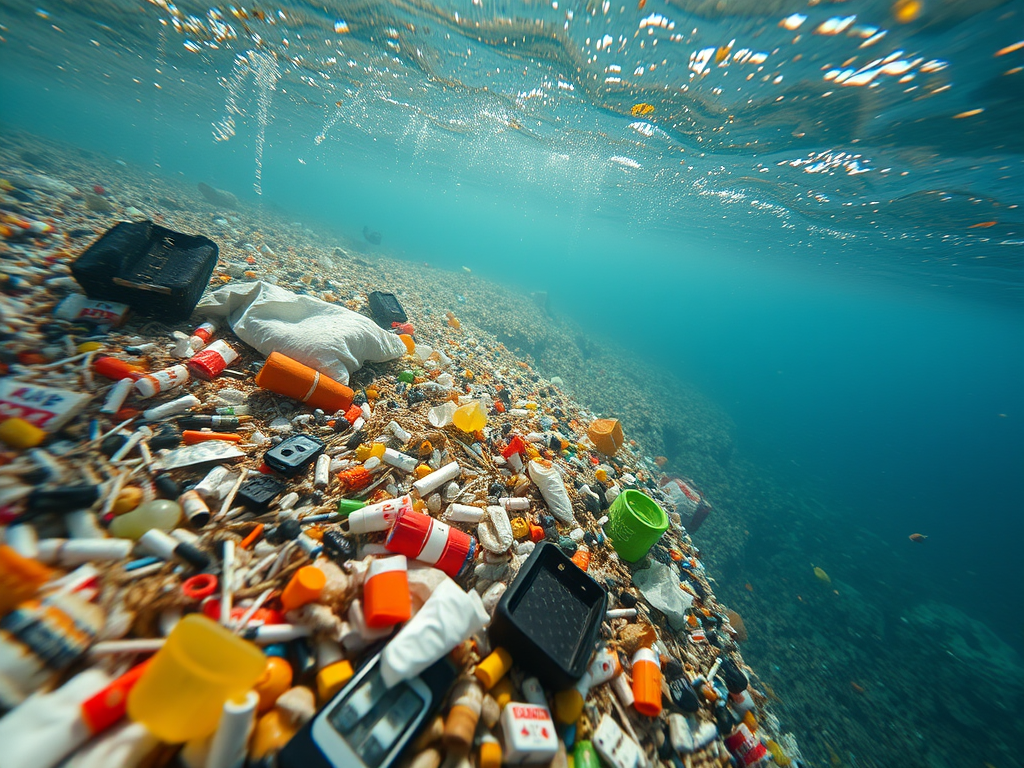
Learning Objectives
- Outline the meaning of bioaccumulation and biomagnification
- Using case studies, discuss the impact of the uses of DDT
- Outline how microplastics may end up in human bodies
Part 1: Bioaccumulation and Biomagnification
Subscribe to get access to the worksheet
Read more of this content when you subscribe today.
Subscribe to get access
Read more of this content when you subscribe today.
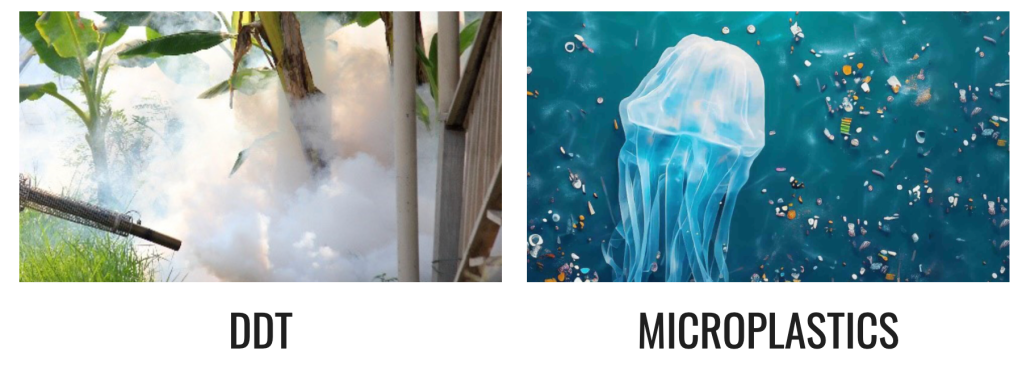
Part 2: [Case study] DDT
Introduction of DDT
- A synthetic pesticide or insecticide
- First extensively used in WW2 to control:
- lice that spread typhus
- mosquitoes that spread malaria
- After WW2, used in farming as pesticide — this caused its production to increase with the demand in food production

Banning History of DDT
- 1970s and 1980s, agricultural use of DDT was banned in most developed countries.
- DDT was first banned in Hungary (1968) followed by Norway and Sweden (1970), the USA in 1972 and the UK in 1984.
- The use of DDT in vector control has not been banned, but it has been largely replaced by less persistent alternative insecticides.
- The Stockholm Convention banned several persistent organic pollutants (POPs) such as DDT and restricted the use of DDT to disease control.
- The Convention was signed by 98 countries and is endorsed by most environmental groups
- DDT is still used in India and North Korea
Question: Outline the environmental impacts of DDT
Read more of this content when you subscribe today.
Part 3: Microplastics
Subscribe to get access
Question: Outline of the Steps in Microplastics Pollution
![ESS 8.1.3 [AHL] Biocapacity and Environmental Migration](https://mypytrclass.com/wp-content/uploads/2025/12/image-4.png?w=1024)




![ESS 8.3.4 [AHL] Photochemical Smogs and Tropospheric Ozone](https://mypytrclass.com/wp-content/uploads/2025/12/image-1.png?w=1024)
 PYTR Class