
Learning Objectives
- Distinguish autotrophs from heterotrophs
- Distinguish photoautotrophs from chemoautotrophs
- Outline ecological productivity
Part 1: Autotrophs VS Heterotrophs
All living organisms can be classified as autotrophs or heterotrophs.
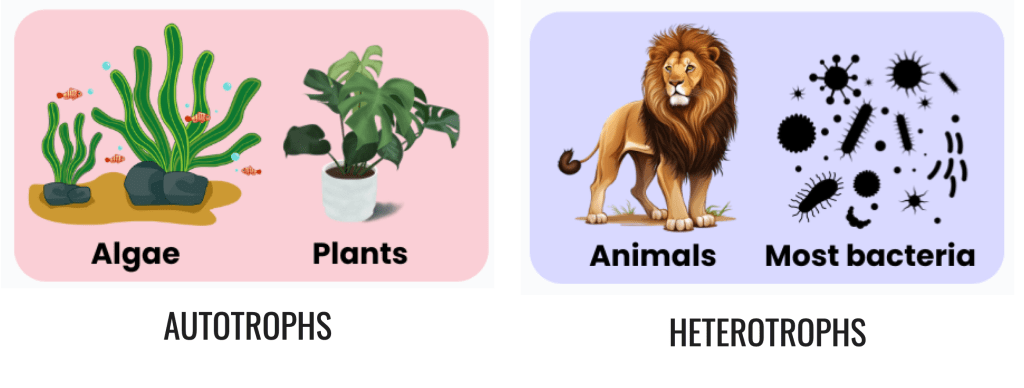
Autotrophs
- Synthesise carbon compounds from inorganic sources of carbon and other elements.
- All autotrophs are producers, including plants, algae and photosynthetic bacteria.
- Types:
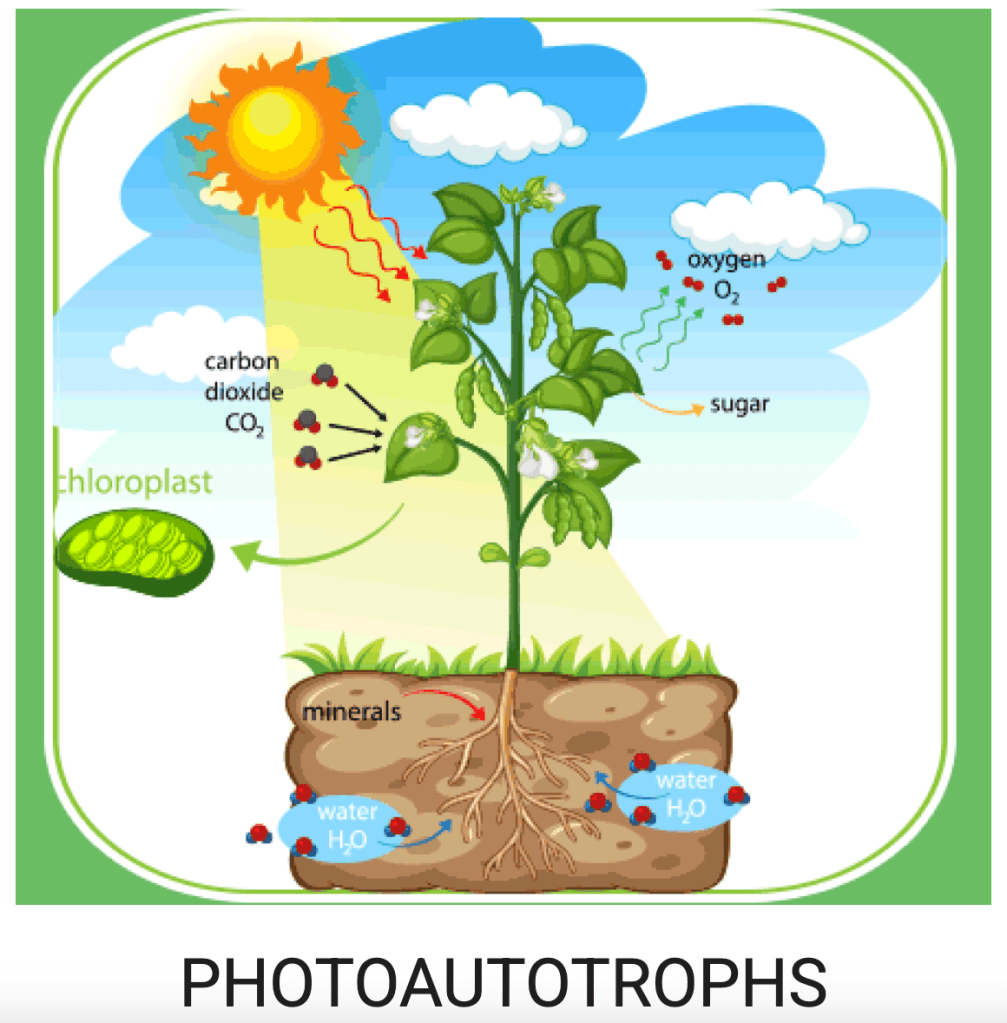
- Photoautotrophs
- Organisms that use sunlight energy to create their own food are called photoautotrophs. All green plants are photoautotrophs but not all producers use sunlight to make food. For example, some bacteria use chemical energy rather than sunlight to make sugars
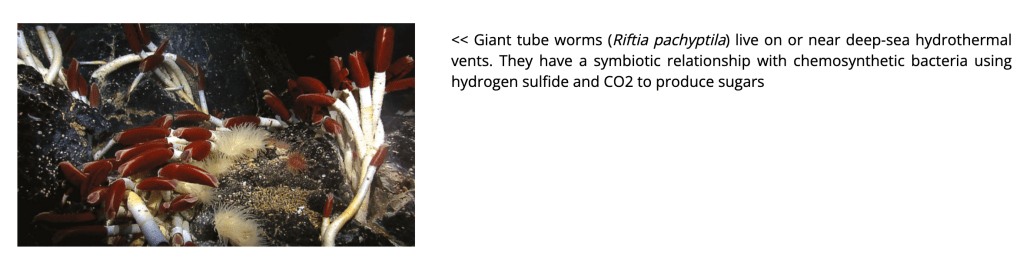
- Chemoautotrophs
- Chemoautotrophs synthesise energy by converting inorganic substances through a chemical reaction called chemosynthesis. Chemoautotrophs get energy from inorganic molecules, such as sulfur or iron, by oxidising them.
- Chemosynthetic bacteria are part of the nitrogen cycle. Most prokaryotes are chemoheterotrophs. They depend on other organisms for both energy and carbon. Many break down organic wastes and the remains of dead organisms
- Photoautotrophs
Heterotrophs
- Are consumers that obtain carbon compounds from other organisms.
Part 2: Ecological Productivity
Productivity in ecosystems
- Production of biomass per unit area per unit time
- Productivity occurs at each level of a food chain
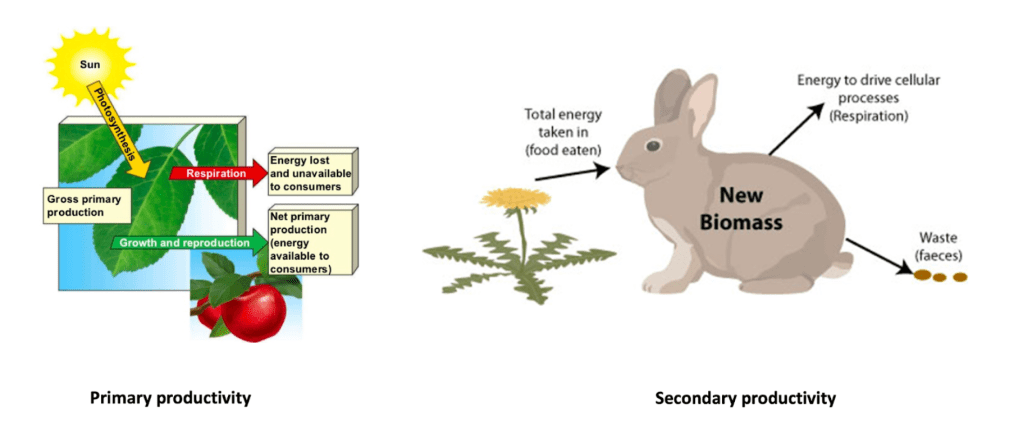
- Depending on where productivity occurs, it is referred to as primary productivity or secondary productivity
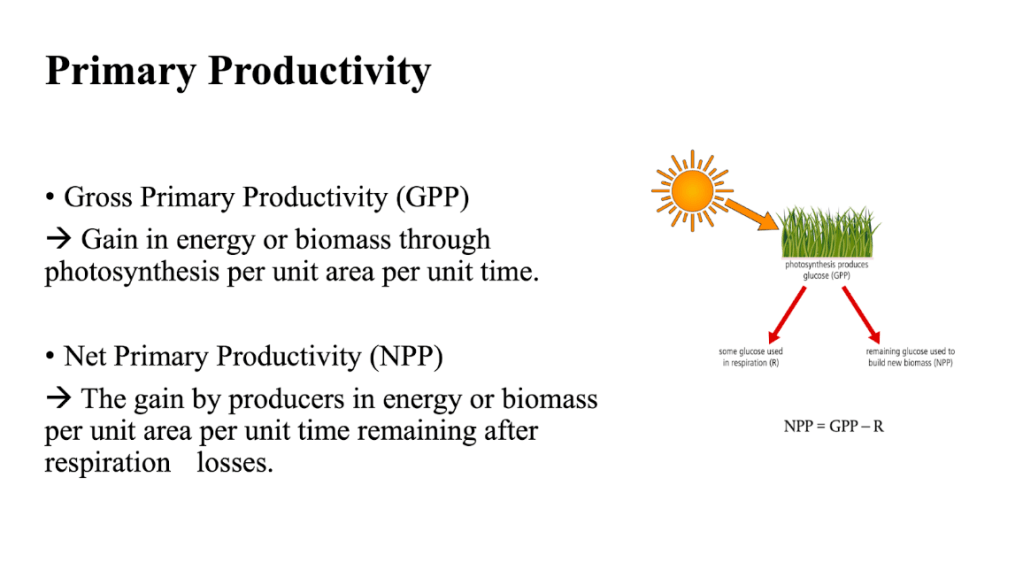
- Primary productivity
- the gain by producers (autotrophs) in energy or biomass per unit area per unit time.
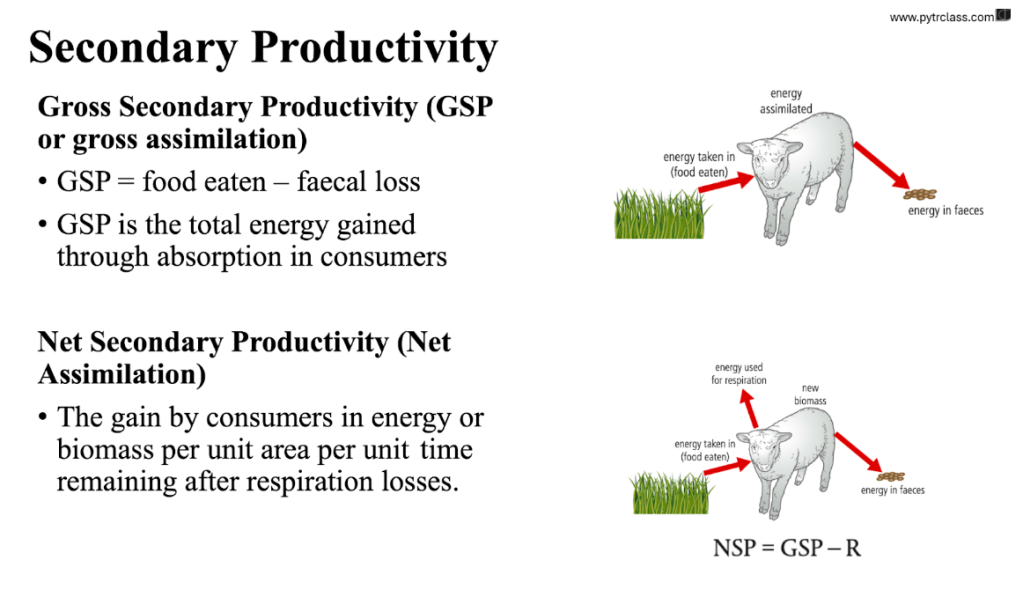
- Secondary productivity
- the biomass gained by heterotrophic organisms, through feeding and absorption, measured in units of mass or energy per unit area per unit time.
- Primary productivity
![ESS 8.1.3 [AHL] Biocapacity and Environmental Migration](https://mypytrclass.com/wp-content/uploads/2025/12/image-4.png?w=1024)


![ESS 8.3.4 [AHL] Photochemical Smogs and Tropospheric Ozone](https://mypytrclass.com/wp-content/uploads/2025/12/image-1.png?w=1024)
 PYTR Class