
Learning Objectives
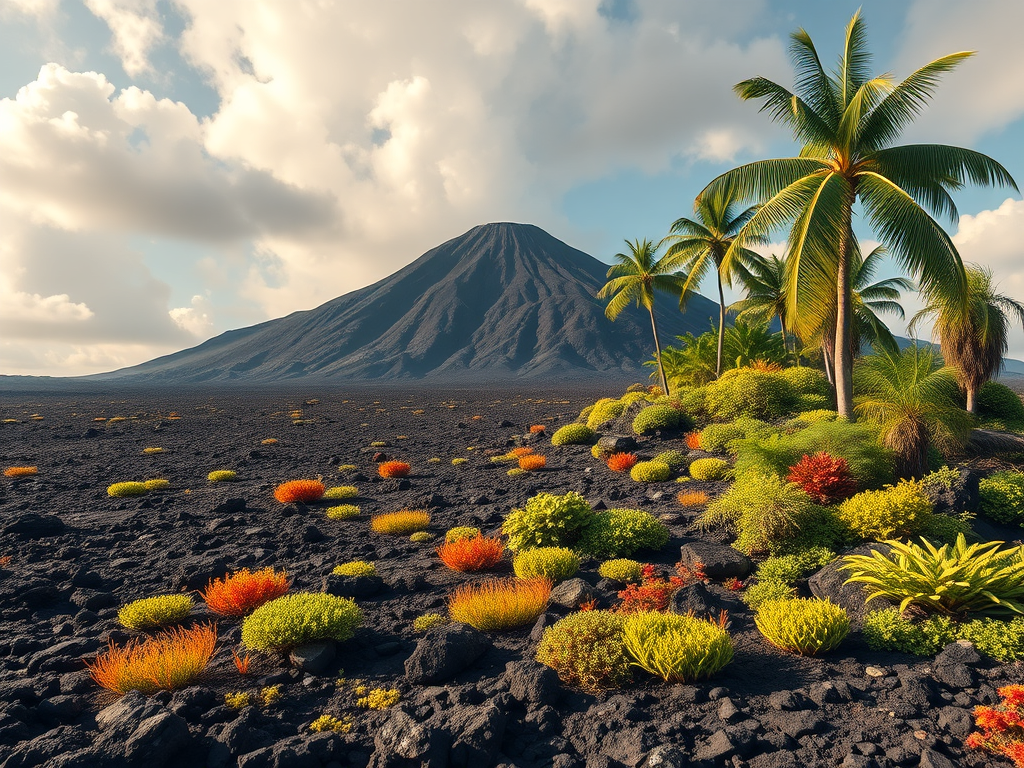
- [Case studies] Describe a primary succession using a named example
- [Case studies] Describe a secondary succession using a named example
- Compare and contrast the pioneer and climax communities
Part 1: Primary Succession
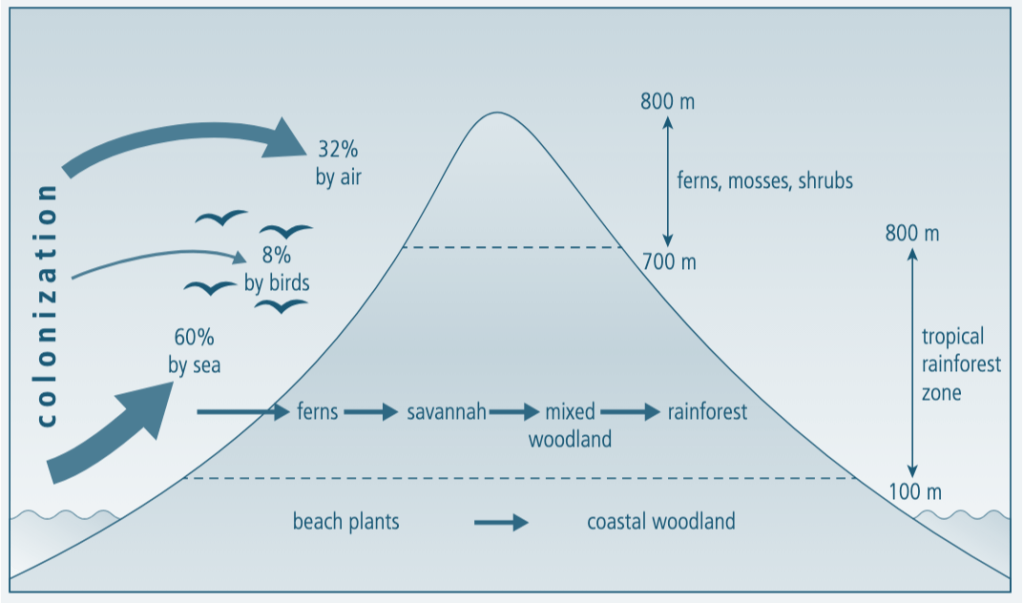
Case Study: Primary Succession on Krakatau, Indonesia
Subscribe to get access
Read more of this content when you subscribe today.
Part 2: Secondary Succession
Case Study: Secondary succession in the Broadbalk Wilderness, Rothamsted, UK
Subscribe to get access
Read more of this content when you subscribe today.
Part 3: Pioneer Vs Climax Communities
Subscribe to get access
Read more of this content when you subscribe today.
Part 4: Summary of Changes
Changes Over Time During Succession
Succession is the natural process of change in the species composition and structure of an ecosystem over time. It occurs in stages and can be classified into primary and secondary succession.
1. Primary Succession
- Occurs in areas with no previous life (e.g., after volcanic eruptions, glacial retreat).
- Pioneer species (such as lichens and mosses) colonize the barren land, breaking down rock and forming soil.
- Gradually, more complex plants (grasses, shrubs, trees) establish, leading to increased biodiversity and soil fertility.
- Eventually, a climax community forms, creating a stable ecosystem.
Example: Formation of ecosystems on volcanic lava flows in Hawaii.
2. Secondary Succession
- Happens in areas where an ecosystem was previously present but was disturbed (e.g., after forest fires, floods, or human activities like farming).
- Soil is already present, so succession occurs more quickly than primary succession.
- Pioneer species such as grasses and fast-growing plants appear first, followed by shrubs and trees.
- Over time, the ecosystem regenerates and may return to its original state or develop into a different stable community.
Example: Regrowth of forests after wildfires in Yellowstone National Park.
3. Changes in Abiotic and Biotic Factors Over Time
During succession, both abiotic (non-living) and biotic (living) factors change, influencing species composition and ecosystem development.
| Factor | Early Succession | Late Succession |
|---|---|---|
| Soil Quality | Poor, little organic matter | Rich, high nutrient levels |
| Biodiversity | Low, dominated by a few species | High, diverse plant and animal species |
| Productivity | Low (less energy flow) | Higher (more biomass and energy transfer) |
| Microclimate | Harsh (extreme temperatures, little moisture) | More stable (moderate temperature, more humidity) |
4. Climax Community and Stability
- A climax community represents the final stage of succession, where the ecosystem reaches stability.
- In some areas, disturbances like wildfires prevent ecosystems from reaching the climax stage, leading to plagioclimax communities.
Example: Grasslands maintained by grazing animals and fires instead of developing into forests.
| Characteristic | Pioneer Community | Climax Community |
|---|---|---|
| Definition | The initial stage of ecological succession where hardy species colonize disturbed areas. | The final, stable stage of ecological succession with a well-established, self-sustaining community. |
| Species Composition | Dominated by a few, hardy, fast-growing species that can tolerate harsh conditions. | Diverse species, including long-lived plants and animals, with complex interdependencies. |
| Adaptations | Species have adaptations for rapid growth, reproduction, and tolerance to extreme conditions (e.g., drought, poor soil). | Species are adapted to stable, balanced conditions, with mechanisms for competition and coexistence. |
| Biodiversity | Low biodiversity due to limited species that can thrive in harsh environments. | High biodiversity with a wide variety of species in balanced populations. |
| Soil Quality | Often poor in nutrients, compacted, and low in organic matter. | Rich in nutrients, deep, and well-structured with high organic matter content. |
| Nutrient Cycling | Slow nutrient cycling due to the low organic matter and few decomposers. | Efficient nutrient cycling due to abundant organic matter and a variety of decomposers. |
| Energy Flow | Energy flow is less efficient as energy is lost to abiotic factors and less biodiversity. | Energy flow is more efficient with complex food webs and energy transfer between different trophic levels. |
| Vegetation Structure | Simple structure, with short-lived, low-lying plants, often with little vertical stratification. | Complex structure, with multiple layers (canopy, understory, ground layer) and long-lived plants. |
| Environmental Conditions | Harsh, unstable conditions that may include extreme temperature fluctuations, drought, and limited nutrients. | Stable and favorable environmental conditions with moderate temperature fluctuations and regular water availability. |
| Ecological Stability | Low stability, with frequent disturbances and limited resilience to change. | High stability, with ecosystems capable of resisting or recovering from disturbances. |
| Timeframe | Short-term, occurring over a period of years to decades. | Long-term, requiring centuries to millennia to fully develop and stabilise. |
![ESS 8.1.3 [AHL] Biocapacity and Environmental Migration](https://mypytrclass.com/wp-content/uploads/2025/12/image-4.png?w=1024)



![ESS 8.3.4 [AHL] Photochemical Smogs and Tropospheric Ozone](https://mypytrclass.com/wp-content/uploads/2025/12/image-1.png?w=1024)
 PYTR Class