

Learning Objectives
- Describe the structure of an atom in terms of substomic particles
- understand the terms atomic number (Z) and mass number (A)
- calculate the numbers of protons, neutrons and electrons in atoms and ions
- understand the term isotope
- understand that isotopes of an element have the same chemical properties but different physical properties
- calculate the relative atomic mass (Ar ) from the relative abundances of isotopes
- calculate the relative abundance of an isotope from the relative atomic mass
Part 1: Atomic Model
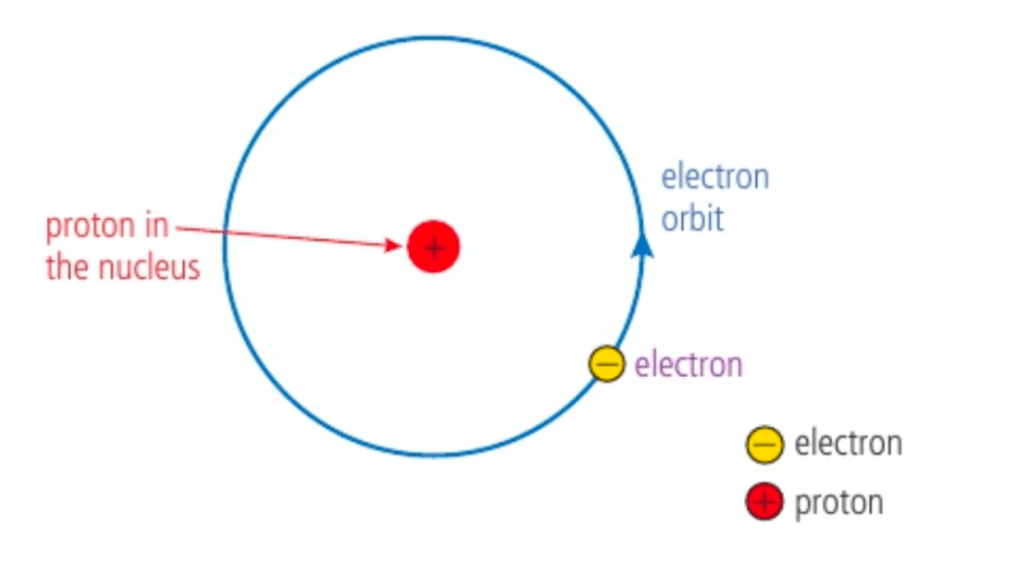
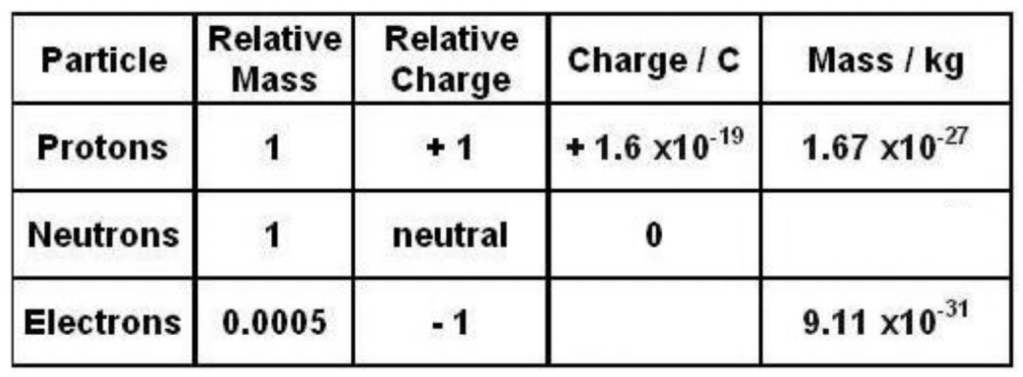
An atom has 3 groups subatomic particles:
- Electron (e–)
- Negatively charged
- Has negligible mass
- Exists in the electron cloud, around the nucleus. The cloud makes up the most of the atomic size
- Electrons occupy different energy levels. The last shell is where the valence electron(s) occupies.
- Proton (p+)
- Positively charges
- Has 1 relative mass. Contributes to the mass of the atom
- Exists in the nucleus of the atom. Hence makes the nucleus positively charged.
- Proton number defines the identity of the atom as an element. For instance, if an atom has 6 protons, it will be called carbon and if has 7 protons, it can no longer be identified as carbon but rather, a nitrogen.
- Neutron (no)
- Neutral in charge
- has 1 relative mass
- Exists in the nucleus. Does not contribute to the charge of the nucleus but contributes to the mass of the atom
- Act as the “glue” to stick protons together in the nucleus
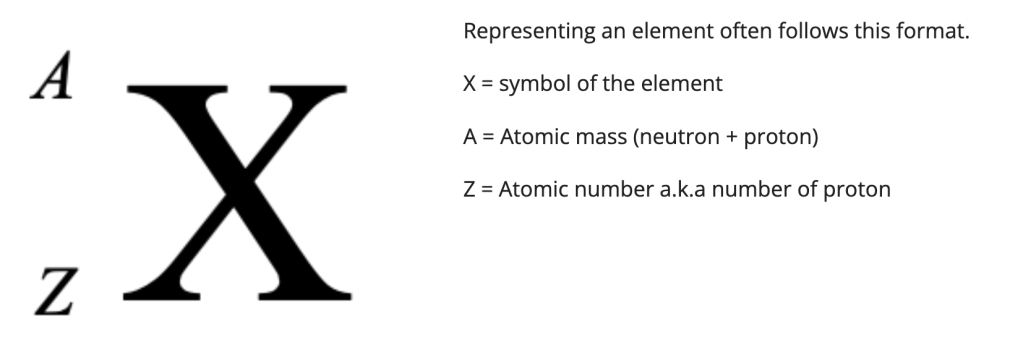

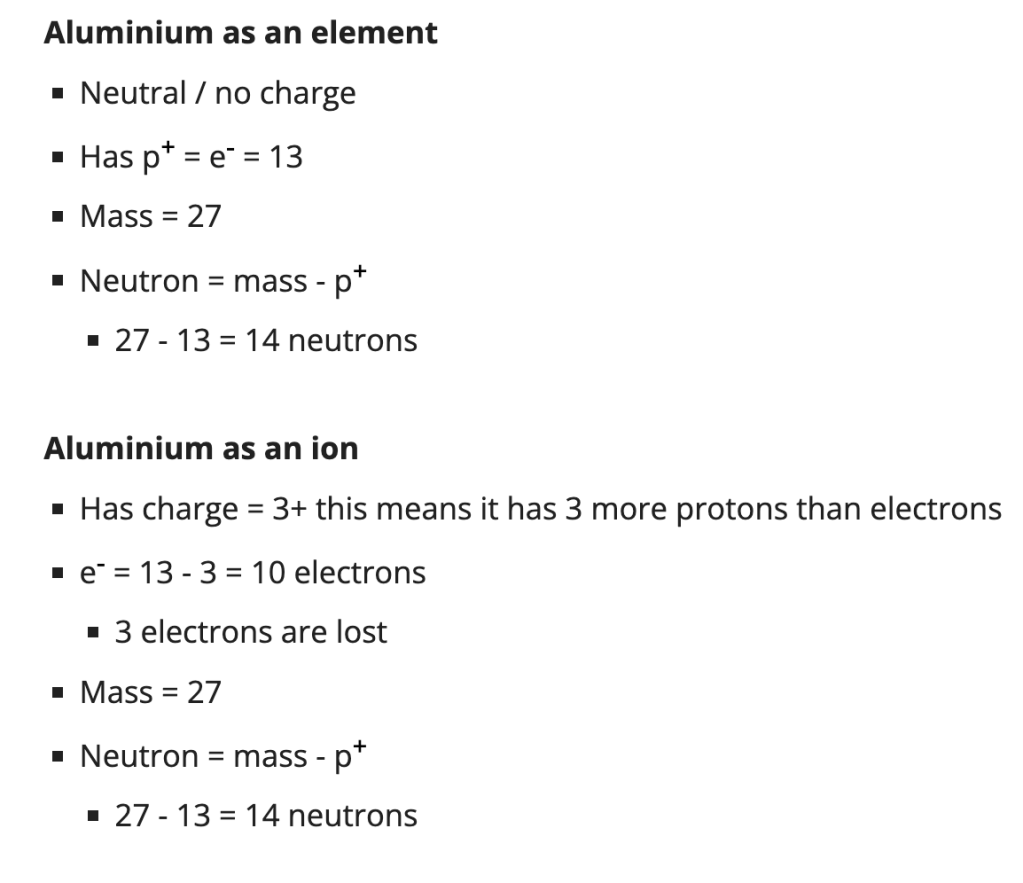
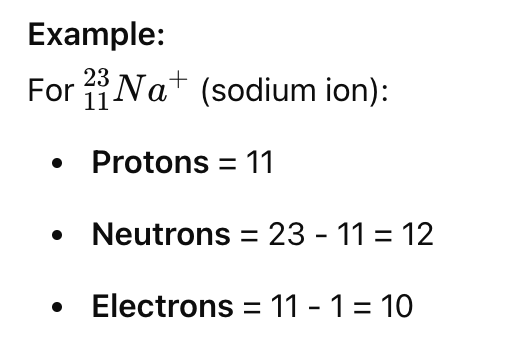
When writing an ion, the A and Z do not change from its element. The number electron(s) that the atom has received or lost is indicated at P
Example:
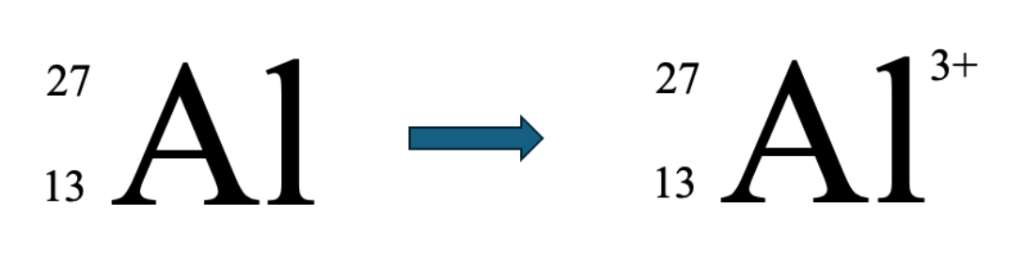
To sum:
Atomic Number (Z) and Mass Number (A)
- Atomic Number (Z) = Number of protons in an atom (also equals the number of electrons in a neutral atom).
- Mass Number (A) = Total number of protons and neutrons in the nucleus.
Formula:A = Z + Number of Neutrons
Part 2: Isotopes
Isotopes are atoms of the same element with:
- Same atomic number (Z) (same number of protons and electrons)
- Different mass number (A) (different number of neutrons)
Are atoms of an element that have the same number of protons but different number of neutrons, hence different mass. Isotopes have different physical properties. This is because as some atoms of an element are lighter or heavier, they will have slightly different density, boiling points and melting points.
Isotopes have the same chemical properties. For instance, both hydrogen and deuterium can react with oxygen to form water. Both can also react with nitrogen to form ammonia. This is because although some isotopes are heavier or lighter, they always have the same number of proton and the same number of electron. Which means the electron transfer (chemical reaction) will be the same.
Formula:

The relative isotopic abundances are obtained from experimental data using mass spectrometer.
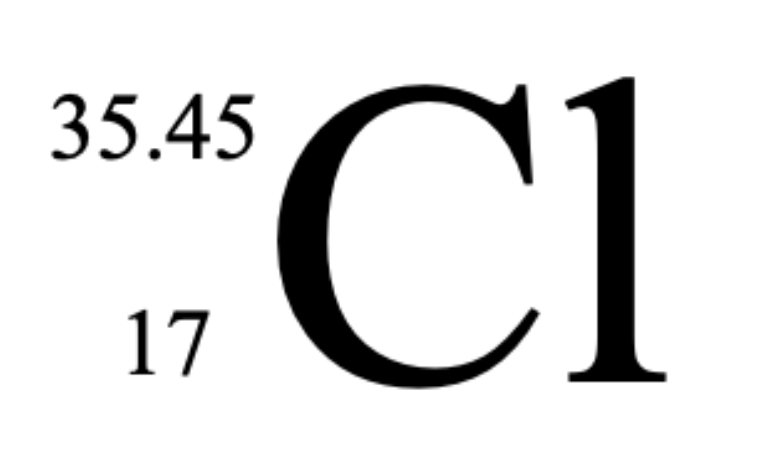
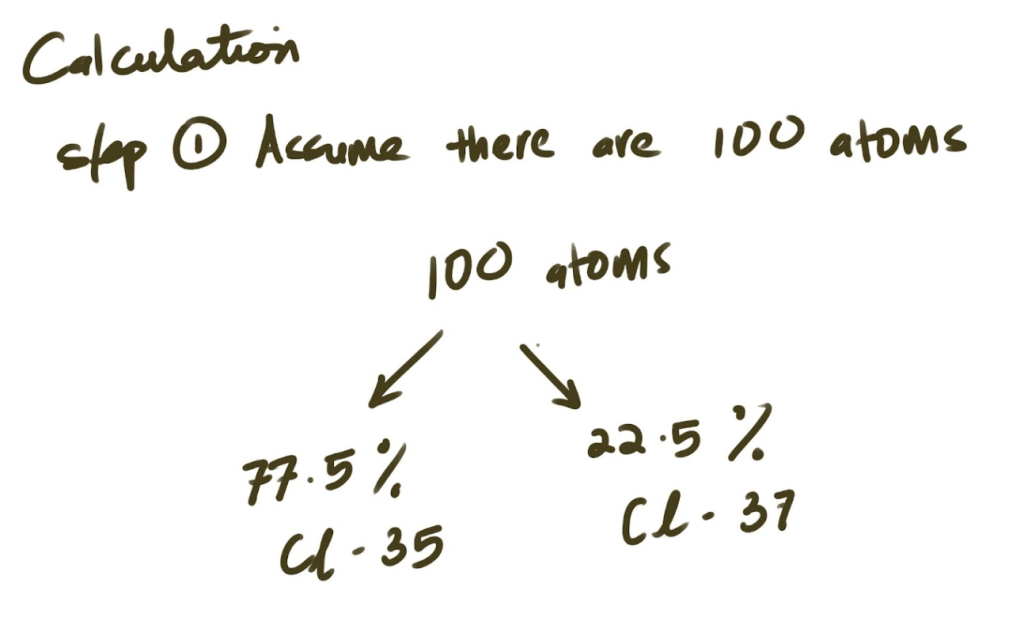
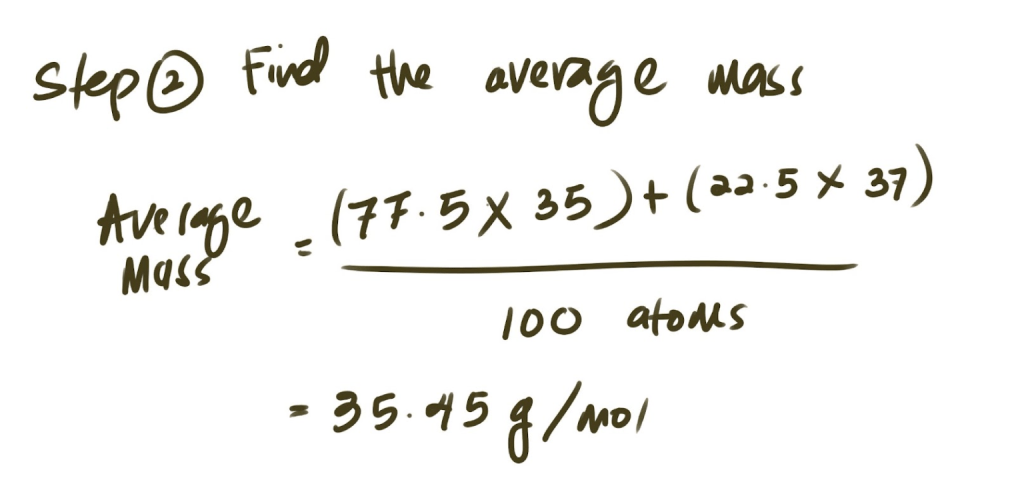
Chlorine is an example of elements with isotopes. In reality, the most abundant chlorine isotopes are Cl-35 (which is about 77.5% of all chlorine on Earth) and Cl-37 (about 22.5%). The average isotopic mass (atomic mass) of Cl is found to be 35.45
Radioisotopes
- Knowing that some isotopes may have too many or too few neutrons, it will affect the nuclear stability (recall that neutrons are the “glue” that stick protons together).
- If an isotope is unstable, it will decay faster than the usually rate (compared to the stable isotope). This decay will release energy in a form of radiation. This unstable isotope is now called a radioisotope
- Radioisotopes have pros and cons. For instance, radioisotopes can release radiation that can harm living cells and cause health issues such as cancer. Some radioisotopes can be harvested safety to make electricity (uranium, U-235) and some radioisotopes give out low radiation that can be used in treatments and diagnosis in healthcare
Part 3: Using Mass Spectra Data
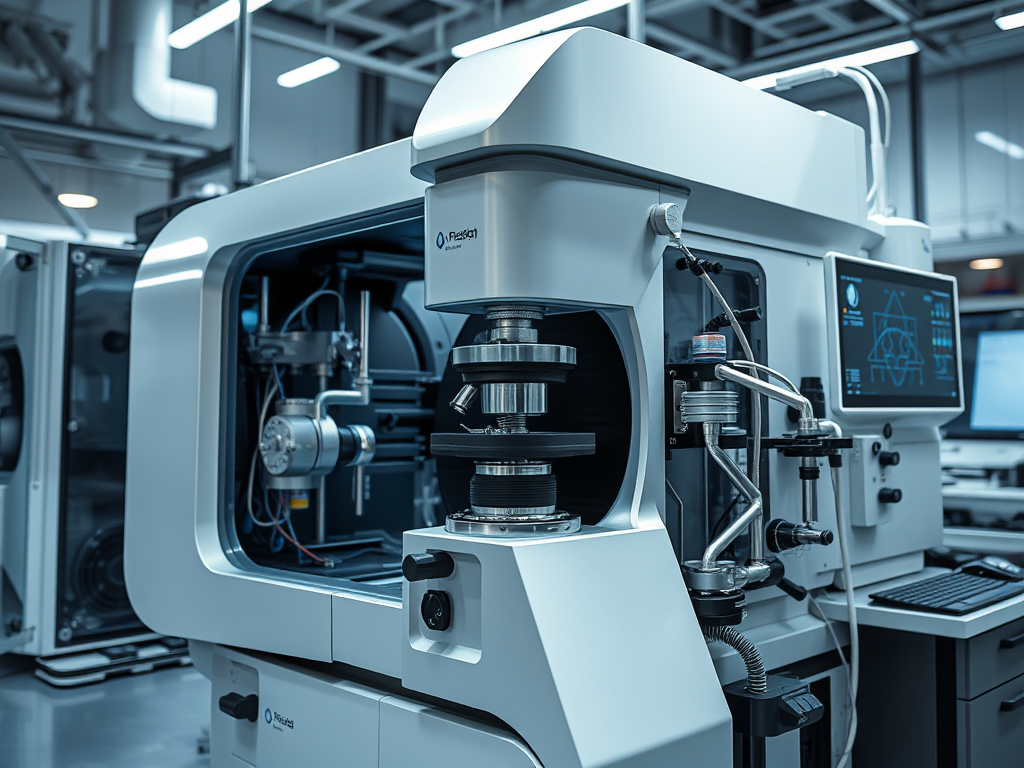
- Is the instrument used to find the relative abundance of isotopes of an element
- The steps involved in mass spectra (MS) can be simplified into these:
- Vaporisation – so that individual atoms can be analysed.
- Ionisation – by high-energy electrons which knock out na electron to produce a positively charged ion
- The positively charged ions are attracted to a negatively charged plate
- Deflection – by a magnetic field placed at right angles to their path. The amount of deflection is inversely proportional to their mass/charge (m/z) ratio. This is equivalent to the mass when the ions have a single positive charge. Single-charge ions with smaller mass are deflected more than heavier ions with the same charge.
Note: MS is also used to analyse organic compounds. The ionisation will produce fragmentation patterns
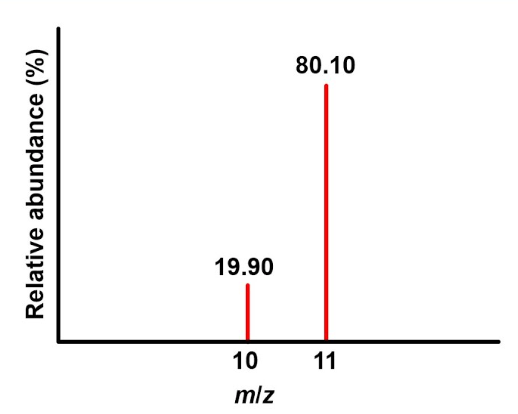
If you know the relative atomic mass and the isotopes’ masses, you can calculate their abundances. Boron has two isotopes:
Atomic mass of boron = 10.8 g/mol (from the periodic table)
We know what there are two isotopes of boron:
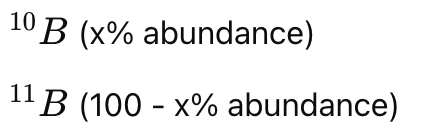
Solution: Using the formula of relative atomic mass:
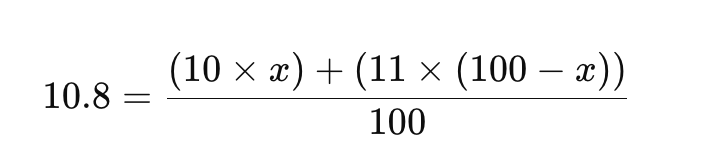
We can solve x:
10.8 * 100 = 10x + 1100 – 11x
x = 1100 = 1080
x = 20%
Therefore the abundance of 10B in nature is 20% and 11B is 80%
![ESS 8.1.3 [AHL] Biocapacity and Environmental Migration](https://mypytrclass.com/wp-content/uploads/2025/12/image-4.png?w=1024)



![ESS 8.3.4 [AHL] Photochemical Smogs and Tropospheric Ozone](https://mypytrclass.com/wp-content/uploads/2025/12/image-1.png?w=1024)

 PYTR Class