
Learning Objectives
- Outline electrophiles
- Outline the chemical reactions of electrophilic addition
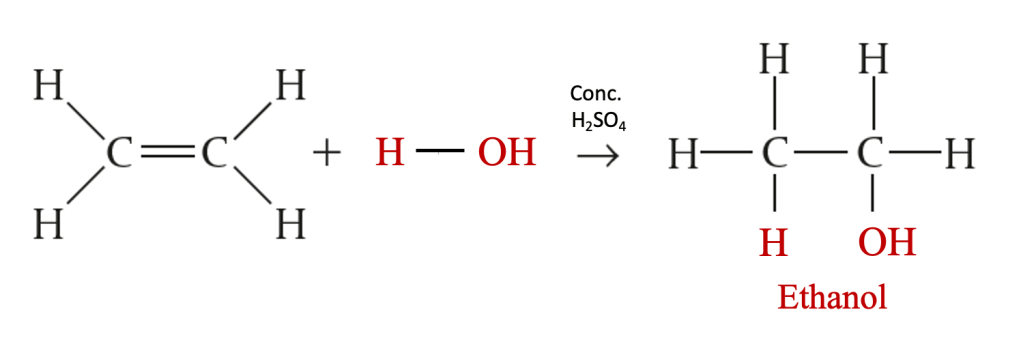
- Hydration of ethene (addition of water)
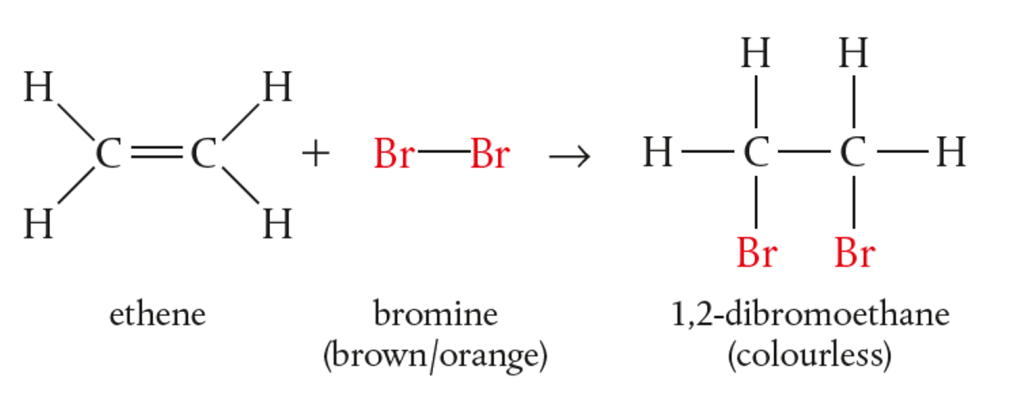
- Addition of halogens
- Addition of hydrogen halides
- [AHL]Outline the mechanisms of electrophilic addition using named examples:
- Ethene + Br2
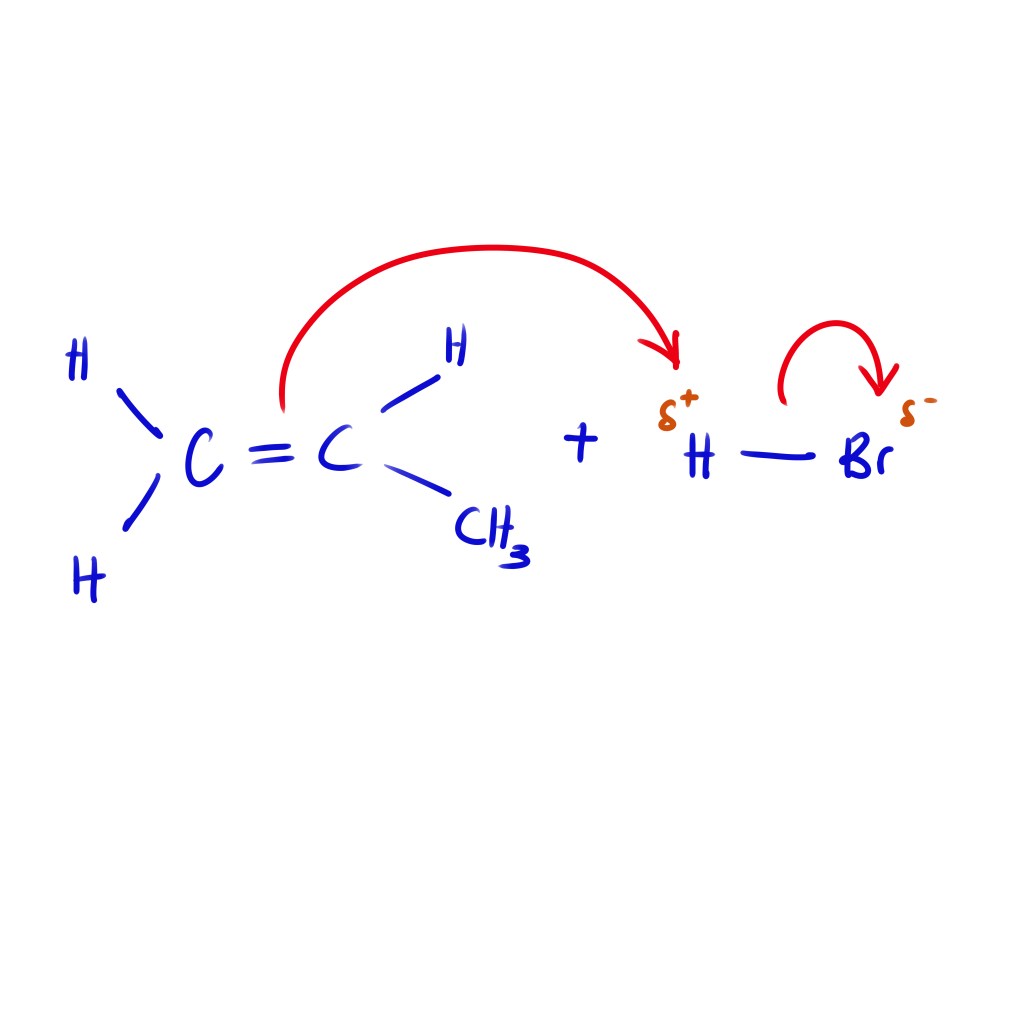
- Propene + HBr
- This must use positive induction explanation
Part 1 What are Electrophiles?
Definition:
- Electrophiles are species that seek electrons and participate in electrophilic reactions by accepting a pair of electrons.
- They are electron-deficient and typically have a partial positive charge (δ⁺) or a full positive charge (+)
- Attracted to nucleophiles (electron-rich species)
- Examples:
- Cations such as H⁺, NO₂⁺
- Neutral with an electron-deficient atom such as the B in BF₃ or Al in AlCl₃
- Instantaneous dipole such as Br₂ (Bromine molecule). One side can become Br+ if the molecules gets too close to another electron-rich species
- Alkyl halide such as HBr with permanent H+
- Often involved in reactions like electrophilic substitution and electrophilic addition.
Part 2: Electrophilic Addition Reactions
Introduction to alkenes
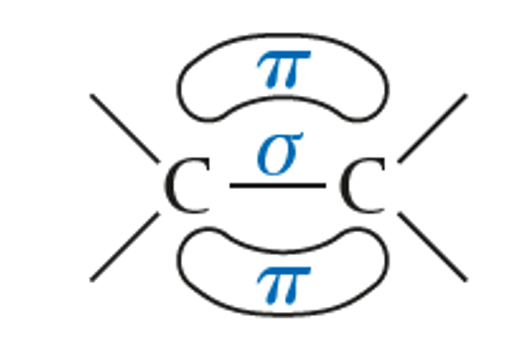
- Double bonds are sp2 hybridized
- Geometry: planar triangular shape
- bond angle: 120°
- This is a fairly open structure that makes it relatively easy for incoming groups to attack.
- The pi bond = area of electron density above and below the plane of the bond axis.
- Weak because less closely associated with the nuclei
- Attracts electrophiles i.e electrophiles can easily be added in
In general, electrophilic addition requires the electrophile to undergo a heterolytic fission. This type of split is uneven where one side will get both of the shared electrons (an electron pair). This leaves one part to become a cation and the other an anion. The cation is usually added first, followed by the anion. This mechanism is further discussed in the AHL parts.

Popular Electrophilic Addition Reactions
Hydration of ethene (addition of water)
- Requires concentrated acid such as sulfuric acid
- This reaction produces alcohols
- Example:
Addition of halogens
- Generally spontaneous reaction to produce dihalogenoalkanes
- Coloured halogen will discolour.
- This can be used to distinguish an alkane with an alkene
- Example:
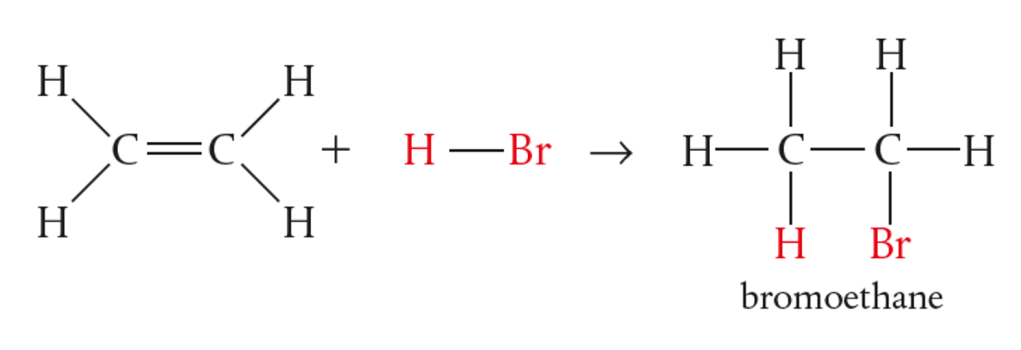
Addition of hydrogen halides
- Produces halogenoalkanes
- Bond enthalpy of hydrogen halides decreases down the group. Therefore, the reaction proceeds faster down the group i.e
- HI > HBr > HCl
- Example:
Part 3: [AHL] Mechanisms Ethene + Br2
Please use the following slide show
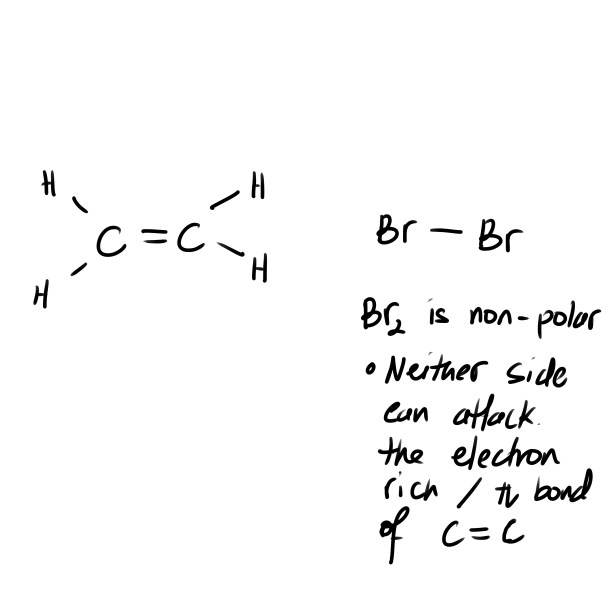
1. The Br2 molecule has no polarity and not induced 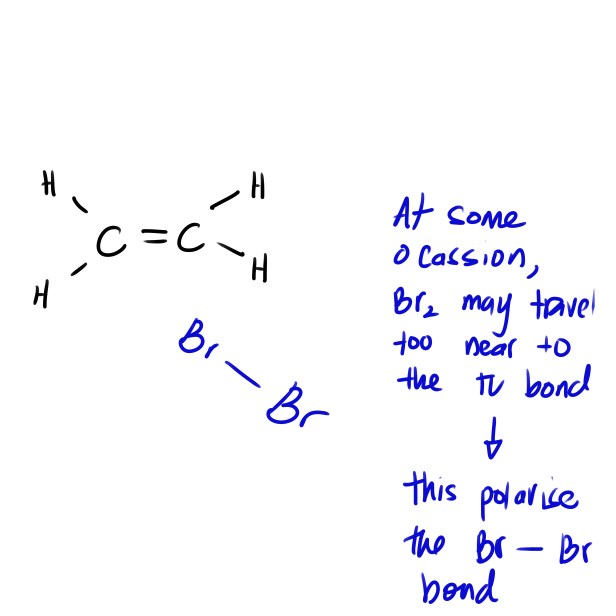
2. When the Br2 molecule gets too near to the pi bond of C=C (which is high electron density), the Br2 gets polarised resulting in instantaneous dipole 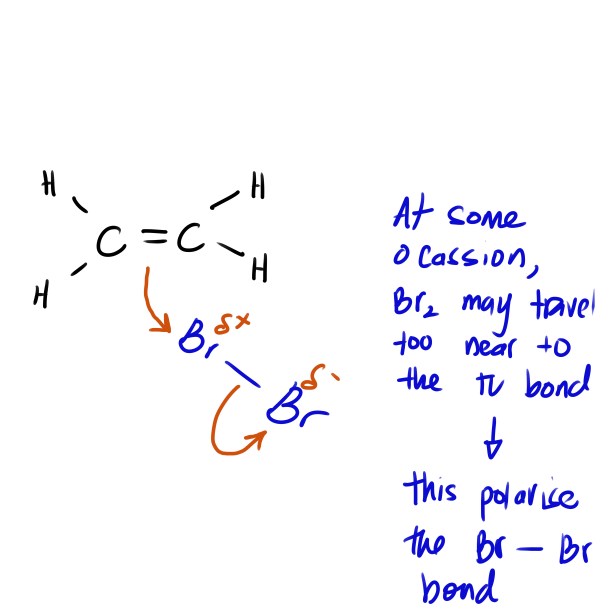
3. The Br+ causes the pi bond to break. Both electrons from the pi bond are given to the Br+ forming a covalent bond 
4. Carbocation is formed 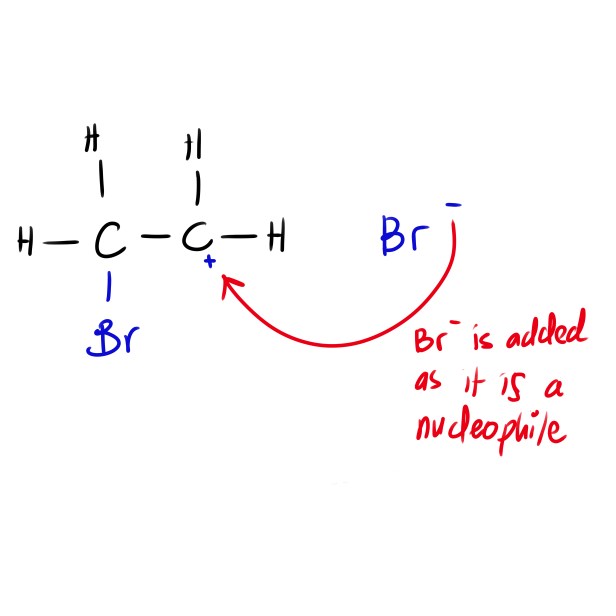
5. This unstable species then reacts rapidly with the negative bromide ion, Br−, forming the product 1,2-dibromoethane 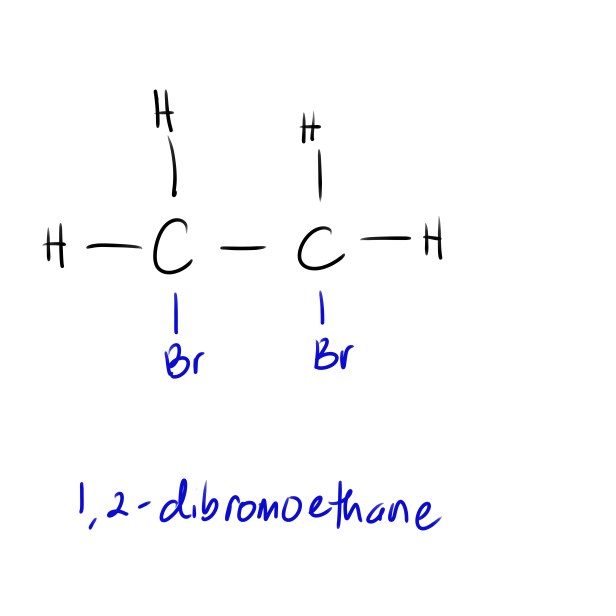
6. Product is formed
Part 4: [AHL] Mechanisms Propene + HBr
Please use the following slide show
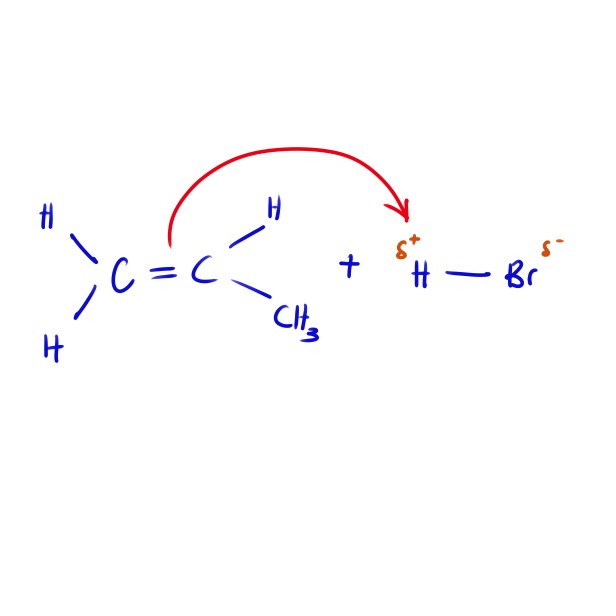
1) HBr molecule is polar as Br pulls more of the electrons towards it. This makes the H side the electrophile 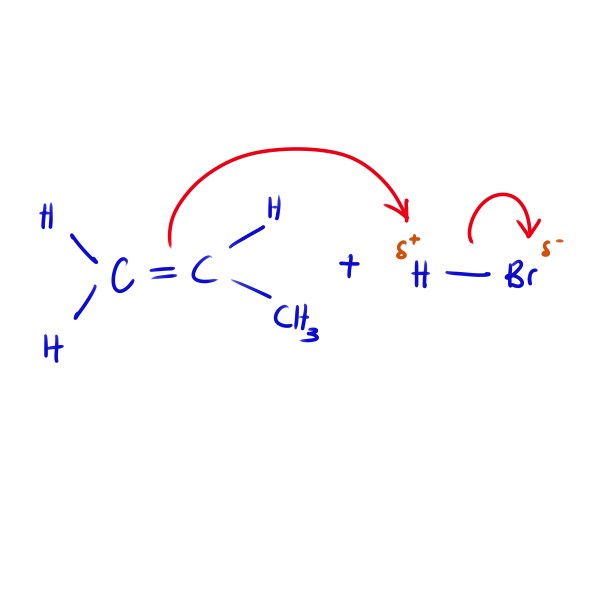
2) Pi bond breaks to attack the electrophile. As the result, the H-Br bond breaks and both electrons from this bond are given to the Br forming Br- 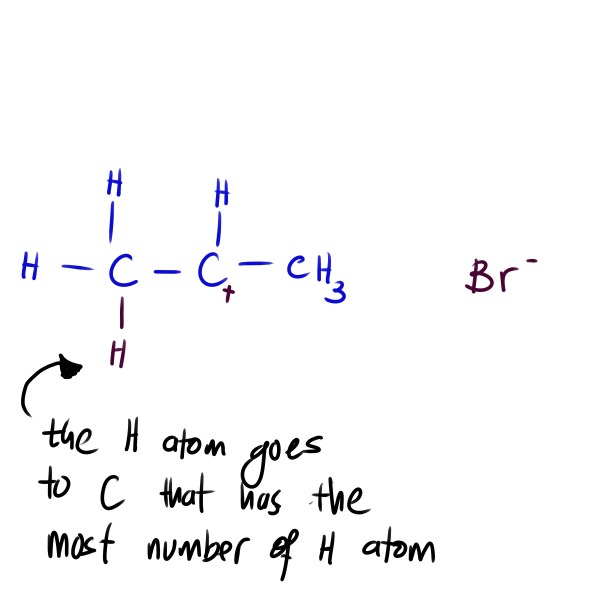
3) Carbocation is formed. Positive inductive effect is applied where the first atom added (in this case the H atom) is the more electropositive atom. It is added to the carbon atom that has the greatest number of H atoms 
4) Positive inductive effect stablises the carbocation 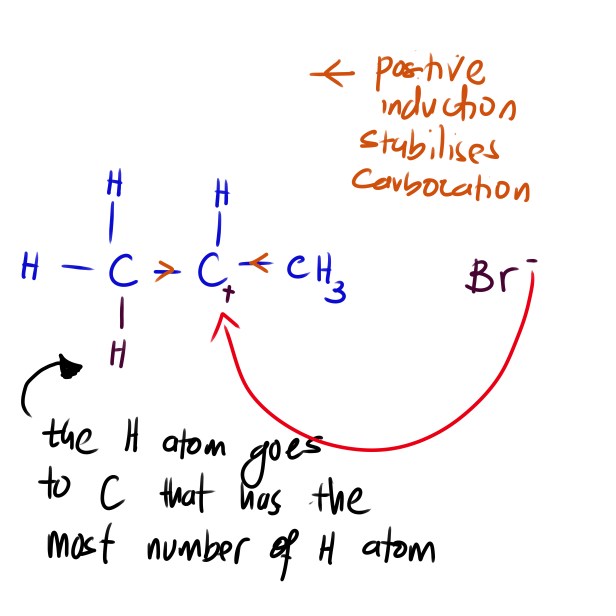
5) This unstable species then reacts rapidly with the negative bromide ion, Br−, forming the product 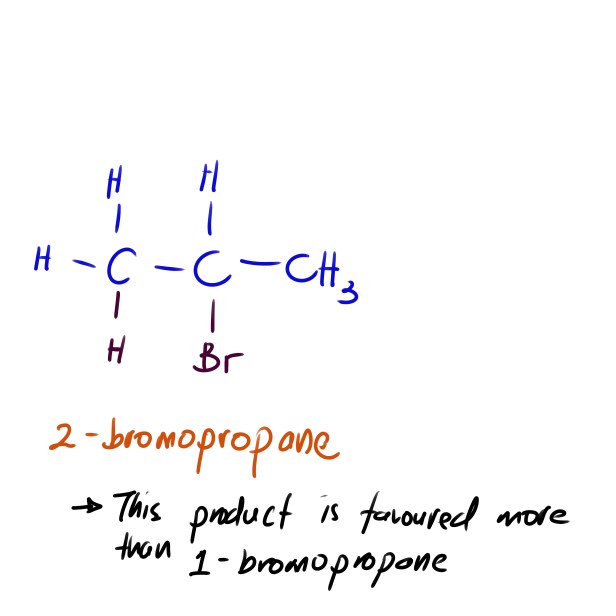
6) Product is formed
Predicting Products using Markovnikov’s rule
- the hydrogen will attach to the carbon that is already bonded to the greater number of hydrogens
- If there is not hydrogen involved, for instance an interhalogen IBr and BrCl, the more electropositive part will first be added into the alkene to form a carbocation. This means what this more electropositive part will behave as H = added to carbon that already has highest number of H atom attached to it
Positive Inductive Effect
- This stabilises the carbocation
- Secondary carbocation is more stable than a primary carbocation because there are two sides that give the positive induction to the C+ in a secondary carbocation

Exercises
Subscribe to get access
Question 1: Outline the reaction mechanism between but-1-ene and I2. State the IUPAC name of the product [4]
Question 2: Outline the reaction mechanism when interhalogen compounds BrCl is added to propene. Identify product is the major product. Explain your answer [4]
![ESS 8.1.3 [AHL] Biocapacity and Environmental Migration](https://mypytrclass.com/wp-content/uploads/2025/12/image-4.png?w=1024)



![ESS 8.3.4 [AHL] Photochemical Smogs and Tropospheric Ozone](https://mypytrclass.com/wp-content/uploads/2025/12/image-1.png?w=1024)
 PYTR Class