
Learning Objectives
- Describe the structure of the periodic table
- Deduce electron configuration of an element from its position in the periodic table
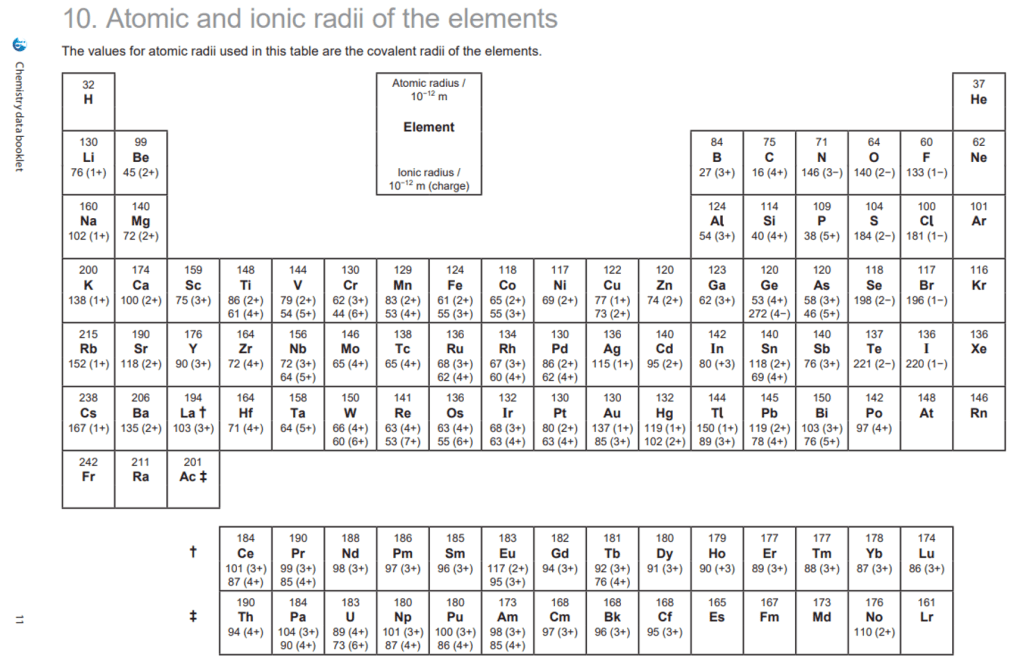
- Outline and explain the trends in the atomic and ionic radii down a group and across a period respectively
Part 1: How to Read The Periodic Table?
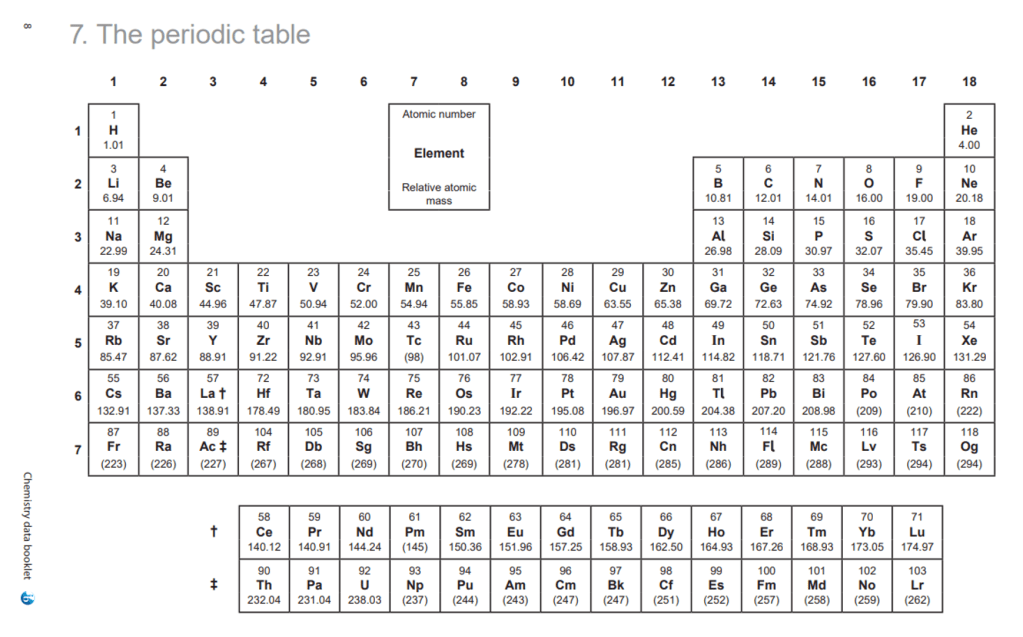
Essential Questions
- How elements are arranged/placed?
- What are groups and periods?
- Locate the region of metals and nonmetals
- Identify the groups of alkali metals, alkaline earth metals, transition elements, halogens and noble gasses
How Elements Are Arranged in the Periodic Table
- Elements are arranged in order of increasing atomic number (proton number).
- The table is structured into groups (vertical columns) and periods (horizontal rows) based on recurring chemical properties.
- Elements in the same group have similar chemical properties due to the same number of valence electrons.
- Elements in the same period have the same number of electron shells, but different properties.
What Are Groups and Periods?
- Groups (Vertical Columns, 1-18): Elements in a group share the same number of valence electrons, resulting in similar chemical behaviour.
- Periods (Horizontal Rows, 1-7): Elements in a period have the same number of electron shells, with properties changing progressively across the period.
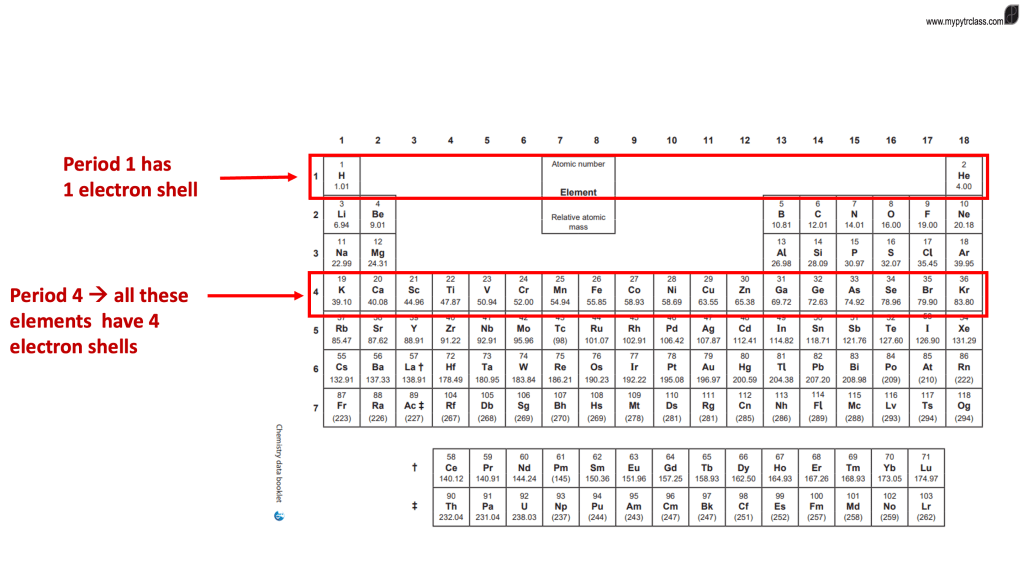
Regions of Metals and Nonmetals
- Metals: Found on the left and centre of the periodic table (Groups 1-12 and some in 13-16).
- Nonmetals: Located on the right side of the periodic table (Groups 14-18).
Identifying Specific Groups
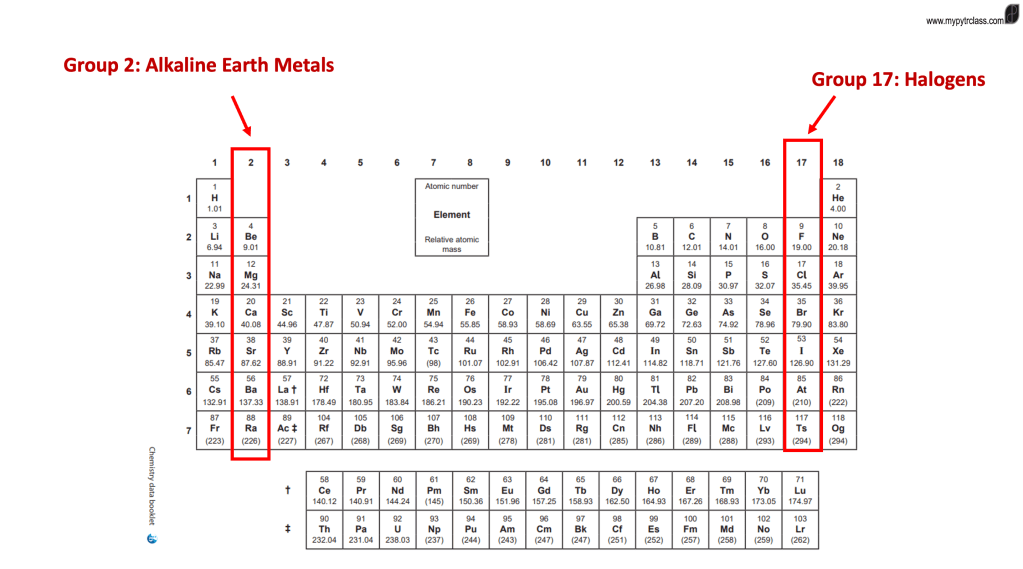
- Alkali Metals (Group 1) – Highly reactive metals (e.g., Lithium, Sodium, Potassium).
- Alkaline Earth Metals (Group 2) – Less reactive than alkali metals (e.g., Magnesium, Calcium).
- Transition Elements (Groups 3-12) – Metals with variable oxidation states and colorful compounds (e.g., Iron, Copper).
- Halogens (Group 17) – Very reactive nonmetals (e.g., Fluorine, Chlorine).
- Noble Gases (Group 18) – Inert gases with full outer electron shells (e.g., Helium, Neon, Argon).
Part 2: How to deduce electron configuration from the Periodic Table?
Essential Questions:
- Identify s, p, d and f blocks
- Deduce the electron configuration of Al
- Why are some elements grouped together?
Elements in the same group have similar chemical properties due to the same number of valence electrons. This is mainly affected by the electron movements, specifically the valence electrons. For example, Both sodium and potassium can donate 1 electron as they only have 1 valence electron. They behave similarly in terms of their chemical property (reactions) therefore they are grouped together
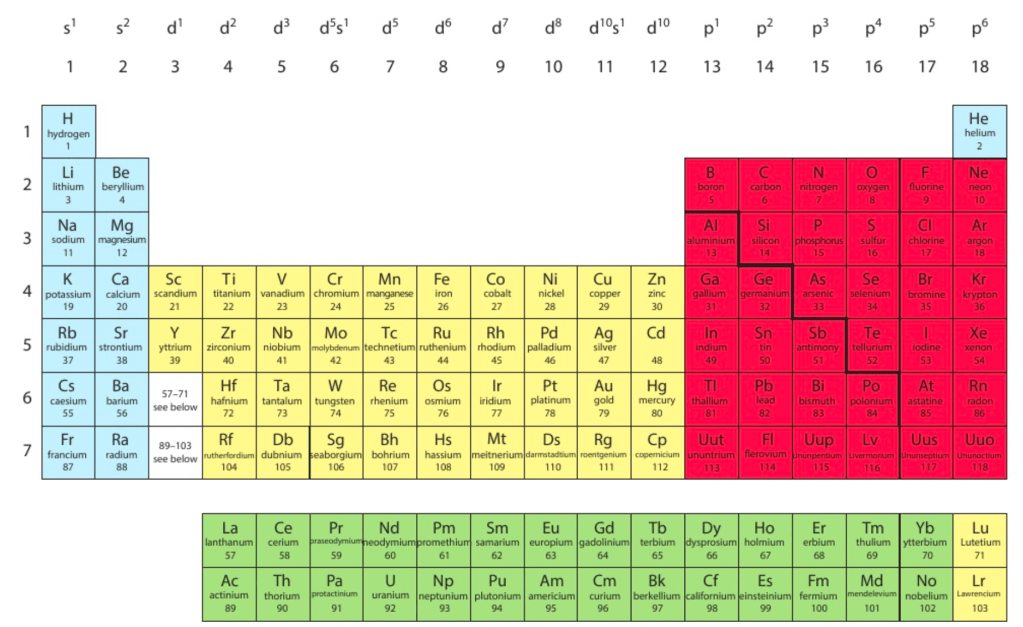
Ultimately, the electron configuration can be deduced by looking at the periodic table. To start with, the periodic table placed elements based on their blocks as follow:
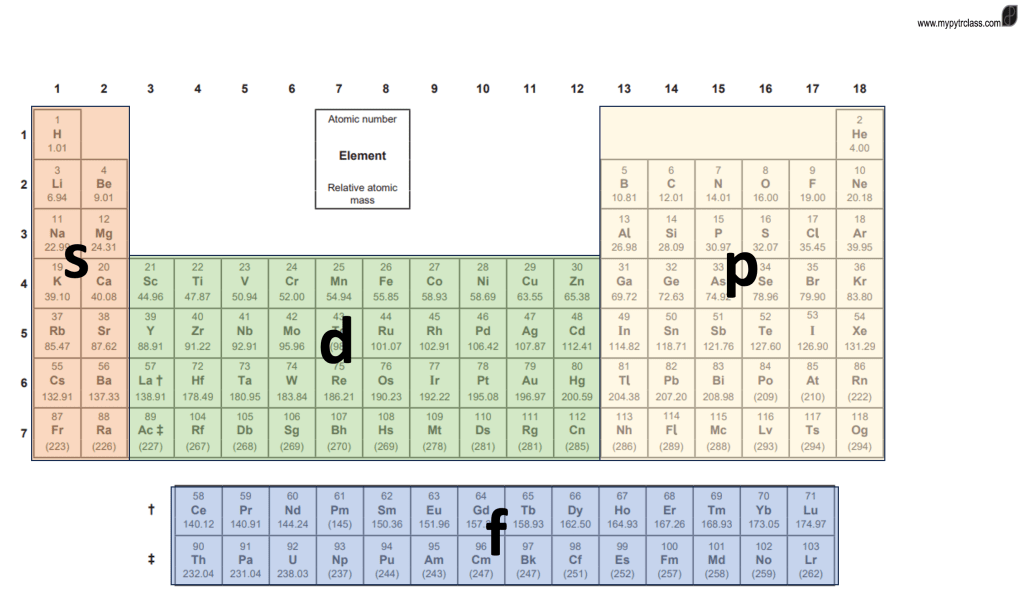
The blocks indicate the last orbital of an element. For instance:
Al is located in the p-block, in group 13 and on period 3. This means that Al has 3 shells, last shell has the highest energy level of p-orbital. The third shell (which should have s and p orbitals) also has only 3 valence electrons.
Therefore the electron configuration of Al is: 1s2 2s2 2p6 3s2 3p1
Part 3: Periodicity – Atomic and Ionic Radii
Trends in Atomic Radius
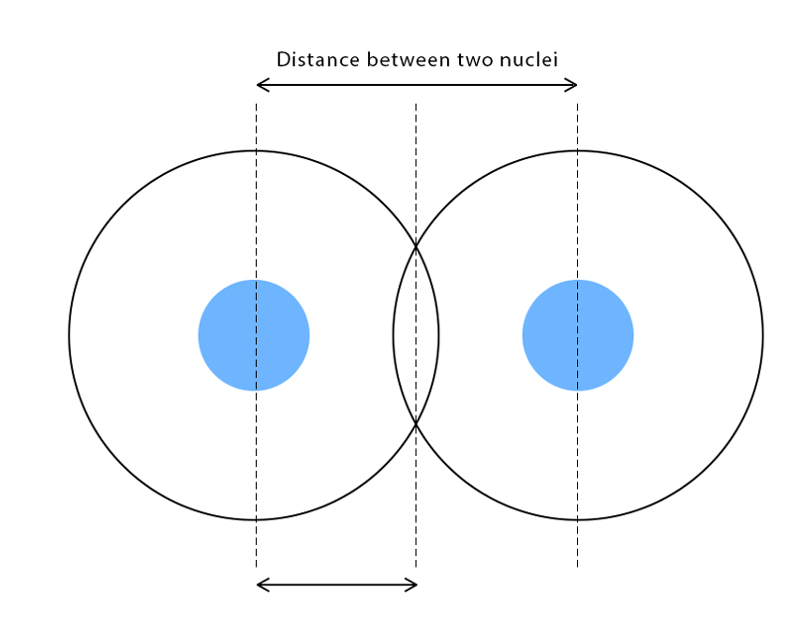
- Atomic radius is not a fixed boundary since electrons occupy atomic orbitals, which describe probability regions rather than definite edges.
- Atomic radius is measured as half the distance between the nuclei of two neighbouring atoms.
- It can also be approximated as the distance from the nucleus to the outermost electron.
- Trends in atomic radius:
- Increases down a group due to:
- additional electron shells
- Example: Group 1 elements show a clear trend of increasing atomic radius down the group.
- Decreases across a period due to:
- increasing nuclear charge pulling electrons closer.
- Increases down a group due to:
Trends in Ionic Radius
5 General Trends in Ionic Radii:
- Positive ions (cations) are smaller than their parent atoms because they lose their outer energy level during ion formation.
- Negative ions (anions) are larger than their parent atoms due to added electrons, increasing repulsion and expanding the outer energy level.
- Ionic radii of positive ions decrease from Groups 1 to 14 across a period due to increasing nuclear charge, pulling electrons closer to the nucleus.
- Ionic radii of negative ions decrease from Groups 14 to 17 across a period for the same reason, with a noticeable size difference between cations and anions.
- Ionic radii increase down a group as more electron energy levels are added, increasing atomic size.
![ESS 8.1.3 [AHL] Biocapacity and Environmental Migration](https://mypytrclass.com/wp-content/uploads/2025/12/image-4.png?w=1024)




![ESS 8.3.4 [AHL] Photochemical Smogs and Tropospheric Ozone](https://mypytrclass.com/wp-content/uploads/2025/12/image-1.png?w=1024)

 PYTR Class