[AHL] Explain the extraterrestrial origin of water on Earth and the factors contributing to its retention.
[AHL] Understand the relationship between the search for extraterrestrial life and the presence of water as a key indicator.
Part 1: Origin of Earth’s Water
Earth’s Water
Earth has nearly 1.4 billion km3 of water
98.3% in liquid form.
The remaining water exists as ice, snow, or water vapour in the atmosphere.
Water was likely not present at Earth’s formation
due to high temperatures above 100°C, which would have caused it to evaporate into space.
Hypothesis of Earth’s Water Origin
Since it was too hot during the formation of the Earth, it is most likely that water vapourised and lost to the space.
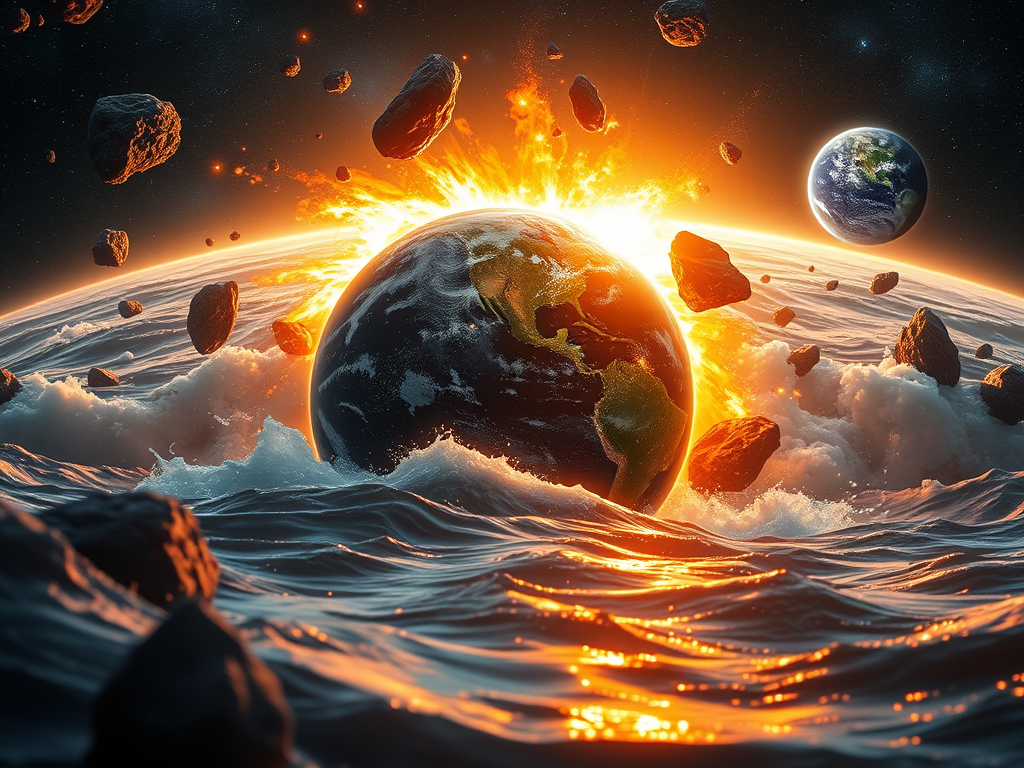
Hypothesis suggests that water was delivered to Earth by colliding asteroids.
Currently, large asteroids (diameter >5 km) impact Earth only once every 20 million years, which is insufficient to explain all of Earth’s water.
Evidence suggests a much higher rate of asteroid bombardment in the first few hundred million years of Earth’s history.
Early asteroids likely contained more water than modern ones, as billions of years of solar heat have caused much of their water to evaporate.
Asteroids have weak gravity, making it difficult for them to retain water vapour over time.
Part 2: Factors of Earth’s Water Retention
Two key factors contributed to Earth’s ability to retain water after its delivery by asteroids:
Distance from the Sun:
Earth’s position ensures that sunlight never reaches temperatures high enough to boil away its water.
Liquid water remains more stable than water vapour, thanks to hydrogen bonding and cohesion.
Strong gravity
Earth’s relatively large size provides sufficient gravitational pull to keep its oceans anchored to the surface and retain gases in the atmosphere.
While some hydrogen and helium escape into space, very little water vapour is lost.
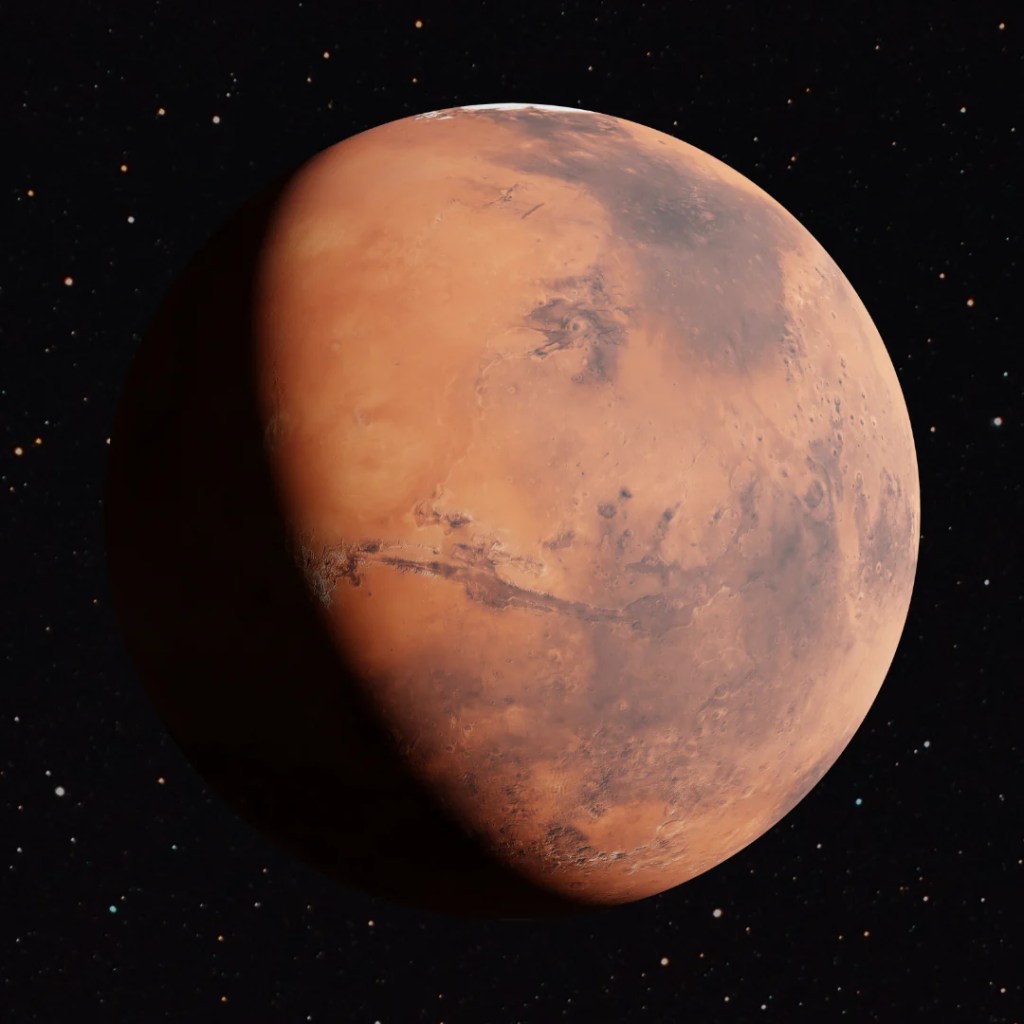
“Evidence suggests that water once existed on Mars but disappeared shortly after the planet’s formation. Most of this water is believed to have been absorbed through hydration reactions with minerals in Martian rock. On Earth, these minerals were present in smaller quantities, allowing surface water to remain abundant.”
Mars. Source: Astronz.nz
Part 3: Goldilocks Zone
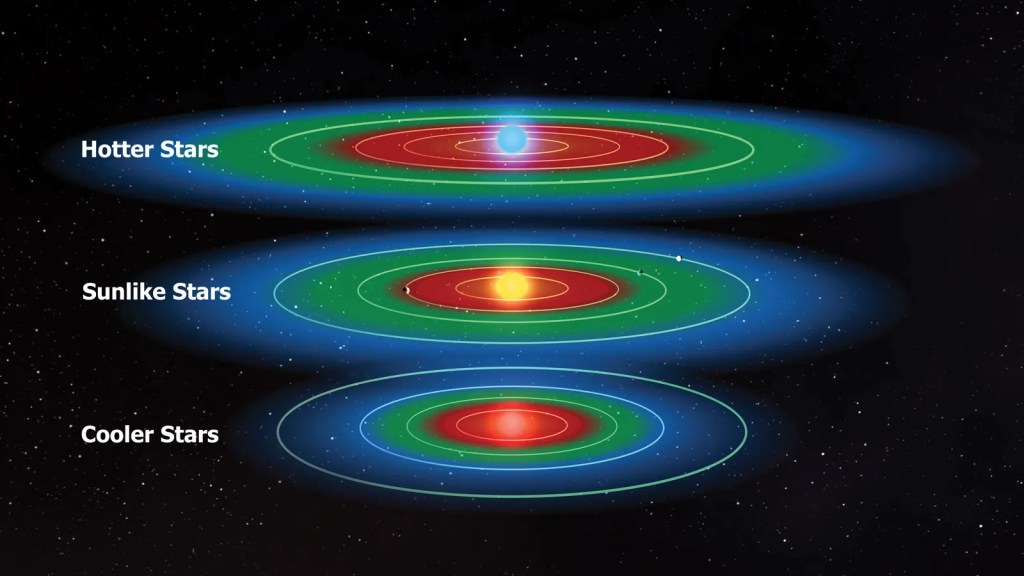
Goldilocks Zone = Habitable zone
In the fairy tale Goldilocks and the Three Bears, a young girl tries three bowls of porridge, finding one too hot, another too cold, and the third just right. This concept is often used as a metaphor for the habitable zone around a star, also known as the Goldilocks zone.
Liquid water is essential for all known life on Earth. If a planet is too close to its star, water evaporates; if too far, it freezes. However, within the Goldilocks zone, temperatures allow water to remain in a liquid state, making the planet more likely to support life.
The location of this habitable zone depends on the size of the star and the amount of energy it emits. It also depends on the planet’s size, which affects gravity strength and atmospheric pressure. Within our galaxy alone, an estimated 40 billion planets exist in a Goldilocks zone. The more planets found in these zones, the greater the possibility of extraterrestrial life.
Goldilocks Zones may vary due to the the star of a planetary system
Exercises [AHL only]
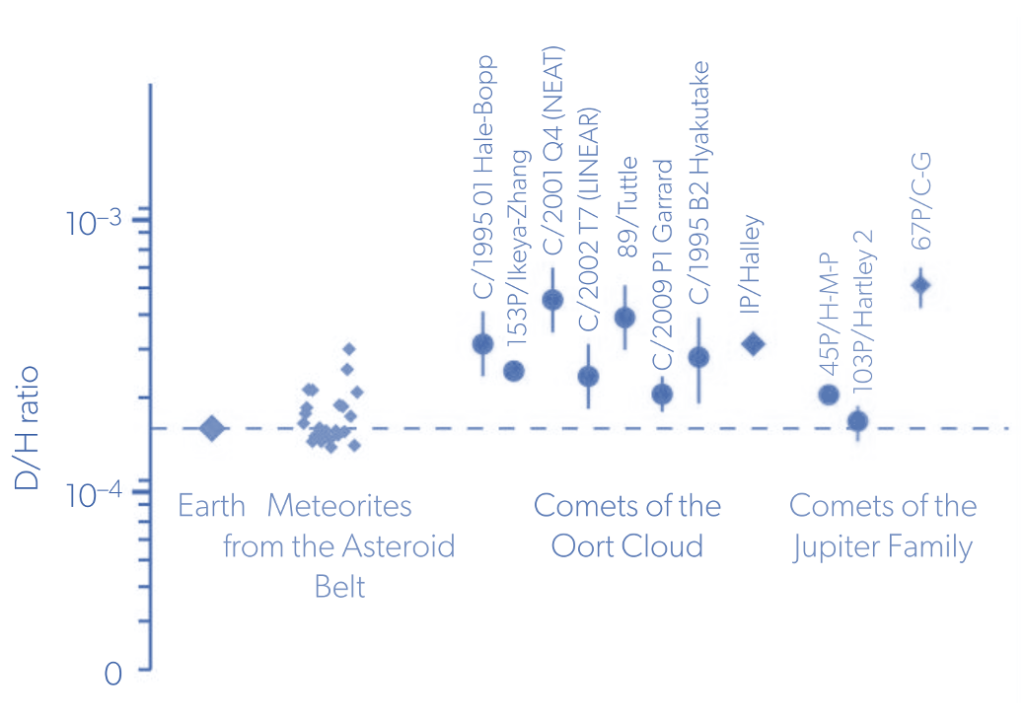
Scientists have analyzed the deuterium-to-hydrogen (D/H) ratio in Earth’s ocean water, which is 1.56 × 10⁻⁴. They have compared this ratio with:
Meteorites – asteroids that have passed through Earth’s atmosphere.
Comets from the Oort Cloud – including Halley’s Comet.
Jupiter-family comets – such as Comet 67P/C-G (67P/C-G), which was explored by the Rosetta spacecraft.
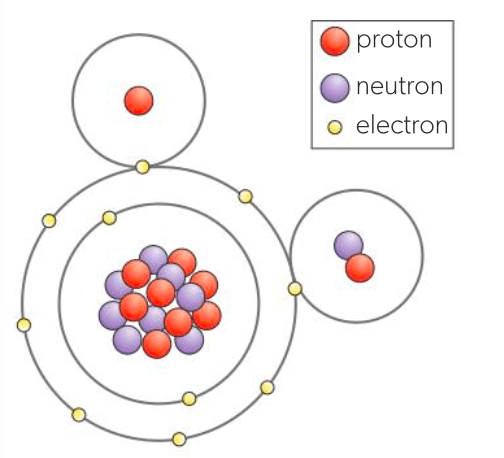
One of the hydrogen atoms contains a neutron, making it the isotope deuterium. On Earth, 1 in 6,420 hydrogen atoms is deuterium.
<< D/H ratio data
Questions
Determine the D/H ratio found on Halley’s comet. [1]
The graph displays data for 11 comets with measured D/H ratios. Identify how many of these comets have a D/H ratio that matches Earth’s water? [2]
In 2014, the Rosetta spacecraft measured the D/H ratio of comet 67P/C-G. Explain how this finding affects the likelihood that Earth’s water originated from comets. [2]
Based on the graph, discuss whether asteroids or comets are the more likely source of Earth’s water [3]


![ESS 8.1.3 [AHL] Biocapacity and Environmental Migration](https://mypytrclass.com/wp-content/uploads/2025/12/image-4.png?w=1024)



![ESS 8.3.4 [AHL] Photochemical Smogs and Tropospheric Ozone](https://mypytrclass.com/wp-content/uploads/2025/12/image-1.png?w=1024)

 PYTR Class