
Learning Objectives
- Understand that DNA and RNA are polymers formed by condensation of nucleotides.
- Describe the structure and roles of RNA
- Describe DNA as a double helix made of two antiparallel strands of nucleotides, linked by hydrogen bonds between complementary base pairs.
- Compare the differences between DNA and RNA.
Part 1: Condensation of Nucleotides
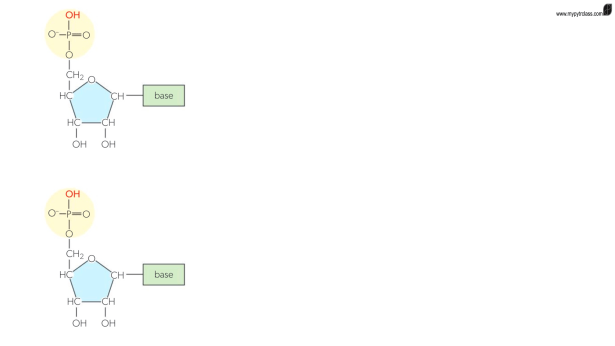
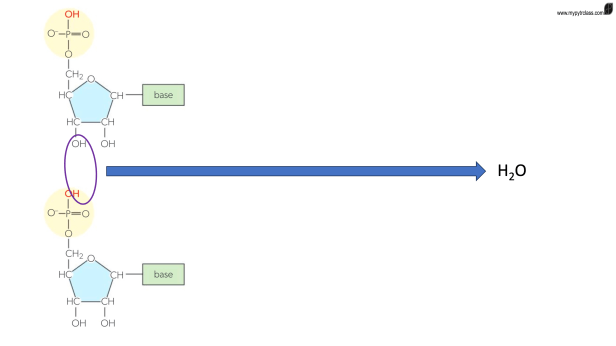
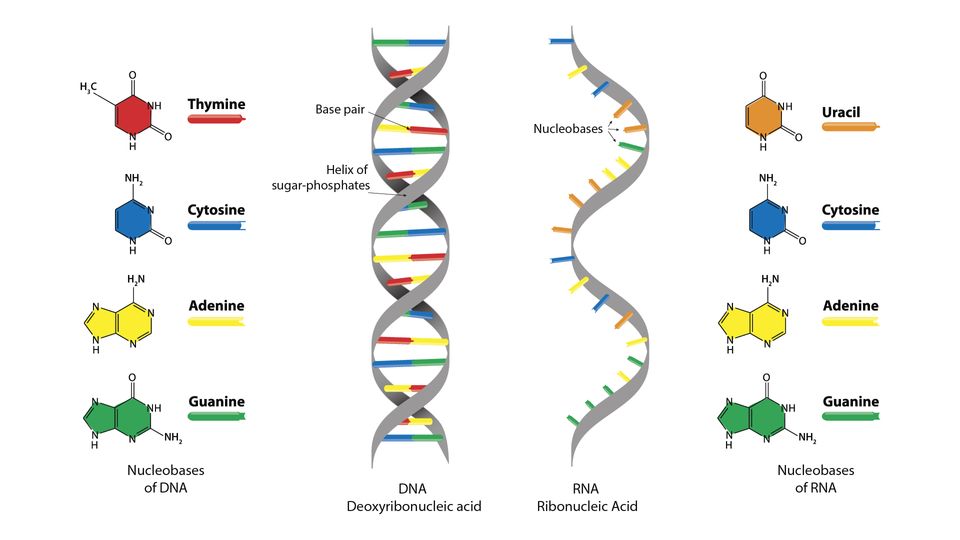
- When 2 nucleotides (for example 2 RNA nucleotides) are linked together,
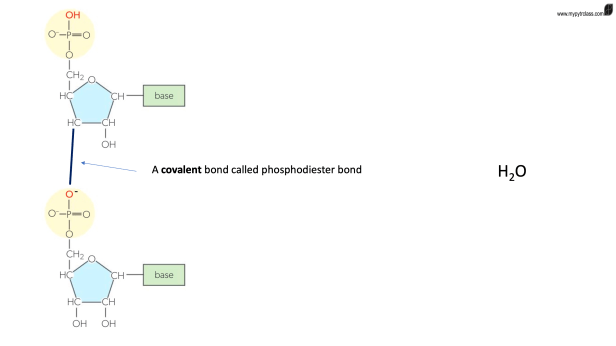
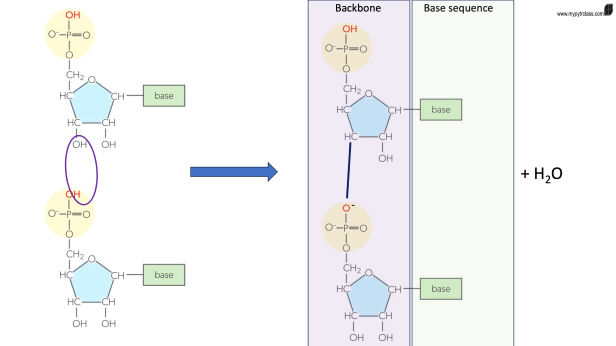
- The phosphate group of one nucleotide reacts with the hydroxyl (-OH) group on the 3′ carbon of another nucleotide’s ribose sugar. This forms a phosphodiester bond (a covalent bond)
- A water molecule (H₂O) is released, making this a condensation reaction.

- Repeating the Process:
- This reaction continues, forming a sugar-phosphate backbone with nitrogenous bases extending from it.
- The result is a single-stranded RNA molecule.
Part 2: Structure and Roles of RNA
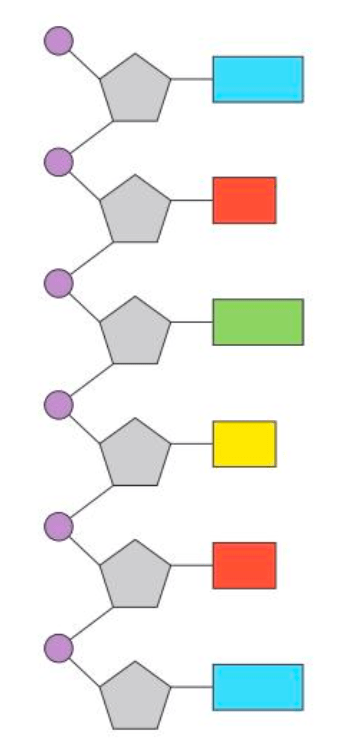
- RNA (ribonucleic acid) is a single-stranded, unbranched polymer of nucleotides.
- Composed of ribose sugar, phosphate group, and nitrogenous bases (Adenine, Uracil, Cytosine, Guanine).
- The number of nucleotides in an RNA molecule is unlimited.
- Formed by condensation reactions, creating a sugar-phosphate backbone.
- This reaction often required enzymes and protein complexes
- Shorter than DNA and can fold into complex secondary structures due to complementary base pairing.
- RNA plays a central role in gene expression, acting as an intermediary between DNA and proteins while also regulating cellular functions.
Roles of RNA
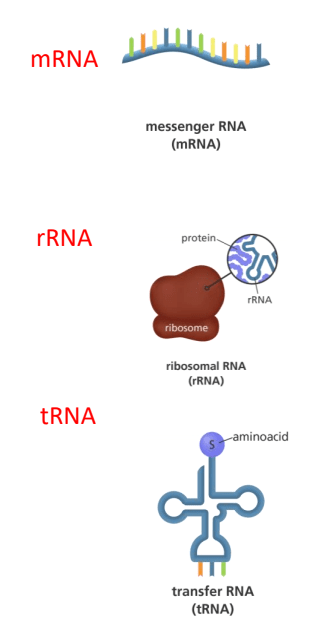
- Messenger RNA (mRNA)
- Carries genetic information from DNA (in the nucleus) to ribosomes (in the cytoplasm) for protein synthesis.
- Acts as a template for translation which is protein synthesis.
- Ribosomal RNA (rRNA)
- A major component of ribosomes.
- Helps catalyse peptide bond formation during translation.
- Transfer RNA (tRNA)
- Transfers specific amino acids to ribosomes during protein synthesis according to the mRNA code (codons) by complementing it with its anticodon.
- Small Nuclear RNA (snRNA)
- Involved in RNA splicing, removing introns from pre-mRNA.
Part 3: Structure of DNA
Structure of DNA as a Double Helix
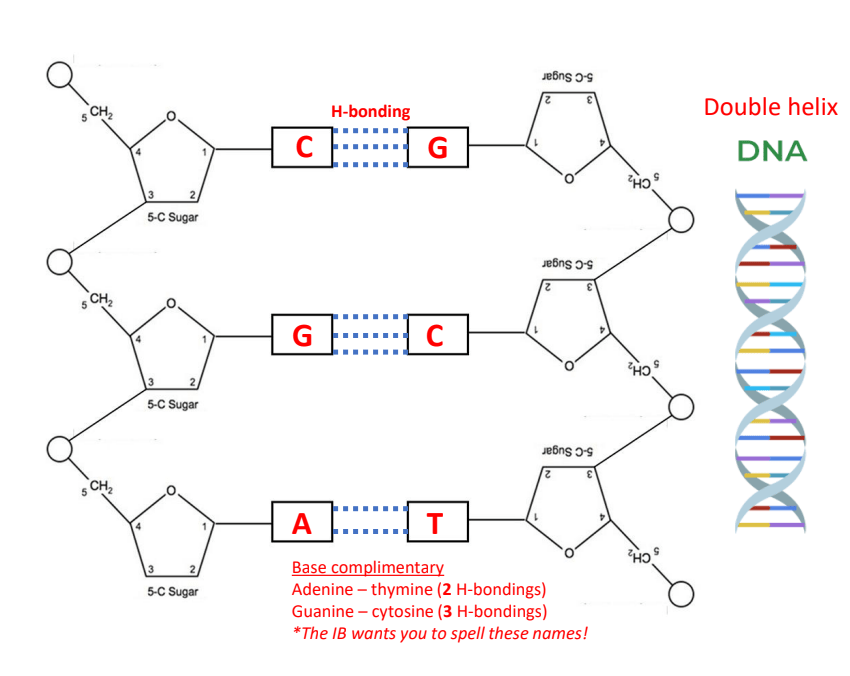
- DNA is a polymer of nucleotides, each consisting of a deoxyribose sugar, phosphate group, and nitrogenous base.
- The four bases in DNA are adenine (A), thymine (T), guanine (G), and cytosine (C).
- DNA is composed of two strands of nucleotides linked by hydrogen bonds between complementary base pairs:
- A pairs with T (via two hydrogen bonds).
- G pairs with C (via three hydrogen bonds).
- The two DNA strands are antiparallel—they run in opposite directions:
- One strand ends with a phosphate group (5’ end).
- The other strand ends with a deoxyribose sugar (3’ end).
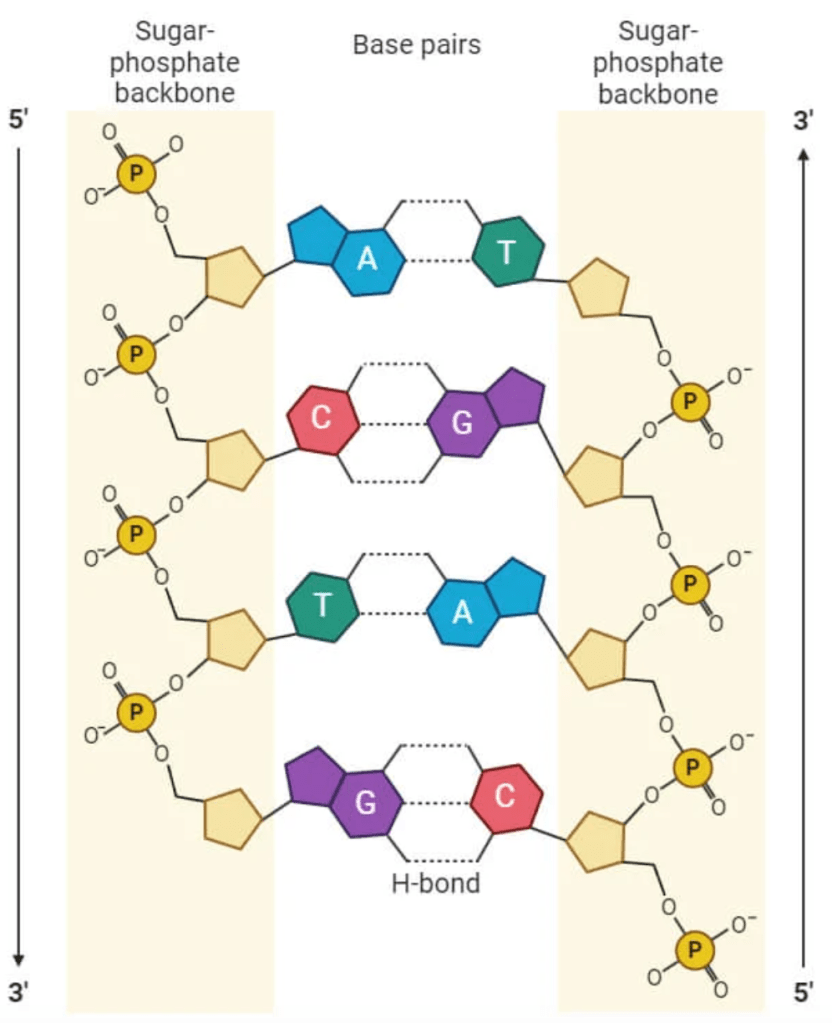
- If the strands ran in the same direction, hydrogen bonding between bases would not be possible.
- DNA has a double helix structure, with a constant diameter of 2 nanometers (2 nm).
- The helical shape allows for compact storage and stability of genetic information.
- Diagrams are often used to represent DNA structure but may not fully capture its 3D helical nature.
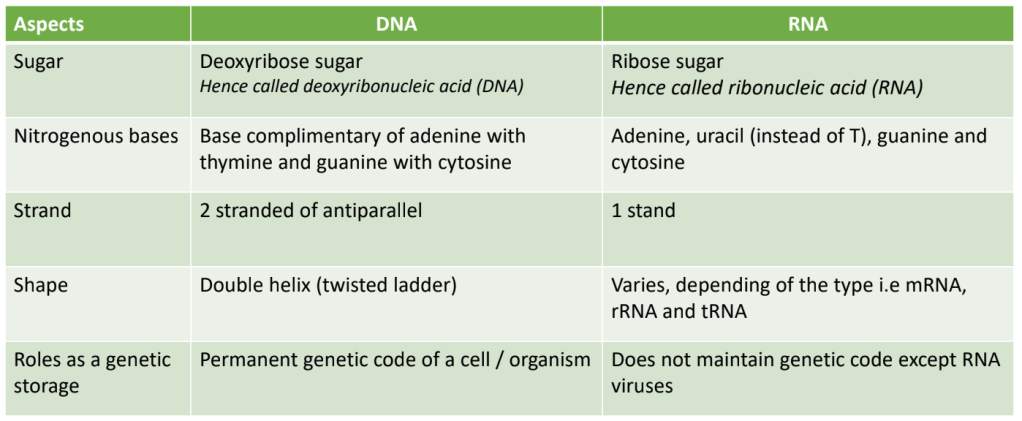
Part 4: Differences of DNA and RNA
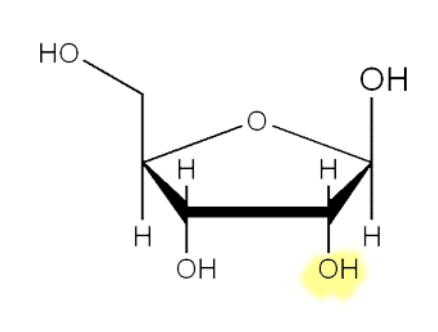
Ribose sugar is the sugar of RNA
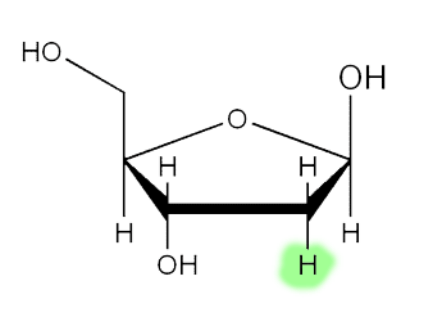
Deoxyribose sugar is the sugar of DNA
![ESS 8.1.3 [AHL] Biocapacity and Environmental Migration](https://mypytrclass.com/wp-content/uploads/2025/12/image-4.png?w=1024)




![ESS 8.3.4 [AHL] Photochemical Smogs and Tropospheric Ozone](https://mypytrclass.com/wp-content/uploads/2025/12/image-1.png?w=1024)

 PYTR Class