

Learning Objectives
- Describe the hydrophobic properties of lipids and their biological significance.
- Differentiate between saturated, monounsaturated, and polyunsaturated fatty acids.
- Describe the role of triglycerides in adipose tissues for energy storage and thermal insulation.
- Explain the formation of phospholipid bilayers based on hydrophobic and hydrophilic interactions.
- Understand how non-polar steroids can pass through the phospholipid bilayer.
Part 1: Hydrophobic Properties
Properties and Types
Lipids are a diverse group of substances found in living organisms. They dissolve in non-polar solvents such as ethanol, toluene, and propanone (acetone). They are sparingly soluble in water-based (aqueous) solvents, making them hydrophobic. However, lipids are not repelled by water; they are simply more attracted to non-polar substances.
Types of Lipids:
- Oils:
- Melting point below 20°C (remain liquid at room temperature but solidify in colder conditions).
- Fats:
- Melting point between 20°C and 37°C (solid at room temperature, liquid at body temperature).
- Waxes:
- Melting point above 37°C (remain solid except at high temperatures).
- Steroids:
- Characterised by a four-ring molecular structure.
Part 2: Organisations of Fatty Acids
Lipids are typically made by glycerol and fatty acids. Fatty acids are composed of an unbranched hydrocarbon chain with hydrogen atoms covalently bonded. Carboxyl group (-COOH) can be found at one end and methyl group (-CH₃) at the other. Chain length varies, typically 14–20 carbon atoms in living organisms.

There are two major types of fatty acids:
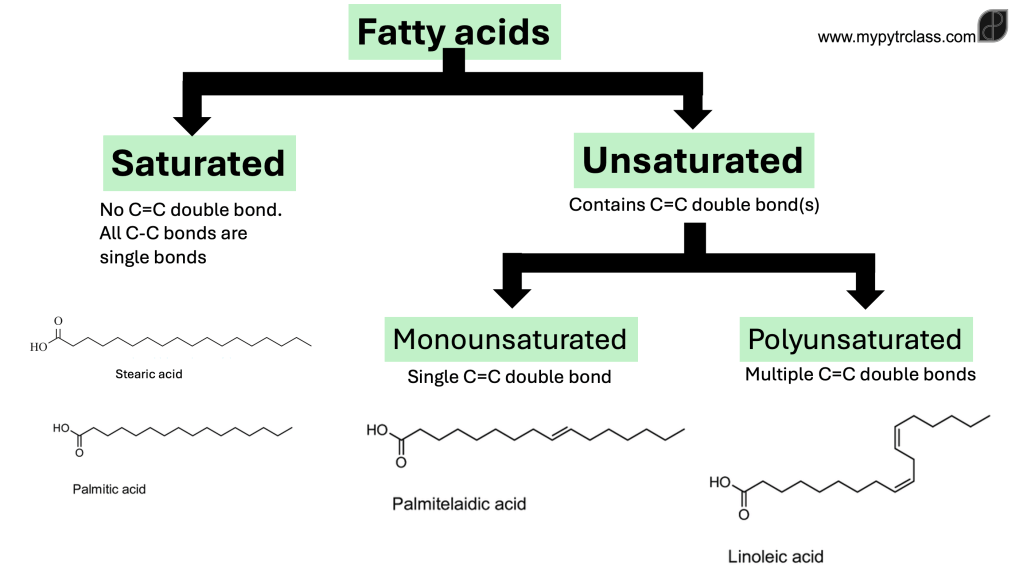
Cis vs. Trans Fatty Acids
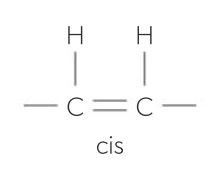
- Cis-fatty acids:
- Hydrogen atoms on the same side of the double bond.
- Creates a bend in the chain, making triglycerides less tightly packed.
- Have low melting points and remain liquid (oils) at room temperature.
- Trans-fatty acids:
- Hydrogen atoms on opposite sides of the double bond.
- Straight chains, allowing tight packing and higher melting points.
- Solid at room temperature, often produced artificially through partial hydrogenation.

“Health Concerns: Trans-fats are linked to serious health risks. The FDA has banned industrial trans-fats due to their negative effects on health.”
Part 3: The Triglycerides and Phospholipids Bilayers
Triglycerides in Adipose Tissue: Energy Storage & Thermal Insulation
Triglycerides serve as long-term energy storage in plants and animals. In animals, they are stored as fat in adipose tissue, found beneath the skin and around organs like the kidneys.
Why Triglycerides Are Ideal for Energy Storage?
- Chemically stable → Energy is not lost over time.
- Insoluble in water → Form droplets in the cytoplasm without osmotic effects.
- High energy density → Release twice as much energy per gram as carbohydrates.
- Efficient storage → Require less body mass, which is crucial for mobile animals like birds and bats.
- Poor heat conductors → Help conserve body heat in cold environments.
- Shock absorption → Act as cushioning around organs like the kidneys.
Animals in cold habitats, such as marine mammals, have thick subcutaneous adipose tissue (blubber) for insulation. However, on land, this thick layer can cause overheating in species like sea lions due to heat retention.
Formation of Phospholipid Bilayers
Phospholipids are amphipathic, meaning they have both hydrophilic and hydrophobic regions:
- Hydrophilic “head” → Phosphate group, attracted to water.
- Hydrophobic “tails” → Two hydrocarbon chains, repelled by water.
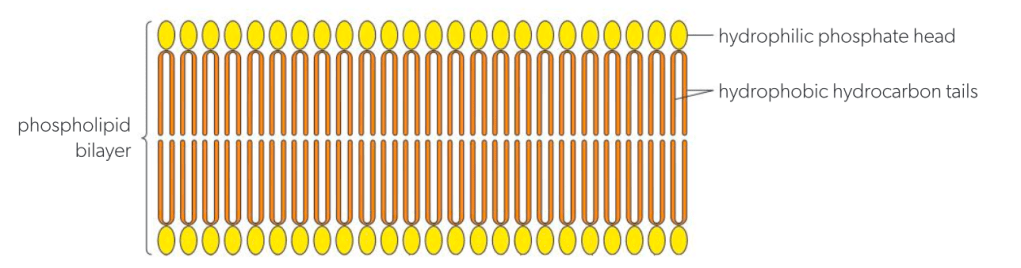
When mixed with water, phospholipids self-assemble into bilayers, with:
- Hydrophilic heads facing outward (towards water).
- Hydrophobic tails facing inward (shielded from water).
These phospholipid bilayers are stable and form the foundation of all cell membranes.
Part 4: Steroids Can Pass Phospholipid Bilayers
Steroids & Their Ability to Pass Through Membranes
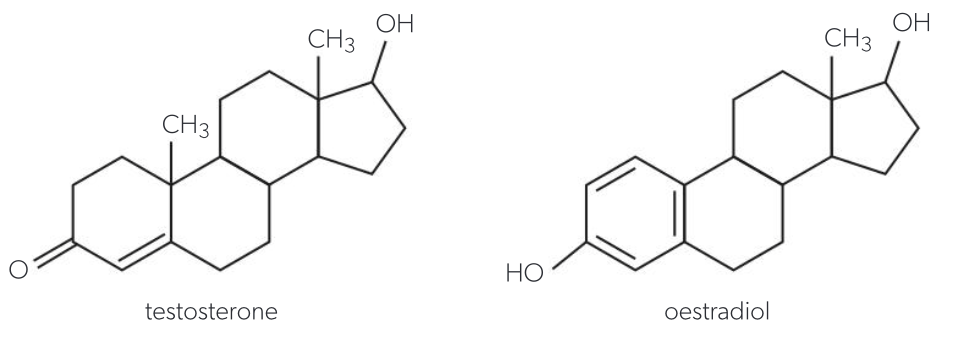
Different steroids vary in double bond placement and functional groups (e.g., –OH). Their non-polar nature enables easy transport into and out of cells. Steroids are a class of lipids with a four-ring structure:
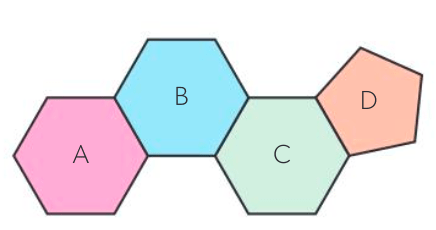
- Three cyclohexane rings (A, B, C) and one cyclopentane ring (D).
- Hydrophobic nature allows them to freely pass through phospholipid bilayers.
![ESS 8.1.3 [AHL] Biocapacity and Environmental Migration](https://mypytrclass.com/wp-content/uploads/2025/12/image-4.png?w=1024)




![ESS 8.3.4 [AHL] Photochemical Smogs and Tropospheric Ozone](https://mypytrclass.com/wp-content/uploads/2025/12/image-1.png?w=1024)

 PYTR Class