
Learning Objectives
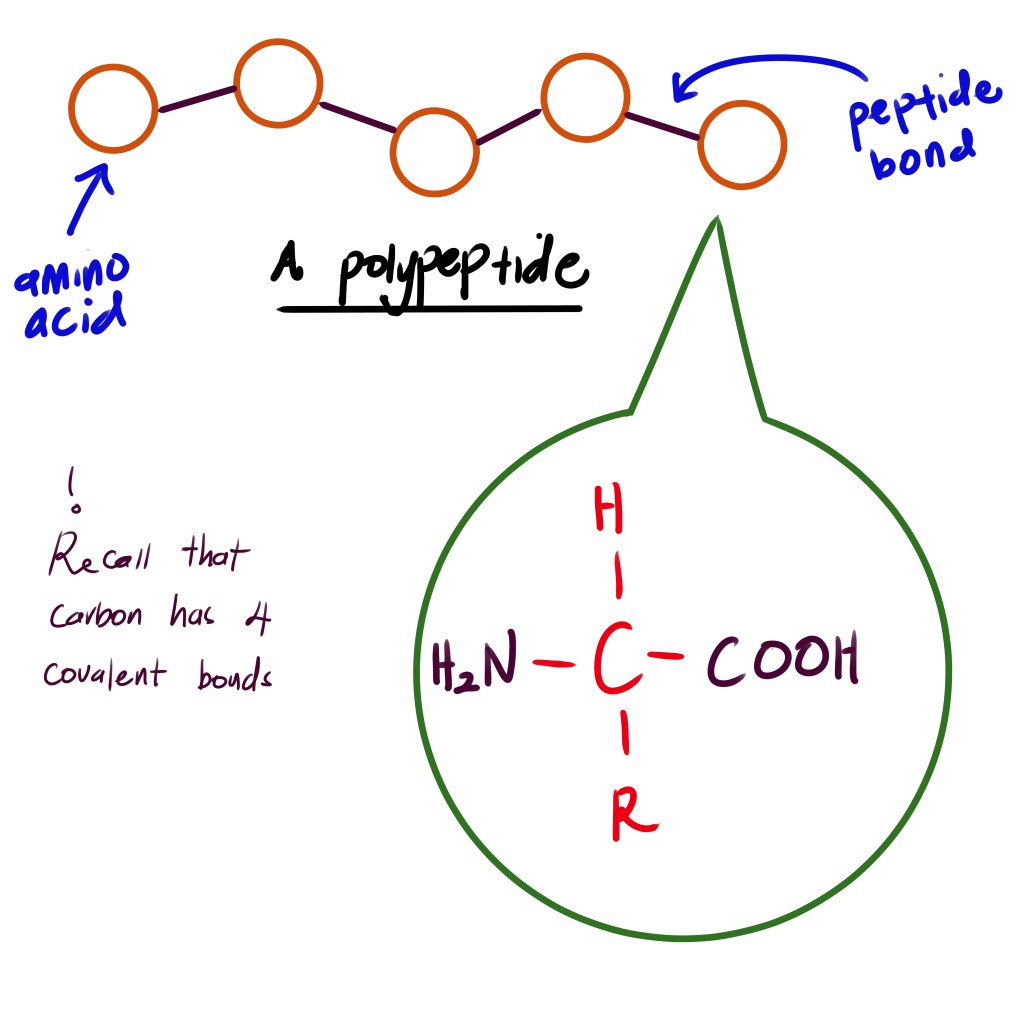
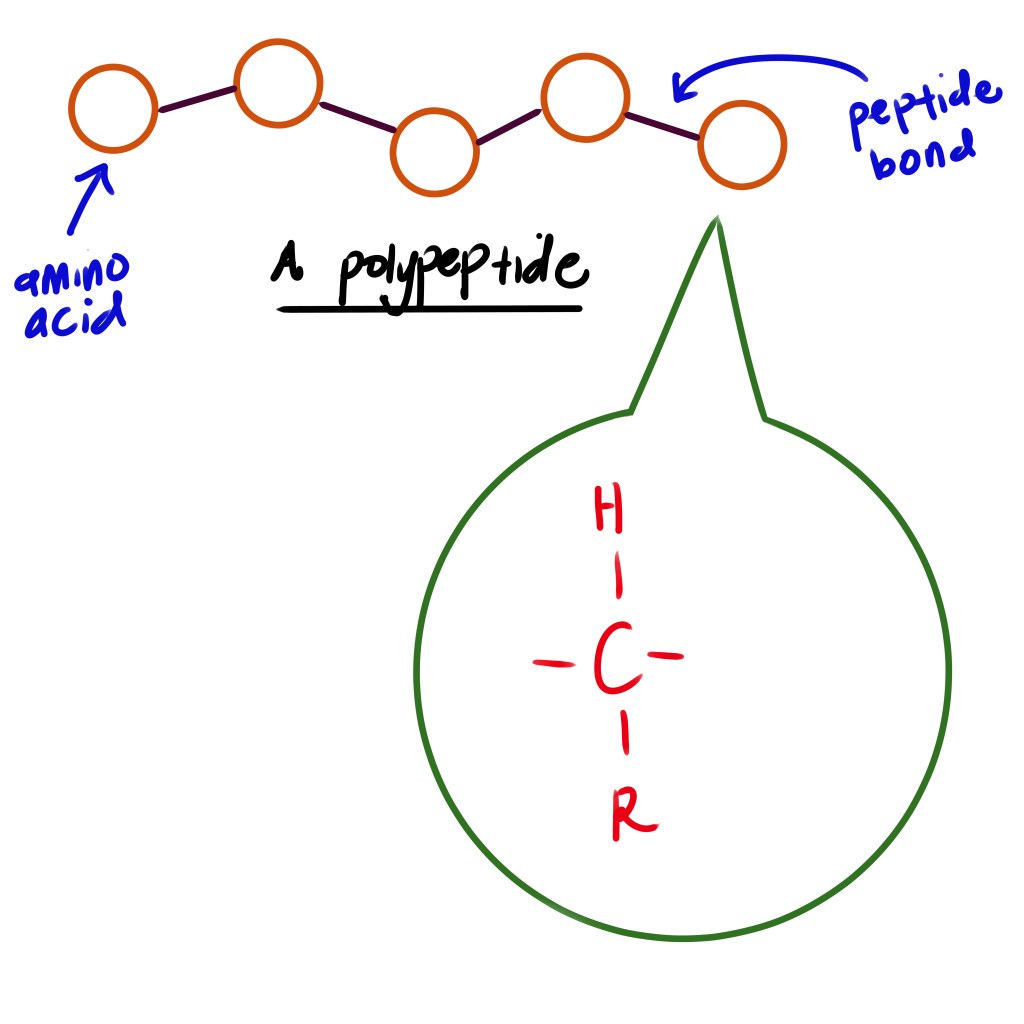
- Describe the generalised structure of an amino acid and identify its key components, including the amino group, carboxyl group, and R-group
- Explain condensation reactions that form dipeptides and polypeptides, including the role of peptide bonds in linking amino acids
- Understand the dietary requirements for amino acids, distinguishing between essential and non-essential amino acids
- Recognise the infinite variety of possible peptide chains due to different amino acid sequences and their impact on protein diversity
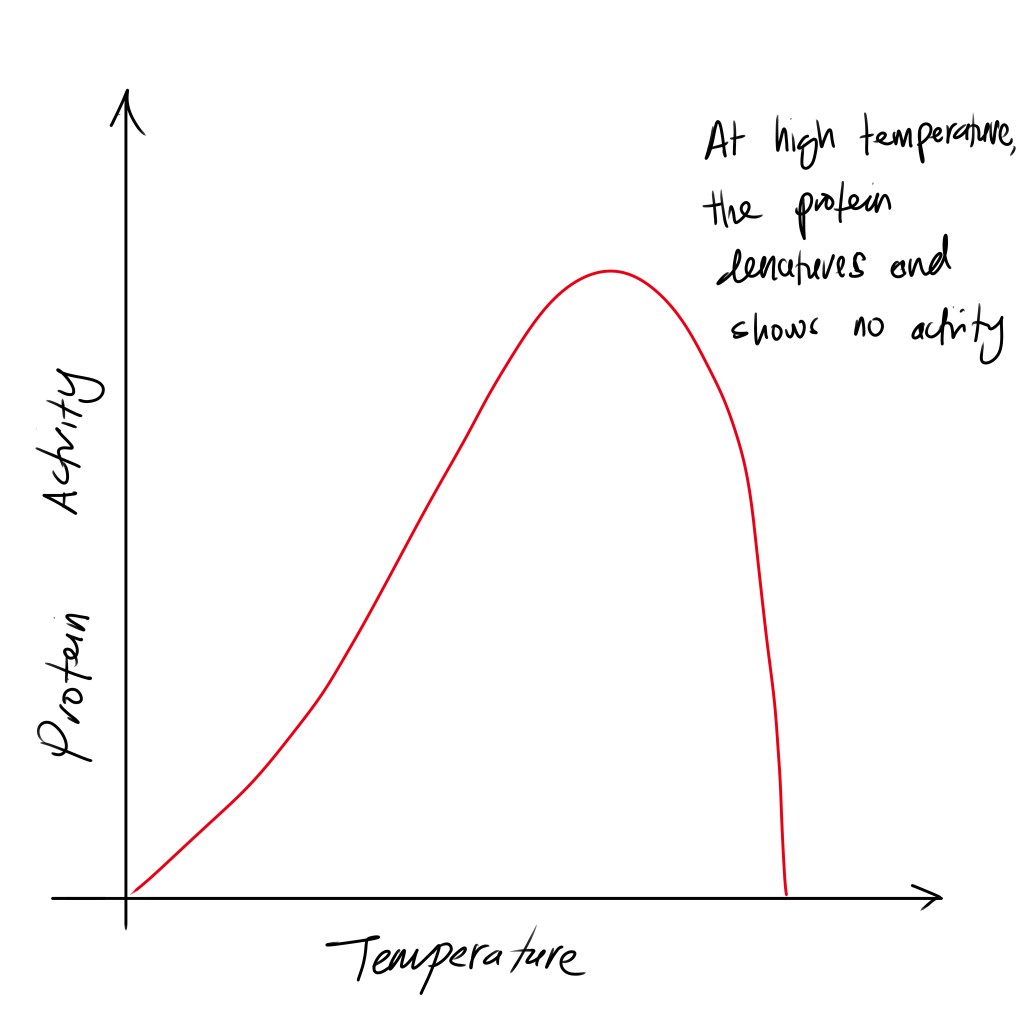
- Analyse the effects of pH and temperature on protein structure, including denaturation and changes in protein function
Abstract:
The diversity in protein form and function is fundamentally linked to the amino acid sequence of their polypeptides. The 20 chemically diverse amino acids can be arranged in countless sequences, analogous to letters forming words, though only a fraction of possible sequences occur in nature. The specific sequence of amino acids determines a protein’s three-dimensional shape, which in turn influences its function. Protein structure is maintained by relatively weak molecular interactions that are highly sensitive to environmental factors such as pH, temperature, and the presence of heavy metals. Changes in these conditions can alter protein conformation, leading to misfolding or denaturation. Understanding how proteins respond to extreme environments—such as high or low temperatures or pH extremes—provides insights into their stability and adaptability in various biological contexts.
Part 1: Amino Acid Structure
Use this slideshow to learn about the generalised structure of amino acids

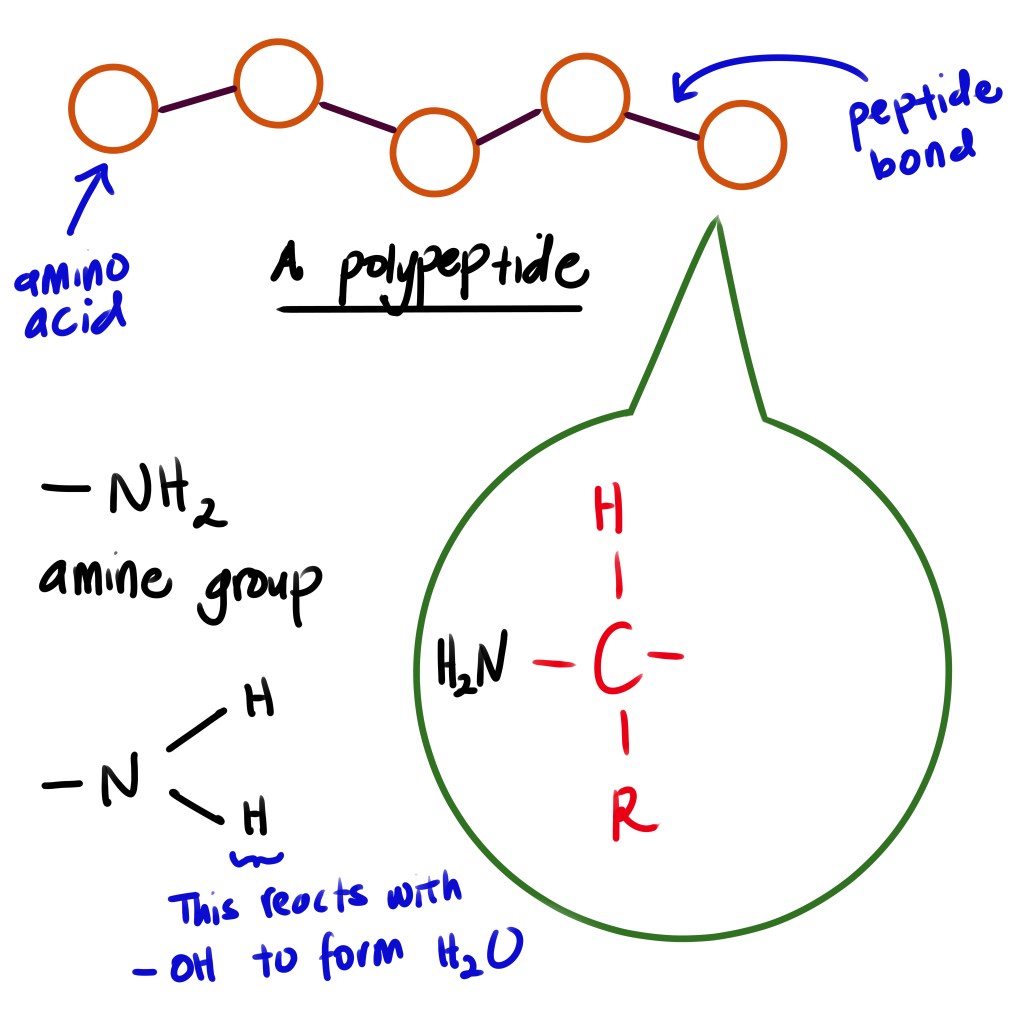
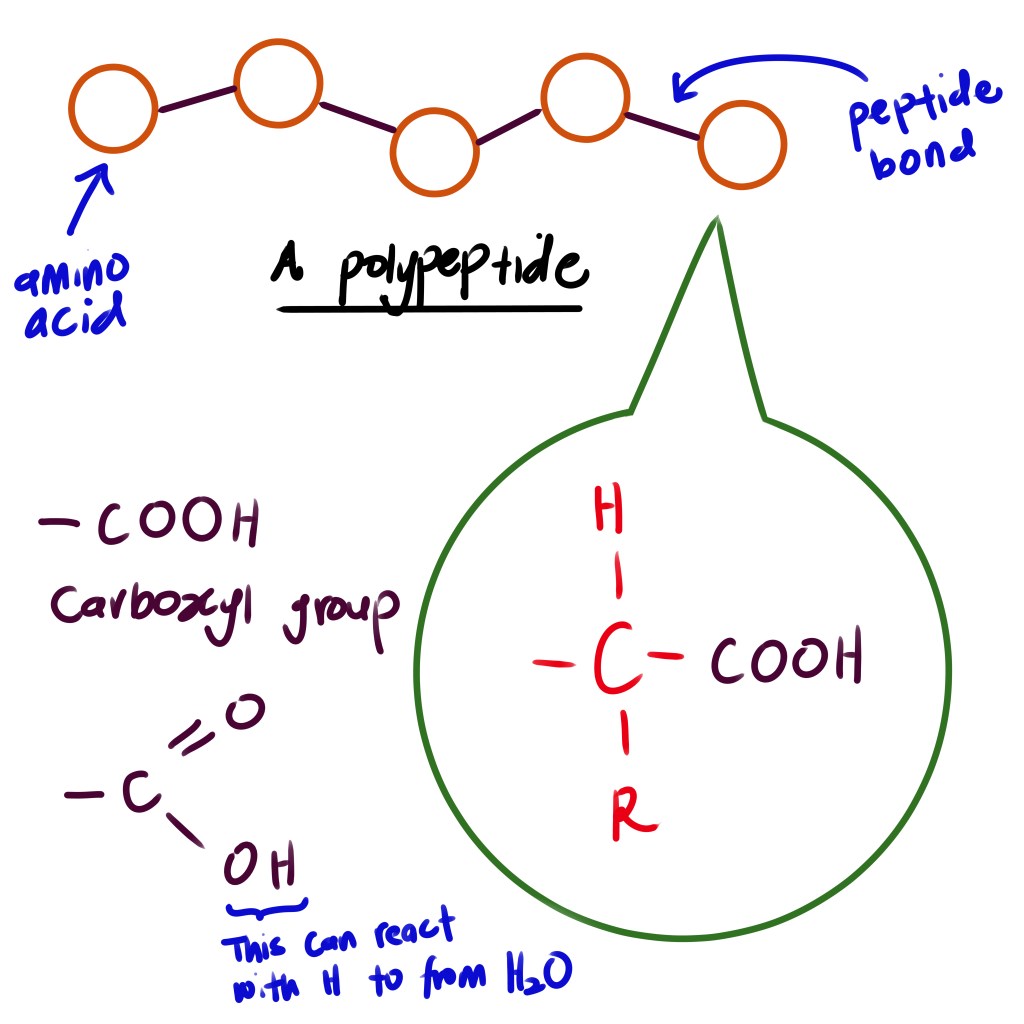
Condensation of Amino Acids
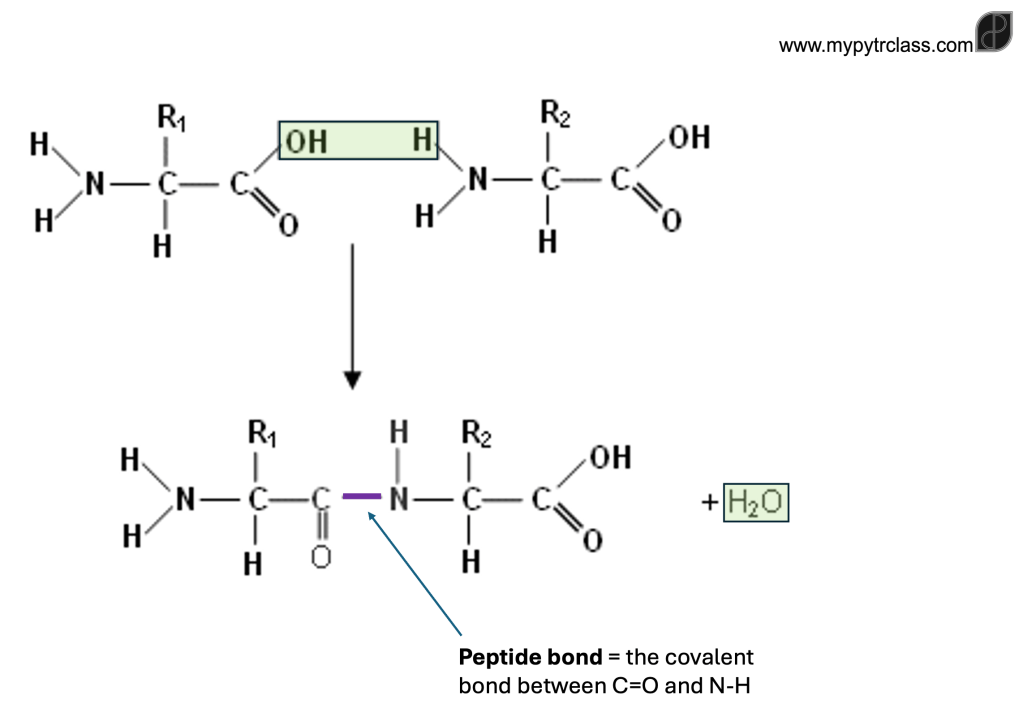
Polypeptide
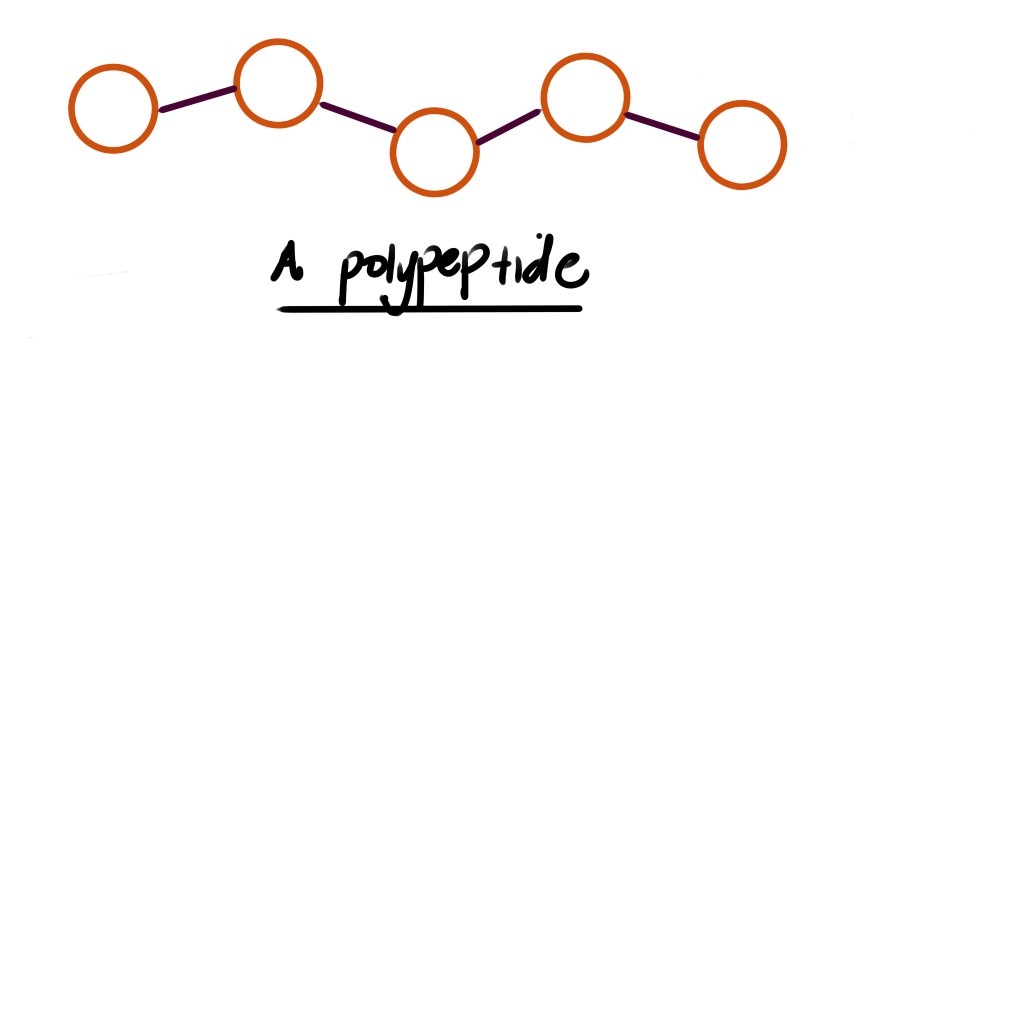
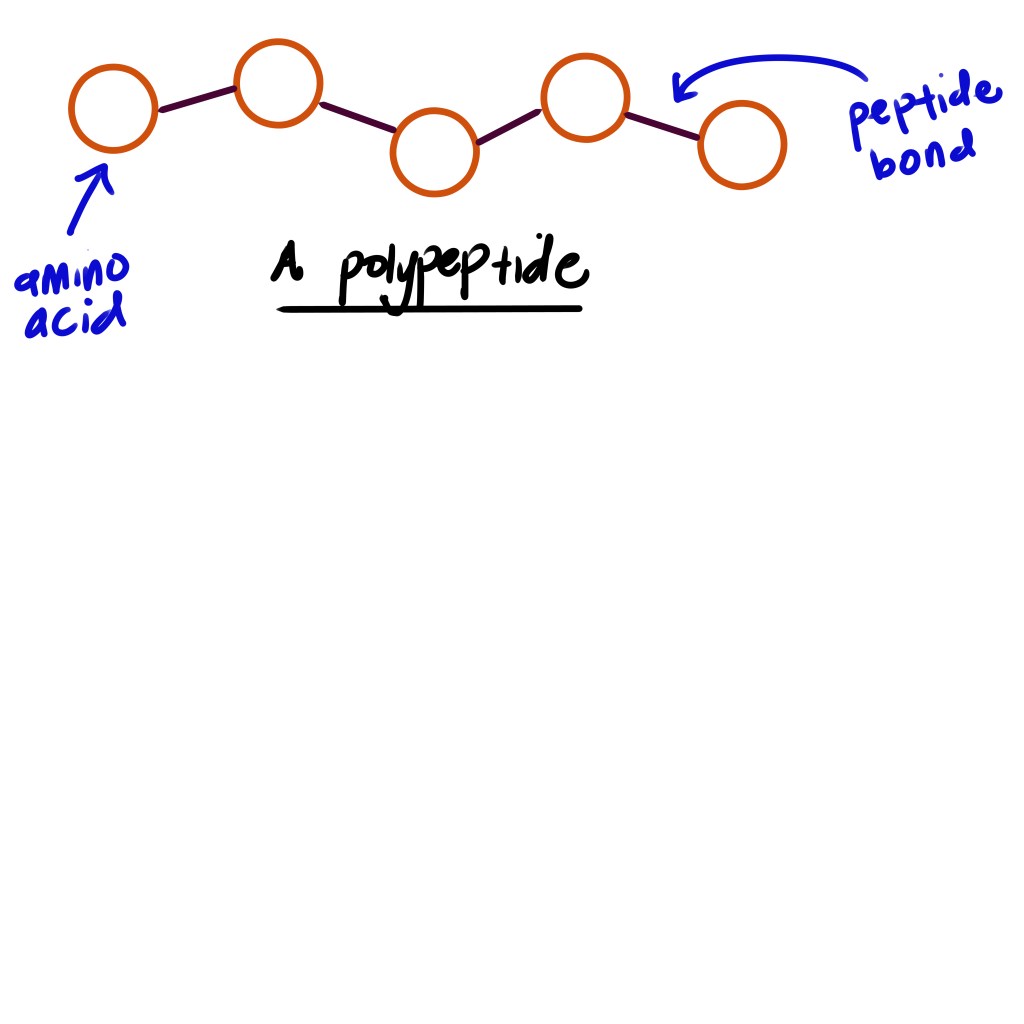
- After the dipeptide formation, additional amino acids can be added through further condensation reactions, creating longer chains.
- Long chains can be classified into:
- Oligopeptide chain = less than 20 amino acids
- Polypeptide chain = 20 or more amino acids
- Polypeptides are the main structural component of proteins.
Peptide Bonds
- Amino acids are linked by peptide bonds (C-N bonds)
- formed between the amine group (NH₂) of one amino acid and the carboxyl group (COOH) of another.
- The formation of peptide bonds is catalysed by ribosomes in cells.
- For all chains, there is always an amine group of a free amino acid links to the carboxyl group at the end of a growing polypeptide chain. Along the chain, peptide bonds are identical regardless of the R-groups of the amino acids involved i.e its always the C-N
Part 2: Variety of Amino Acids
Essential and Non-essential Amino Acids
- Ribosomes use 20 different amino acids to form polypeptides in the cell during protein synthesis (translation).
- Some of these amino acids are synthesised in the body but some cannot be synthesised and therefore must be consumed (eaten).
- Essential Amino Acids: Cannot be synthesised in sufficient quantities by animals and must be obtained from the diet.
- Nine of the 20 amino acids are essential for humans
- Some non-essential amino acids become essential under specific conditions.
- Example: Phenylalanine is essential, but tyrosine is non-essential as it can be synthesised from phenylalanine.
- Non-Essential Amino Acids: Can be synthesised by animals using metabolic pathways that convert one amino acid into another.
- Essential Amino Acids: Cannot be synthesised in sufficient quantities by animals and must be obtained from the diet.
Protein Sources
- In general:
- Plants: Can synthesise all amino acids through photosynthesis.
- Animals: Obtain amino acids from food
- Amino Acid Content in Foods:
- Animal-Based Foods (e.g., fish, meat, milk, eggs): Contain a balanced mix of amino acids, similar to human dietary needs.
- Plant-Based Foods: Have different amino acid compositions, with some being deficient in specific essential amino acids.
- Examples of Amino Acid Deficiencies in Plant Foods:
- Cereals (e.g., wheat): Low in lysine.
- Legumes (e.g., peas, beans): Low in methionine.
- Dietary Considerations for Vegans: A balanced intake of essential amino acids must be ensured to avoid deficiencies. Traditional Plant-Based Diets: Successfully provide a balanced amino acid intake in many civilisations.
Variety of Possible Polypeptide Chains
- As already mentioned, ribosomes link amino acids together one at a time to form a complete polypeptide. This is done by “decoding” codons (this is further discussed in Section D1). Ribosomes follow genetic instructions and do not create random sequences.
- Amino Acids in the Code: The genetic code includes 20 different amino acids.
- Calculation of Possible Sequences:
- Dipeptides: 20 × 20 = 400 possible sequences (20²).
- Tripeptides: 20 × 20 × 20 = 8,000 possible sequences (20³).
- Polypeptides: For a chain of n amino acids, the possible sequences are 20ⁿ.
- Example: A polypeptide with 400 amino acids has 20⁴⁰⁰ possible sequences—an incredibly large number, often expressed as infinity.
Proteome
- Despite the vast number of possible sequences, only a small fraction are produced by an organism, forming its proteome.
- Examples of Polypeptides:
- Beta-endorphin: A natural painkiller secreted by the pituitary gland, consisting of 31 amino acids.
- Insulin: A small protein with two polypeptide chains (one with 21 amino acids, the other with 30).
- Alpha-amylase: An enzyme in saliva that digests starch, composed of a single 496-amino-acid polypeptide, with one chloride and one calcium ion.
- Titin: The largest known polypeptide, essential for muscle structure. It has 34,350 amino acids in humans and 35,213 in mice.
Part 3: Protein Functions and Denaturation
- Protein Structure and Stability:
- The three-dimensional conformation of proteins is stabilized by bonds and interactions between the R-groups of amino acids.
- These bonds are relatively weak and can be disrupted, leading to denaturation.
- Effects of Denaturation:
- Denaturation permanently alters the protein’s structure.
- Soluble proteins often become insoluble due to exposure of hydrophobic R-groups, forming precipitates. This can also be observed as they become cloudy. You can see this when cooking the egg white (albumen) of an egg.
- Causes of Denaturation:
- Heat:
- Increases molecular vibrations, breaking intermolecular bonds.
- Most proteins denature at high temperatures, but some extremophiles (e.g., Thermus aquaticus) have heat-resistant proteins.
- Heat:
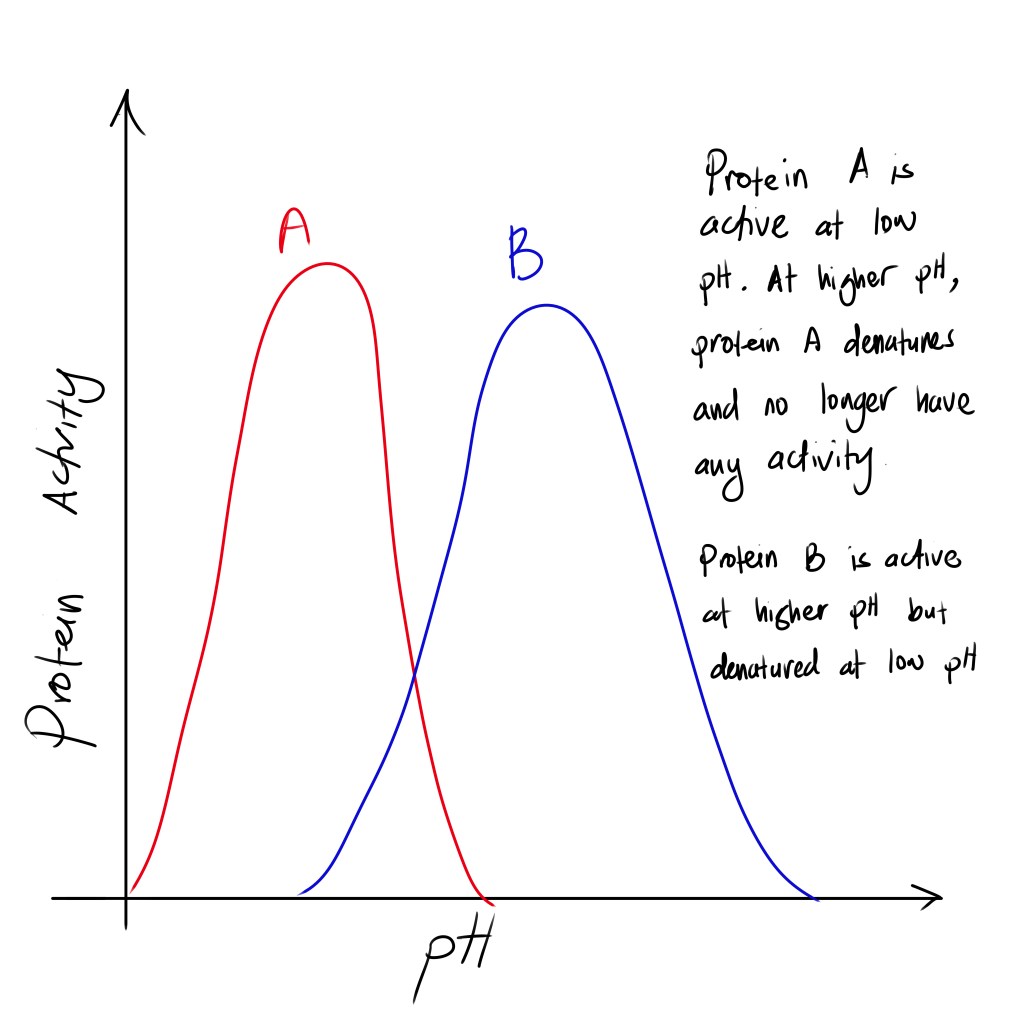
- pH Extremes:
- Alter charges on R-groups, disrupting ionic bonds and forming new ones.
- This leads to structural changes and loss of solubility in many proteins.
- Exception: Pepsin, a digestive enzyme in the stomach, functions optimally at a very low pH (1.5).
![ESS 8.1.3 [AHL] Biocapacity and Environmental Migration](https://mypytrclass.com/wp-content/uploads/2025/12/image-4.png?w=1024)




![ESS 8.3.4 [AHL] Photochemical Smogs and Tropospheric Ozone](https://mypytrclass.com/wp-content/uploads/2025/12/image-1.png?w=1024)
 PYTR Class