
Learning Objectives
- Outline the measure of water footprint
- Analyse the roles citizen science involving water system investigations
Part 1: Water Footprint
Water Footprint: A Measure of Water Use and Sustainability
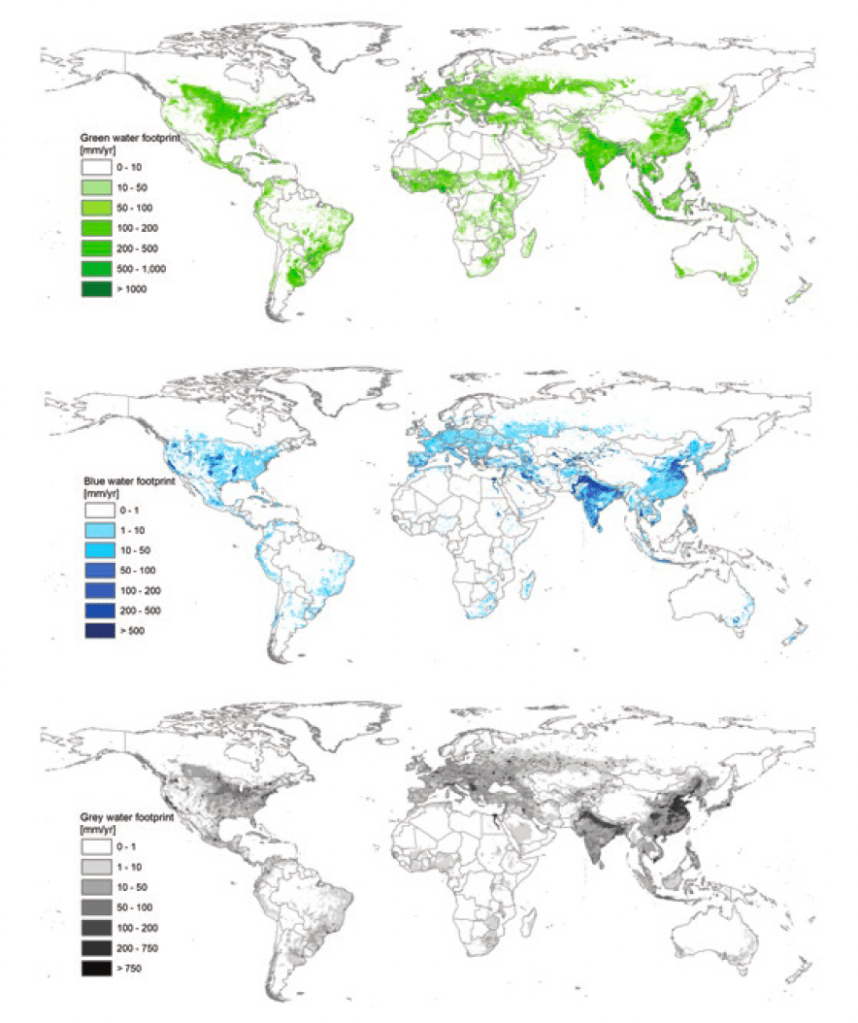
- A water footprint measures water use by individuals, nations, businesses, or industries such as agriculture and manufacturing.
- It helps assess sustainability and informs decision-making on water security.
- Water footprints relate water use to human consumption, considering the total freshwater used to produce goods and services.
- Originally, water use was measured from the production side, but now includes virtual water trade, where products are consumed in different countries from where they are produced.
- Introduced in 2002, water footprints track both the quantity and location of water consumption.
Global Water Footprint Statistics
- Average global water footprint per person = 1,385 m³ per year.
- India has the largest total footprint = 987 Gm³ per year
- The USA has the highest per capita footprint = 2,842 m³ per person per year
Challenges and Misinterpretations of Water Footprint
- Water footprints can sometimes be misleading:
- High footprints may suggest overconsumption and environmental risks, but low footprints in dry areas can also be problematic.
- A high footprint in a water-abundant area may not be an issue.
- A lower footprint in an arid region can still indicate water scarcity concerns.
- Water footprints also consider water quality, including pollution levels, which impact long-term sustainability.
- An area must have both an ample supply of water and good water quality to sustain consumption and production.
Part 2: The Roles of Citizen Science in Water Systems
Citizen Science and Water Quality Monitoring
- Citizen science, also known as community science or crowdsourced science, involves members of the public conducting research to support scientific projects.
- Participants use standardised methods, ensuring open-access and high-quality data.
- A key advantage is the ability to collect data on a much larger scale than professional researchers alone.
- Citizen science is increasingly used in water resource monitoring and management.
- The availability of affordable water quality monitoring equipment makes field studies more accessible, reducing reliance on laboratory testing.
Example: Citizen Science in Killarney, Ireland
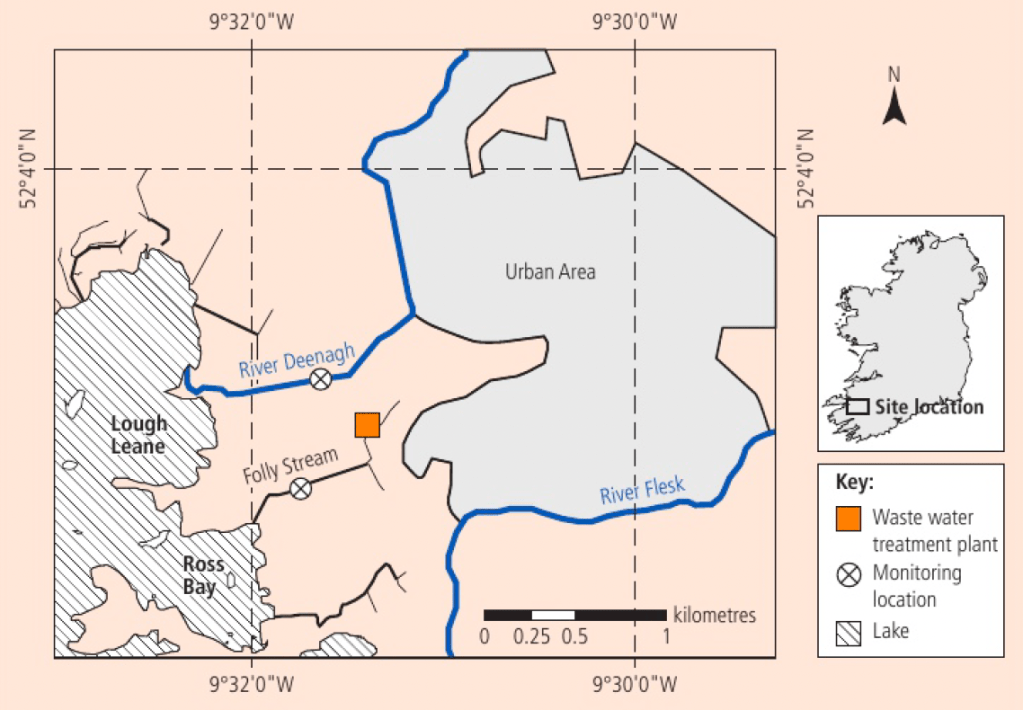
- A study with 26 citizen scientists from St. Brendan’s College, Killarney, examined water quality in:
- River Deenagh (good ecological status)
- Folly Stream (declining water quality).
- Their data was compared with laboratory results to assess accuracy.
Relevance to Global Water Quality Monitoring
- UN Sustainable Development Goal (SDG) Indicator 6.3.2 tracks the proportion of water bodies with good ambient water quality.
- The United Nations recognises citizen science as a valuable tool for monitoring and improving global water quality.
Findings from the Killarney Study
- Citizen scientists accurately measured:
- Orthophosphates (dissolved phosphorus)
- Nitrates
- Less agreement with lab results data in:
- Biochemical Oxygen Demand (BOD)
- pH levels
- Results were more reliable in cleaner water bodies (River Deenagh) and less reliable in polluted water bodies (Folly Stream).
- Digital measurement tools provided more accurate data than colour-based test kits, which were more subjective.
Effectiveness of Citizen Science
- Numerous studies confirm that citizen scientists can collect data comparable in quality to professional scientists, given proper training, resources, and well-designed methodologies.
![ESS 8.1.3 [AHL] Biocapacity and Environmental Migration](https://mypytrclass.com/wp-content/uploads/2025/12/image-4.png?w=1024)




![ESS 8.3.4 [AHL] Photochemical Smogs and Tropospheric Ozone](https://mypytrclass.com/wp-content/uploads/2025/12/image-1.png?w=1024)
 PYTR Class