
Learning Objectives
- Explain how phytoplankton and macrophytes contribute energy to freshwater and marine food webs.
- [AHL] Explain how productivity, thermal stratification, nutrient mixing, and nutrient loading are interconnected in aquatic systems.
- Describe the ways in which humans consume organisms from freshwater and marine environments
Part 1: Aquatic Producers
Phytoplankton
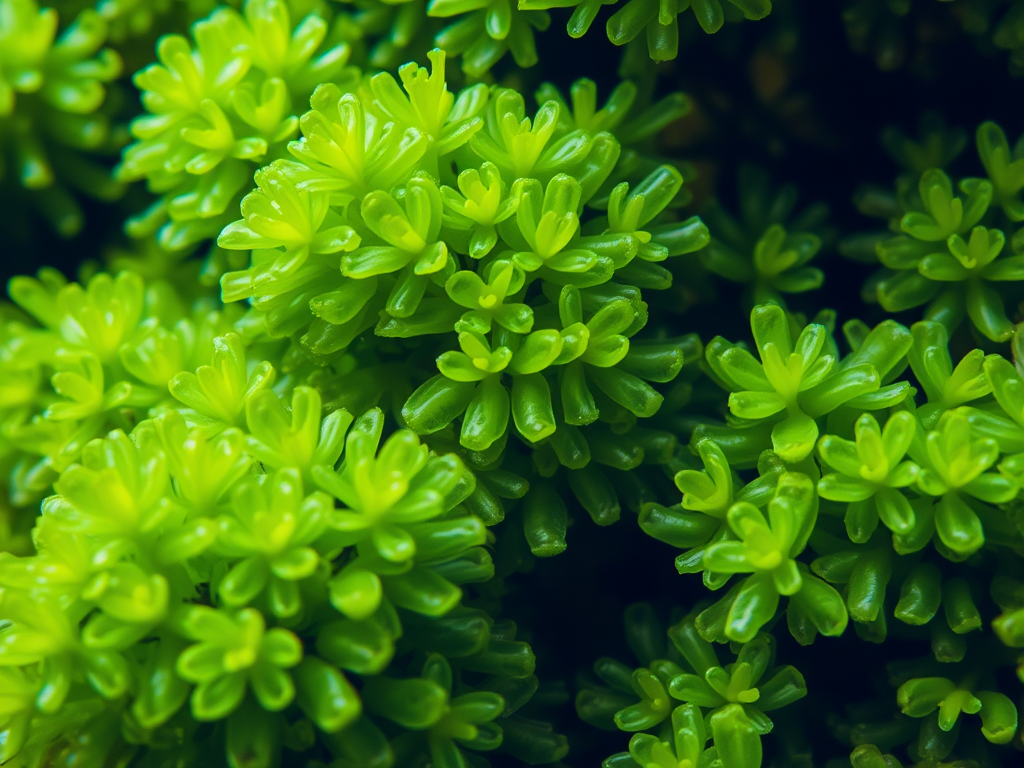
- Autotrophs: Self-feeding organisms that obtain energy through photosynthesis using sunlight.
- Habitat: Found in the well-lit surface layers (euphotic zone) of oceans and lakes.
- Role in Ecosystem: Form the base of marine and freshwater food webs as primary producers.
- Carbon Cycle Contribution: Convert dissolved CO₂ into organic carbon compounds.
- Global Impact:
- Account for ~1% of global plant biomass but contribute to ~50% of global photosynthesis.
- Responsible for at least half of the world’s oxygen production.
- Play a key role in Earth’s carbon cycle.
- Zooplankton: Some plankton are heterotrophs that feed on other plankton or detritus and are known as zooplankton.
- Photosynthesis Process: Assimilate CO₂ and release O₂; can be photodegraded by excessive solar radiation or broken down by bacteria.
- Nutrient Dependence:
- Require macronutrients such as nitrate, phosphate, and silicic acid, often available in upwelling zones.
- Some ocean regions, like the Southern Ocean, limit phytoplankton growth due to a lack of iron.
- B vitamins are essential for their survival, and regions lacking these vitamins have fewer phytoplankton.
- Biogeochemical Role: Influence atmospheric gas composition, nutrient cycling, and organic matter transfer.
- Carbon Recycling: Fixed carbon is rapidly reused in surface waters, with some sinking to the deep ocean for remineralisation.
Aquaculture
- Phytoplankton as Food: Essential food source in aquaculture and mariculture (marine farming).
- Availability:
- Naturally occurring in mariculture.
- Must be obtained or introduced in aquaculture, either by collection or cultivation.
Macrophytes (Aquatic Plants)

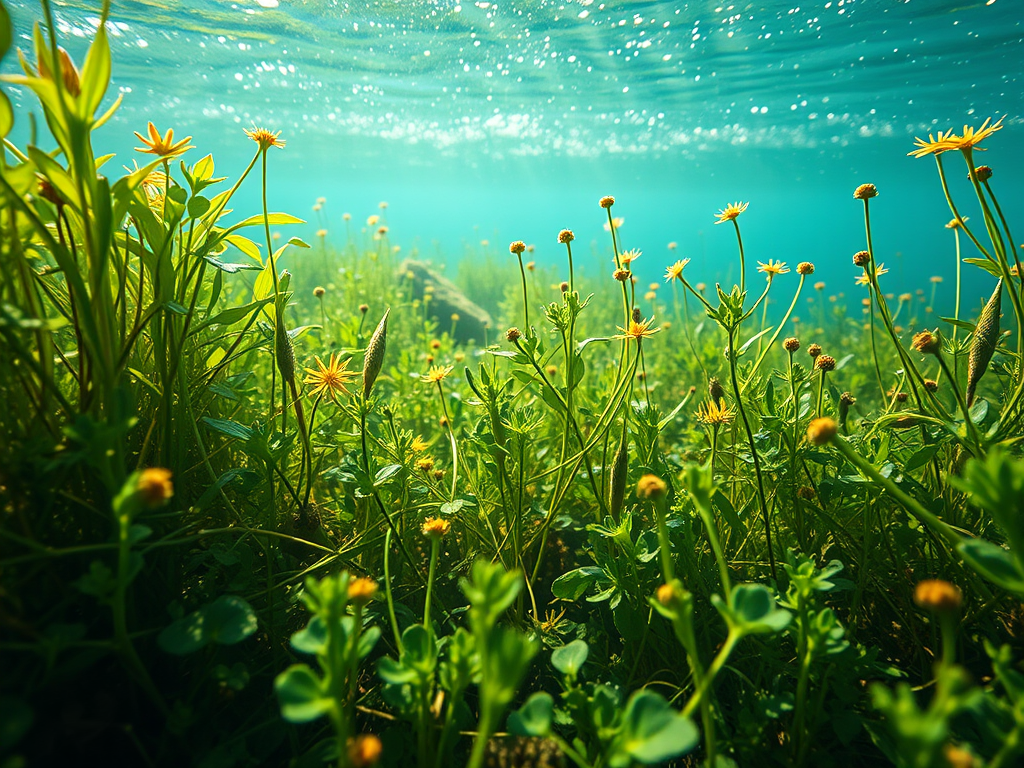
- Definition: Plants adapted to living in freshwater and saltwater environments.
- Types:
- Emergent: Grow in water but are partially exposed to air.
- Submergent: Fully or partially submerged underwater.
- Floating: Leaves float on the water surface.
- Ecological Role:
- Primary producers forming the base of many aquatic food chains.
- Slow water velocity in rivers, increasing sedimentation and pollutant capture.
- Adaptations:
- Floating leaves, dissected leaves, and lightweight cells for survival in water.
- Reduced access to CO₂ and light compared to terrestrial plants.
- No need for woody biomass in fully submerged plants.
- Finely dissected leaves to maximize mineral and gas exchange and reduce water flow impact.
- Floating plants often have stomata only on the top of leaves to capture atmospheric CO₂.
- Reproduction:
- Many emergent plants have flowers above the water surface for pollination.
- Submerged macrophytes may or may not have roots attached to sediments.
- Helophytes (e.g., reeds, yellow flag) grow in marshes from submerged buds.
- Examples:
- Floating-leaved macrophytes: Water lilies, pondweeds (roots in riverbed/lakebed, leaves on surface).
- Food crops: Wild rice, watercress, Chinese water chestnut.
- Environmental Importance:
- Used in wastewater treatment, particularly in small-scale sewage systems.
- Decline in macrophytes can indicate deteriorating water quality due to salination or biocide use.
- Invasive Species: Some macrophytes introduced into new environments become dominant, e.g., water hyacinth in South Africa, New Zealand stone crop.
Part 2: [AHL] Thermal Stratification and Nutrient Cycling Production
Rates of Productivity
- Higher Productivity in Shallow Areas:
- Sunlight penetrates to the seabed, supporting photosynthesis.
- More nutrients are available, such as in estuaries and upwelling zones.
- Coastal areas benefit from nutrient input from rivers and overland flow.
- Variations in productivity occur in some lake systems.
- Sunlight as the Main Energy Source:
- Essential for nearly all life on Earth, including deep-sea organisms.
- In oceans, light is absorbed and scattered, limiting penetration.
- Light Penetration Depths:
- Up to 150 m in low-productivity subtropical regions.
- As shallow as 10 m in highly productive coastal regions.
- Photosynthesis is restricted to the photic zone (light-penetrated upper layer).
- Thermocline and Water Mixing:
- In low- and mid-latitude oceans, sunlight warms the surface water, making it less dense than deep water.
- The boundary between warm surface water and cold deep water is called the thermocline.
- Winds can mix water across the thermocline, transferring some nutrients to the deep ocean.
- This interaction of light, temperature, and seawater density is crucial for phytoplankton success.
- Nutrient Limitation in Surface Waters:
- The Deep Chlorophyll Maximum (DCM) occurs where there is enough light for photosynthesis and a good nutrient supply.
- Nutrients are lost from the surface when organic matter sinks to the ocean floor.
- Nutrient Recycling:
- Nutrients accumulate in deep water where photosynthesis cannot occur.
- Due to density differences, nutrients return to the surface very slowly or through upwelling currents.
- This self-limiting cycle restricts ocean productivity.
Geographic and Seasonal Variations in Productivity
- Tracking Productivity with Satellites:
- Ocean surface color can indicate chlorophyll concentration, which is used to measure productivity.
- Higher chlorophyll and productivity occur near the Equator and along coastlines.
- Eastern ocean margins experience strong upwelling, increasing nutrient availability.
- Factors Influencing Productivity:
- Upwelling currents and nutrient mixing in the euphotic zone (upper sunlit ocean layer).
- Low- and mid-latitude oceans:
- Warm surface water is separated from cold, nutrient-rich deep water.
- Strong density differences limit mixing, reducing nutrient supply and productivity.
- High-latitude oceans:
- Surface water is cold and sinks, causing vertical mixing.
- Nutrient supply often exceeds phytoplankton demand due to limited light availability.
- Seasonal Productivity Changes:
- Greatest seasonal changes occur at high latitudes, where light availability varies.
- Summer productivity increases due to:
- Higher sunlight intensity per area.
- Longer daily sunlight duration, allowing for more photosynthesis.
Part 3: How we consume aquatic food?
Fauna (Animals in Aquatic Food Production)
- Human Consumption of Aquatic Organisms:
- People consume species from both freshwater and marine environments.
- Marine Capture Production (2020):
- Finfish made up 85% of total marine capture.
- Anchoveta was the top species harvested.
- Aquaculture Production:
- Only a few staple species dominate production:
- Grass carp is the leading species in global inland aquaculture.
- Atlantic salmon is the dominant species in marine aquaculture.
- Only a few staple species dominate production:
- Global Tuna Trade (2020):
- Exports of tuna, bonitos, and billfish made up 10% of total aquatic product export value.
- Tuna trade was worth over US$14 billion.
- Trade categories:
- Processed & preserved tuna (e.g., canned products).
- High-quality fresh tuna (e.g., sushi and sashimi markets).
- Tuna species & uses:
- Bluefin & bigeye tuna → sushi and sashimi.
- Skipjack, yellowfin & albacore → processed products (e.g., canned, frozen).
- Global Tuna Processing Hubs:
- Thailand → major supplier to the USA.
- Ecuador → major supplier to the European Union.
- Smaller processing industries in Asia, Latin America, and Africa also play key roles.
Flora (Aquatic Plants & Seaweed Use)
- Uses of Seaweed:
- Food ingredient & flavoring.
- Thickener for soups and broths.
- Herbal tea & medicinal purposes (e.g., for sore throats).
- Skin cleanser (bath treatments).
- Soil fertilizer.
- Pepper Dulse Seaweed (Osmundea pinnatifida):
- Found in rock pools & base of rocks when the tide is out.
- Nicknamed the “truffle of the sea” due to its unique sweet-savory taste.
- Used as a garnish for seafood dishes (e.g., mussels, clams, scallops).
- Very short shelf-life (2 days when fresh).
- Can be dried and powdered, but loses some of its strong flavor.
Rising Demand for Aquatic Foods
- Drivers of Increased Demand:
- Population growth and changing dietary preferences.
- Global Fisheries & Aquaculture Production (2020):
- Total production: 214 million tonnes.
- 178 million tonnes of aquatic animals.
- 36 million tonnes of algae.
- Growth was largely driven by aquaculture, especially in Asia.
- Total production: 214 million tonnes.
- Rising Consumption Trends:
- Per capita consumption (excluding algae): 20.2 kg in 2020.
- More than double the 1960s average (9.9 kg per capita).
- Global consumption of aquatic foods grew at 3.0% per year (1961–2019).
- Faster than world population growth (1.6% per year in the same period).
- Aquatic animal food consumption per capita:
- 1961: 9.0 kg (live weight equivalent).
- 2019: 20.5 kg.
- 2020: Slight decline to 20.2 kg.
- Aquaculture’s Role in Food Supply (2020):
- 56% of aquatic animal food for human consumption came from aquaculture.
- Factors Influencing Per Capita Consumption:
- Increased supply of aquatic foods.
- Changing consumer preferences.
- Technological advancements in production and storage.
- Income growth worldwide.
![ESS 8.1.3 [AHL] Biocapacity and Environmental Migration](https://mypytrclass.com/wp-content/uploads/2025/12/image-4.png?w=1024)




![ESS 8.3.4 [AHL] Photochemical Smogs and Tropospheric Ozone](https://mypytrclass.com/wp-content/uploads/2025/12/image-1.png?w=1024)

 PYTR Class