
Learning Objectives
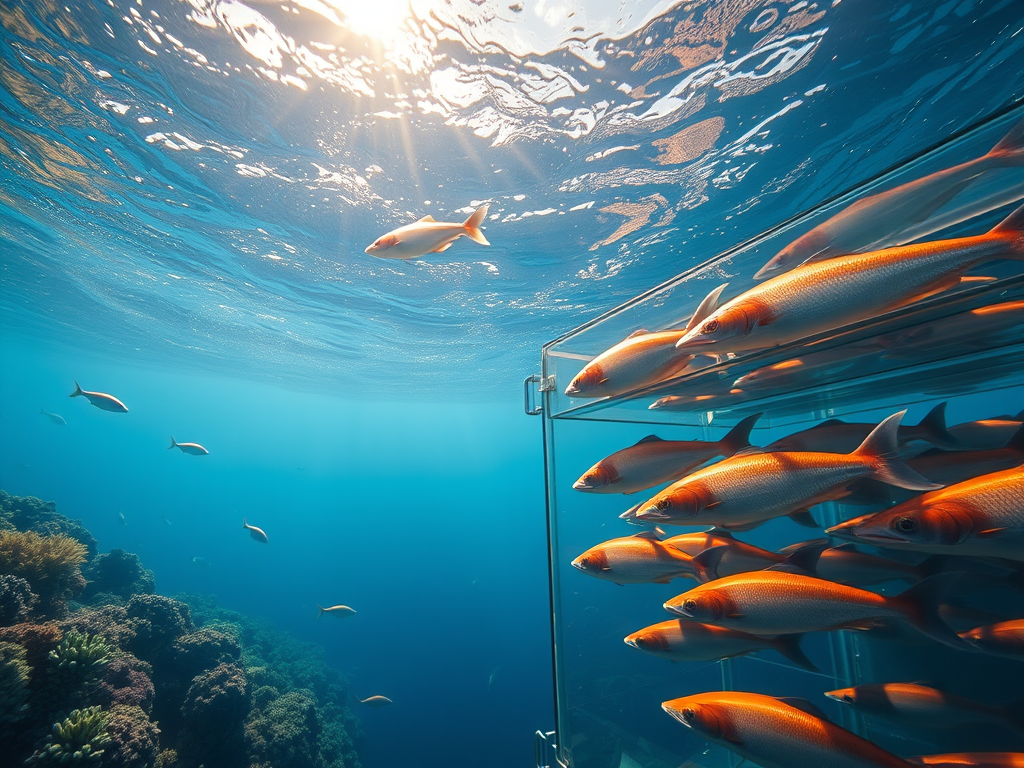
- Describe how marine protected areas (MPAs) contribute to the support of aquatic food chains and the maintenance of sustainable yields.
- Explain the purpose and scope of aquaculture, including the types of organisms farmed.
- Evaluate the role of aquaculture in enhancing food supply and economic development.
- Analyse the environmental impacts associated with the expansion of the aquaculture industry.
Part 1: Protected Marine Areas
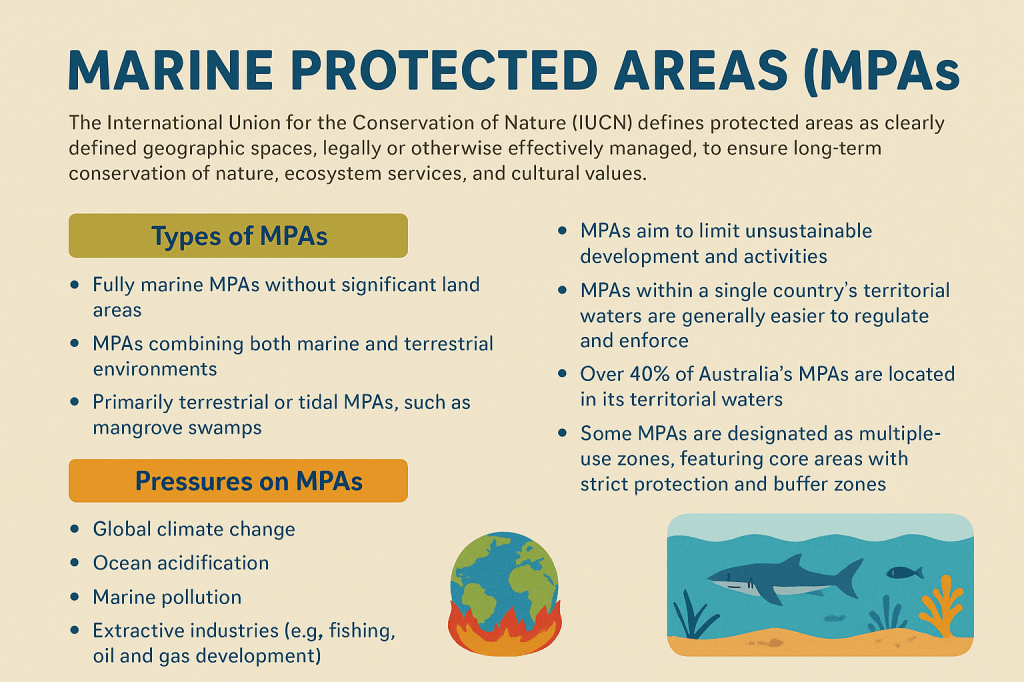
- Marine Protected Areas (MPAs) = designated zones where certain human activities are restricted. in:
- oceans,
- seas,
- estuaries, and
- some lakes
- These restrictions aim to conserve the natural environment and its resources.
- MPAs help support aquatic food chains and promote sustainable resource yields.
- They can benefit surrounding marine areas by offering shelter and spawning grounds for marine life.
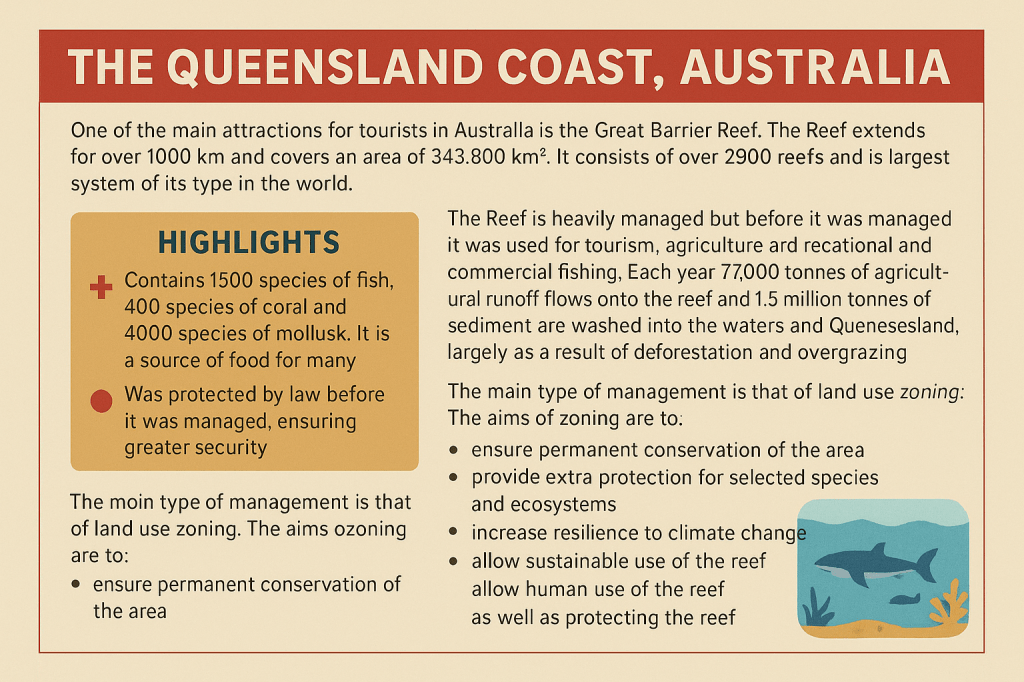
- MPAs vary in size, ranging from large conservation zones near Antarctica and Greenland to small reserves around islands.
- Under the United Nations Convention on the Law of the Sea (UNCLOS), coastal states have an Exclusive Economic Zone (EEZ) extending up to 370 km from their coastline.
- Within this EEZ, the coastal state has the authority to regulate activities such as fishing.
- Nearly 60% of the ocean lies beyond these zones and is considered the high seas.
- The high seas are subject to limited intergovernmental regulation and oversight.
Part 2: Aquaculture
Expansion and Purpose of Aquaculture
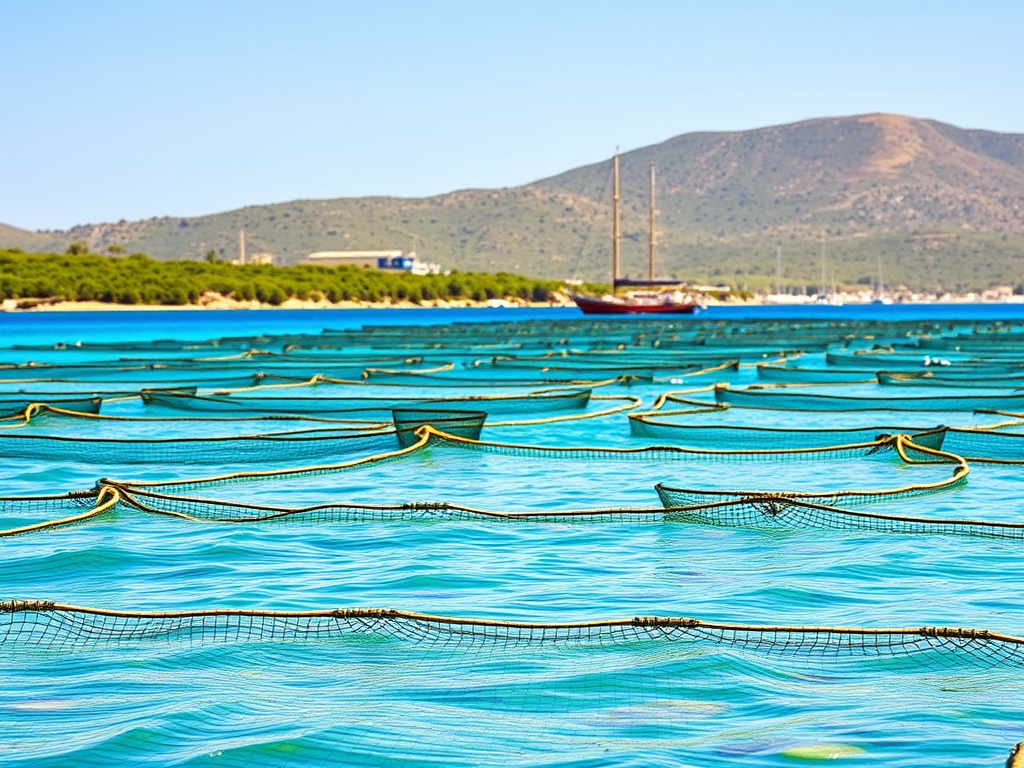
- Aquaculture is expanding to increase global food supplies and support economic development.
- It involves raising fish commercially, usually for food.
- Fish hatcheries differ by releasing juvenile fish into the wild for conservation or recreation.
Key Species and Market Information
- Major farmed species: salmon, carp, tilapia, catfish, cod.
- Salmon accounts for 85% of Norwegian fish farming sales.
- Salmon farming grew as a response to wild Atlantic salmon population collapse due to overfishing.
Economic and Production Characteristics
- High technological costs due to:
- Antibiotics and steroids for health and growth.
- Expensive breeding programs.
- High efficiency and output per hectare and per farmer.
- Aquaculture provides a healthy protein source with vitamin D and omega-3 fatty acids.
- Requires less land and water than traditional farming.
Environmental Impacts
- Feed-related issues:
- Salmon are carnivorous and require 2–5 kg of wild fish to produce 1 kg of farmed salmon.
- Feed production contributes to depletion of species like herring, mackerel, sardines, and anchovy.
- Pollution:
- Waste from uneaten food, feces, and chemicals contaminates surrounding waters.
- Steroids and other chemical waste affect coastal water quality.
- Disease and Parasites:
- Sea lice and diseases can spread from farms to wild populations.
- Escapees:
- Escaped farmed fish can interbreed with wild species, reducing genetic diversity.
- Invasive species like Atlantic salmon have been introduced into non-native waters (e.g., British Columbia).
Environmental and Energy Costs
- Marine aquaculture uses energy for service vessels.
- Freshwater aquaculture consumes electricity for feed and water circulation.
- Habitat destruction and contamination are significant concerns.
Benefits of Aquaculture
- Reduces pressure on wild fish stocks, allowing their populations to recover.
- Provides efficient, nutritious food in compact spaces with lower water usage.
Mitigation Strategies
- Locating farms in deeper, well-oxygenated waters.
- Reducing fish stock size and density.
- Minimising food waste.
- Implementing better management techniques to reduce negative impacts.
![ESS 8.1.3 [AHL] Biocapacity and Environmental Migration](https://mypytrclass.com/wp-content/uploads/2025/12/image-4.png?w=1024)



![ESS 8.3.4 [AHL] Photochemical Smogs and Tropospheric Ozone](https://mypytrclass.com/wp-content/uploads/2025/12/image-1.png?w=1024)
 PYTR Class