
Learning Objectives
- Identify multiple sources of water pollution and explain their major impacts on marine and freshwater ecosystems.
- Distinguish point and non-point sources of pollution
- Describe how plastic debris accumulates in marine environments and evaluate strategies for managing plastic pollution.
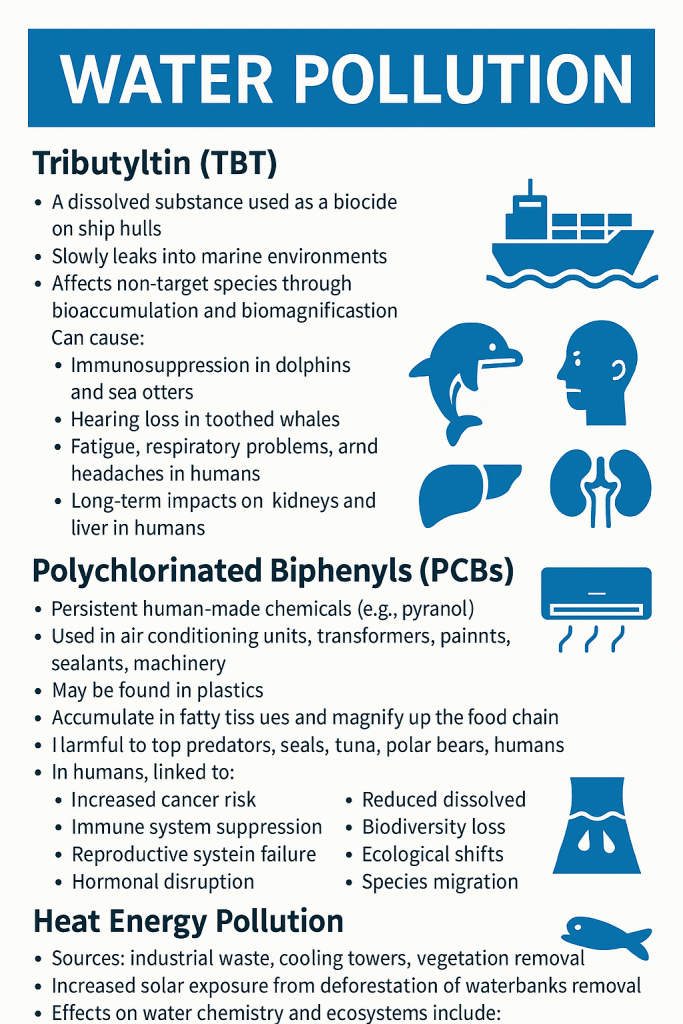
- [AHL] Describe a variety of water pollutants, including organic matter (e.g., sewage), dissolved substances (e.g., tributyltin), persistent and biomagnifying chemicals (e.g., PCBs), plastics, and heat energy, and explain their potential impacts on aquatic environments.
Part 1: Defining Water Pollution

Freshwater and marine pollution sources:
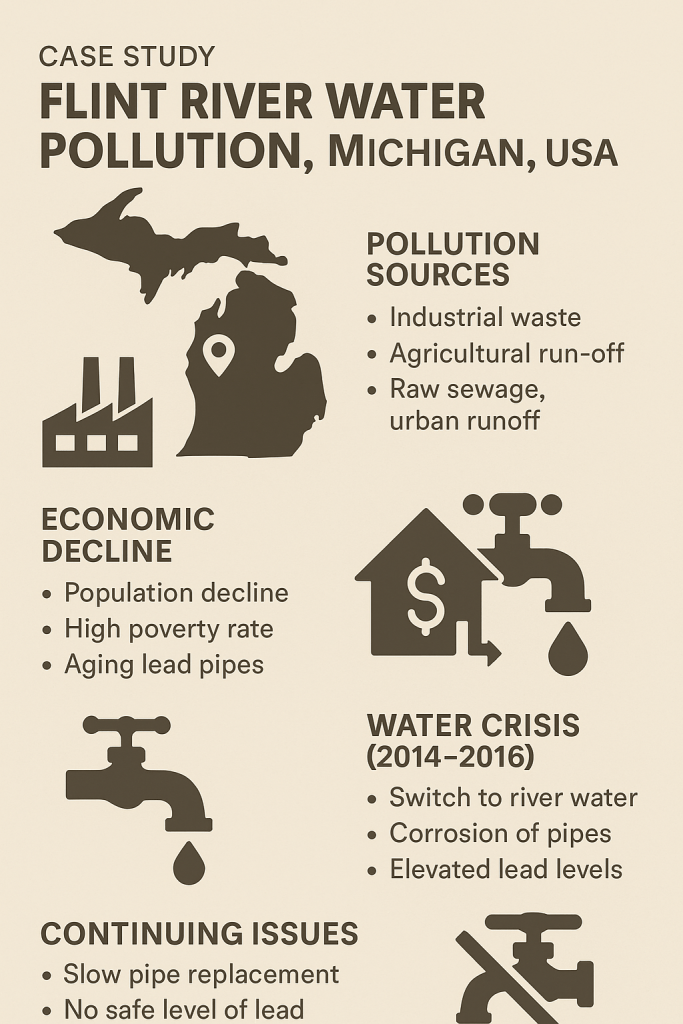
- Run-off, sewage, industrial discharge, domestic waste
- Transport and tourism waste, energy waste
- Marine-specific: rivers, pipelines, atmosphere, oil spills, ship discharges, cruise ships, aquaculture farms, power stations, industry
Storm water pollution:
- Often more polluted than sewage
- Contains heavy metals, volatile solids, organic chemicals
- Studies in London show 20–40% of stormwater sediments were organic and mostly biodegradable
- Highway run-off contains 5–6 times more heavy metals than roof run-off
Annual highway run-off (1 km of M1 in the UK):
- 1.5 tonnes of suspended sediment
- 4 kg of lead
- 126 kg of oil
- 18 g of hazardous polynuclear aromatic hydrocarbons
Part 2: Point and Non-Point Water Pollutions
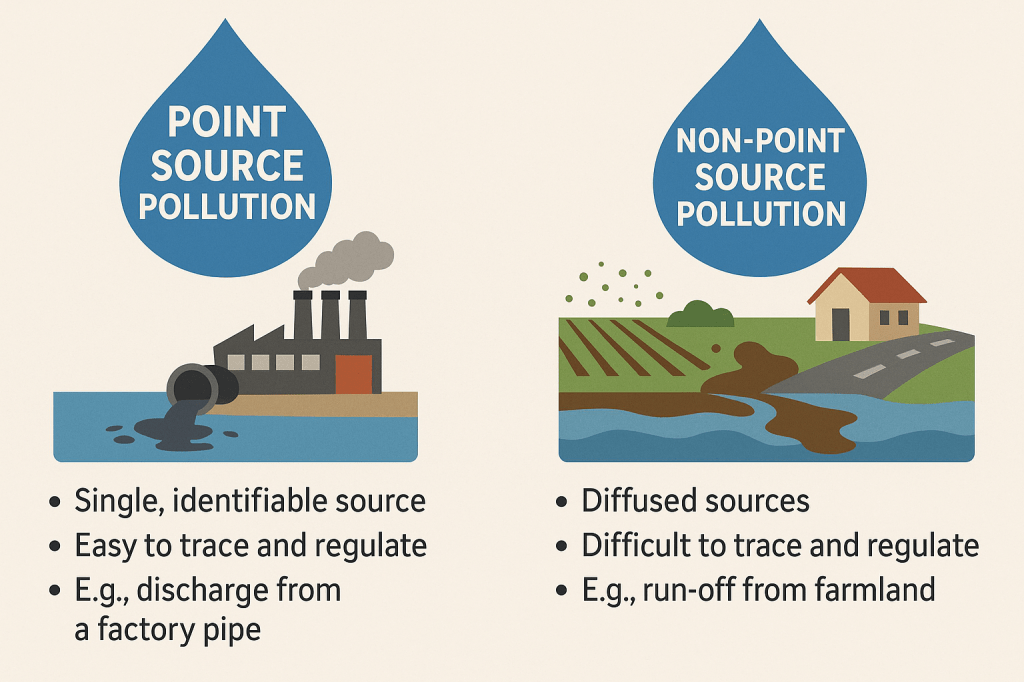
Point Source Pollution
- Definition: Pollution that comes from a single, identifiable source.
- Examples:
- Discharges from a factory pipe
- Sewage treatment plants
- Oil spills from a tanker
- Traceability: Easy to trace and monitor.
- Regulation: Easier to regulate with permits and legal action.
- Control: Usually controlled through treatment before discharge.
Non-Point Source Pollution
- Definition: Pollution that comes from many diffuse sources.
- Examples:
- Run-off from agricultural land
- Urban stormwater runoff
- Oil and grease from roads
- Traceability: Difficult to trace to a single origin.
- Regulation: Harder to regulate; often requires broad policy measures.
- Control: Managed through land use practices and public education.
Common Types of Water Pollutants:
- Pathogens
- Bacteria, viruses, and parasites from sewage and animal waste
- Cause diseases like cholera and dysentery
- Nutrients
- Nitrogen and phosphorus from fertilizers
- Lead to excessive algae growth (eutrophication), depleting oxygen in water
- Heavy Metals
- Lead, mercury, cadmium, arsenic from industrial discharge or mining
- Toxic to humans and wildlife
- Toxic Chemicals
- Pesticides, solvents, and industrial chemicals
- Harm aquatic life and may accumulate in the food chain
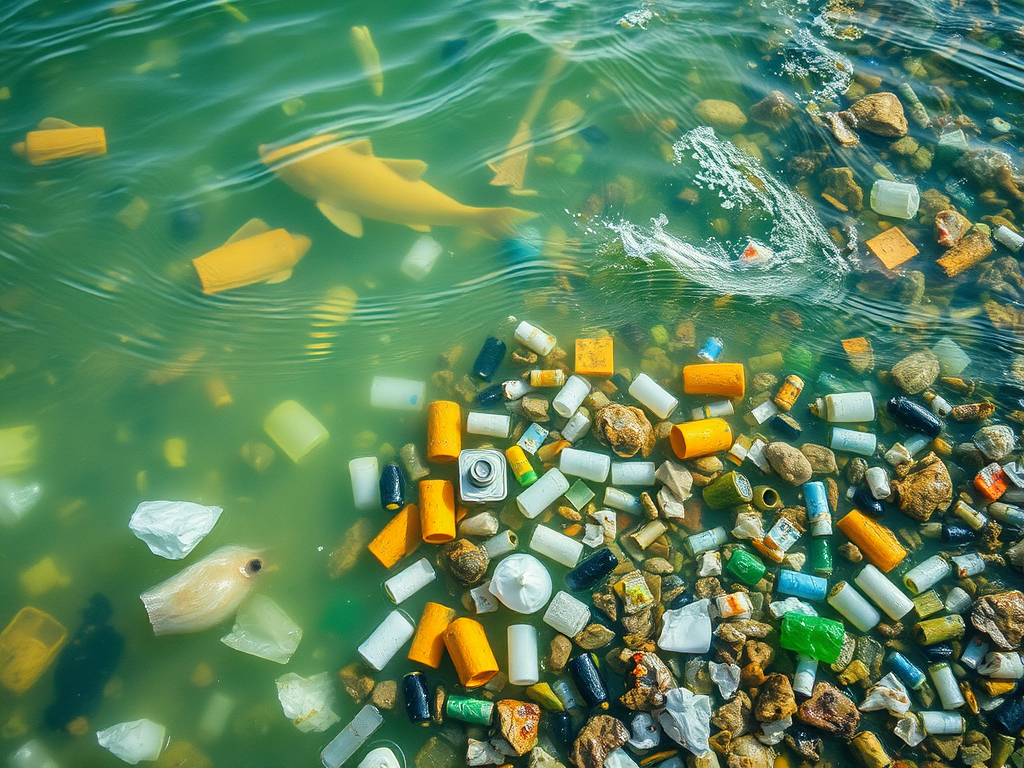
- Plastics and Microplastics
- Plastic waste and degraded plastic particles
- Ingested by marine life and possibly enter human diets
- Oil and Grease
- From spills, road run-off, and industrial waste
- Coats aquatic organisms and reduces oxygen exchange
- Sediments
- Soil, sand, and minerals washed into water from erosion or construction
- Cloud water and disrupt aquatic ecosystems
- Thermal Pollution
- Hot water from industrial processes
- Alters temperature balance and affects aquatic species
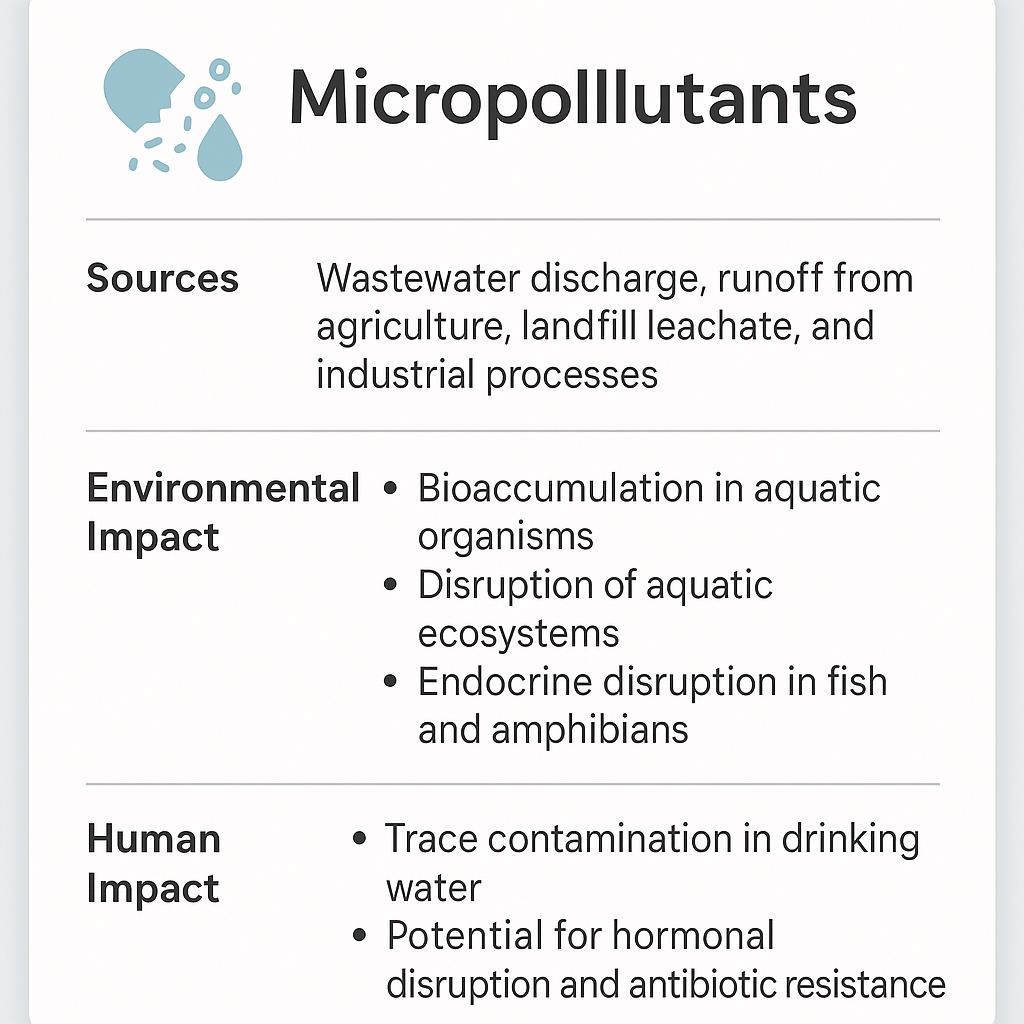
- Micropollutants
- Industrial chemicals, pharmaceuticals, cosmetic products, pesticides, and hormones

Part 3: Plastics in the Ocean
Plastic Pollution in Oceans
- Plastic waste is accumulating in marine environments, threatening:
- Ocean and marine species health
- Food safety and quality
- Human health
- Coastal tourism
- Climate change
- Over 14 million tonnes of plastic enter oceans annually, mostly from:
- Urban and stormwater runoff
- Sewer overflows
- Poor waste management
- Tyre abrasion
- Construction and industrial activities
- Illegal dumping
- Plastics break down into:
- Microplastics (< 5 mm)
- Nanoplastics (< 100 nm)
- These small particles are easily ingested by marine life
- Visible impacts include:
- Death of organisms from plastic ingestion
- Presence of microplastics in tap water, salt, beer, and oceans
- Carcinogenic chemicals in plastics
- Release of CO₂ and CH₄ from plastic burning, contributing to global warming
- Reduced tourist appeal and revenue
- High cleanup costs
- Solutions involve:
- Reducing plastic usage
- Promoting recycling, reusing, and reducing
- Levying supermarket plastic bags, which has significantly cut pollution (e.g., Ireland)
Case Study: The Great Pacific Garbage Patch
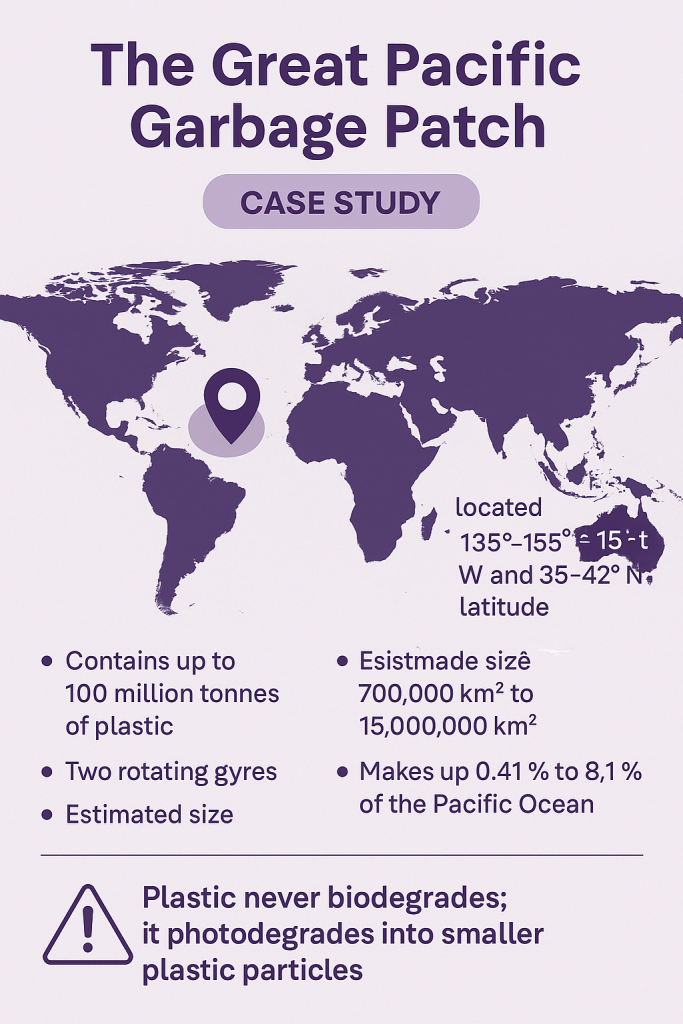
Problems Caused by Plastic
- Pollutes beaches, impacting tourism
- Entangles and kills marine animals
- Destroys coastal habitats when washed ashore
- Damages ship propellers and keels, increasing maintenance costs
- Microplastics accumulate in the food chain
- Does not degrade naturally
- Facilitates the spread of invasive species
Challenges in Cleaning the Great Pacific Garbage Patch
- Too large and contains many tiny plastic particles
- Beach cleanups are limited due to few beaches in the area
- Ideas like using booms or vacuuming the patch are impractical due to its scale
- Best solution: reduce plastic pollution at the source through waste reduction, recycling, and reuse
Part 4: [AHL] Further about Water Pollutants
![ESS 8.1.3 [AHL] Biocapacity and Environmental Migration](https://mypytrclass.com/wp-content/uploads/2025/12/image-4.png?w=1024)


![ESS 8.3.4 [AHL] Photochemical Smogs and Tropospheric Ozone](https://mypytrclass.com/wp-content/uploads/2025/12/image-1.png?w=1024)
 PYTR Class