
Learning Objectives
- Describe the process of eutrophication
- Identify the primary nutrients responsible for eutrophication.
- Outline the sequence of ecological impacts caused by eutrophication.
- [AHL] Describe the impact of eutrophication as harmful algal blooms (HABs)
- Evaluate how eutrophication affects ecosystem services.
- Discuss different management approaches to address eutrophication at various levels.
Part 1: Eutrophication Process
- Occurs when streams, lakes, estuaries, and coastal waters receive excess mineral nutrients (especially nitrates and phosphates).
- Triggers excessive phytoplankton growth, especially if previously limited by low phosphate/nitrate levels.
- Algal blooms result, leading to oxygen depletion and reduced biodiversity in aquatic ecosystems.
- Common human sources include detergents, sewage, and agricultural fertilizers.
- Nutrient enrichment increases algal blooms; as algae die and decompose, more nutrients are released — a positive feedback loop.
- Dense algal and cyanobacteria growth shades submerged plants, blocking sunlight.
- Decomposition of biomass causes anoxia (oxygen starvation), especially in warmer conditions.
- Species composition shifts due to changes in oxygen levels and light availability.
- Eutrophication is a dynamic process influenced by fluctuating nitrate and phosphate concentrations.
Anthropogenic Eutrophication
- Human activities have doubled nitrogen and phosphorus levels in many rivers; local increases of up to 50x reported.
Phosphorus
- Rare in Earth’s crust; no gaseous atmospheric reservoir.
- In tropical ecosystems, often the limiting nutrient.
- Major source: domestic detergents in sewage.
- Accounts for 20–60% of phosphorus in UK watercourses.
- More phosphorus → more plankton, fewer freshwater plants.
Nitrogen
- 80% of atmosphere is nitrogen; however, in terrestrial ecosystems, it’s often the limiting nutrient due to leaching.
- Increased nitrogen deposition due to air pollution (nitrous oxides from vehicles and power plants).
- Fertilisers contribute via:
- Leaching through soil by drainage water.
- Runoff from animal excreta used as fertiliser.
- Soil erosion or particle movement into drainage systems.
- In regions like Europe and the USA (e.g., Chesapeake Bay), livestock slurry spread on fields adds significant nitrogen and phosphorus to ecosystems.
Impacts of Eutrophication
- Algal bloom death and decomposition reduce dissolved oxygen (hypoxia/anoxia), harming aquatic life.
Consequences
- Increased turbidity reduces light for submerged plants.
- Higher sediment deposition rates shorten lake lifespan by slowing water flow.
- Elevated net primary productivity due to algal/bacterial blooms.
- Oxygen levels drop as decomposers consume it during biomass breakdown.
- Primary producer diversity initially rises, then falls as cyanobacteria dominate.
- Fish populations decline; oxygen-sensitive species die or migrate, and surface-dwelling coarse fish (e.g., pike, perch) become dominant.
- Submerged macrophytes decline due to light limitation from dense algal blooms, despite nutrient availability.
Part 2: [AHL] Harmful Algal Blooms (HABs)

- Organisms involved:
- Cyanobacteria
- Protoctists such as:
- Algae
- Dinoflagellates.
- Only a small number produce potentially fatal toxins.
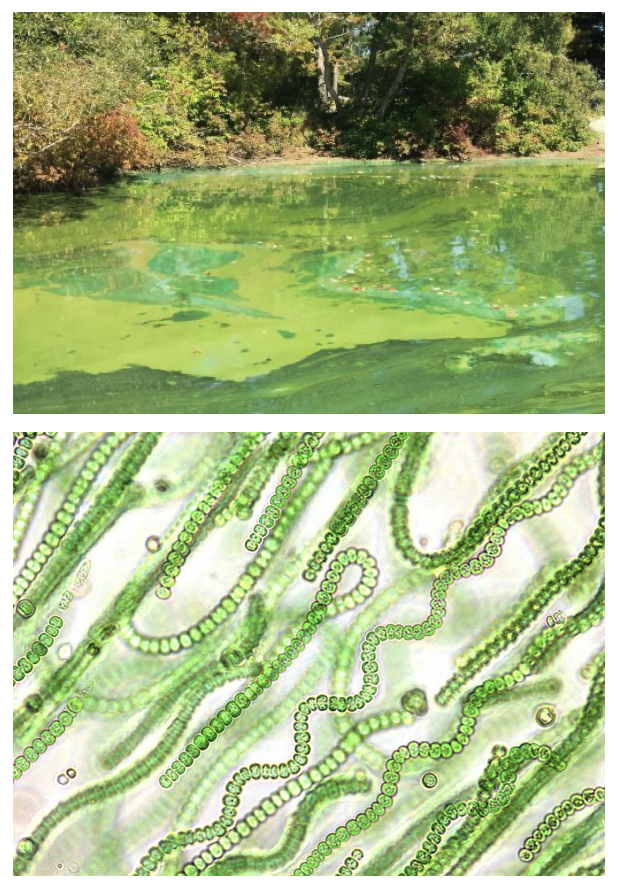
Freshwater HABs
- Main toxin producers: Cyanobacteria, which release cyanotoxins.
- Exposure routes:
- Recreational activities (e.g., swimming)
- Drinking contaminated water
- Inhaling aerosolized toxins (contaminated air droplets)
- Eating contaminated fish or shellfish
- Health symptoms:
- Skin, eye, throat, lung, and/or nose irritation
Marine (Coastal) HABs
- Main organisms: Dinoflagellates
- Many produce potent neurotoxins
- Health risks from contaminated seafood:
- Paralytic shellfish poisoning (PSP)
- Neurotoxic shellfish poisoning (NSP)
- Amnesic shellfish poisoning (ASP)
- Diarrheal shellfish poisoning (DSP)
- Toxin accumulation:
- Even when toxic dinoflagellates are in low concentrations, they may cause no immediate impact.
- At high densities, toxins can bioaccumulate in shellfish, zooplankton, and herbivorous fish.
- These toxins then biomagnify up the food chain, increasing risk to predators, including humans.
Other Factors
- Non-toxic algae can still be harmful:
- They may consume large amounts of oxygen, leading to hypoxia (oxygen depletion) and harming aquatic ecosystems.
- Protists:
- Not classified as animals, plants, bacteria, or fungi.
- Examples: Amoeba, brown algae, red algae
Part 3: Eutrophication on Ecological Services
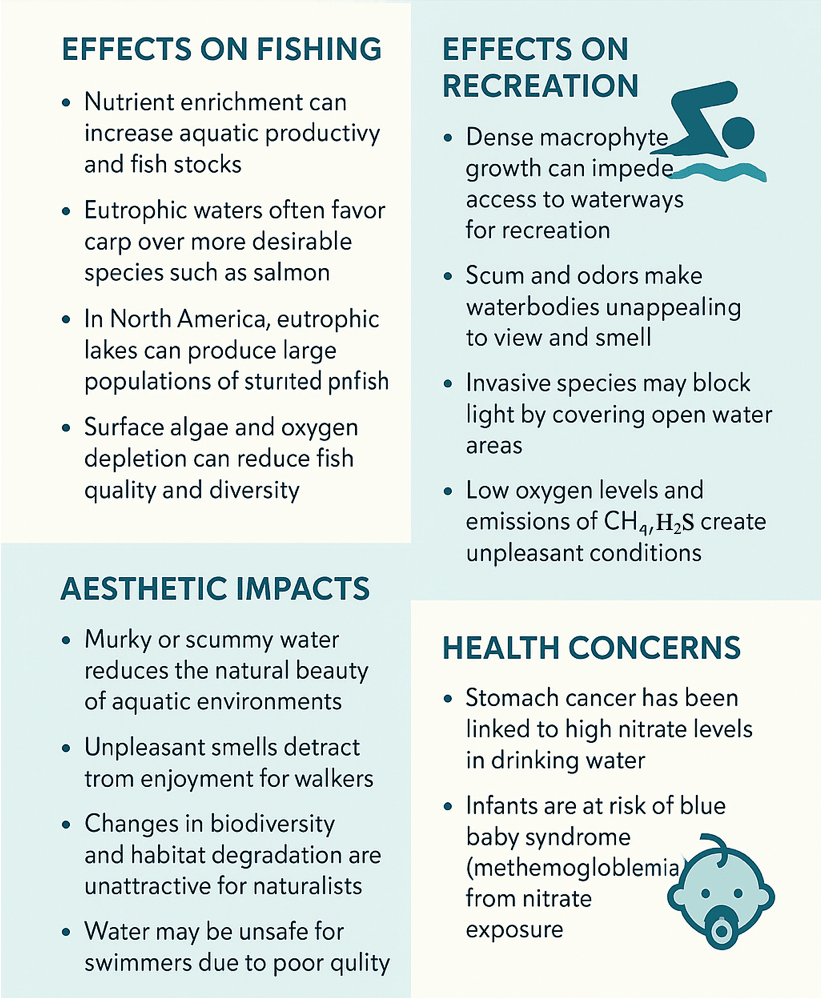
Effects on Fishing
- Nutrient enrichment (nitrates/phosphorus) can:
- Increase aquatic productivity.
- Boost fish stocks in some regions.
- Impact on fish species:
- Eutrophic waters often favour carp, a less desirable species compared to salmon or trout.
- Carp disturb bottom sediments, reducing water clarity.
- North American examples:
- Eutrophic lakes often produce large populations of stunted panfish.
- Turbidity from algae and sediments limits predator visibility, allowing panfish to proliferate.
- Algae effects:
- Surface algae block sunlight from reaching deeper water.
- Oxygen depletion occurs, reducing fish quality and diversity.
- Marine impacts:
- Open oceans are naturally nutrient-poor; fish stocks are limited by primary productivity.
- Coastal nutrient runoff can cause algal blooms or red tides (e.g., from dinoflagellates).
Effects on Recreation
- Dense macrophyte growth can:
- Obstruct access for fishing, sailing, swimming, and paddle-boarding.
- Aesthetic issues:
- Scum and odours make waterbodies unpleasant to view and smell.
- Invasive species (e.g., water hyacinths, Nile cabbage) can:
- Cover large surface areas.
- Block light to underwater vegetation.
- Decomposition effects:
- High levels of dead organic matter lead to:
- Low oxygen levels.
- Emissions of methane (CH₄) and hydrogen sulfide (H₂S).
- Resulting in unpleasant conditions for recreational users.
- High levels of dead organic matter lead to:
Aesthetic Impacts
- Eutrophication reduces the natural beauty of aquatic environments.
- Key aesthetic issues include:
- Murky or scummy water.
- Unpleasant smells.
- Altered biodiversity and habitat degradation.
- Less appeal for walkers, swimmers, and nature enthusiasts.
Health Concerns
- Stomach cancer:
- Linked to high nitrate levels in drinking water.
- Though debated, studies show elevated cancer rates in areas with nitrates over 90 mg/dm³ (e.g., parts of Nigeria).
- Blue baby syndrome (methemoglobinemia):
- Caused by low oxygen levels in a baby’s blood, linked to nitrates in water.
- Risk increases when well water contains over 10 mg/L of nitrate.
- Most dangerous for infants under six months.
Part 3: Management Strategies
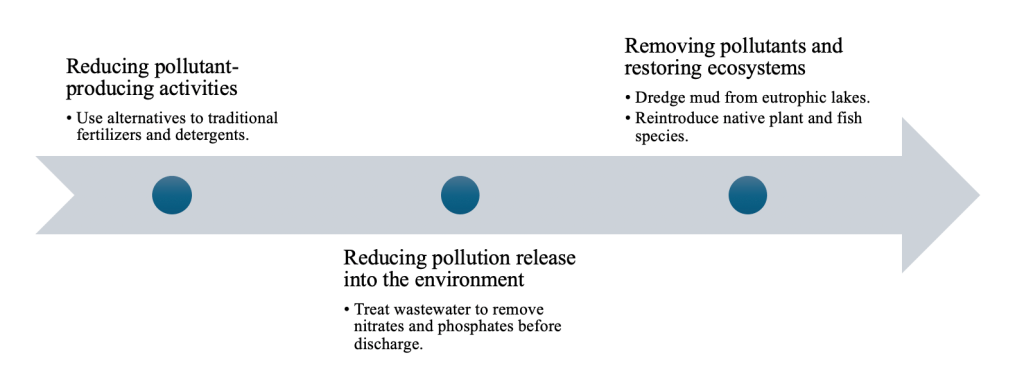
Altering Human Activities
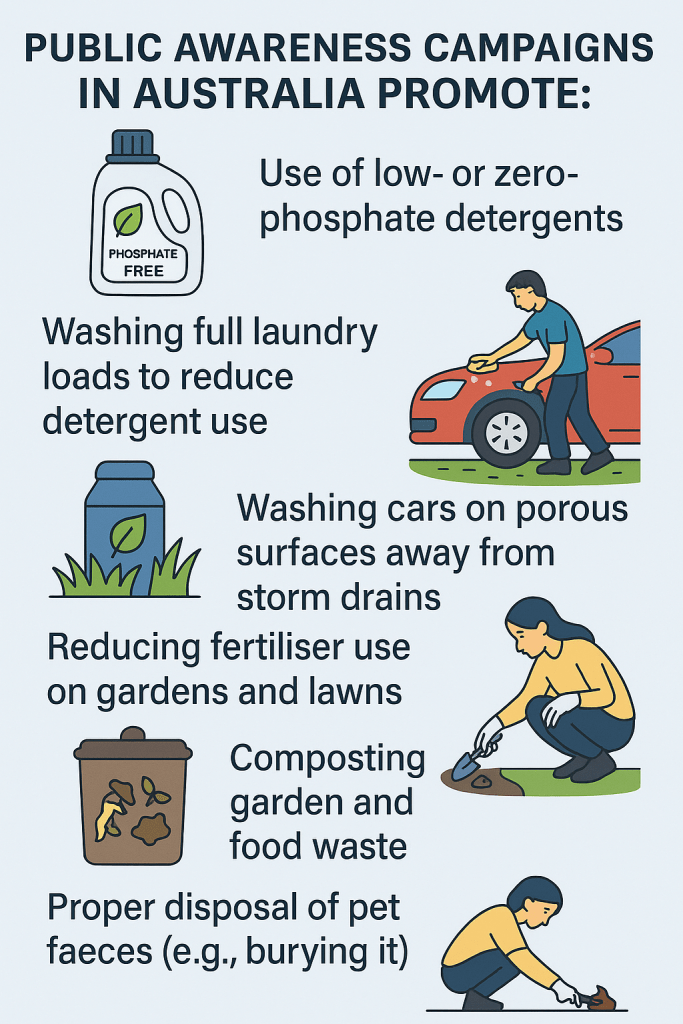
Reducing Emission

Clean-Up Strategies

Part 4: Management Strategies in USA vs Europe
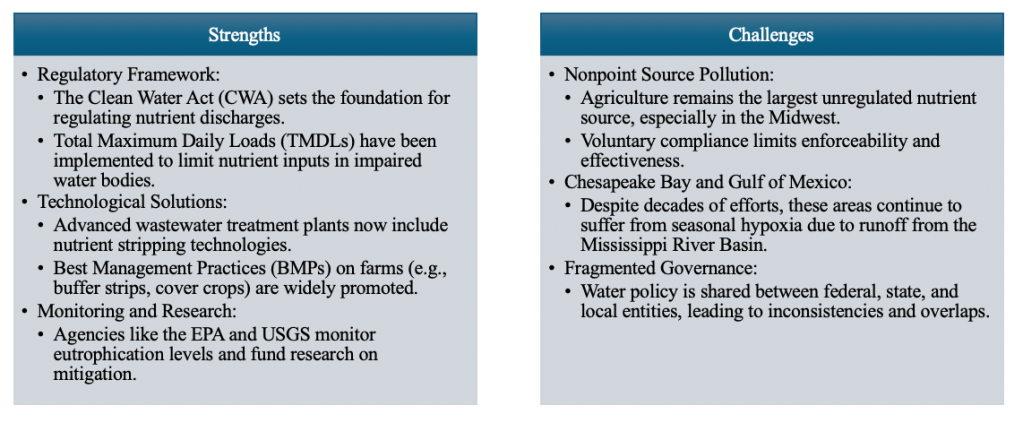
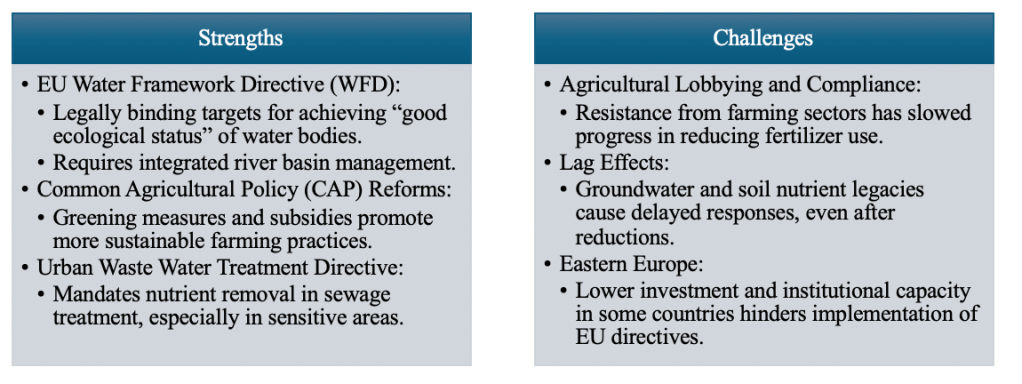
The management strategies for eutrophication in the USA and Europe have seen varying levels of success, with both regions employing a mix of regulatory, technological, and voluntary approaches.
- Europe tends to have a more cohesive, enforceable framework due to EU-wide policies, but faces difficulty with agricultural resistance and uneven progress.
- The USA has strong regulation of point sources but struggles with nonpoint pollution and decentralised governance.
- In both regions, success depends on cross-sector cooperation, sustained funding, and addressing the legacy of past nutrient loads.
USA
Europe
![ESS 8.1.3 [AHL] Biocapacity and Environmental Migration](https://mypytrclass.com/wp-content/uploads/2025/12/image-4.png?w=1024)



![ESS 8.3.4 [AHL] Photochemical Smogs and Tropospheric Ozone](https://mypytrclass.com/wp-content/uploads/2025/12/image-1.png?w=1024)
 PYTR Class