
Learning Objectives
- Explain how certain species can act as indicators of water quality based on their sensitivity or adaptation to pollutants.
- Use a biotic index to indirectly assess water quality through species tolerance, diversity, and abundance.
- Propose individual and community-level actions that can help reduce water pollution.
Part 1: Indicator Species
..are organisms whose presence, absence, or abundance reflects a specific environmental condition, such as pollution. They are not limited to water pollution and can indicate:
- Air pollution (e.g., Usnea alliculata indicates low sulfur dioxide levels)
- Soil nutrient levels (e.g., Urtica dioica indicates high phosphate levels)
- Water characteristics (e.g., Corallina officinalis indicates saline rock pools)
Tolerance to Pollution
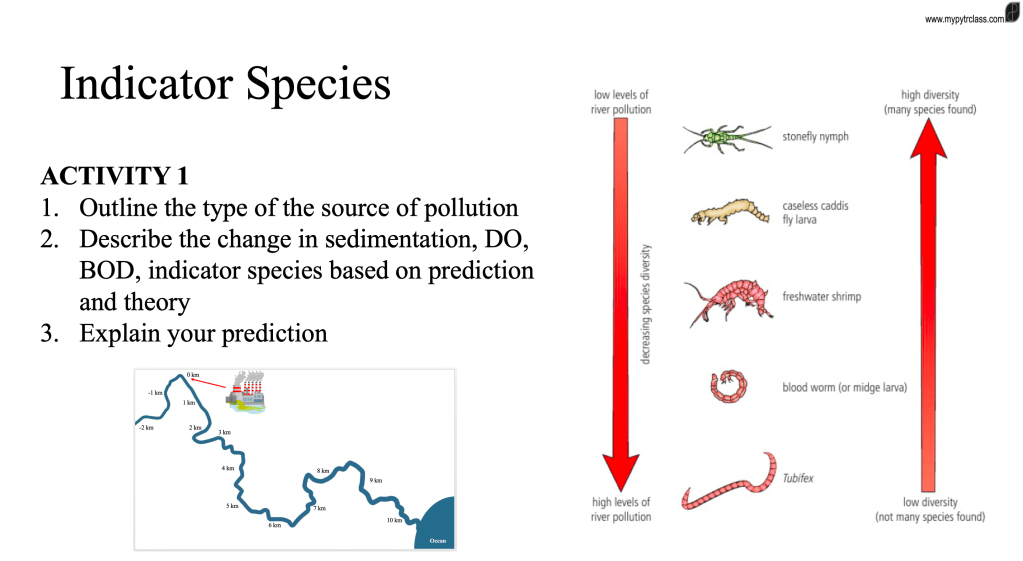
Some species can tolerate low oxygen levels caused by organic pollution and thrive in polluted conditions. Others cannot survive in low oxygen environments and will move away or die if pollution levels rise. These species serve as bioindicators of water quality and pollution levels. Low DO means high BOD. Typical larger and more complex organisms usually do not survive in this condition
BOD vs Fauna
| Class of Water | Fauna Present | BOD (mg O₂ per dm³ of water at 20°C in 5 days) | Water Suitable For |
| I | salmon, trout, grayling, stonefly and mayfly nymphs, caddis larvae, Gammarus | 0–3 | domestic supply |
| II | trout rarely dominant; chub, dace, caddis larvae, Gammarus | 4–10 (increases in summer in times of low flow) | agriculture, industrial processes |
| III | roach, gudgeon, Asellus, mayfly nymphs, caddis larvae rarely | 11–15 | irrigation |
| IV | red chironomid larvae (bloodworms), Tubifex | 16–30 (completely deoxygenated from time to time) | unsuitable for amenity use |
| V | barren/sewage fungus and small Tubifex | >30 | none |
Otters and wetland quality
Otters inhabit freshwater, brackish water, and seawater environments. They are carnivores that primarily feed on:
- Fish
- Amphibians
- Crustaceans
- Occasionally waterfowl, mammals, and reptiles
Otter populations have declined in many regions of Western and Central Europe. Key threats to otters include:
- Habitat destruction
- Wetland drainage
- River regulation
- Increasing water pollution
A major factor in their decline is the contamination of their fish prey with:
- Pesticides
- PCBs (polychlorinated biphenyls)
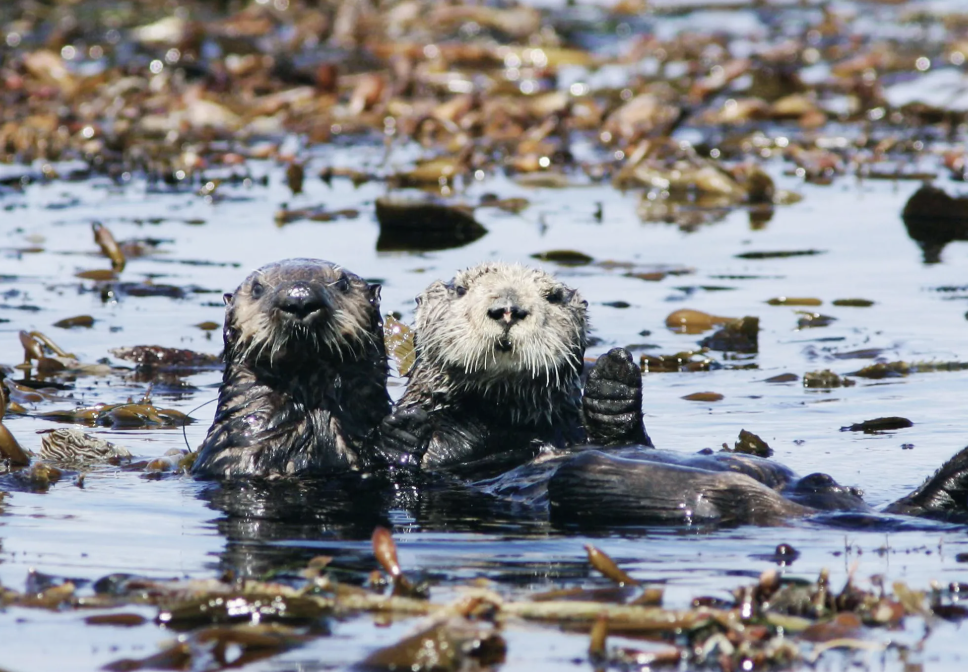
Otters are highly sensitive to environmental stress, making them effective biological indicators of wetland habitat quality. Their disappearance in many areas reflects significant environmental damage to wetland ecosystems.
Part 2: Trent Biotic Index
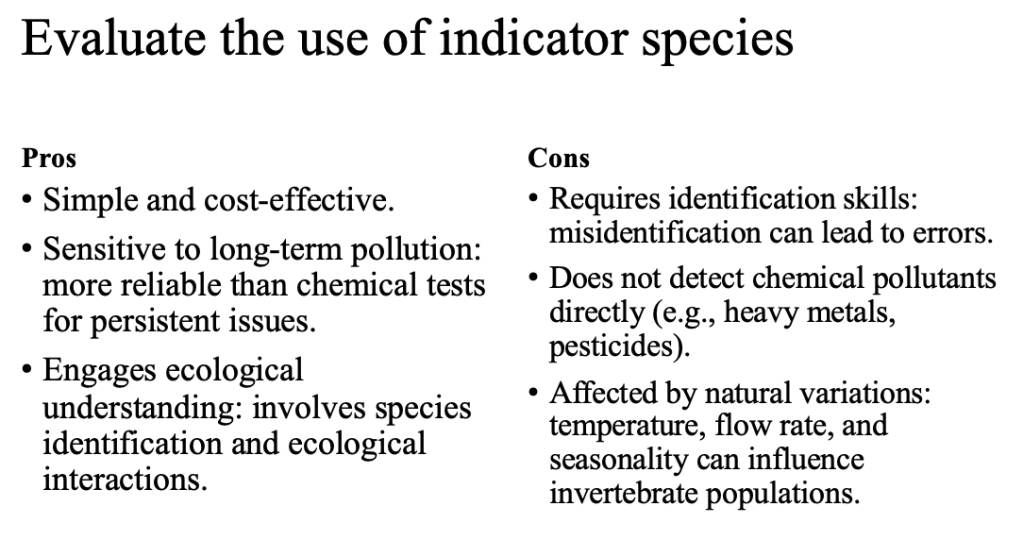
The measures water quality based on the presence or absence of indicator species. As organic pollution increases, sensitive species disappear because they cannot tolerate:
- Lower oxygen (O₂) levels
- Reduced light availability
- Other environmental changes
Pollution-tolerant species survive and often become more abundant under poor conditions. This shift results in a decline in species diversity. In highly polluted rivers, overall diversity is low, but the population of tolerant species may be high. Therefore, the index reflects that diversity decreases as pollution increases.
Part 3: Community Action
Actions Individuals and Groups Can Take:
- Reduce water pollution through changes in consumption and waste disposal
- Engage in protests against polluters or harmful policies
- Participate in data collection on water quality
- Lobby politicians for stronger environmental regulations
- Form or support legal teams to take action against polluters
Everyday Practices to Reduce Water Pollution and Consumption:
- Avoid pouring cooking fat, oil, or grease down the sink
- Do not dispose of household chemicals or cleaning agents in sinks or toilets
- Never flush medications or pills down the toilet
- Install a water-efficient toilet to reduce water use
Run the dishwasher or washing machine only with full loads to conserve water
![ESS 8.1.3 [AHL] Biocapacity and Environmental Migration](https://mypytrclass.com/wp-content/uploads/2025/12/image-4.png?w=1024)




![ESS 8.3.4 [AHL] Photochemical Smogs and Tropospheric Ozone](https://mypytrclass.com/wp-content/uploads/2025/12/image-1.png?w=1024)

 PYTR Class