
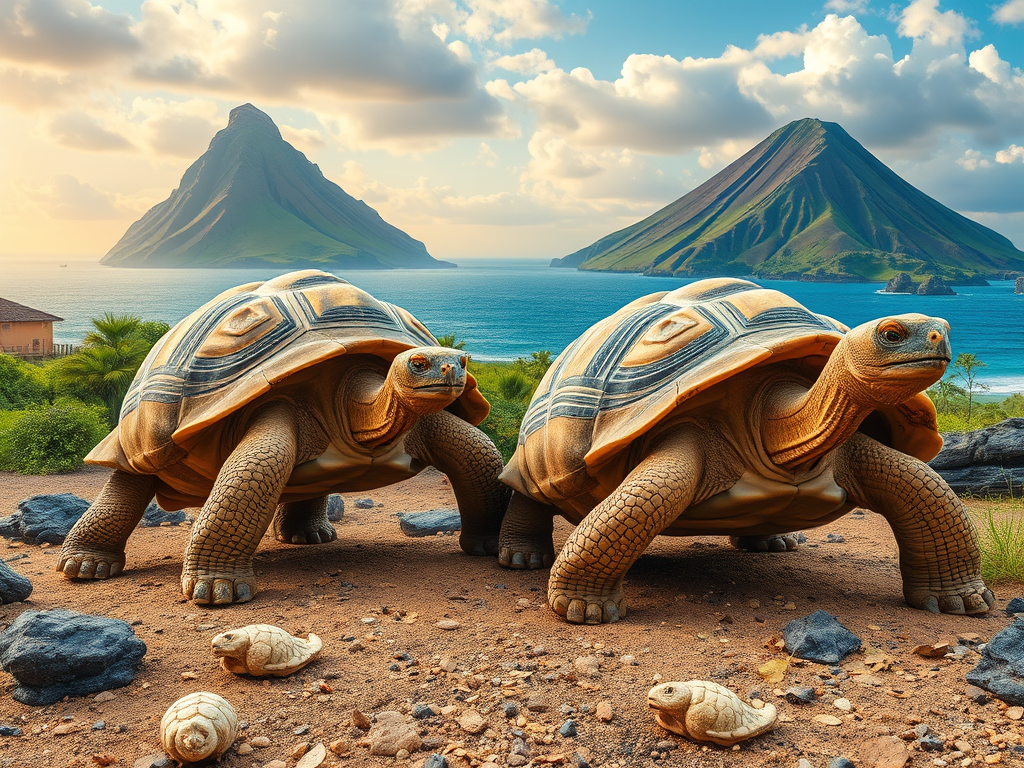
Learning Objectives
- Explain how biodiversity results from evolutionary processes over time.
- Describe natural selection as the main mechanism of evolutionary change.
- Outline the key components of evolution by natural selection, including variation, overproduction, competition, adaptation, and their effects on survival and reproduction.
- Define speciation and explain how new species arise through evolutionary processes.
Part 1: Evolution and Natural Selection
Evolution
- The theory of evolution describes the cumulative changes in the genetic composition of a species over many successive generations and explains how these changes ultimately give rise to species that are completely different to the common ancestor.
- A common ancestor is the most recent species from which two or more now different species have evolved. For example, humans and chimpanzees share a common ancestor of some six million years ago
- Fossils have been used as the evidence of evolution. Every layer of the Earth contains different types of previous organisms. This also gives the evidence of mass extinction events and possibly their causes
- In general, the theory of evolution is supported by the following natural occurences
- all species tend to over-reproduce
- this leads to competition for limited resources
- variation within a species due to mutations
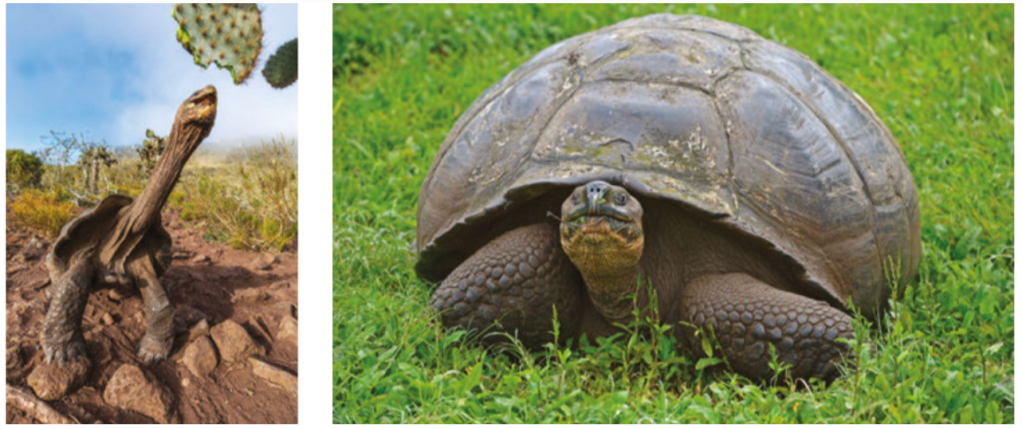
Natural Selection
- Darwin to develop his theory of evolution by natural selection. Darwin called the process natural selection because nature does the choosing, as opposed to artificial selection, also known as selective breeding
- natural selection has resulted in not only new varieties, but also entirely new species.
- contributes to the changes in biodiversity over time with appropriate isolations
- Natural selection is based upon adaptation – survival of the fittest
- Individuals with traits that favours the survival can grow to maturity and later on reproduce
- Benefit over: hunting, running, mating, eating, extreme climate etc
- They will be able to pass down their traits genetically
- Eventually the gene pool will change over time where the beneficial gene will accumulate.
- Sometimes these accumulation is of mutated gene
- Individuals with traits that favours the survival can grow to maturity and later on reproduce
Part 2: Speciation
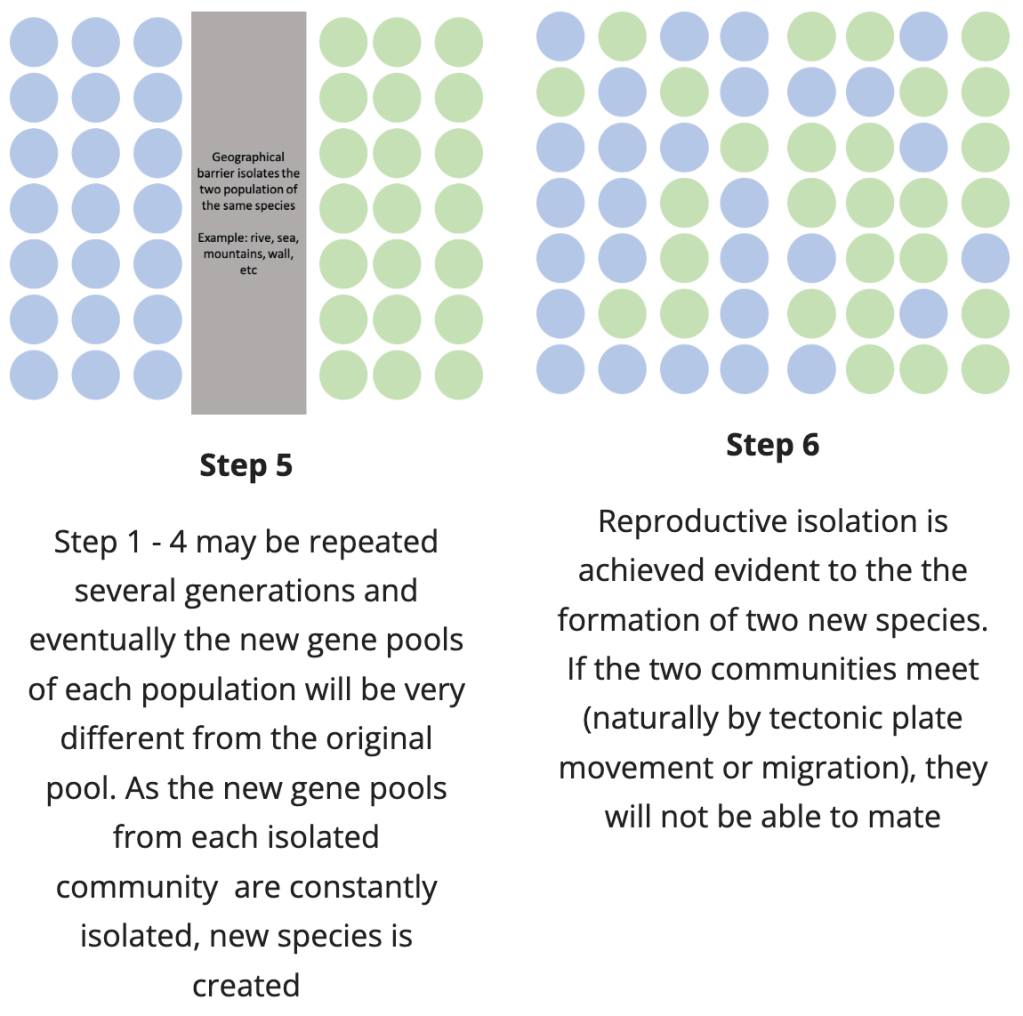
Speciation leads to reproductive isolation
- This means that two different species that came from the same ancestor will not mate (if they mate by force, they will produce infertile offspring)
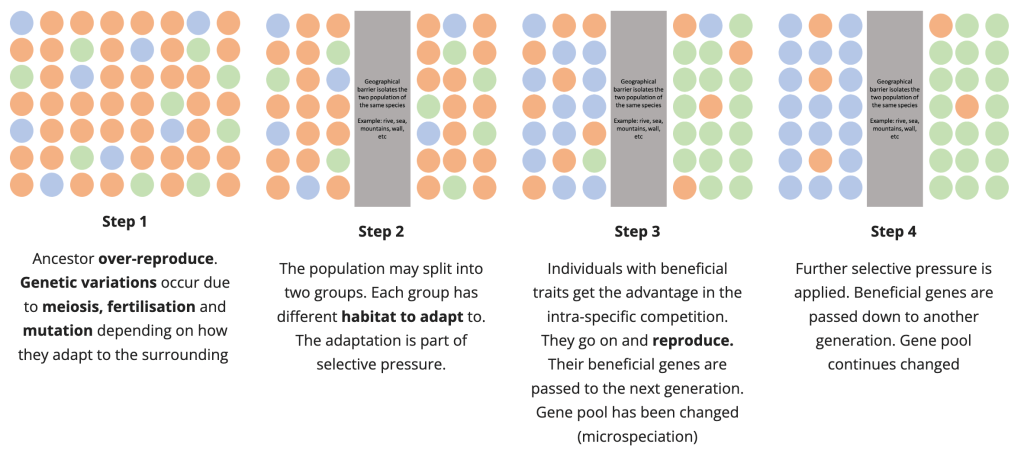
- Speciation can be described as follow:
Notes
Question 1
Outline the factors that contribute to total biodiversity of an ecosystem
Question 2
Distinguish between species diversity and species richness.
Question 3
Outline what high and low values of the Simpson reciprocal index indicate about an ecosystem.
Question 4
Explain how diversity indices can be used to measure the impact of human activities.
Question 5
Discuss the usefulness of providing numerical values of species diversity to understanding the nature of biological communities and the conservation of biodiversity.
Question 6
Describe the process of natural selection, and how it leads to the generation of new species.
Question 7
Explain how the isolation of populations leads to speciation.
![ESS 8.1.3 [AHL] Biocapacity and Environmental Migration](https://mypytrclass.com/wp-content/uploads/2025/12/image-4.png?w=1024)



![ESS 8.3.4 [AHL] Photochemical Smogs and Tropospheric Ozone](https://mypytrclass.com/wp-content/uploads/2025/12/image-1.png?w=1024)

 PYTR Class