
Learning Objectives
- Describe soil as a dynamic system within the larger ecosystem, identifying its inputs, outputs, storages, and flows.
- Identify and explain the components of soil, including inorganic and organic matter, water, and air.
- Explain how soils develop a stable, layered profile over time through interactions within the system.
- List and describe the main inputs into the soil system, including dead organic matter and inorganic minerals.
- Identify and explain the outputs from the soil system, including decomposition, mineral loss, and energy loss.
- Describe how transfers occur across soil horizons and between the soil and its surroundings.
- Explain how transformations within soils alter their components or the overall system.
- Interpret or construct systems flow diagrams to represent flows into, out of, and within the soil ecosystem.
- Explain how soils support terrestrial ecosystems by acting as a medium for plant growth and storing essential plant nutrients (excluding carbon).
- Describe the role of soils in supporting biodiversity by providing habitats and niches for various species.
- Explain the role of soils in the recycling of elements within biogeochemical cycles.
- Define soil texture and describe how it is determined by the proportions of sand, silt, clay, and humus.
- Analyze how soil texture and organic content influence primary productivity.
- Evaluate the role of soils as carbon sinks, stores, or sources based on the balance between organic matter input and decomposition.
AHL
- Describe how soils are classified and mapped based on the appearance of the entire soil profile.
- Identify and describe the main soil horizons (O, A, B, and C) and their characteristics within different soil types.
- Explain the characteristics and significance of the A horizon for plant growth, and analyze its vulnerability to erosion and degradation in relation to sustainable soil management.
Part 1: What is Soil?
Soil constitutes a dynamic and complex system within terrestrial ecosystems, functioning simultaneously as a storage medium, a regulator of biogeochemical cycles, and a foundation for ecological productivity. As a system, soil interacts with its surrounding environment through a range of inputs, outputs, storages, and transfers. Inputs include dead organic matter, mineral deposits derived from the weathering of parent rock, precipitation, and anthropogenic additions such as fertilisers or compost. Outputs involve nutrient uptake by plants, the loss of organic material through decomposition, erosion by wind and water, and the release of gases such as carbon dioxide. Storages are represented by the organic and inorganic components, water, and soil air, while transfers occur through processes such as leaching, infiltration, and biological mixing. Transformations include the decomposition of organic matter, chemical weathering of minerals, and nutrient cycling. The balance between these processes determines whether a soil functions as a carbon sink, a stable carbon store, or a carbon source. In cold environments, decomposition is slowed, allowing organic matter to accumulate, whereas in warmer or wetter conditions decomposition accelerates, sometimes resulting in substantial carbon loss.
Facts about Soil
Soil Stores Carbon
Soils store more carbon than the atmosphere and all the world’s plants and forests combined. Around 10% of the world’s CO₂ emissions are stored in soil. 95% of food production depends on soil—plants grow in soil, and animals rely on those plants. Soils can function as carbon sinks, storages, or sources depending on the balance between: input of dead organic matter and rate of decomposition. Forests are effective carbon sinks, but wetlands, temperate grasslands, and boreal forests store more overall carbon in their soils. Carbon storage in soil is influenced by soil type, climate and other limiting factors such as precipitation, aeration, and temperature.
Soil is a habitat
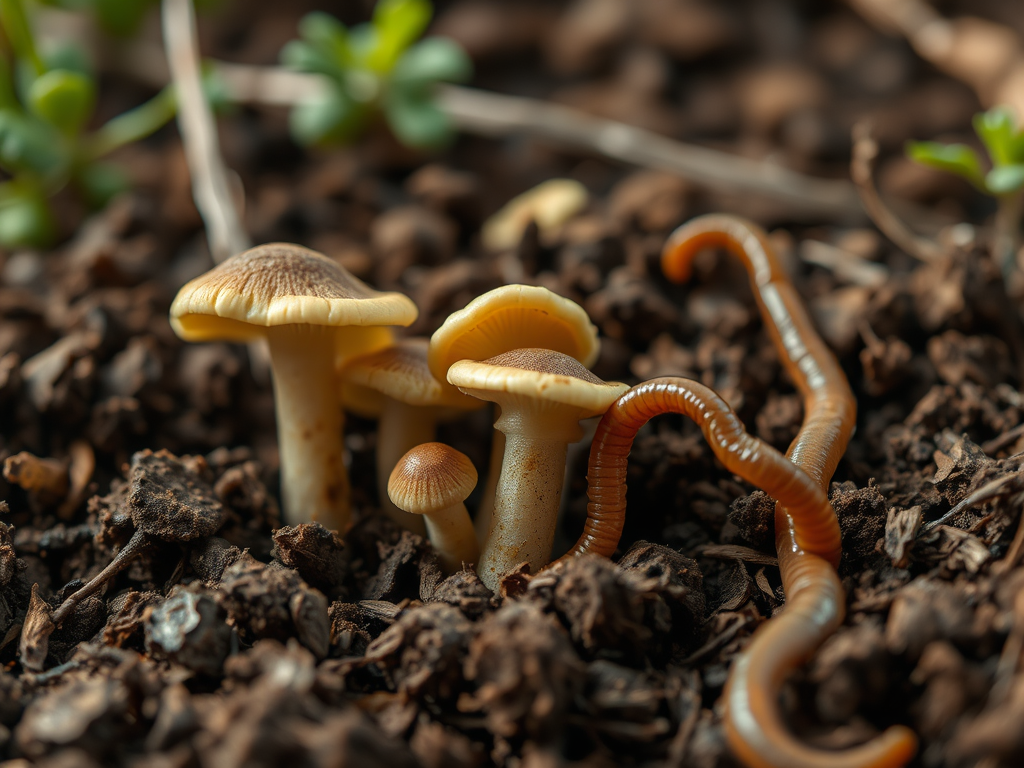
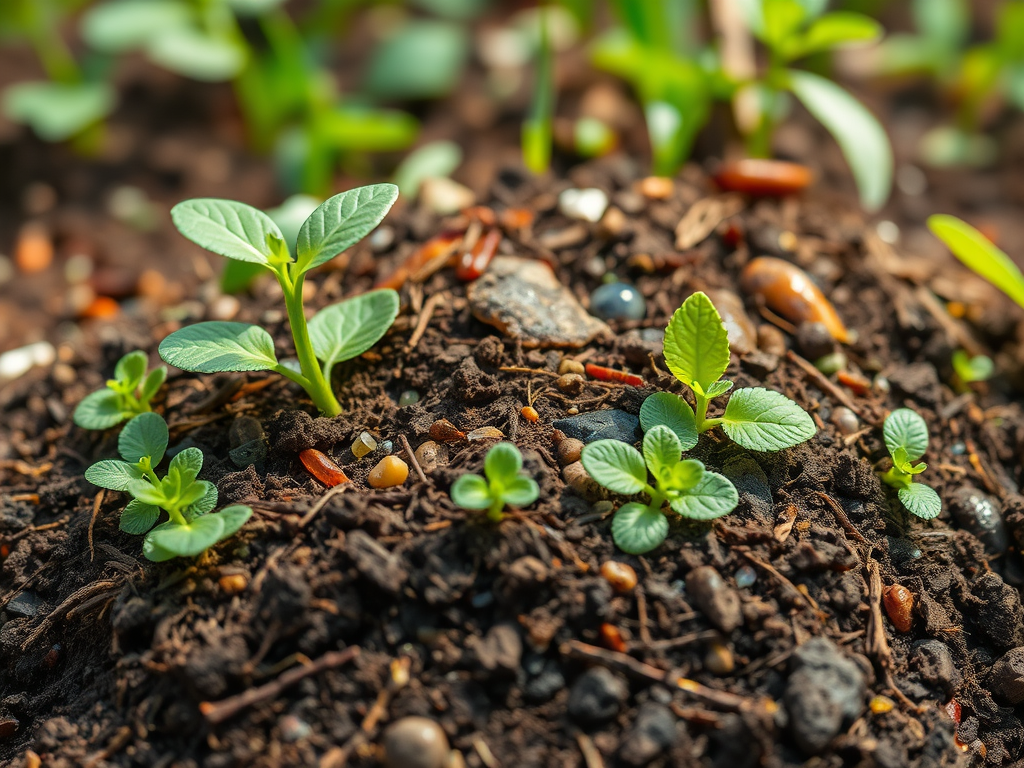
Soil is a habitat for many organisms – A tablespoon of healthy soil contains more microorganisms than people on Earth. In some ecosystems, below-ground biomass exceeds above-ground biomass. Only about 1% of soil microorganisms have been identified. Soils are among the largest reservoirs of microbial diversity, including bacteria, archaea, and certain fungi. Earthworms are vital – One earthworm can process 5 tonnes of dry matter per hectare per year. Soil organisms, mycorrhizal fungi, and plant roots form complex nutrient exchange and communication networks
Soil is an ecological service
Soils represent the pedosphere — a thin, active layer where life and geological processes interact: Connects the biosphere, lithosphere, atmosphere, and hydrosphere. Soil is a highly porous – approximately 50% solids and 50% pore space, which contains variable amounts of water and air. Soil holds water and mineral nutrients essential for plant growth. Acts as a natural water filter, purifying water as it passes through. Soils store and transfer heat, influencing atmospheric temperatures and moisture interactions..
Managed Soil Systems
Soil management practices are implemented by humans to enhance the productivity of agricultural systems and optimize the extraction of natural resources. These practices include the incorporation of organic matter, such as compost, to increase nutrient availability, as well as the application of inorganic fertilizers to directly supplement essential crop nutrients. Pesticides and herbicides are also commonly employed, although their use can result in residual chemical accumulation within the soil profile.
Water management strategies play a central role in soil modification. Irrigation is used to support plant growth in arid environments but can contribute to secondary salinization if not carefully regulated. Conversely, excessive soil moisture is often mitigated through artificial drainage systems, including ditches and subsurface pipes, to improve aeration and prevent waterlogging.
Finally, mechanical cultivation represents another key practice, as it enhances soil aeration and facilitates root penetration, although repeated tillage may also contribute to structural degradation over time.
Part 2: Soil as a System
| Category | Examples |
|---|---|
| Storages | Organic matter, organisms, nutrients, minerals from underlying rock, air, and water |
| Inputs | – Organic material: leaf litter, manure, biomass – Inorganic matter from parent material – Precipitation – Gases and air humidity – Solar energy – Guano – Waterborne and windblown particles – Anthropogenic sources: compost, fertilizer, agrochemicals, irrigation, salinization |
| Outputs | – Uptake by plants – Soil erosion – Loss of dead organic matter – Loss through wind and water erosion – Diffusion of gases – Evaporation of water – Loss of heat |
| Transfers | – Movement into and out of soils and across soil horizons – Biological mixing – Translocation (movement of soil particles in suspension) – Leaching (minerals dissolved in water) – Infiltration – Percolation – Groundwater flow – Aeration – Erosion |
| Transformations | – System-wide changes or changes to soil components – Decomposition – Weathering – Nutrient cycling – Salinisation |
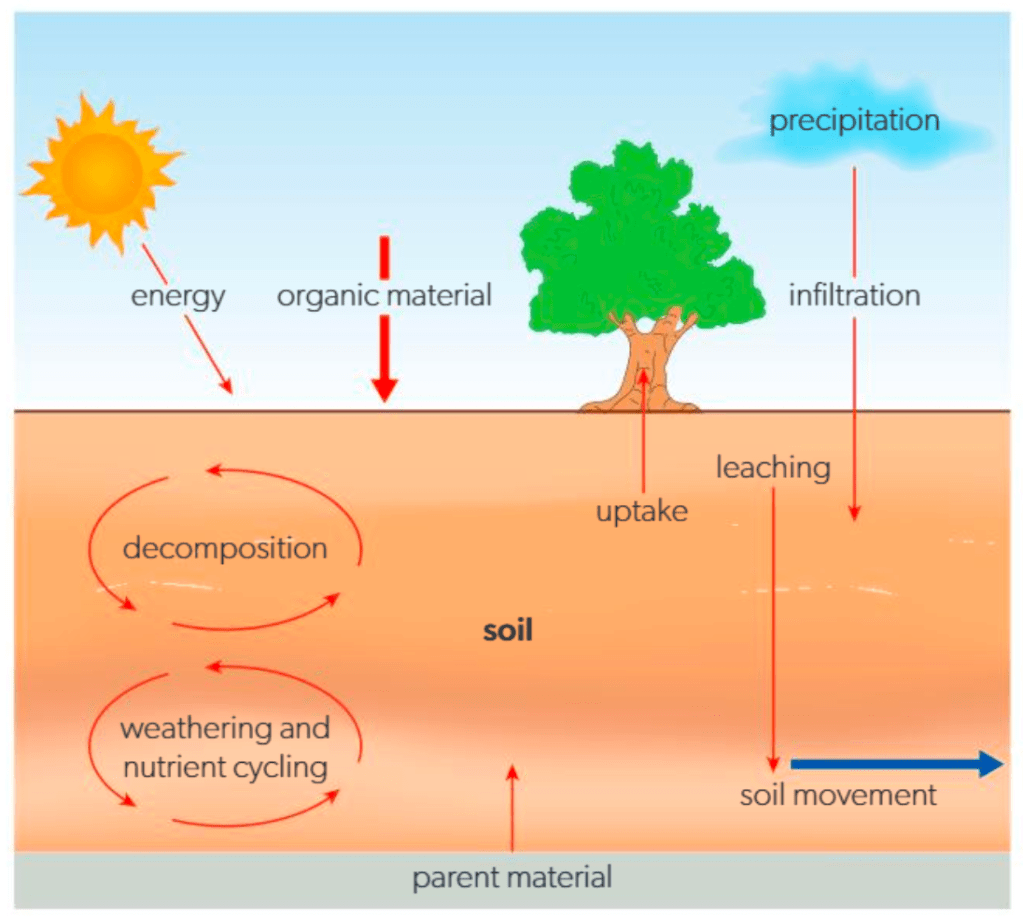
Carbon storage within ecosystems is strongly influenced by climatic conditions. In colder environments, lower temperatures reduce rates of decomposition because microbial respiration proceeds more slowly under such conditions. As a result, organic matter accumulates, enhancing long-term carbon storage in soils. Conversely, high levels of soil moisture can create anaerobic conditions in which oxygen availability is limited. This restricts aerobic respiration and slows the breakdown of organic matter, further contributing to carbon accumulation.
In tropical forest ecosystems, above-ground biomass is extremely high due to rapid rates of primary productivity. However, the warm and humid climate accelerates decomposition processes and promotes frequent leaching of nutrients. These conditions limit the persistence of organic matter within the soil and thereby reduce the capacity for long-term soil carbon storage, even though the vegetation itself contains large amounts of carbon.
Major Soil Fractions and Their Functions
| Fraction | Constituents | Function |
|---|---|---|
| Rock particles | – Insoluble: gravel, sand, silt, clay, chalk – Soluble: mineral salts (e.g. nitrogen, phosphorus, potassium, sulfur, magnesium) | Forms the physical structure of soil. Derived from parent rock or transported rock particles (e.g. glacial till). |
| Humus | Plant and animal matter undergoing decomposition | Darkens soil color. Releases mineral nutrients back into the soil. High water retention capacity. |
| Water | Precipitation seeping into soil or rising from underground sources via capillary action | Carries dissolved minerals to plants. Can cause leaching. Excess water may lead to waterlogging, anoxic conditions, and soil acidification. |
| Air | Primarily oxygen and nitrogen | Supports respiration of soil organisms and plant roots. Well-aerated soil is essential for healthy soil function. |
| Soil organisms | Invertebrates (e.g. worms), microorganisms, and larger animals (e.g. moles) | Break down organic matter into smaller particles. Microorganisms decompose matter and recycle nutrients. Burrowing animals aerate and mix the soil. |
Part 3: Soil Profile and Functions
Soil Structure
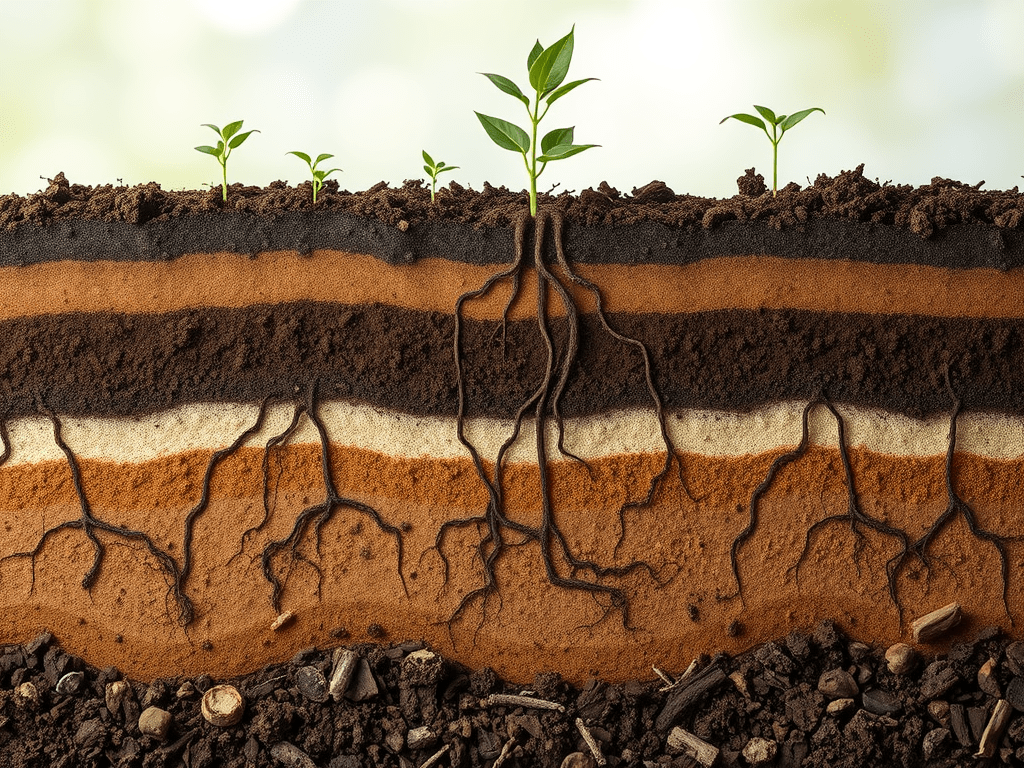
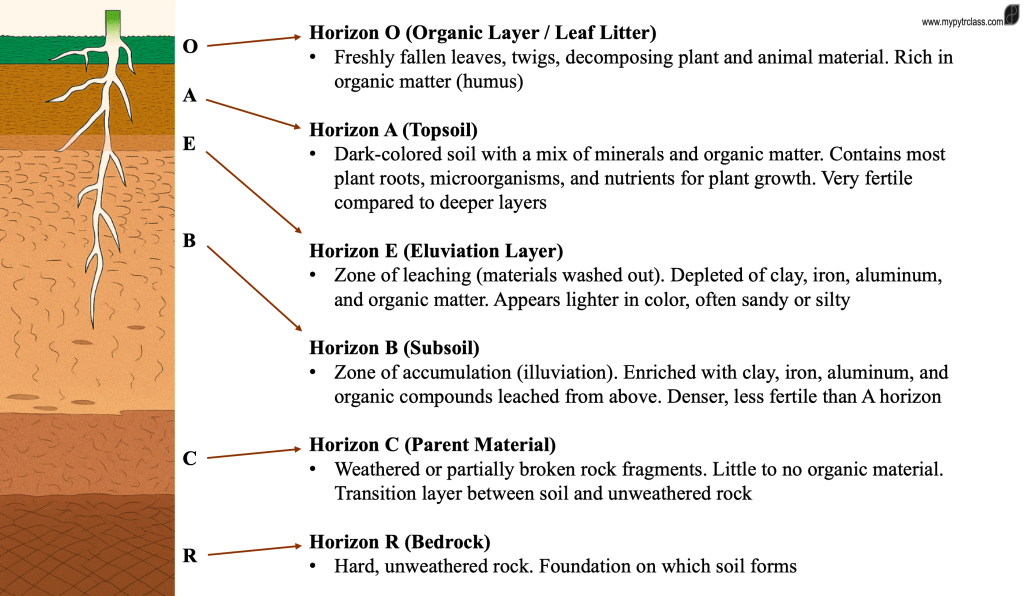
Soils develop a stable, layered profile over time as a result of complex interactions among physical, chemical, and biological processes. This vertical arrangement, known as the soil profile, is composed of distinct horizons. These include the O horizon, consisting of organic matter; the A horizon, enriched with minerals and organic material; the E horizon, characterised by the leaching of nutrients; the B horizon, where materials such as clay and iron accumulate; the C horizon, composed of weathered parent material; and the R horizon, which represents unaltered bedrock at the base. Together, these horizons reflect both the processes of soil formation and the environmental conditions in which the soil develops.
Soil Texture
Soil texture is determined by the relative proportions of sand, silt, and clay within a given sample. Particles larger than 2 mm, classified as gravel or stones, are excluded from texture descriptions. Texture is a fundamental property influencing soil fertility and productivity, as the physical characteristics of each particle type affect water retention, aeration, and nutrient availability.
Sandy soils are coarse, gritty, and free-draining, but retain limited moisture and nutrients. Silty soils are smooth in texture, retain more water than sandy soils, and support better nutrient availability. Clay soils are dense, sticky, and cohesive, with a high capacity to retain both water and nutrients. Loam soils, often regarded as optimal for agriculture, represent a balanced mixture of sand, silt, and clay. In loam, sand contributes to adequate drainage and aeration, clay enhances water and nutrient retention, and silt provides cohesion that makes the soil workable.
Soil texture can be quantitatively assessed through laboratory and field methods. One common approach involves sieving dried soil samples through progressively finer mesh sizes to separate particle fractions. Alternatively, a sedimentation test may be conducted by agitating soil in water, allowing particles to settle by size and density, with sand settling first and clay remaining suspended the longest. These methods provide insight into the soil’s composition, which in turn influences its agricultural and ecological potential.

- Texture affects fertility and productivity due to different properties of particle types:
- Sandy soil: gritty, loose, drains quickly.
- Silty soil: smooth, slippery, retains water better than sand.
- Clay soil: sticky, holds shape, retains nutrients and water.
- Loam soils (ideal for agriculture) contain balanced sand, silt, and clay:
- Sand ensures drainage and air supply.
- Clay retains nutrients and water.
- Silt binds particles and makes soil workable.
- Soil particle proportions can be analysed by:
- Sieving dried soil through decreasing mesh sizes.
- Shaking soil in water and observing sediment layers (sand settles first, clay last).
| Property | Sandy Soil | Clay Soil | Loam Soil |
|---|---|---|---|
| Composition (%) | |||
| – Sand | 100 | 15 | 40 |
| – Silt | 0 | 15 | 20 |
| – Clay | 0 | 70 | 40 |
| Mineral Content | High | High | Intermediate |
| Potential to Hold Organic Matter | Low | Low | Intermediate |
| Drainage | Very good | Poor | Good |
| Water Holding Capacity | Low | Very high | Intermediate |
| Air Spaces | Large | Small | Intermediate |
| Biota (Soil Organism Activity) | Low | Low | High |
| Primary Productivity | Low | Quite low | High |
Functions of Soil
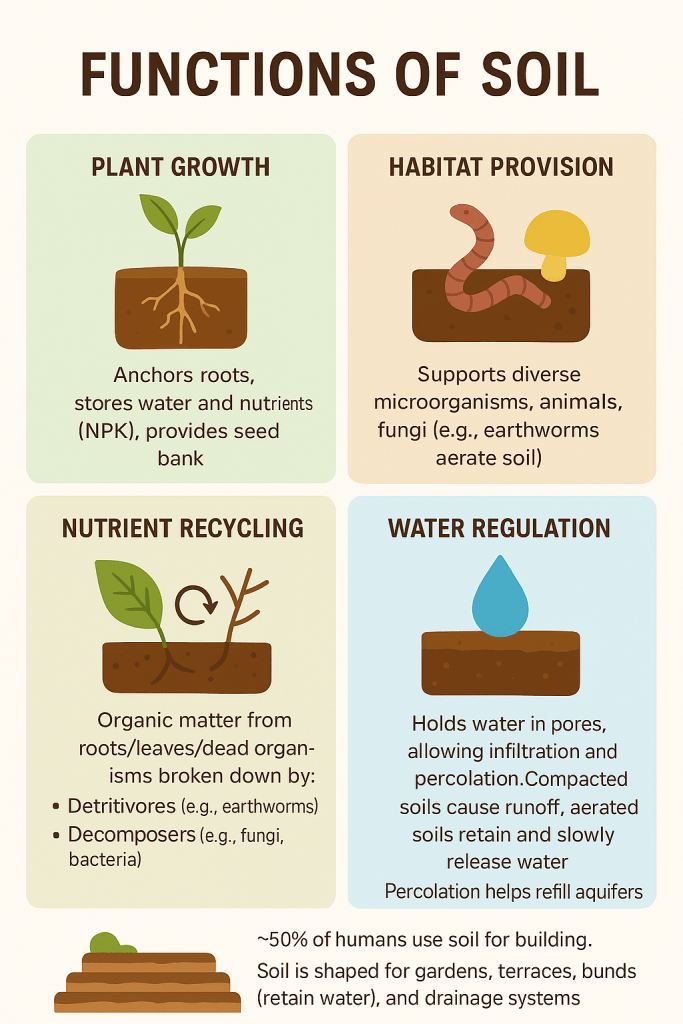
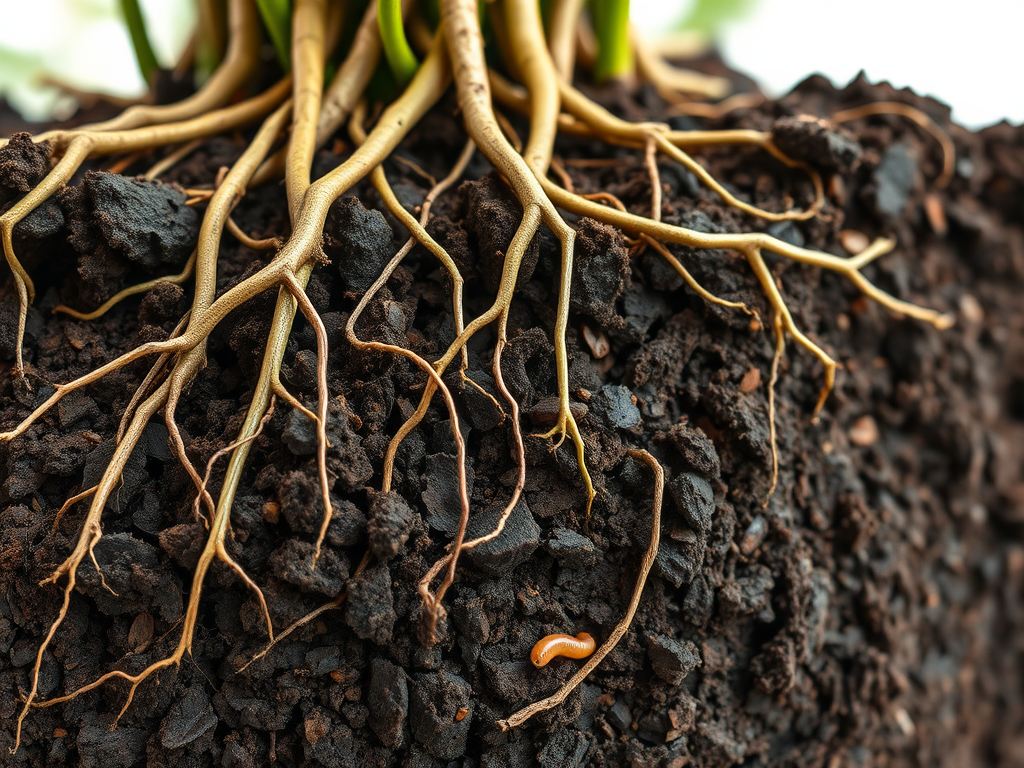
Humus is formed through the decomposition of plant material and represents a stable, organic component of the soil profile. Typically located beneath the layer of leaf litter, it is characterised by a dark, crumbly texture that reflects its high organic content. Humus plays a crucial role in maintaining soil fertility and structure. It enhances the retention of essential minerals and reduces nutrient loss through leaching. In addition, humus improves the soil’s capacity to hold water while still allowing effective drainage, thereby balancing moisture availability for plants. Furthermore, it contributes to soil aeration by preventing compaction and reducing the risk of waterlogging, ultimately creating conditions favourable for root growth and microbial activity.
Part 4 [AHL only] Soil Horizons and Classifications
Soil-Forming Processes
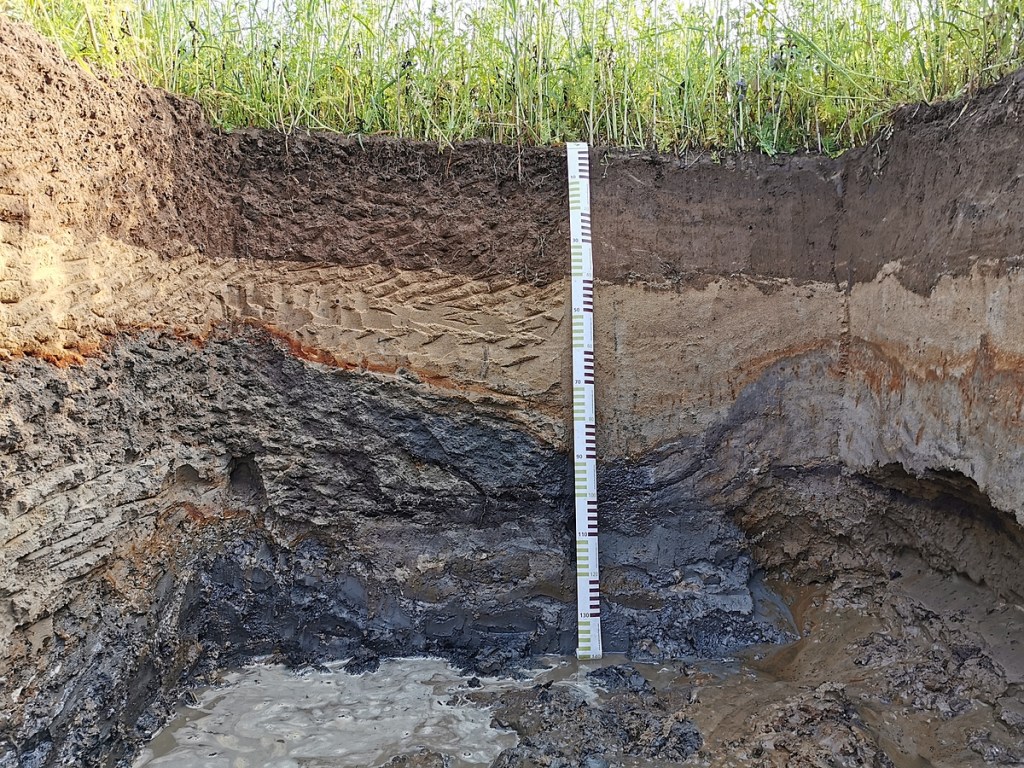
A soil profile, typically observed in a vertical cross-section such as a trench, reveals the sequential layering and developmental processes of soil. Each horizon represents distinct physical and chemical characteristics arising from the interaction of organic and inorganic inputs with environmental conditions. The O horizon contains fresh organic material where decomposers initiate the breakdown of litter. The A horizon is enriched with humus, comprising decomposed organic matter mixed with mineral particles. The B horizon is characterised by the accumulation of clay, iron, and other minerals leached from upper layers. Beneath this, the C horizon consists of weathered fragments of the parent rock, while the R horizon represents the unaltered bedrock. Not all soils exhibit every horizon, and in particular, intensively managed agricultural soils often lack the upper organic layers due to cultivation practices.
Soil development is driven by several key processes. Translocation involves the vertical movement of materials through the soil profile, primarily facilitated by water percolation. In arid environments where precipitation is less than evaporation (P < E), salinization occurs as dissolved minerals migrate upward and crystallise following surface evaporation. Conversely, in humid environments where precipitation exceeds evaporation (P > E), leaching predominates. In this process, soluble minerals are washed downward through the soil, often resulting in nutrient depletion of the upper horizons and enrichment of lower layers.
Soil Classification
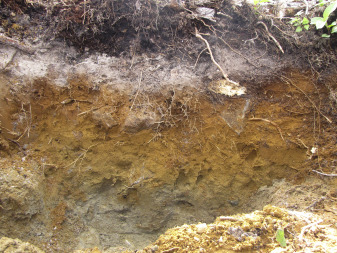
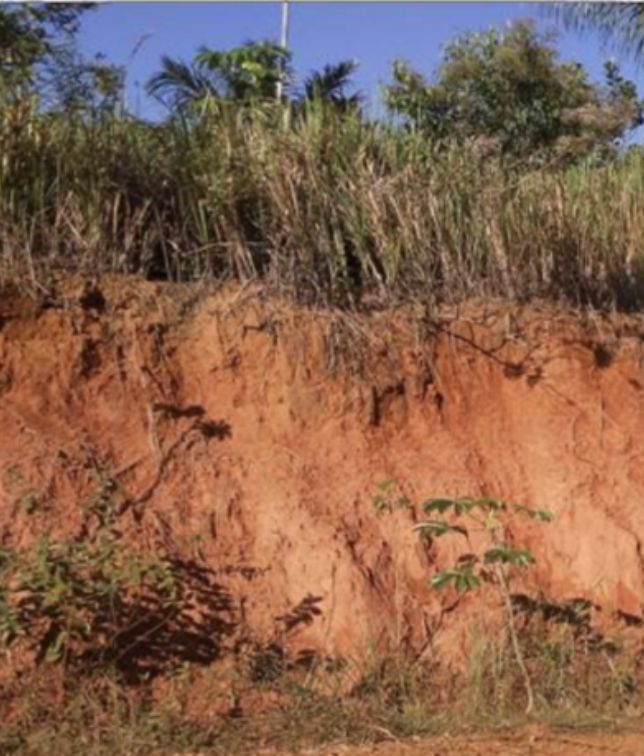
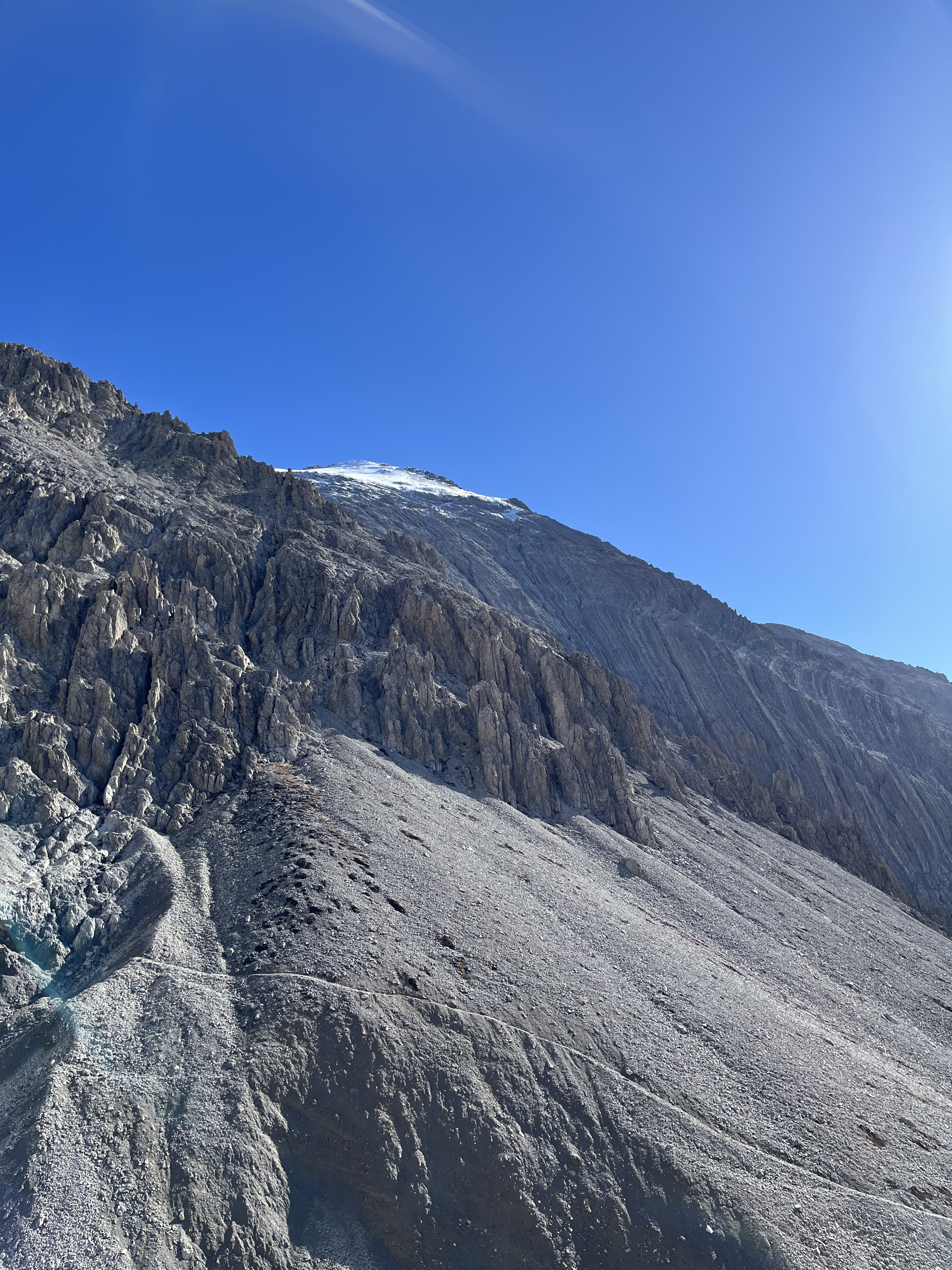
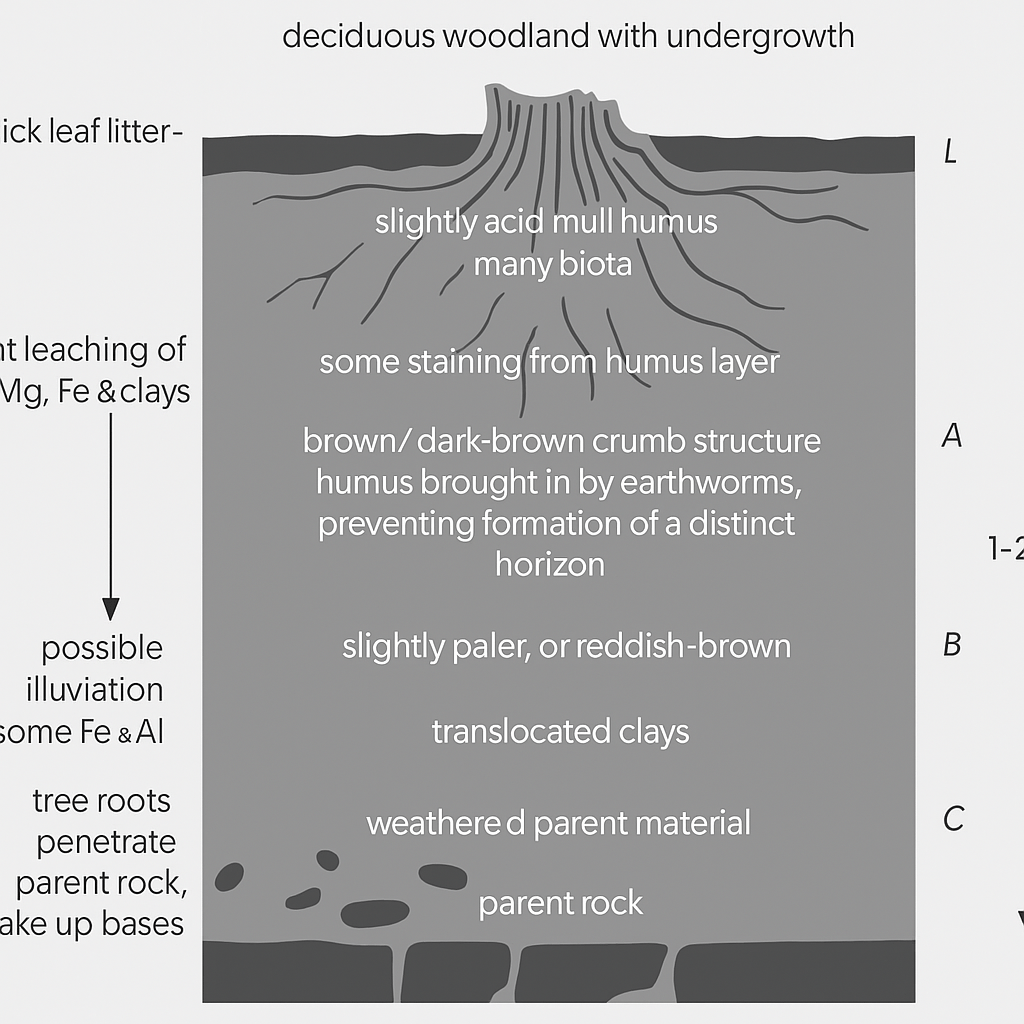
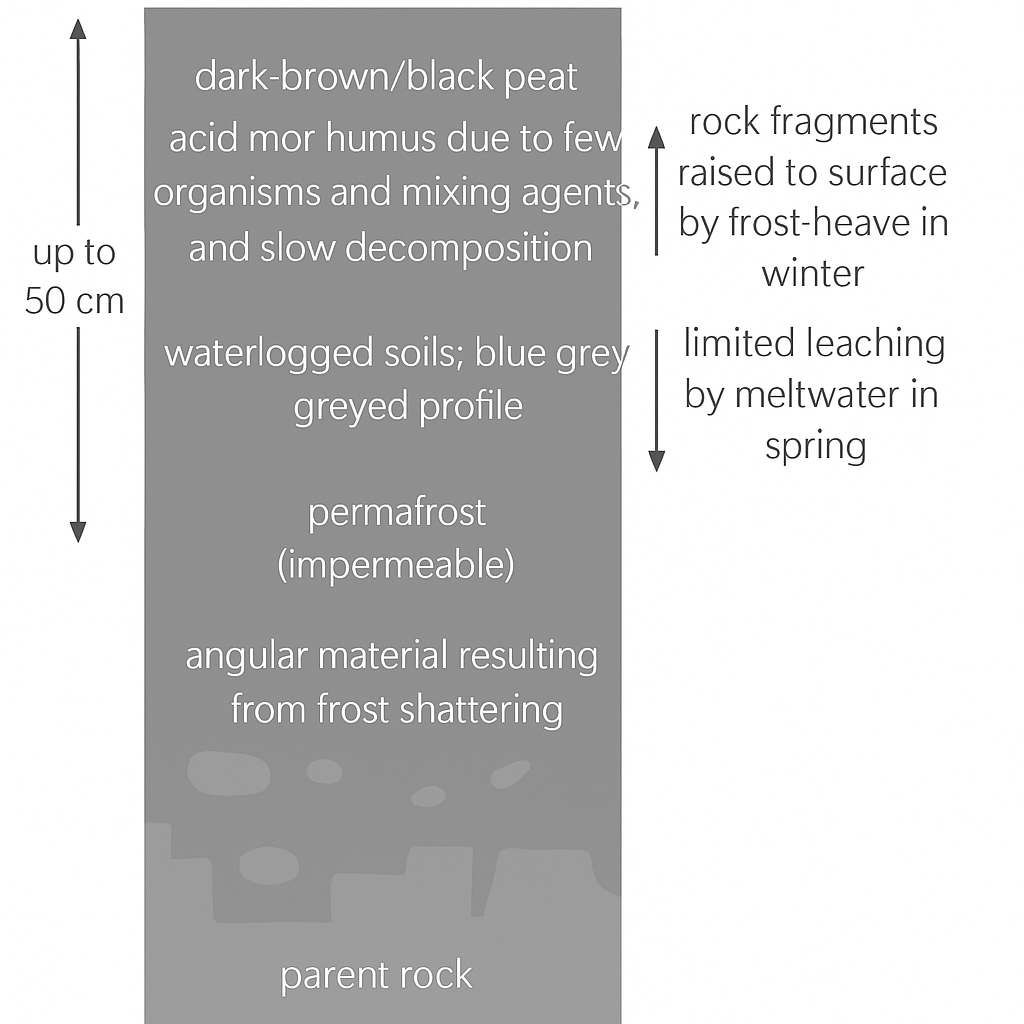
Soils are classified based on full profiles. Types are biome-dependent due to climate and vegetation.
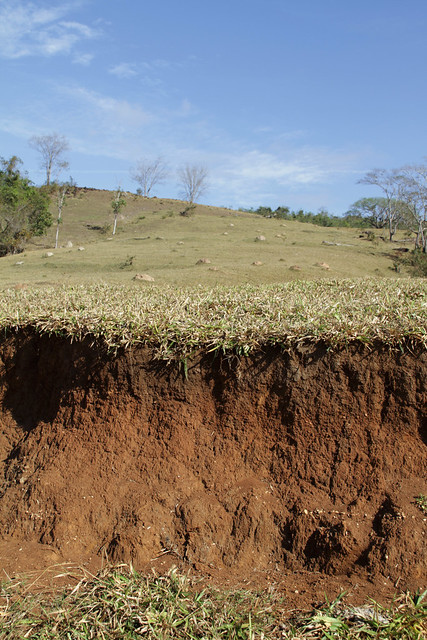
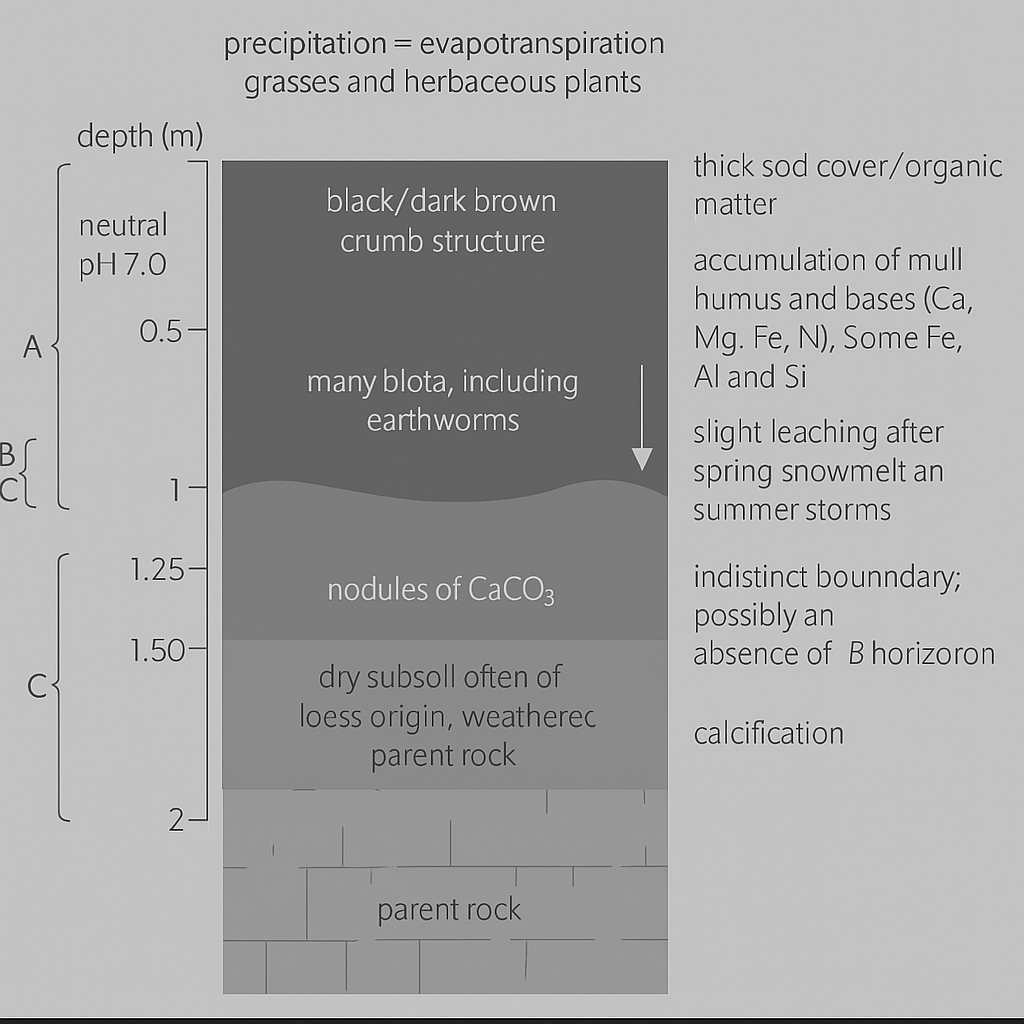
Mollisols (chernozems)
- Found in temperate grasslands.
- High organic matter, dark, fertile, base-rich.
- Common in steppes of Europe/Asia, U.S. Great Plains.
Alfisols
- Deciduous forest soils.
- Leached but retain moisture and nutrients.
- Productive for agriculture; found in temperate/humid regions.
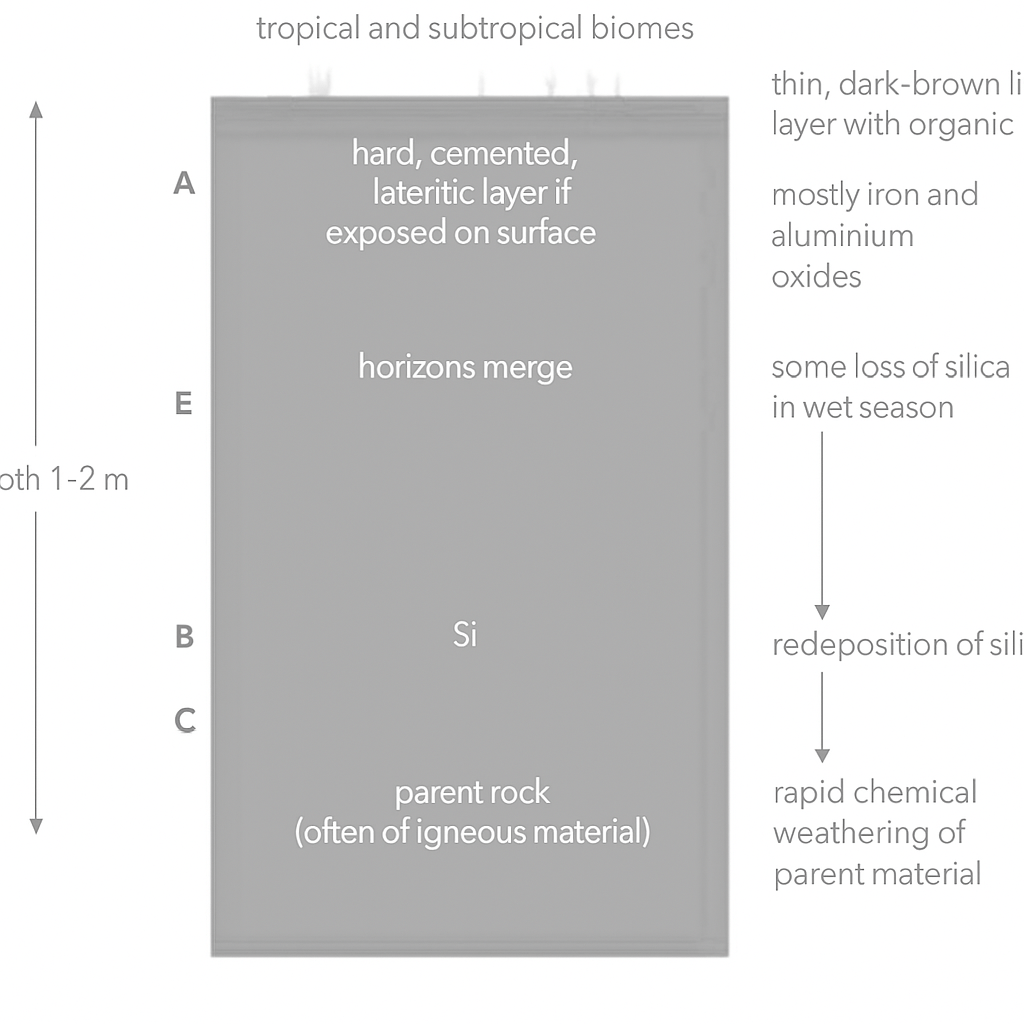
Oxisols (laterite soils)
- Tropical regions (rainforest, savanna).
- Highly weathered, acidic, low fertility.
- Poor ability to retain fertilisers, indistinct layers.
Gelisols (cryosols)
- Found in tundra with permafrost.
- Frozen/waterlogged, slow decomposition, infertile.
![ESS 8.1.3 [AHL] Biocapacity and Environmental Migration](https://mypytrclass.com/wp-content/uploads/2025/12/image-4.png?w=1024)



![ESS 8.3.4 [AHL] Photochemical Smogs and Tropospheric Ozone](https://mypytrclass.com/wp-content/uploads/2025/12/image-1.png?w=1024)
 PYTR Class