
Learning Objectives
- Explain how local soil and climate conditions influence contrasting agricultural choices.
- Identify and evaluate alternative farming approaches developed in response to ecological challenges, including soil regeneration, rewilding, permaculture, non-commercial cropping, and zero tillage.
- Describe regenerative farming and permaculture techniques and assess how mixed farming methods (e.g., using animals for land preparation or mob grazing) enhance productivity and soil health.
- Analyze how technological innovations such as high-tech greenhouses and vertical farming contribute to increased productivity and urban food supply.
What is soil degradation?
Soil is a fundamental natural resource, often described as “black gold,” due to its critical role in sustaining ecosystems, agricultural productivity, and human societies. However, soil degradation—defined as the decline in soil’s natural productivity due to human activities—has emerged as one of the most pressing global environmental and social challenges. Current estimates suggest that approximately 25% of the world’s total land area is degraded, with the United Nations warning that soil could become a finite resource within the next fifty years. This essay examines the causes and global distribution of soil degradation, alongside strategies developed to address and reverse this process.
Causes and Impacts of Soil Degradation
Soil degradation arises from a range of anthropogenic pressures. Unsustainable agricultural practices, deforestation, overgrazing, and excessive use of chemical inputs contribute to declining soil fertility, erosion, and biodiversity loss. The consequences extend beyond agriculture, affecting freshwater availability, sanitation, and fuelwood supplies, while accelerating climate change through carbon release.
The social implications are equally severe. Degraded soils undermine food security, disproportionately impacting poorer populations who depend on local agriculture for subsistence. Recent estimates suggest that an area equivalent in size to China and India combined now suffers from impaired biotic function due to poor land management. As global populations grow and demands on land intensify, the risks of soil degradation for both human and ecological systems are increasing.
In high-income countries (HICs), industrial agriculture has developed over centuries with greater emphasis on soil conservation. Knowledge of soil fertility management has traditionally mitigated the worst effects of erosion. However, even in these contexts, extreme climate events and intensified production systems can cause significant and unprecedented levels of soil loss.
Global Distribution of Soil Degradation
The severity of soil degradation varies across regions. Rates of erosion are highest in Asia, Africa, and South America, where soil loss can reach 30–40 tonnes per hectare annually. By contrast, in Europe and North America, the average erosion rate is approximately 17 tonnes per hectare per year. This uneven distribution highlights the intersection of geography, agricultural intensity, and socioeconomic development in shaping soil vulnerability.
What can be done to solve soil degradation?
Strategies for Soil Regeneration and Sustainable Farming
Efforts to address soil degradation focus on both prevention and regeneration. Soil regeneration refers to practices that restore soil health by enhancing organic matter content, drainage, and nutrient retention. Several strategies have been developed:
- Rewilding: Allowing natural ecosystems to recover with minimal human intervention, enabling soil fertility to gradually return.
- Permaculture: Designing integrated farming systems that minimize environmental impact while sustaining food production.
- Non-commercial cropping: Cultivating crops for personal use or soil improvement rather than for market purposes.
- Zero-tillage or no-till farming: Reducing soil disturbance by avoiding ploughing, thereby retaining root systems that anchor soil and reduce erosion.
- Cover cropping: Planting crops such as clover or buckwheat to protect soil surfaces, reduce evaporation, and restore fertility.
- Mulching: Using organic or synthetic materials to cover soil, reduce erosion, and conserve moisture.
- Crop rotation: Alternating crops, including legumes and cereals, to maintain soil nutrients and fertility, a practice historically embedded in European and Middle Eastern agriculture.
Regenerative Farming
This farming approach involves using animals to clear land, fertilize soil, or graze in a way that improves soil health.
Historically, mixed farming was the norm—where animals and crops were raised together. Animals provided manure, which enriched the soil, while some crops were grown to feed them (like turnips) and others were sold. Rotating animals and grass with crops like legumes and cereals helped maintain soil fertility.
With increased mechanization over the past 70 years, larger fields were created by removing hedgerows, and many farms began to specialize in either crops or livestock. As a result, farmers now often rely on fertilizers and purchased animal feed.
Recently, there’s a renewed interest in mixed farming, now called regenerative farming, aiming to restore soil health through practices like:
- Mob Grazing: This involves rotating a dense group of animals across fields for short periods, then allowing the grass to recover for 40–100 days. Electric fences help control the movement. Chickens can be added afterward to scratch through the manure, eating pests and helping to distribute the dung more effectively.
- Pig Rooting: Pigs are allowed to dig in forested areas, mimicking wild boar behavior. This helps clear the undergrowth and control invasive species. They also eat seeds and small saplings, reducing unwanted tree growth and clearing harmful seeds like acorns.
- Herbal Leys: These are diverse pastures containing herbs, legumes, and grasses. Their roots reach different soil depths, which helps bring up nutrients and fix nitrogen. These pastures also support biodiversity and some herbs have medicinal benefits for livestock.
The shift away from these practices in the past was driven by the Green Revolution and a focus on maximizing food production using synthetic inputs. While this met the needs of a growing population, it often neglected long-term sustainability. Now, there is greater awareness of the ecological costs of industrial agriculture.
Technological Innovations
New technologies are helping improve productivity. For example:
- Hydroponics: Growing plants in a nutrient-rich water solution without soil, which helps reduce land degradation.
- Vertical Farming: Plants are cultivated in vertically stacked layers indoors, using artificial lighting. These systems are often set up in unused buildings or shipping containers. While they offer high yields in small spaces, the costs are high and crops are typically limited to things like lettuce and strawberries.
Organic Agriculture
On January 18, 2016, Sikkim became the world’s first fully organic state, officially recognized by Indian Prime Minister Narendra Modi.
Organic farming avoids synthetic chemicals, fertilizers, and genetically modified organisms. Instead, it uses crop rotation, organic compost, and natural pest control—similar to how farming was done before industrial agriculture.
Currently practiced in 187 countries, organic farming covers around 72.3 million hectares and involves over 3.1 million farmers. Yet, only 1.5% of global farmland is certified organic.
Can organic farming feed the world? It’s unclear. While some organic crops match or surpass conventional yields, the overall productivity may be lower. However, organic produce often fetches higher market prices, making it profitable for farmers.
In 2019, the global organic food and drink market was valued at over USD 112 billion. But in 2021, the total global food market was about USD 8.3 trillion, indicating that organic products still make up a small portion.
Genetically Modified (GM) Crops
GM crops are created by inserting DNA from one species into another to give it desirable traits, forming what’s known as a transgenic plant. Crops like soybeans, maize, and cotton are the most commonly modified.
Supporters argue that GM crops can boost food production by making plants disease- or pest-resistant, reducing the need for chemical inputs and minimizing waste. This is similar to traditional breeding but done more precisely at the genetic level. For example, Golden Rice was engineered to produce beta-carotene to help combat vitamin A deficiency. However, it’s not yet in widespread use.
Critics, however, raise concerns about the ecological risks of GM crops—such as crossbreeding with wild plants, disrupting ecosystems, or harming biodiversity. There are also ethical and health questions. As a result, some countries have banned or restricted GM foods and insist on clear labelling
Case Study: Ranching and Soybean Cultivation in the Amazon
Introduction
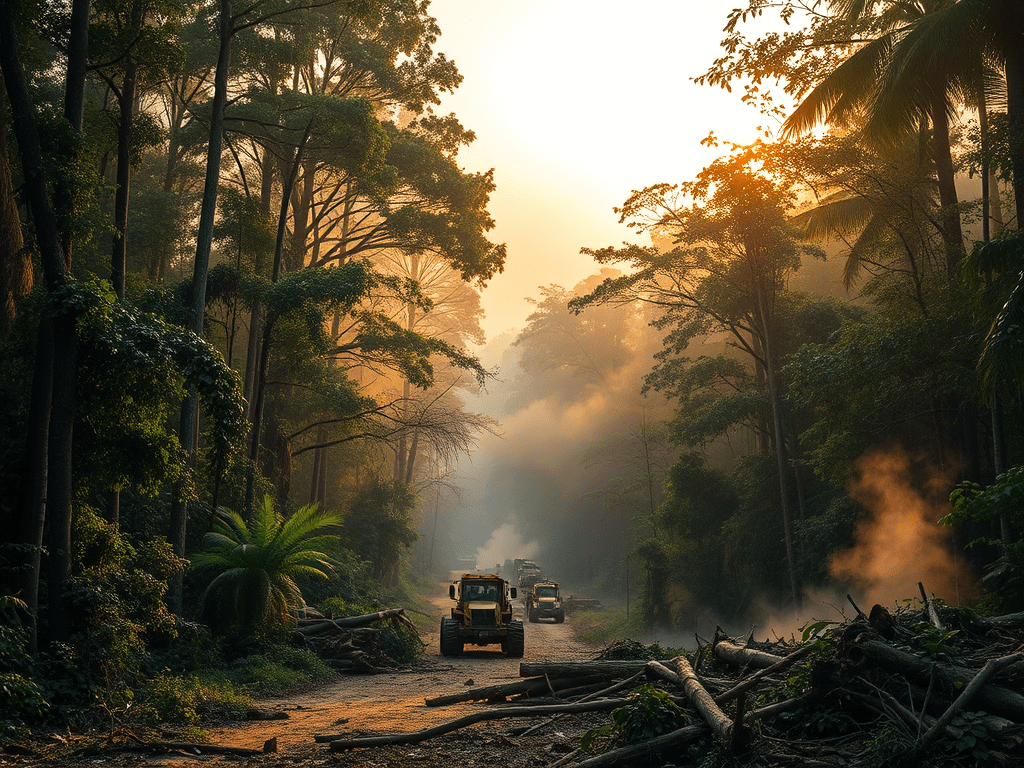
The Amazon Basin, extending across nine countries and covering 6.5 million km², represents the largest tropical rainforest on Earth. Approximately 60% of this biome is situated within Brazil, where it plays a vital role in climate regulation, biodiversity conservation, and carbon storage. However, the Amazon faces unprecedented levels of deforestation, primarily driven by cattle ranching and soybean cultivation. This essay examines the causes, impacts, policy responses, and potential solutions to deforestation in the Amazon, with particular attention to the links between agricultural expansion, global markets, and social challenges.
Causes of Deforestation
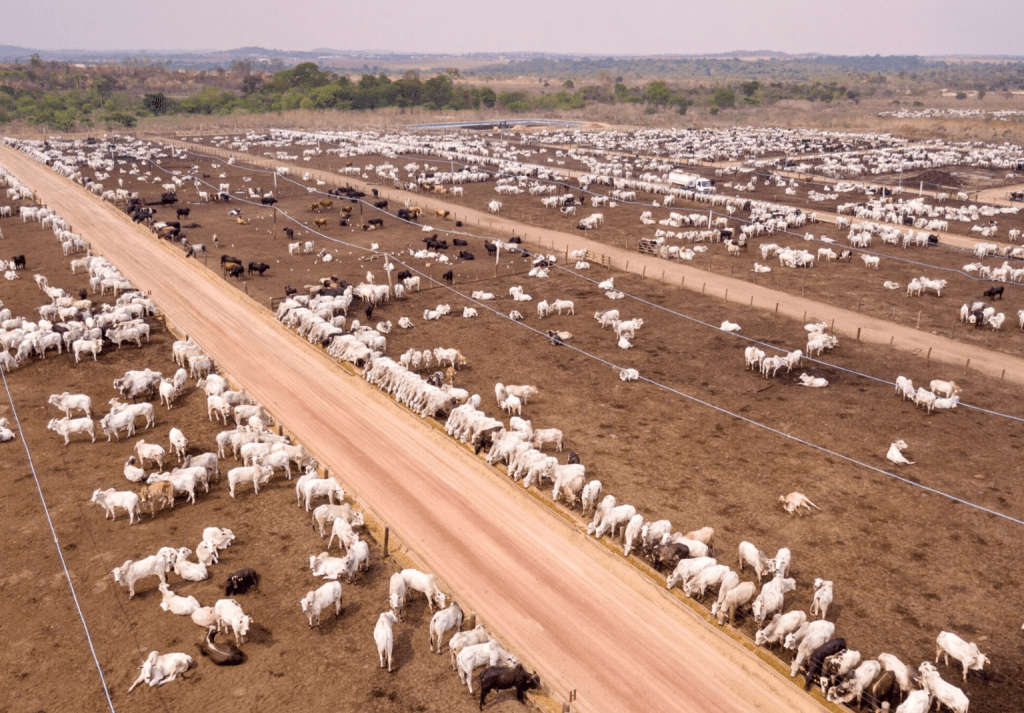
Cattle ranching is the leading cause of forest clearance in Brazil, accounting for approximately 80% of Amazon deforestation. Since the 1960s, Brazil’s cattle population has increased from 5 million to over 230 million, facilitated by extensive pastureland created through slash-and-burn clearance. Although traditional shifting cultivation once allowed forest regeneration, the scale and intensity of modern agro-industrial farming has transformed land-use patterns irreversibly.
Soybean cultivation constitutes the second most significant driver of forest loss. Brazil is the world’s largest exporter of soybeans, a crop primarily used for livestock feed and, increasingly, for biofuels. International market dynamics amplify this trend. For instance, United States subsidies for corn-based ethanol production indirectly raised demand for Brazilian soy, as US farmers reduced soybean planting in favour of corn. The expansion of road networks has further facilitated agricultural penetration into remote areas, accelerating deforestation in both the Amazon and the Cerrado savannah.
Environmental and Social Impacts
The environmental consequences of deforestation are profound. Tree clearance disrupts ecological systems, reduces biodiversity, and threatens numerous species with extinction. The release of hundreds of millions of tonnes of greenhouse gases contributes directly to climate change, while alterations in regional weather patterns affect rainfall cycles across South America. Soil erosion, river siltation, and nutrient depletion further undermine long-term agricultural productivity.
Social consequences are equally significant. Indigenous communities are displaced as agricultural frontiers expand into traditional lands, eroding cultural autonomy and livelihoods. Until 2008, instances of slave labour on ranches were also documented, reflecting wider inequalities in land ownership and labour relations. These dynamics underscore the complex intersection between environmental degradation and human rights.
Policy Responses
Efforts to address deforestation have yielded mixed results. In 2006, Greenpeace exposed the connections between deforestation, soy production, and global supply chains. In response, major traders agreed to the Soy Moratorium, pledging not to purchase soy linked to deforestation after 2008, nor from farms associated with slave labour or encroachment on Indigenous territories. This initiative was highly successful, reducing tree clearance in the Amazon by 84% between 2004 and 2012. The moratorium has been renewed annually since, demonstrating the potential effectiveness of international supply-chain governance.
Nevertheless, the problem persists. While soy-related deforestation slowed, land continues to be cleared for other crops and for cattle grazing. In 2021, deforestation rates in Brazil reached a 15-year high, driven by political support for agricultural expansion. This highlights the fragility of policy gains in the absence of consistent governmental commitment and enforcement.
Future Directions and Solutions
Addressing deforestation requires a multi-scalar approach. Intensifying cattle ranching and crop production could reduce land requirements; however, monocultures and heavy reliance on agrochemicals pose risks to ecosystems and water systems. Strengthened national legislation to restrict land clearance, coupled with stricter enforcement, remains essential. At the global level, high-income countries could provide financial support to conserve forests in low- and middle-income countries, while corporations must ensure supply chains are free from deforestation-linked products. Consumers also play a role, with reduced meat consumption and conscious purchasing decisions contributing to lower demand for destructive agricultural practices.
Conclusion
The case of ranching and soybean cultivation in the Amazon exemplifies the tension between economic development and environmental sustainability. While international agreements such as the Soy Moratorium demonstrate that coordinated action can curb deforestation, persistent pressures from global markets, national politics, and entrenched agricultural practices continue to threaten the world’s largest tropical rainforest. Protecting the Amazon will require integrated policies that respect Indigenous rights, reduce greenhouse gas emissions, and balance agricultural production with long-term ecological resilience.
![ESS 8.1.3 [AHL] Biocapacity and Environmental Migration](https://mypytrclass.com/wp-content/uploads/2025/12/image-4.png?w=1024)




![ESS 8.3.4 [AHL] Photochemical Smogs and Tropospheric Ozone](https://mypytrclass.com/wp-content/uploads/2025/12/image-1.png?w=1024)
 PYTR Class