
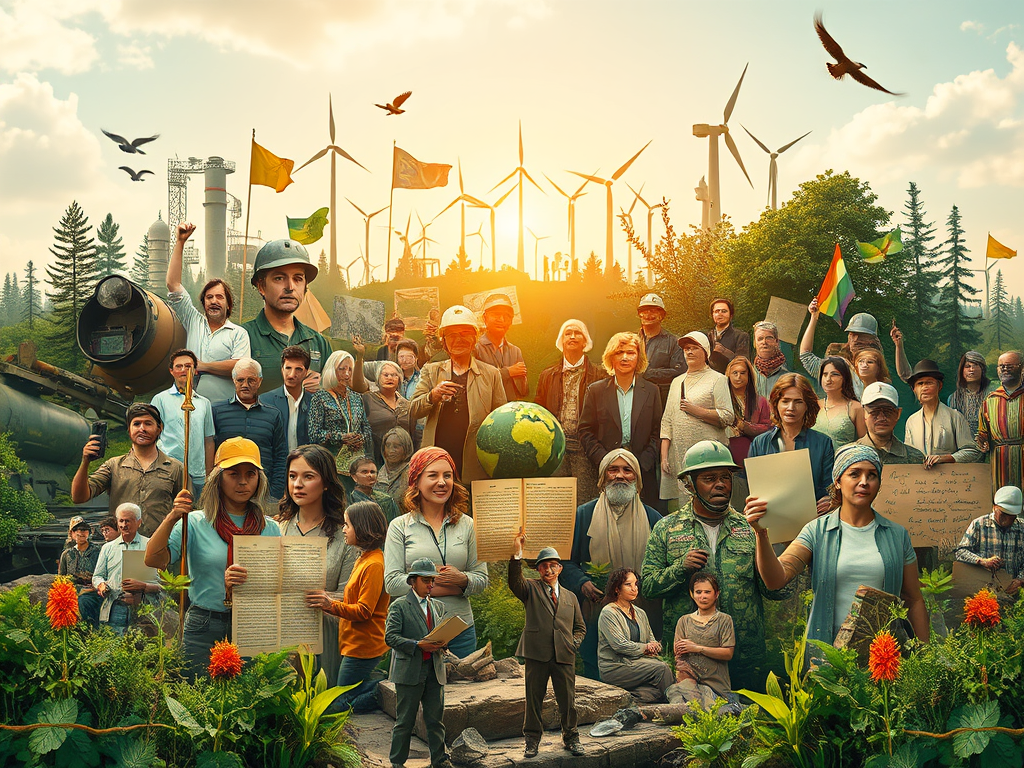
This section focuses on:
- Explain the factors that develop of environmental movement
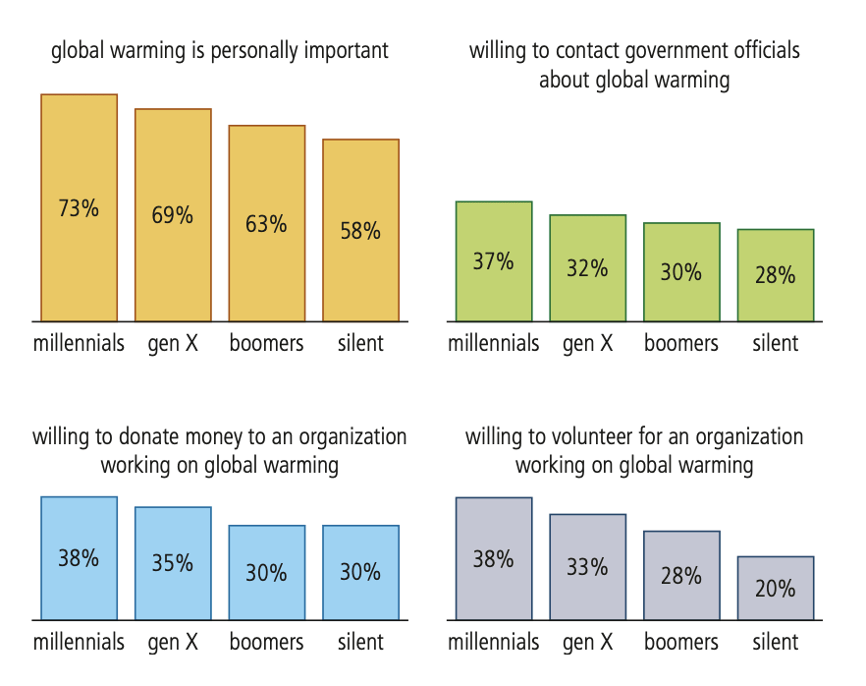
- Describing and identifying EVS using surveys
Try this “What’s Your Worldview” simple survey
The Emergence and Evolution of the Environmental Movement
Although the modern environmental movement is generally regarded as having originated in the 1960s, human awareness of the consequences of environmental degradation dates back much further. The Romans documented issues such as air and water pollution, while in Europe between the late fourteenth and mid-sixteenth centuries, pollution was widely associated with the spread of epidemic disease. Soil conservation practices were adopted in China, India, and Peru as early as two millennia ago.
Estimates of global population suggest approximately 50 million people in 1000 BCE, 200 million by the beginning of the Common Era, and one billion by 1800. Until the past two centuries, natural resources were largely perceived as inexhaustible. Today, with a global population exceeding eight billion, this assumption is no longer tenable. Understanding contemporary environmentalism requires an examination of both (i) events that generated concern over environmental impacts, and (ii) the responses of individuals, collectives, governments, businesses, and international organisations such as the United Nations (UN).
The environmental movement has been shaped not only by policy and science but also by the efforts of influential individuals and independent advocacy groups, often amplified through media engagement. This dynamic has contributed to its character as a grassroots movement. Nevertheless, a philosophical divide persists: some argue that nature should be conserved to ensure the sustainable provision of goods and services for humankind (environmental managers), whereas others maintain that conservation should occur unconditionally, valuing nature for its intrinsic and spiritual significance (deep ecologists).
At its core, the debate can be reduced to a simple question: should nature be preserved for our sake or for its own?
Actors in the Environmental Movement
The development of the environmental movement has been influenced by multiple factors, including:
- individuals and their activism,
- literature,
- media coverage,
- major environmental disasters,
- international agreements,
- scientific discoveries, and
- technological innovations.

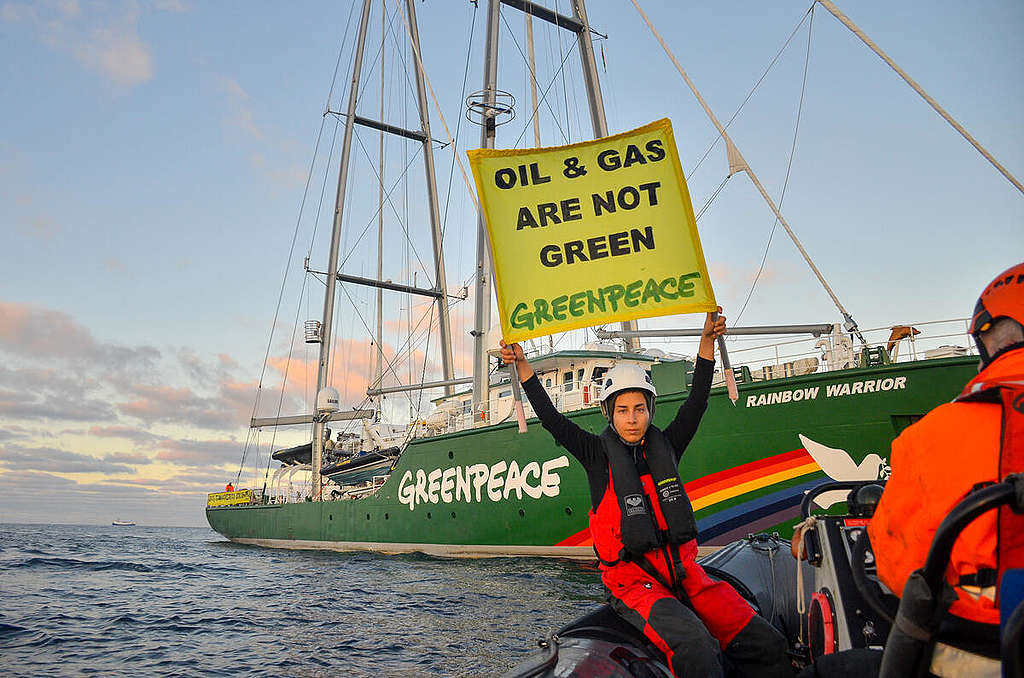
Historically, environmental concerns rarely reached the majority of the global population unless issues directly affected them. However, social norms and behaviours have shifted, with greater attention now paid to energy conservation, ethical consumption (e.g., electric vehicles, dolphin-safe tuna), and recycling. Political engagement has also grown, as evidenced by the influence of Green parties and activist groups such as Extinction Rebellion and Greenpeace.

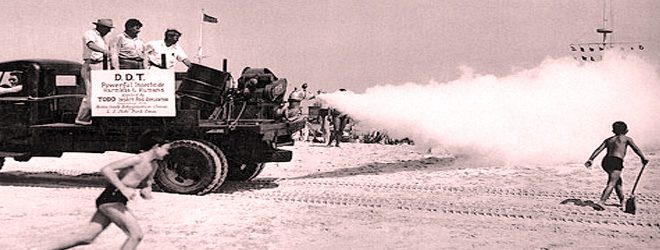
A pivotal moment for modern environmentalism was the publication of Rachel Carson’s Silent Spring (1962). Carson highlighted the ecological consequences of pesticide use, particularly the bioaccumulation of synthetic chemicals such as dichlorodiphenyltrichloroethane (DDT) in animal and human tissues. She warned of risks to biodiversity, notably declines in birds of prey, and raised concerns about human health impacts, including cancer. Although the chemical industry sought to discredit her work, many scientists corroborated her findings. A subsequent government investigation, commissioned by President John F. Kennedy, confirmed her warnings and ultimately led to the prohibition of DDT.
Today, climate change represents the most pressing environmental challenge. While scientific understanding of its causes and consequences has advanced, action to reduce greenhouse gas emissions has lagged. The widely used “overflowing bathtub” analogy captures the urgency: just as one would immediately turn off the taps when a bath begins to overflow, greenhouse gas emissions must be halted rather than endlessly debated while accumulation continues.
Key Influences and Stakeholders
Independent non-governmental organisations (NGOs) have played a crucial role in raising awareness and shaping public opinion, thereby influencing both government and corporate behaviour. Notable NGOs include Friends of the Earth (FoE), the World Wide Fund for Nature (WWF), Greenpeace, the Global Footprint Network (GFN), and Earthjustice. These organisations employ advocacy campaigns, legal action, and public mobilisation to achieve specific outcomes. For instance, the WWF’s sustained campaign contributed to the 1989 global ban on the commercial ivory trade, while Earthjustice filed a lawsuit against the U.S. government in 2023 in response to the approval of the Willow Project in Alaska, supported by petitions signed by five million citizens.
Corporate actors also play a significant role. As suppliers of goods and services, multinational and transnational corporations (TNCs) directly affect resource use and environmental outcomes, particularly through extractive industries and fossil fuel consumption. Recent campaigns promoting reductions in single-use plastics and commitments to sustainability have influenced corporate strategies.
Governments contribute through policy, regulation, and legislation (e.g., emissions controls, land-use planning), while also engaging in international negotiations under the auspices of bodies such as the United Nations Environment Programme (UNEP). While national priorities differ—some placing greater emphasis on immediate socioeconomic concerns such as food security—environmental issues are globally recognised and necessitate coordinated solutions.
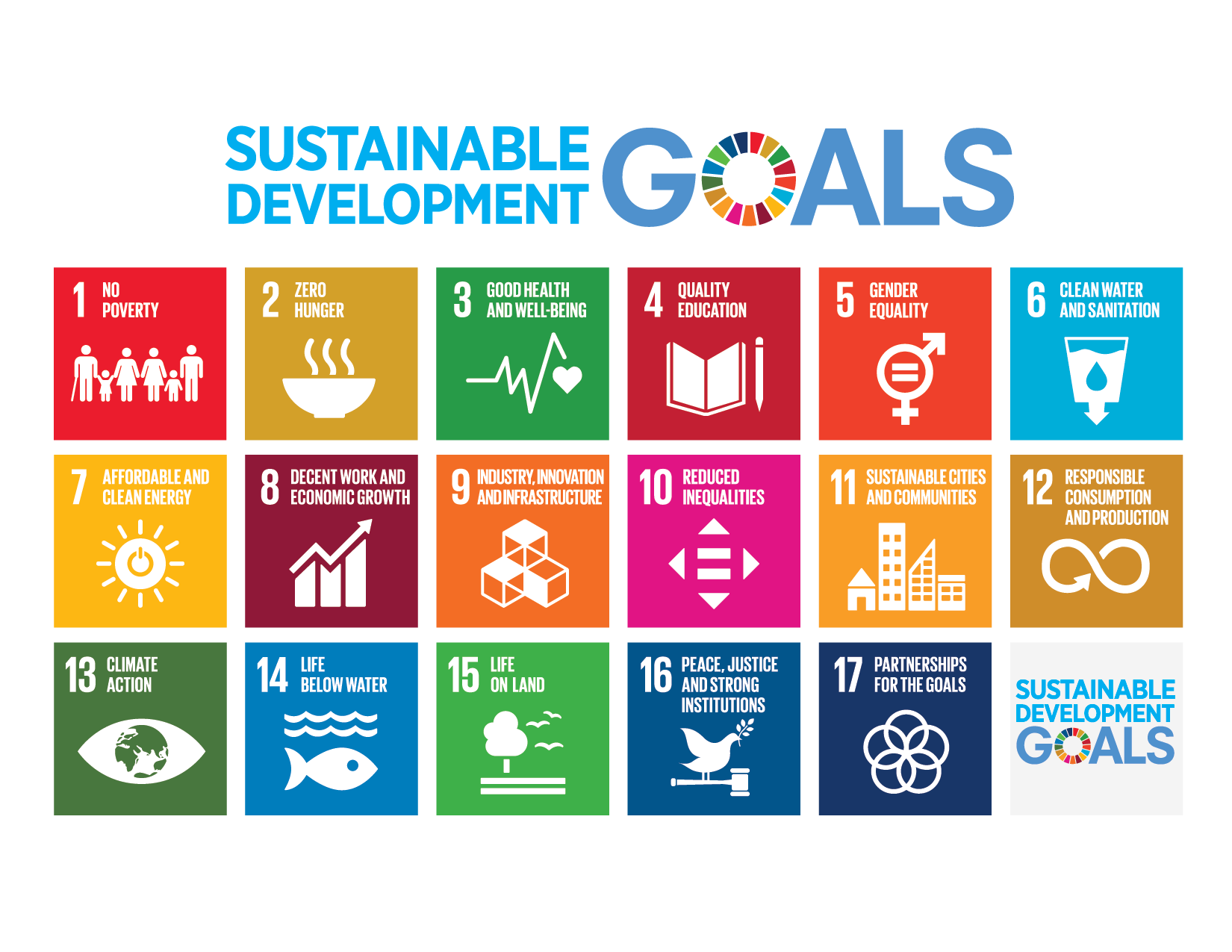
Intergovernmental organisations, particularly the UN, have become central to environmental governance, convening global summits that bring together states, NGOs, and corporate actors to address interconnected challenges of environmental protection and sustainable development.
What has influenced you or you community in terms of your EV S?
![ESS 8.1.3 [AHL] Biocapacity and Environmental Migration](https://mypytrclass.com/wp-content/uploads/2025/12/image-4.png?w=1024)



![ESS 8.3.4 [AHL] Photochemical Smogs and Tropospheric Ozone](https://mypytrclass.com/wp-content/uploads/2025/12/image-1.png?w=1024)
 PYTR Class