

Learning objectives
- Understands the advantages and limitation of international law that provides an essential framework
Transboundary Environmental Issues and Regional Agreements
Environmental challenges often transcend national borders, necessitating cooperative and transboundary solutions. International agreements addressing these challenges generally fall into two categories: (1) those targeting transboundary pollution, such as the Association of South-East Asian Nations (ASEAN) Agreement on Transboundary Haze Pollution (AATHP), and (2) those focused on transboundary resource management, such as the Food and Agriculture Organization’s (FAO) International Plan of Action to Prevent, Deter, and Eliminate Illegal, Unreported, and Unregulated Fishing.
The Association of South-East Asian Nations and Haze Pollution
The Association of South-East Asian Nations (ASEAN) comprises Indonesia, Brunei Darussalam, Cambodia, Laos, Malaysia, Myanmar, the Philippines, Singapore, Thailand, and Vietnam. Within this region, land and forest fires have become an escalating environmental problem, with smoke and haze frequently spreading across national boundaries and affecting countries located considerable distances from the source.
A notable example occurred in 1997, when extensive forest fires in the Indonesian part of Borneo severely affected Malaysia and Singapore. The fires, primarily caused by illegal slash-and-burn agricultural practices, were exacerbated by the ignition of peat deposits and prolonged drought conditions, which limited natural suppression by rainfall. The consequences were severe: large areas of forest were destroyed, substantial quantities of carbon dioxide (CO₂) were released into the atmosphere, and widespread air pollution caused respiratory illnesses and fatalities.
In response, ASEAN member states sought a coordinated approach to address the crisis. This culminated in the signing of the ASEAN Agreement on Transboundary Haze Pollution (AATHP) on 10 June 2002 in Kuala Lumpur, Malaysia. Under this agreement, signatory states committed to both individual and joint actions aimed at assessing the origin, causes, and extent of land and forest fires and the resulting haze. The agreement obliges states to implement environmentally sound policies, practices, and technologies to prevent and control such fires, while also strengthening national and regional capacities for assessment, prevention, mitigation, and management.
Although the agreement was signed in 2002, ratification occurred in stages. Initially, only seven of ASEAN’s ten member states ratified the treaty. Cambodia acceded in 2006, followed by the Philippines in 2010, and Indonesia—the country most frequently associated with transboundary haze events—in 2014.
To what extend the ASEAN Transboundary Pollution Agreement has been successful?
Activity
Step 1: Explore the following resources to learn more about the issues:
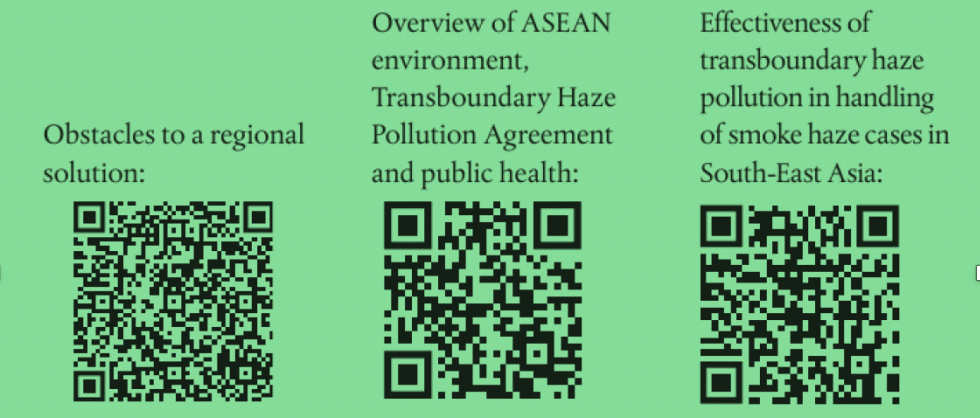

Step 2: Write an essay: To what extent the ASEAN Agreement on Transboundary Haze Pollution been successful
Sample Essay
Read more of this content when you subscribe today.
| Evidence | Implication of Success |
|---|---|
| ACC THPC established and operationalized | Demonstrates institutional capacity to coordinate haze management at the ASEAN level |
| Second Haze-Free Roadmap drafted and launched | Shows strategic planning with clear responsibilities, targets, and monitoring mechanisms |
| Continued use of ASMC and earlier governance structures | Indicates sustained regional collaboration and early-warning systems |
Is Haze Getting Less Because of AATHP?
Overall haze hasn’t significantly decreased. In fact, many indicators show that in recent years, air pollution, including haze, has worsened across Southeast Asia.
| Claim | Assessment |
|---|---|
| Haze is significantly decreasing across ASEAN | No. Haze continues to be episodic and persistent, with major events recurring regularly. |
| AATHP effectively reduces haze through enforcement | Not yet. The agreement lacks enforcement mechanisms, legal penalties, and binding accountability. |
| There is some progress in specific areas or countries | Yes, modestly. Initiatives like SOPs, peatland strategies, and regional coordination show localized results. Thailand’s reductions are notable. |
| Overall impact remains limited despite frameworks | Correct. AATHP has built institutional and cooperative foundations, yet effectiveness hinges on enforcement, political will, and funding. |
Introduction
The Southeast Asian haze crisis, driven primarily by large-scale forest and peatland fires, has posed enduring environmental, health, and economic challenges since the late twentieth century. In response, the Association of Southeast Asian Nations (ASEAN) adopted the ASEAN Agreement on Transboundary Haze Pollution (AATHP) in 2002, marking the world’s first legally binding regional environmental treaty targeting air pollution. This paper evaluates whether haze incidence has demonstrably decreased due to the AATHP, drawing on regional monitoring data, scholarly critiques, and recent institutional developments.
Effectiveness of the AATHP in Reducing Haze
Despite its symbolic significance, the AATHP’s overall effectiveness in reducing haze has been limited. Severe haze episodes continued to occur after the agreement’s ratification, including in 2005–06, 2009, 2013, 2015, and 2019, underscoring the persistence of the problem (ASEAN, 2024). Empirical assessments of air quality and hotspot activity reveal that haze intensity fluctuates more closely with climatic cycles such as El Niño–Southern Oscillation than with regional governance mechanisms (CIFOR-ICRAF, 2024). Thus, while the AATHP has provided a framework for dialogue and coordination, it has not eradicated the recurring haze phenomenon.
Institutional and Cooperative Progress
Nonetheless, the AATHP has produced important institutional outcomes that may gradually improve the region’s capacity for haze management. The establishment of the ASEAN Specialised Meteorological Centre (ASMC), the 2016 and 2023–2030 Haze-Free Roadmaps, and most recently, the ASEAN Coordinating Centre for Transboundary Haze Pollution Control (ACC-THPC), demonstrate incremental progress toward regional coordination (CIFOR-ICRAF, 2024). Furthermore, the ASEAN Peatland Management Strategy 2023–2030 explicitly targets peatlands as priority landscapes, recognising their central role in haze formation. These developments suggest that ASEAN has advanced from rhetorical commitments to structured frameworks with measurable targets.
Continuing Limitations
Despite these institutional advances, the AATHP remains constrained by weak enforcement mechanisms, the consensus-driven “ASEAN Way,” and limited transparency, particularly regarding land concession data in Indonesia (Eco-Business, 2023). The absence of a centralised enforcement body or penalties for non-compliance has curtailed the agreement’s deterrent power. Moreover, funding shortfalls and reliance on public rather than private sector financing hinder the implementation of ambitious haze-free targets. As a result, transboundary haze persists as a recurrent problem, particularly in years of drought and high fire risk.
Recent Trends in Haze Intensity
Air quality data suggests no consistent long-term decline in haze. For instance, the World Air Quality Report (IQAir, 2023) documented modest improvements in 2022 across several ASEAN countries, including an 11% improvement in Indonesia. However, these gains were reversed in 2023, when eight out of nine ASEAN countries recorded worsening air quality, with Cambodia, Malaysia, and Thailand reporting significant increases in particulate matter (PM2.5) concentrations. While hotspot counts in 2024 fell compared to 2023 in parts of the Mekong and southern ASEAN regions (Borneo Bulletin, 2024), these reductions were modest and likely influenced by weather variability.
Conclusion
In conclusion, the evidence does not support the assertion that haze in ASEAN has significantly declined as a result of the AATHP. The agreement has succeeded in institutionalising cooperation, raising awareness, and building technical capacity. However, its lack of enforcement, transparency, and adequate financing has meant that the incidence of haze continues largely unabated. Although localised improvements in hotspot control and new institutional arrangements such as the ACC-THPC are promising, the AATHP’s success remains primarily procedural rather than substantive. Achieving a haze-free ASEAN will require stronger compliance mechanisms, greater private sector accountability, and sustained political will at both national and regional levels.
![ESS 8.1.3 [AHL] Biocapacity and Environmental Migration](https://mypytrclass.com/wp-content/uploads/2025/12/image-4.png?w=1024)




![ESS 8.3.4 [AHL] Photochemical Smogs and Tropospheric Ozone](https://mypytrclass.com/wp-content/uploads/2025/12/image-1.png?w=1024)

 PYTR Class