
Learning Objectives
- Outline the components of an environmental system
- Define transfer and transformation in terms of environmental systems
- Construct a system diagram of a lake
- Evaluate the use of models (diagrams) to represent environmental systems
- Describe system equilibria
A system is a collection of inter-related components and their relationships, which together create a unified, complex whole, giving rise to emergent properties.
Part 1: The Human Place in the Biosphere
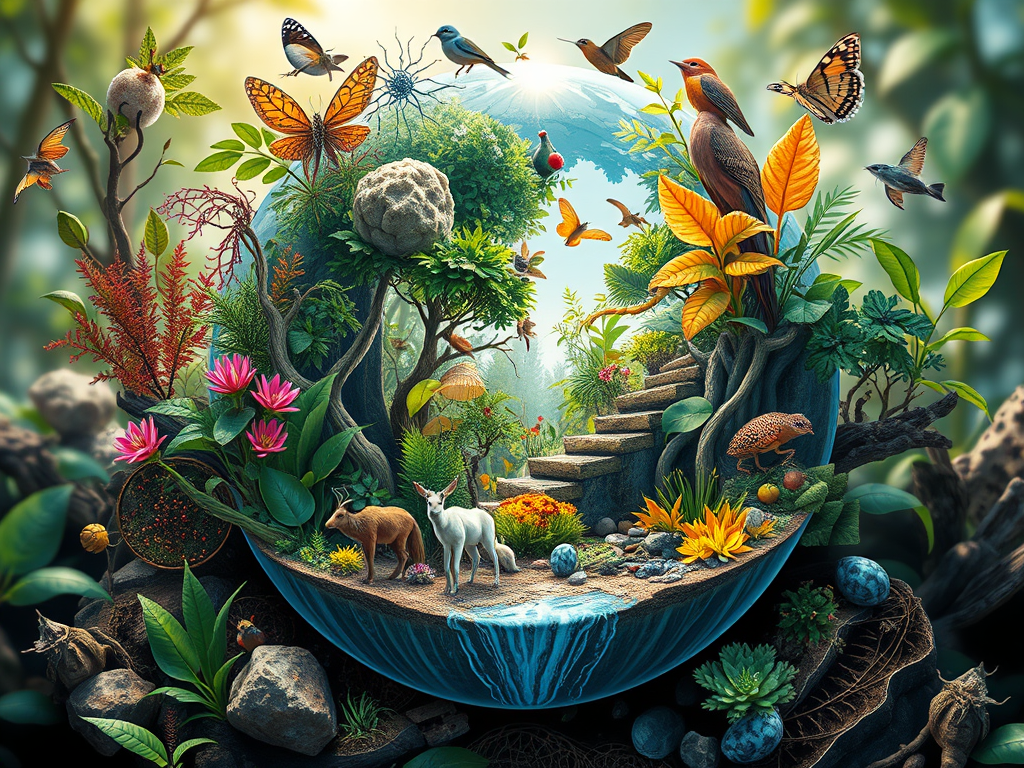
The biosphere includes all regions of Earth where life exists—essentially, all ecosystems. It is made up of living organisms, soil, water, and air. Humans, along with every other organism, live within this thin layer. Yet, our understanding of how it functions, self-regulates, and responds to human activity remains limited.
The anthroposphere refers to the parts of Earth that are created or modified by humans. This includes cities, towns, roads, machines, ports, energy systems, mines, and agricultural land used for crops and livestock. The anthroposphere reduces the natural biosphere by degrading land and damaging habitats.
Other Earth systems (or “spheres”) include:
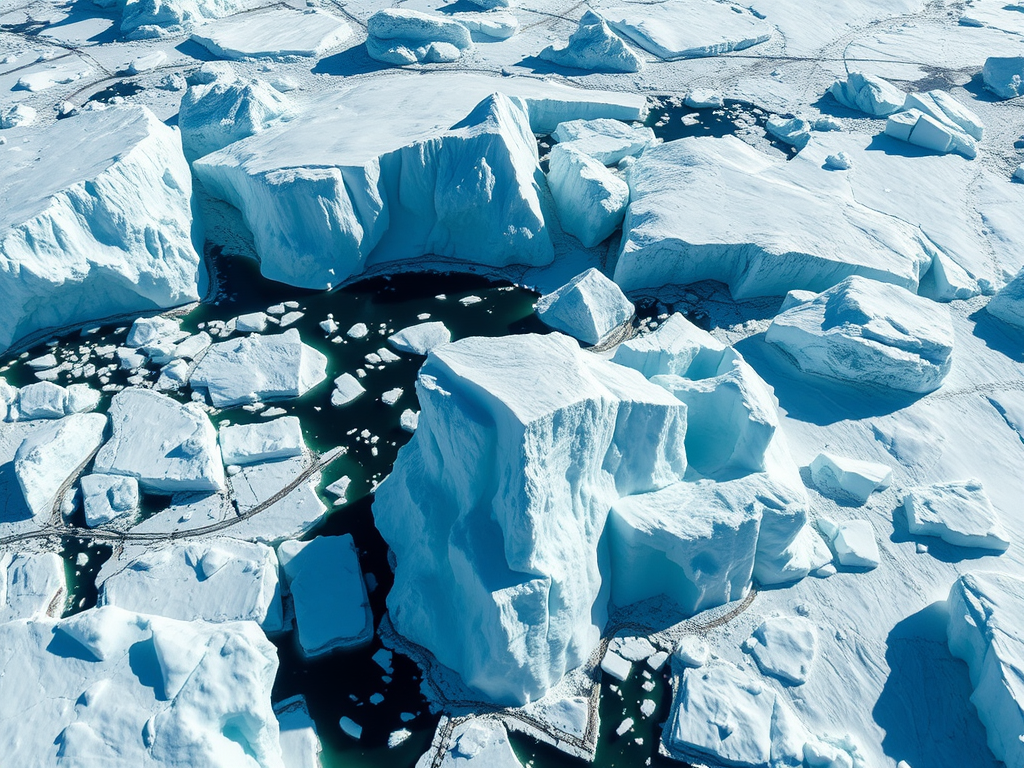
These Earth systems (including the anthroposphere) are interconnected i.e supporting each other by exchanging materials, energy. As the result of they emerge as one property – the Earth
The Gaia Hypothesis — A Model of the Earth
In the 1970s, James Lovelock and Lynn Margulis proposed the Gaia hypothesis. They suggested that Earth and its biological systems function as a single, self-regulating entity. Through negative feedback loops, conditions on Earth are kept within a range suitable for life. The name Gaia was chosen after the Ancient Greek Earth goddess.
The hypothesis is supported by several observations:
- Surface temperature has remained relatively stable, even though the Sun now emits about 30% more energy than when Earth first formed.
- Atmospheric composition is stable: roughly 79% nitrogen, 21% oxygen, and 0.03% carbon dioxide. Oxygen is highly reactive and should be depleted, yet it remains constant.
- Ocean salinity is steady at around 3.4%, even though rivers continually carry salts into the seas.
- Habitability persists despite major disturbances such as volcanic eruptions and meteor impacts.
To illustrate how self-regulation might evolve, Lovelock and Andrew Watson created a mathematical model called Daisyworld. In this simulation, black and white daisies influence the planet’s temperature through their differing abilities to absorb or reflect sunlight. The model demonstrates how feedback mechanisms can emerge from the actions of individual organisms acting in their own interest.
Later, in The Revenge of Gaia, Lovelock described Earth as an “older lady,” past her prime and less resilient than before. He warned that humanity may be approaching a tipping point, where stable equilibrium gives way to positive feedback processes. This could push Earth into a new, hotter equilibrium. Lovelock controversially suggested that while humans might survive, the global population could decline by up to 90%.
Part 2: Environmental System
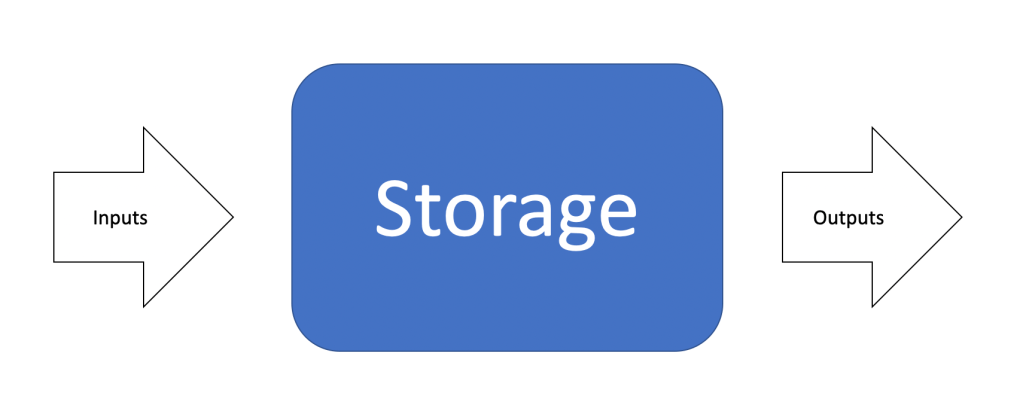
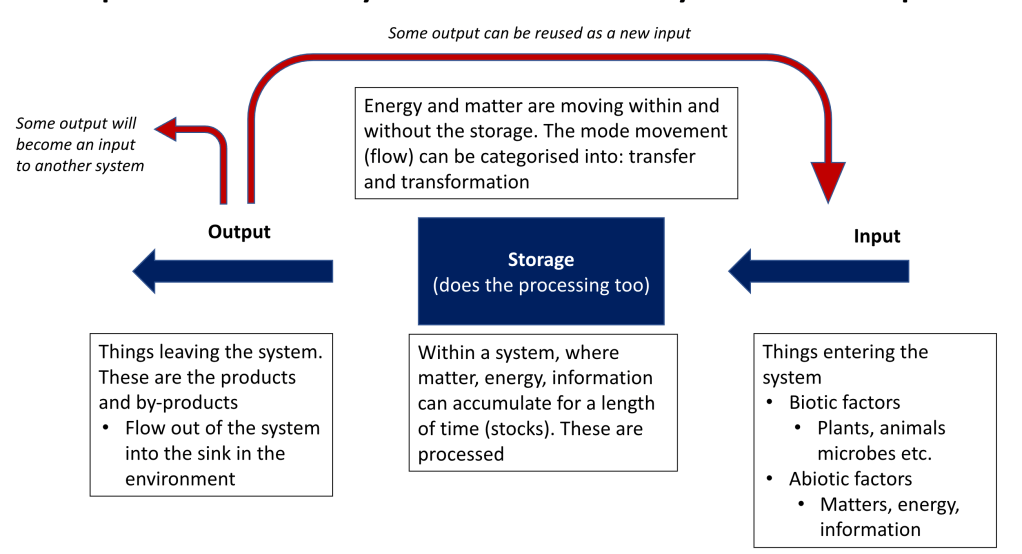
A system contains of the following components:
- Inputs and outputs of a system
- May be matter or energy.
- Storages (stores)
- May be living or non-living.
- Flows represent the movement of matter or energy.
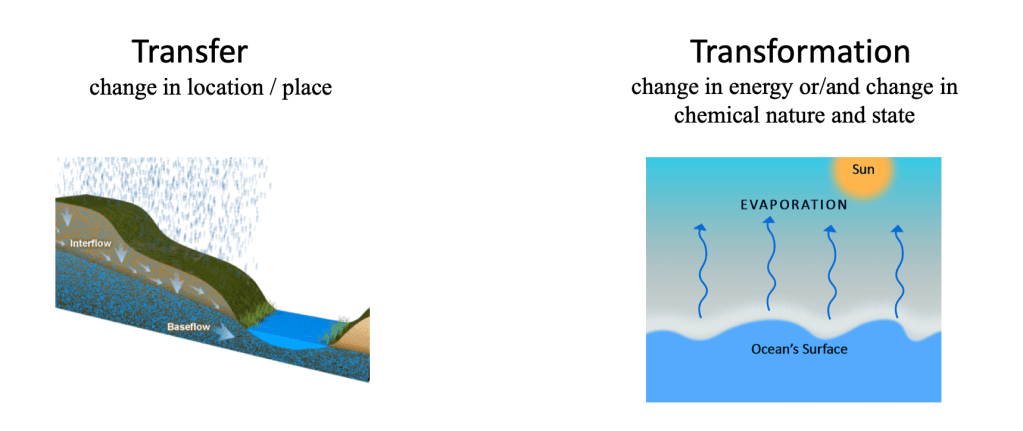
- Transfer – movement of matter or energy without a change in state or chemical form.
- Water flowing from a river into the sea
- Chemical energy in sugars moving from herbivores to carnivores when eaten
- Heat energy moving in ocean currents
- Transformation – a change in state or form of matter or energy.
- Soluble glucose converted into insoluble starch in plants (matter → matter)
- Light energy converted into heat by a surface (energy → energy)
- Burning wood (matter → energy)
- Photosynthesis (energy → matter)
- Transfer – movement of matter or energy without a change in state or chemical form.
- The size of storage boxes in diagrams indicates the relative size of the storages.
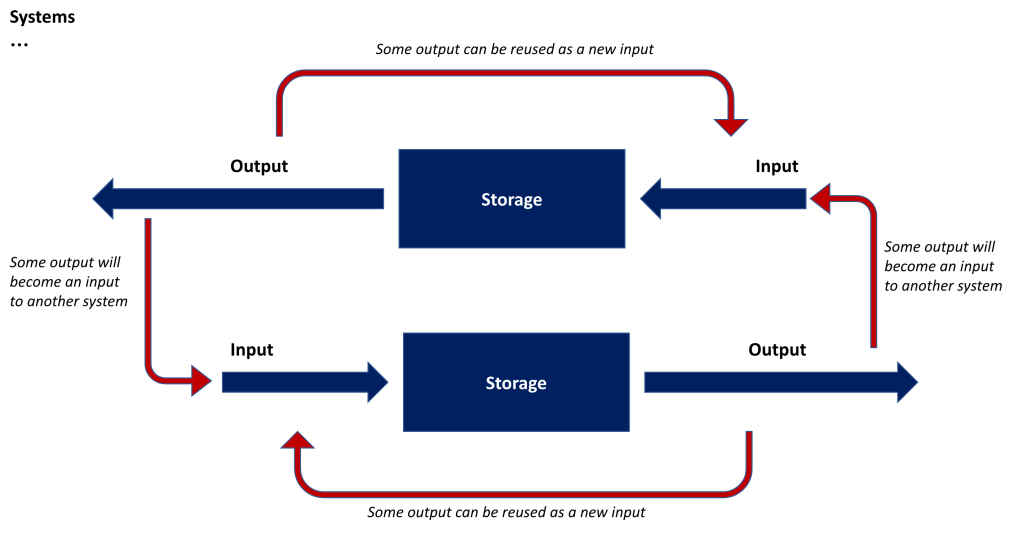
Types of Environmental Systems
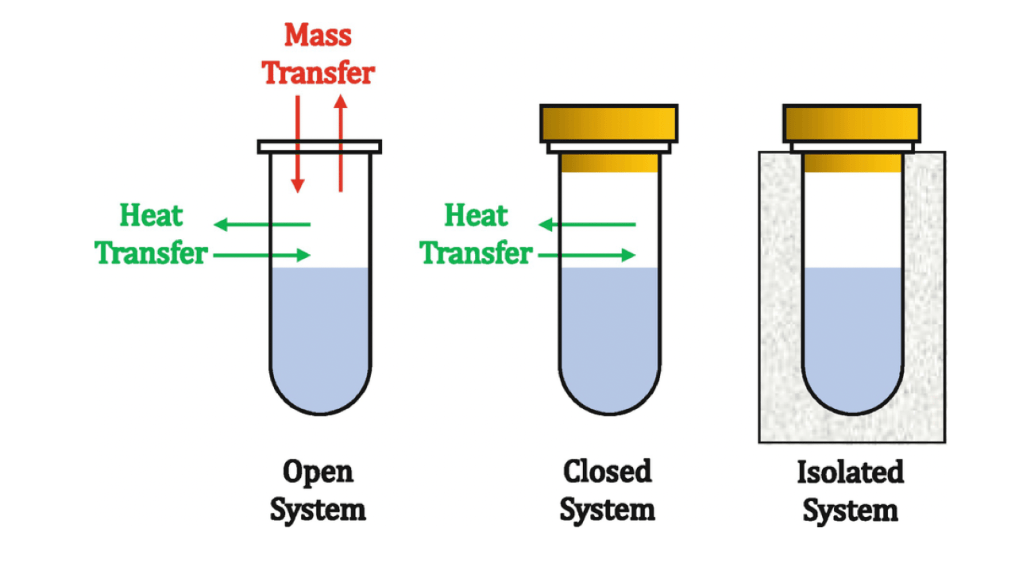
- Open systems exchange both matter and energy with their surroundings. All ecosystems are open systems. Even isolated islands exchange energy and matter through air, oceans, and migratory species.
- Closed systems exchange energy but not matter with their surroundings. True closed systems do not occur naturally on Earth, though Earth itself can be considered an “almost closed” system. It receives solar energy and radiates heat back to space, but only very small amounts of matter enter or leave.
Artificial examples of closed systems include sealed aquariums or terrariums. These usually collapse over time due to imbalances in oxygen, carbon dioxide, or nutrients.
Part 3: Equilibria
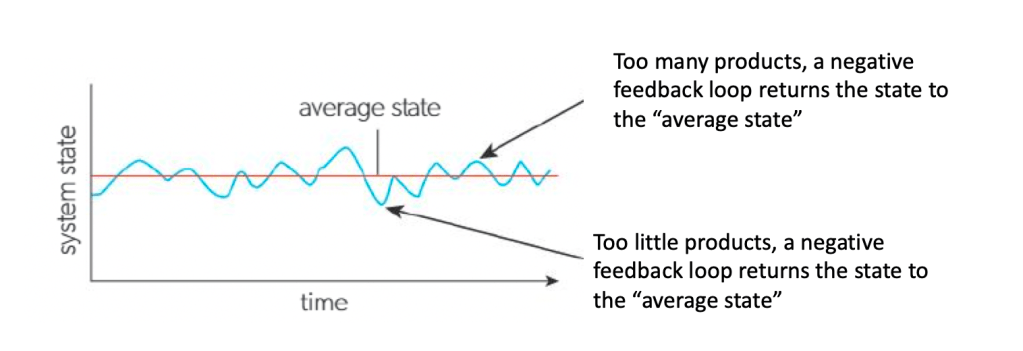
Open systems tend toward steady-state equilibrium, maintaining balance within limits despite ongoing changes.
Examples:
- A water tank where inflow equals outflow—water is moving, but the level stays constant.
- Economic markets with continuous capital flows yet overall stability.
- Ecological populations where births equal deaths, keeping numbers stable.
- A mature forest ecosystem where energy and matter inputs equal outputs, maintaining long-term balance.
- Human body temperature regulation (sweating to cool, shivering to warm).
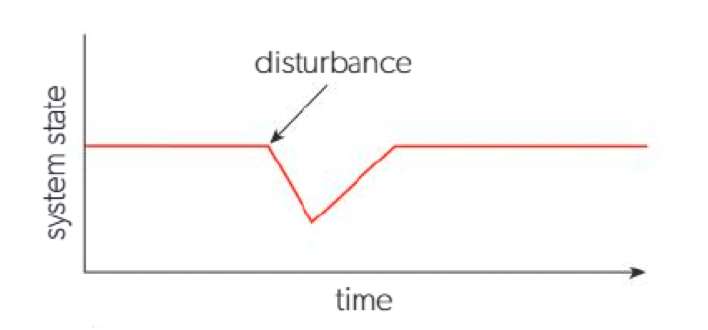
Equilibrium is maintained by negative feedback mechanisms.
Stable and Unstable Equilibria
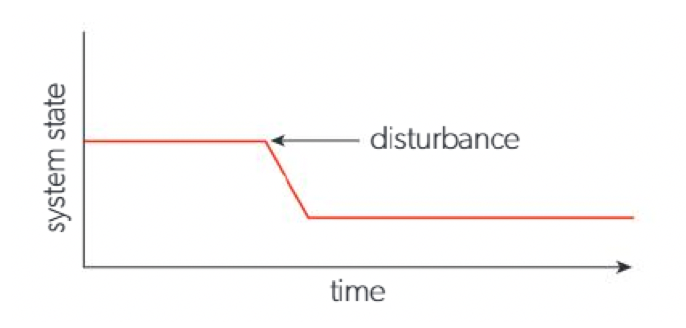
Part 4: Pros and Cons of System Models
Models of Systems
A model is a simplified representation of reality, used to understand systems and predict changes. Systems follow rules, but humans don’t always know them fully, so models help explore scenarios.
Types of models:
- Physical (e.g., wind tunnels, aquariums, globes).
- Software (e.g., climate models, DaisyWorld).
- Mathematical equations.
- Dataflow diagrams.
Strengths of models:
- Simpler to work with than reality.
- Useful for predicting effects of input changes.
- Applicable to similar situations.
Limitations:
- They cannot capture the full complexity of real systems.
- Assumptions and simplifications may limit accuracy.
Notes and Classwork
Subscribe to get access
Read more of this content when you subscribe today.
![ESS 8.1.3 [AHL] Biocapacity and Environmental Migration](https://mypytrclass.com/wp-content/uploads/2025/12/image-4.png?w=1024)


![ESS 8.3.4 [AHL] Photochemical Smogs and Tropospheric Ozone](https://mypytrclass.com/wp-content/uploads/2025/12/image-1.png?w=1024)
 PYTR Class