

Learning objectives
- Explain how environmental laws play important roles in ensuring the sustainability of the biodiversity
CITES and the Regulation of African Elephants
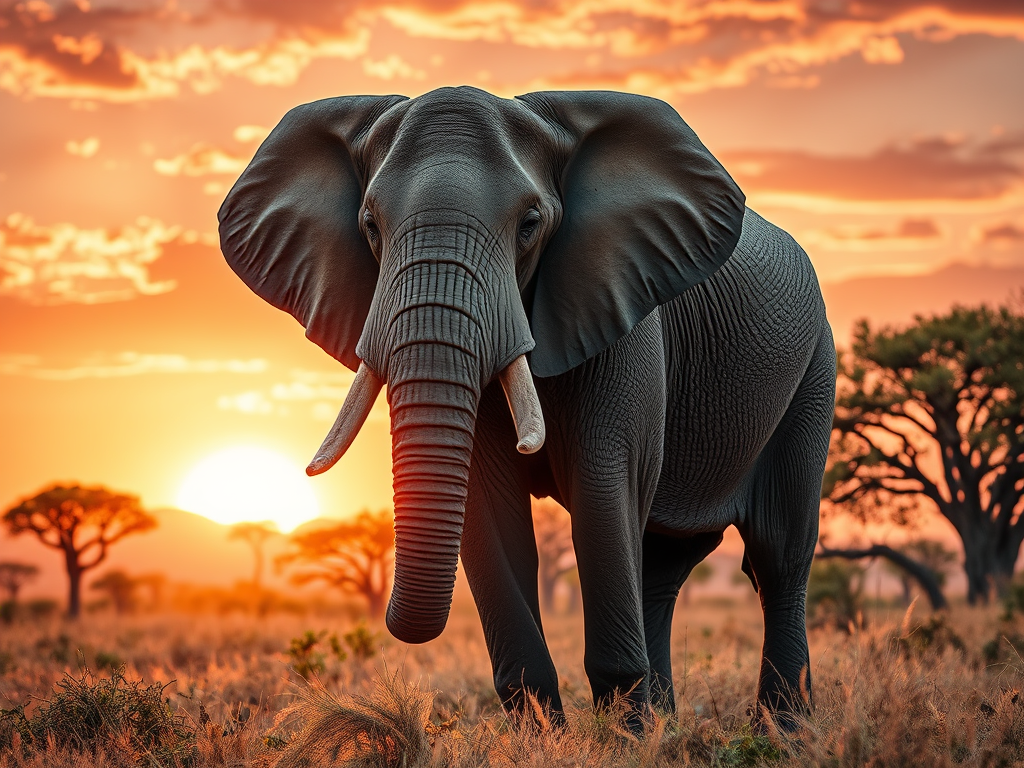
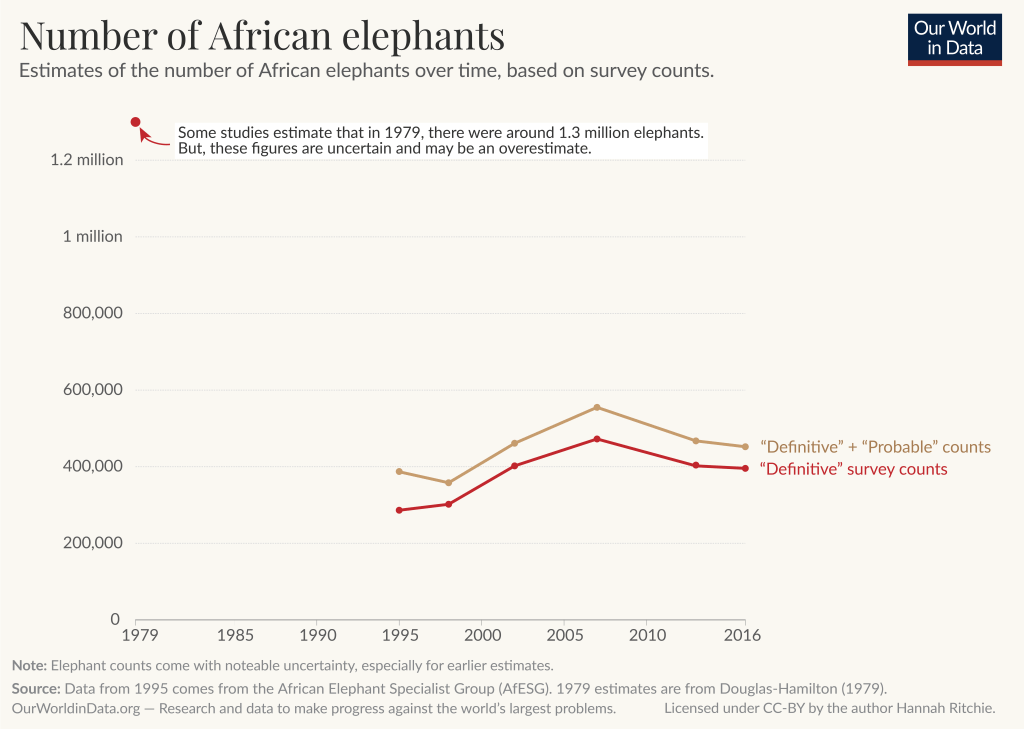
The African elephant (Loxodonta africana) was formally listed in Appendix I of the Convention on International Trade in Endangered Species of Wild Fauna and Flora (CITES) in 1989. Appendix I encompasses species that are threatened with extinction, where international trade is permitted only under exceptional circumstances (CITES, 1989). This decision followed a severe decline in elephant populations during the 1970s and 1980s, largely driven by intensive ivory poaching, which reduced global herds from an estimated 1.3 million individuals to approximately 600,000 (Douglas-Hamilton, 1987; CITES Secretariat, 1992).
In 1997 and 2000, several southern African states—namely Botswana, Namibia, and Zimbabwe, followed later by South Africa—successfully lobbied to have their elephant populations transferred to Appendix II. Appendix II species are not necessarily threatened with extinction, but may become so if trade is not effectively regulated (CITES, 1997). This reclassification permitted strictly controlled ivory sales, most notably the one-off sale to Japan in 1999 and a subsequent sale to China and Japan in 2008 (UNEP et al., 2013).
Conservation Implications of the Appendix II Downlisting
The decision to downlist elephants in southern Africa produced mixed conservation outcomes. On the one hand, governments in the region argued that regulated ivory sales provided important revenue streams for conservation initiatives and local community development. The relative stability of elephant populations in these countries was cited as evidence that sustainable management could be achieved under the Appendix II framework (Martin, 2008). Proceeds from sales were reportedly allocated to anti-poaching operations, the maintenance of wildlife reserves, and community-based conservation programs (Biggs et al., 2017).
Conversely, conservationists raised concerns that the reintroduction of legal trade created significant enforcement challenges. Legal sales were said to provide loopholes through which illegally sourced ivory could be laundered into legitimate markets. The partial legalization of ivory trade also made it increasingly difficult for enforcement agencies to distinguish between legal and illegal products, thereby weakening regulatory control (Stiles, 2004). Moreover, these policy shifts had an unintended “signal effect,” potentially reigniting consumer demand, particularly in Asian markets (Wasser et al., 2015).
Trends in Illegal Trade and Poaching
Empirical evidence suggests that illegal ivory trade expanded significantly following the Appendix II downlistings and associated one-off sales. Data from the Elephant Trade Information System (ETIS) and the Monitoring the Illegal Killing of Elephants (MIKE) programme demonstrated a marked rise in poaching incidents and illicit ivory flows during the mid-2000s and early 2010s (CITES, 2013; Underwood et al., 2013). In particular, the 2008 CITES-approved ivory sale correlated with an escalation in poaching across East, Central, and West Africa (UNEP et al., 2013).
Between 2010 and 2014, poaching reached crisis levels, with tens of thousands of elephants killed annually (Wittemyer et al., 2014). During this period, the illegal ivory trade became increasingly dominated by transnational organized crime networks, contributing to systemic corruption and, in some cases, fueling armed conflict in source regions (Nellemann et al., 2014). These developments underscore the complexities of balancing sustainable use with species protection under international environmental law.
References
- Biggs, D., Courchamp, F., Martin, R., & Possingham, H. P. (2017). Legal trade of Africa’s rhino horns. Science, 339(6123), 1038–1039.
- CITES. (1989). Amendments to Appendices I and II of CITES adopted at the seventh meeting of the Conference of the Parties. Lausanne: CITES Secretariat.
- CITES. (1997). Amendments to Appendices I and II of CITES adopted at the tenth meeting of the Conference of the Parties. Harare: CITES Secretariat.
- CITES. (2013). Monitoring the Illegal Killing of Elephants (MIKE) and the Elephant Trade Information System (ETIS) report to the CITES Standing Committee. Bangkok: CITES Secretariat.
- CITES Secretariat. (1992). The African Elephant Action Plan. Geneva: CITES.
- Douglas-Hamilton, I. (1987). African elephants: Population trends and their causes. Oryx, 21(1), 11–24.
- Martin, E. B. (2008). Effective conservation measures for Africa’s elephants. Pachyderm, 44, 67–76.
- Nellemann, C., Henriksen, R., Raxter, P., Ash, N., & Mrema, E. (Eds.). (2014). The Environmental Crime Crisis: Threats to Sustainable Development from Illegal Exploitation and Trade in Wildlife and Forest Resources. Nairobi: UNEP.
- Stiles, D. (2004). The ivory trade and elephant conservation. Environmental Conservation, 31(4), 309–321.
- UNEP, CITES, IUCN, & TRAFFIC. (2013). Elephants in the Dust – The African Elephant Crisis: A Rapid Response Assessment. Nairobi: UNEP.
- Underwood, F. M., Burn, R. W., & Milliken, T. (2013). Dissecting the illegal ivory trade: An analysis of ivory seizures data. PLOS ONE, 8(10), e76539.
- Wasser, S. K., Brown, L., Mailand, C., Mondol, S., Clark, W., Laurie, C., & Weir, B. S. (2015). Genetic assignment of large seizures of elephant ivory reveals Africa’s major poaching hotspots. Science, 349(6243), 84–87.
- Wittemyer, G., Northrup, J. M., Blanc, J., Douglas-Hamilton, I., Omondi, P., & Burnham, K. P. (2014). Illegal killing for ivory drives global decline in African elephants. Proceedings of the National Academy of Sciences, 111(36), 13117–13121.
![ESS 8.1.3 [AHL] Biocapacity and Environmental Migration](https://mypytrclass.com/wp-content/uploads/2025/12/image-4.png?w=1024)




![ESS 8.3.4 [AHL] Photochemical Smogs and Tropospheric Ozone](https://mypytrclass.com/wp-content/uploads/2025/12/image-1.png?w=1024)
 PYTR Class