Describe and evaluate the following sustainability models:
The framework of SDG in ensuring sustainability
The Earth’s planetary boundary
Doughnut economy model
Circular economy model
You can join in to ensure sustainability as a citizen science
Citizen science refers to the involvement of non-professional scientists (i.e., the general public) in scientific research and data collection. It is a collaborative approach in which individuals, often volunteers, contribute to scientific projects—usually under the direction or supervision of professional researchers or institutions.
Sustainability models provide simplified abstractions of complex realities, offering both analytical utility and inherent limitations. In this section, four major frameworks are examined: the Sustainable Development Goals (SDGs), the Planetary Boundaries model, Doughnut Economics, and the Circular Economy.
While each model contributes uniquely to understanding sustainability, no single framework is sufficient by itself. SDGs offer goals and targets, but often lack the ecological thresholds emphasised in the Planetary Boundaries model. Doughnut Economics tries to integrate both social foundations and ecological ceilings, while the Circular Economy is more operational, focused on material throughput and product lifecycle. A holistic approach may require combining elements of these frameworks, ensuring coherence among goal setting, boundary conditions, justice, and implementation.
Sustainable Development
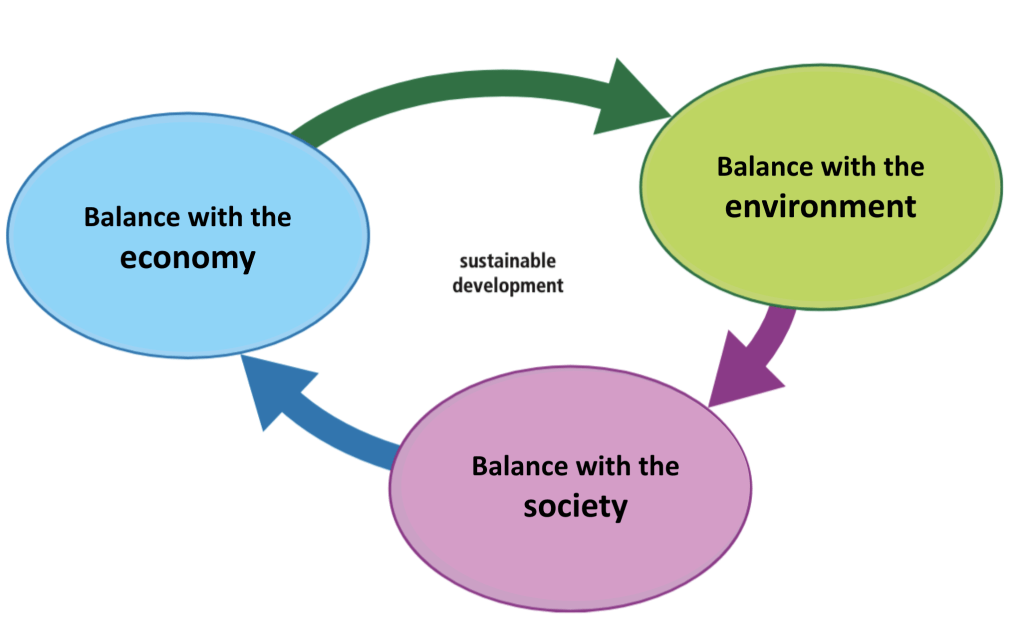
Sustainable development focuses on the quality of environmental, economic and social and cultural development. The concept encompasses ideas and values that inspire individuals and organizations to become better stewards of the environment and promote positive economic growth and social objective
The Growth-Driven Economic Model and Its Implications
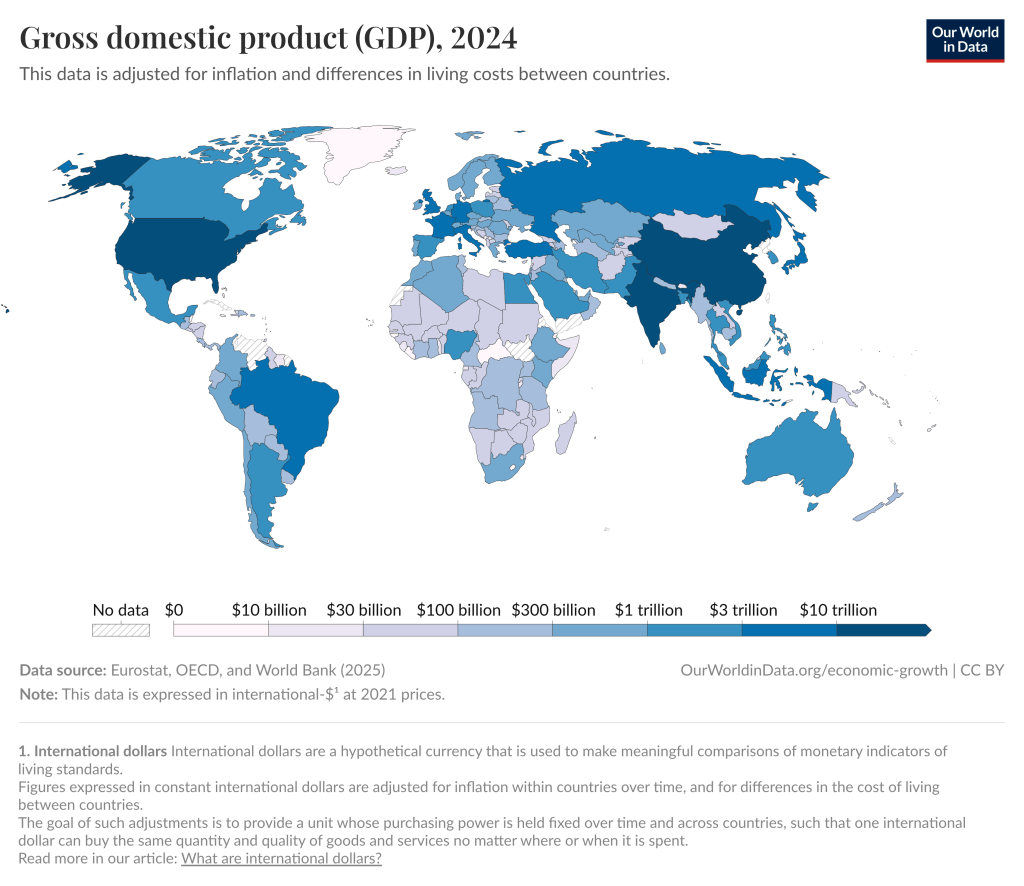
In contemporary global economic policy, particularly among the wealthiest nations, economic growth is widely regarded as the principal mechanism for addressing financial challenges. This paradigm underpins a culture of mass consumption, wherein citizens are incentivised to purchase consumer goods as a means of stimulating Gross Domestic Product (GDP).
Dependence on Growth:
Modern economies are fundamentally reliant on the continuous expansion of GDP. This reliance fosters a systemic dependency—political, social, and financial—on sustained economic growth, making its pursuit central to national stability and policy-making.
Consumerism and Public Perception:
The predominance of GDP as a metric for societal progress has contributed to the normalization of consumerism. Economic success is often equated with rising sales and market expansion, trends that correlate closely with population growth. Consequently, individuals are encouraged to associate personal well-being and achievement with the acquisition of material goods, a phenomenon sometimes referred to as “transformative consumerism.”
Disparities in Wealth Distribution:
Although rising GDP figures may signal national economic prosperity, they often obscure the unequal distribution of wealth. As such, GDP can serve as a divisive indicator, masking underlying socioeconomic inequalities.
Environmental Impact:
The relentless pursuit of economic growth has significant ecological consequences. It accelerates the depletion of natural resources, contributes to environmental pollution, and leads to widespread biodiversity loss. These outcomes pose substantial threats to planetary stability and long-term sustainability.
SDG
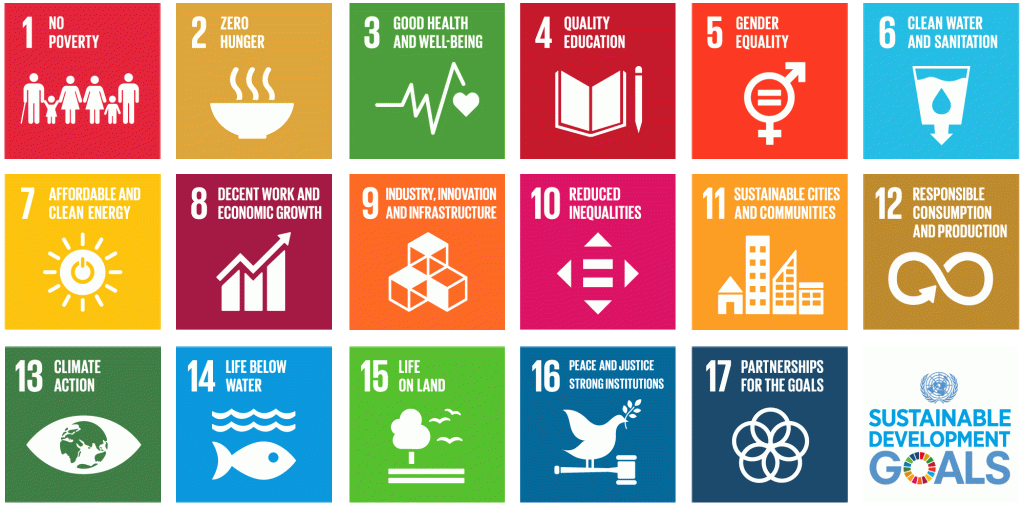
The Sustainable Development Goals (SDGs) consist of seventeen interrelated objectives formulated by the United Nations in 2015, intended to guide global development through 2030 and beyond. These succeeded the Millennium Development Goals (MDGs)—eight goals targeted for the period ending in 2015—that focused principally on low- and middle-income countries. The MDGs included goals such as eradicating extreme poverty and hunger; achieving universal primary education; promoting gender equality; reducing child mortality; combating major diseases; ensuring environmental sustainability; improving maternal health; and fostering global partnerships for development.
While the MDGs achieved notable successes—such as lifting nearly half a billion people out of extreme poverty, reducing gender disparities, increasing access to clean drinking water, and saving millions of lives—progress was uneven, particularly between low-income versus middle-income countries. Environmental outcomes were relatively weak, and the top-down structure of the MDGs meant that local consultation and engagement were often lacking. Critics have contended that some poverty reduction might have occurred independently of the MDGs, driven instead by broader economic trends.
UN SDG
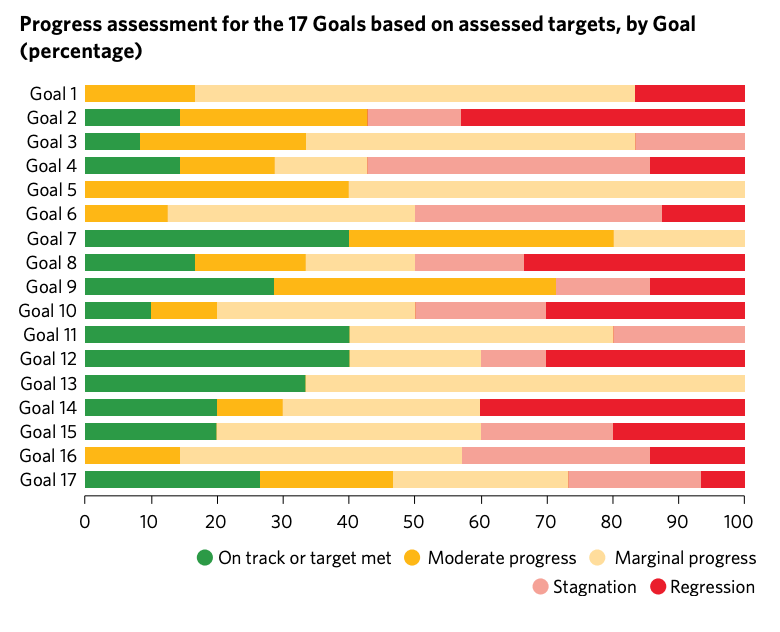
The SDGs build upon the MDGs with a broader scope and higher ambition. Each SDG target is monitored via one to four indicators, typically classified into three tiers depending on methodological robustness. Some targets relate to outcomes (e.g., health, education), others concern means of implementation (e.g., finance, infrastructure). There is an internationally accepted methodology for assessing many targets, though not all have established measurement protocols. A mid-term review in 2020 resulted in adjustments to some targets and indicators.
Despite the aspirational nature of the SDGs and evident progress in areas such as extreme poverty reduction, primary education, gender equality, and access to health services, substantial challenges remain. Global poverty persists: for example, as of 2021, approximately 9% of the global population—around 700 million people—lived on less than US$2.15 per day (2017 prices), concentrated in South Asia and Sub‑Saharan Africa. Undernourishment, unequal access to clean energy, water stress affecting over 2 billion people, insufficient data for many indicators, and rising environmental pressures complicate attainment.
SDG Progress. Source: UN SDG Report, 2025
Strengths
Provide a shared global agenda that enables cross‑national comparison and mutual accountability.
Universality: all countries are expected to strive toward the same goals, not only low‑ or middle‑income nations.
Rallying framework: despite non‑binding status, the SDGs encourage political commitment and enable advocacy.
Limitations
Pace & scale: Many targets may not be achieved by 2030; unexpected shocks (e.g., pandemics, natural disasters, conflicts) can divert progress.
Top‑down implementation: Centralized goal‑setting often fails to capture local priorities and contexts.
Data issues: Data reliability, consistency, and availability are challenges, especially in remote or under‑resourced regions.
Non‑binding nature: Without enforcement mechanisms, accountability depends largely on political will.
Underlying inequalities: SDGs measure many dimensions, but systemic issues (e.g., power relations, structural injustice) are harder to incorporate or measure.
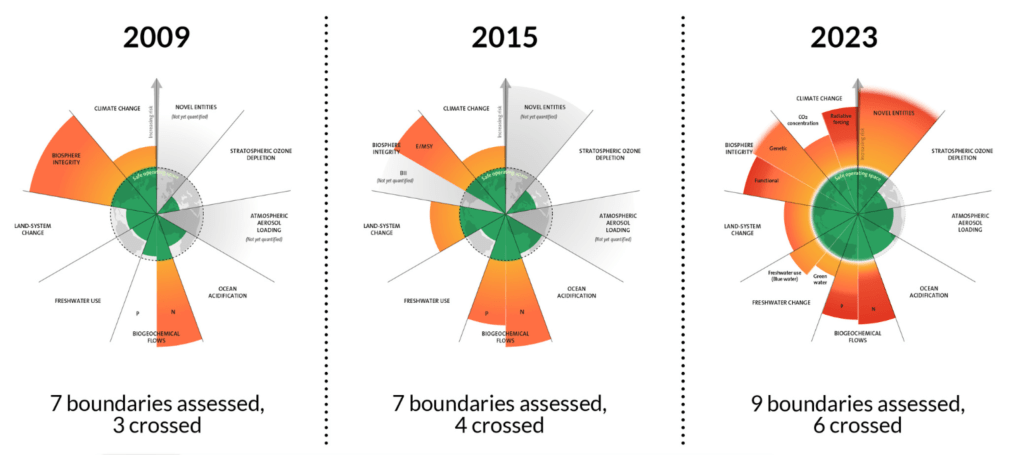
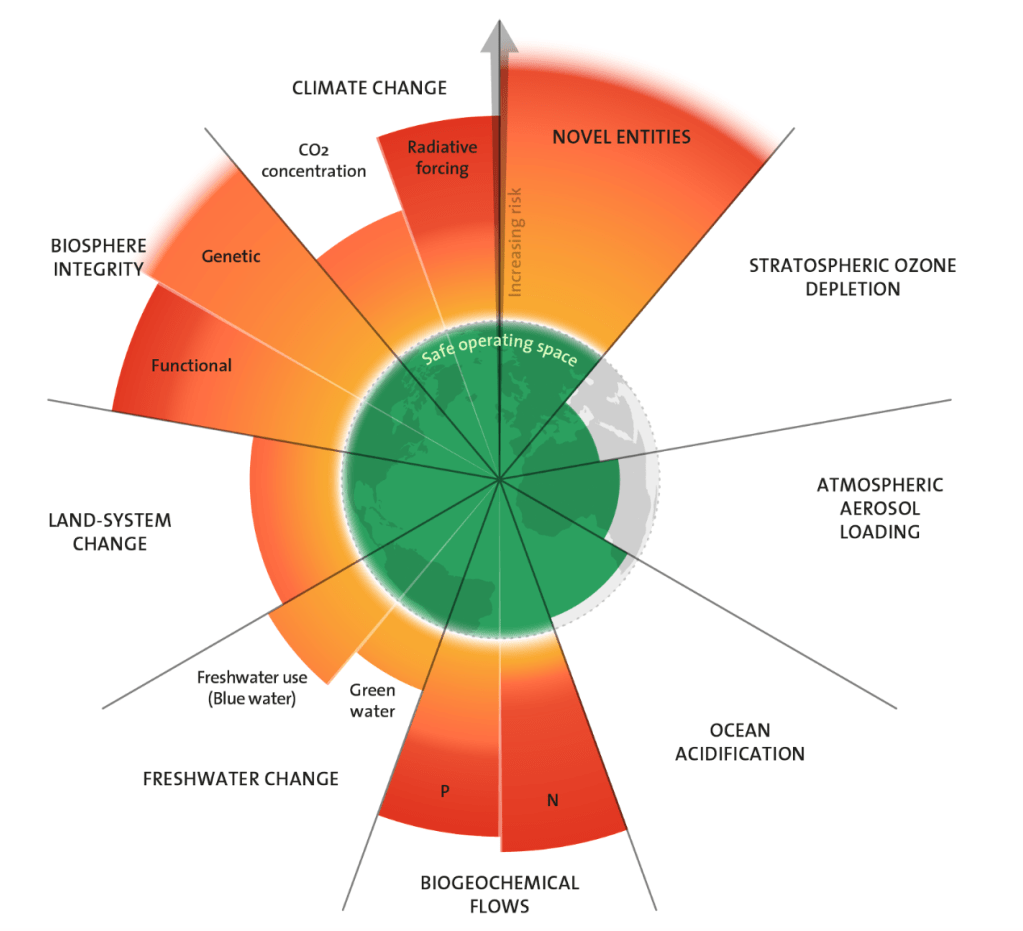
The Planetary Boundaries framework was introduced by Johan Rockström and colleagues in 2009 to define a “safe operating space” for humanity, based on nine key Earth‑system processes whose stability and resilience are critical to maintaining the environmental conditions characteristic of the Holocene epoch. These processes include: climate change; biosphere integrity (biodiversity loss and species extinction); biogeochemical flows (notably nitrogen and phosphorus cycles); land‑system change; freshwater use; ocean acidification; stratospheric ozone depletion; atmospheric aerosol loading; and the introduction of novel entities (e.g., synthetic chemicals, plastic pollution).
Quantitative thresholds (or control variables) are proposed for many of these processes. If these thresholds are exceeded, the risk of abrupt, non‑linear, or irreversible environmental changes increases substantially. The latest update (2023) has quantified all nine boundaries and found that six are already being transgressed (https://www.stockholmresilience.org)
Provides science‑based limits to human activities, helping policymakers and stakeholders understand where ecological risk becomes high.
Expands the sustainability discussion beyond climate change alone, to encompass multiple interacting Earth system processes.
Serves as a warning mechanism and encourages precautionary principles in policy and planning.
Limitations
Insufficient integration of the social dimension: issues of justice, equity, and human well‑being are not inherently built into the framework.
Regionally variable relevance: Global boundaries may not translate cleanly to national, regional, or local scales.
Uncertainty in threshold values: Scientific knowledge is evolving; some boundaries are less precisely quantified than others.
Doughnut Economy
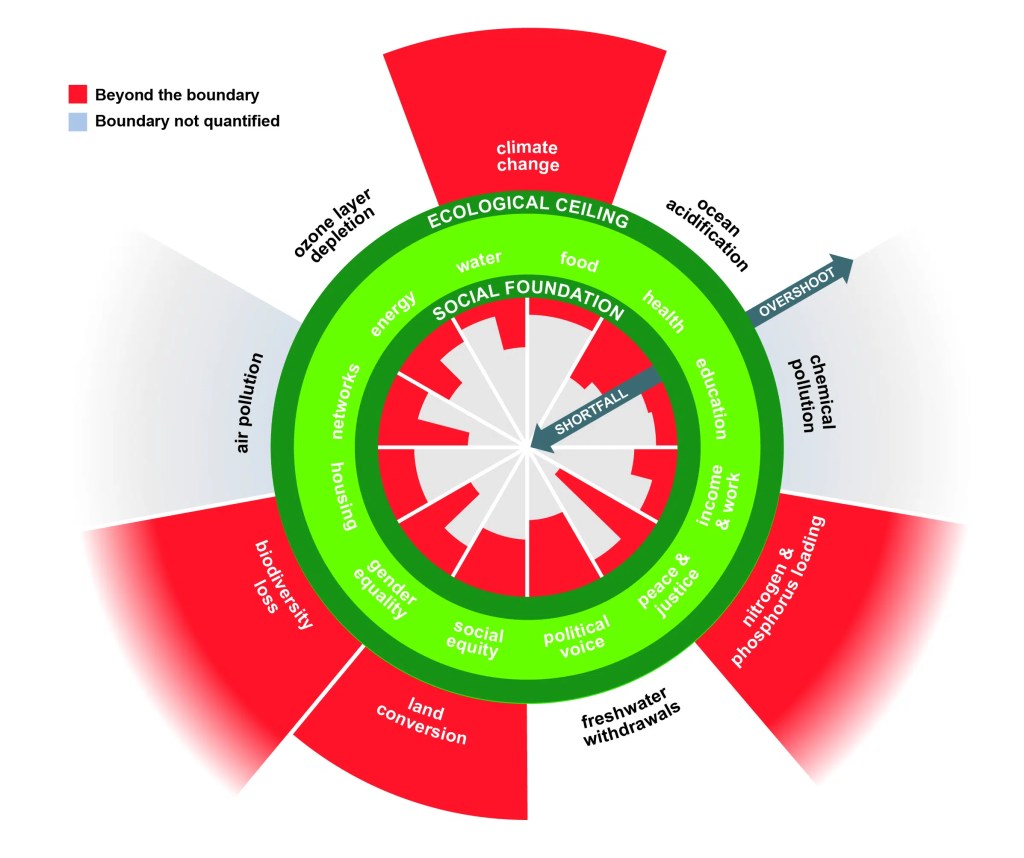
The Doughnut Economics model, developed by Kate Raworth and others, is a framework that seeks to balance human well‑being with ecological sustainability by designing economies that are both regenerative (restoring or renewing natural systems) and distributive (ensuring fair access to resources, opportunities, and the benefits of economic activity). The model is visually represented as two concentric rings: the inner ring defines the social foundation, below which basic human needs (e.g., food, health, education, equity) are not met; the outer ring defines the ecological ceiling, based in part on planetary boundary science, above which Earth‑system degradation occurs. The “safe and just space” for humanity lies between these two rings.
Uses
Bridges ecological limits and social justice in one integrative model.
Has gained visibility and adoption at different scales—including cities, enterprises, and some national policy discussions.
Encourages systems thinking and attention to interdependencies among social, ecological, and economic factors.
Limitations
Broad in scope; it tends to emphasise guiding principles rather than prescriptive policy instruments.
Implementation challenges, especially in political economies that prioritize short‑term growth or where institutions are weak.
Cultural and behavioural barriers: unequal priorities across stakeholders can impede adoption of regenerative and distributive values.
Circular Economy
The Circular Economy model proposes an alternative to the traditional linear model (“take‑make‑use‑dispose”) by designing systems that prioritize reduction of waste and pollution; maintaining products and materials at their highest value for as long as possible; and regenerating natural systems. Key principles include: eliminating waste, designing for reuse/repair/remanufacture, circulating materials in technical and biological cycles, and regenerating ecosystems (e.g., through practices like agroecology, conservation, restoration).
Uses
Promotes efficiency and waste reduction which can lower environmental impacts (e.g., greenhouse gas emissions, resource depletion).
Can stimulate innovation in product design, business models, supply chain management.


![ESS 8.1.3 [AHL] Biocapacity and Environmental Migration](https://mypytrclass.com/wp-content/uploads/2025/12/image-4.png?w=1024)



![ESS 8.3.4 [AHL] Photochemical Smogs and Tropospheric Ozone](https://mypytrclass.com/wp-content/uploads/2025/12/image-1.png?w=1024)
 PYTR Class