
Learning objectives
- Outline the meaning of economics and environmental economics
- Describe the polluter-pays principle and carbon market
- Outline the scope of environmental economics
- Summarise the 5 concepts of environmental economics
- Describe greenwashing using a named example
IB Knowledge Statements
HL.b.1 Economics studies how humans produce, distribute and consume goods and services, both individually and collectively.
HL.b.2 Environmental economics is economics applied to the environment and environmental issues.
HL.b.3 Market failure occurs when the allocation of goods and services by the free market imposes negative impacts on the environment.
HL.b.4 When the market fails to prevent negative impacts, the polluter-pays principle may be applied.
HL.b.5 “Greenwashing” or “green sheen” is where companies use marketing to give themselves a more environmentally friendly image.
HL.b.6 The tragedy of the commons highlights the problem where property rights are not clearly delineated and no market price is attached to a common good, resulting in overexploitation.
HL.b.7 Environmental accounting is the attempt to attach economic value to natural resources and their depletion.
HL.b.8 In some cases, economic value can be established by use, but this is not the case for non-use values.
HL.b.9 Ecological economics is different from environmental economics in that it views the economy as a subsystem of Earth’s larger biosphere and the social system as being a sub component of ecology.
HL.b.10 While the economic valuation of ecosystem services is addressed by environmental economics, there is an even greater emphasis in ecological economics.
HL.b.11 Economic growth is the change in the total market value of goods and services in a country over a period and is usually measured as the annual percentage change in GDP.
HL.b.12 Economic growth is influenced by supply and demand, and may be perceived as a measure of prosperity.
HL.b.13 Economic growth has impacts on environmental welfare.
HL.b.14 Eco-economic decoupling is the notion of separating economic growth from environmental degradation.
HL.b.15 Ecological economics supports the need for degrowth, zero growth or slow growth, and advocates planned reduction in consumption and production, particularly in high-income countries.
HL.b.16 Ecological economists support a slow/no/zero growth model.
HL.b.17 The circular economy and doughnut economics models can be seen as applications of ecological economics for sustainability.
The Concepts Environmental Economics
What is Environmental Economics?
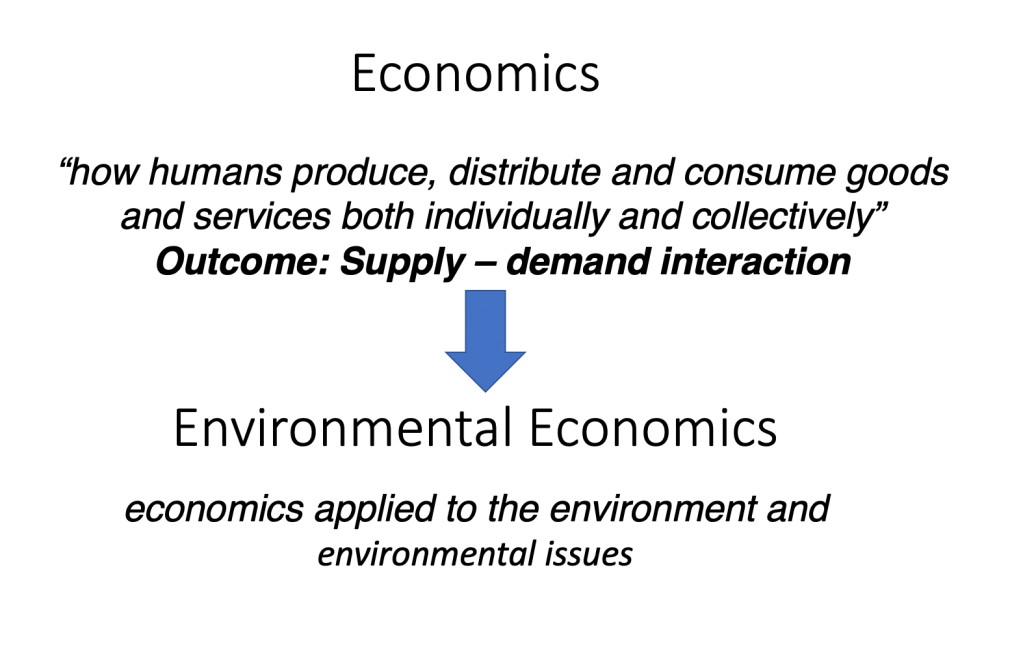
- Studies the economic effects of environmental policies worldwide.
- Concerned with the design and implementation of environmental policies.
- Developed in response to environmental damage caused by economic activities, with the aim of enhancing sustainable development.
- Focuses on the efficient allocation of environmental and natural resources.
- Examines how alternative environmental policies address issues such as:
- air pollution
- water quality
- toxic substances
- solid waste
- global warming
- Addresses challenges including inefficient natural resource allocation, market failure, negative externalities, and the management of public goods.
Perspectives in Environmental Economics
- Technocentric perspective
- science and technology can allow environmental economics to function within the current economic framework.
- Ecocentric perspective
- favours ecological economics as an alternative approach.
- Anthropocentic perspective (socio-ecological economics)
- A multidisciplinary approach to economics that considers environmental and societal factors primarily in terms of their impact on human well-being. Within this, ecological economics focuses on the natural world as a resource that supports human life and prosperity. Advocates of ecological economics argue that addressing today’s environmental challenges requires significant changes in human behaviour and systems, with the aim of ensuring the continued survival and flourishing of humanity. This perspective has given rise to a growing movement in ecological economics
- A multidisciplinary approach to economics that considers environmental and societal factors primarily in terms of their impact on human well-being. Within this, ecological economics focuses on the natural world as a resource that supports human life and prosperity. Advocates of ecological economics argue that addressing today’s environmental challenges requires significant changes in human behaviour and systems, with the aim of ensuring the continued survival and flourishing of humanity. This perspective has given rise to a growing movement in ecological economics
Activity 1 Discussing Perspectives in Environmental Economics
- Read this article
- How does this report support the idea that science and technology will enable environmental solutions to work within the current economic framework, rather than one framed by environmental or socio-ecological economics?
- How would an ecocentric approach differ from this technocentric one?
The Scope in Environmental Economics
Environmental economics addresses several key questions:
- What are the economic causes of environmental challenges?
- Market failure is central here. Markets for environmental goods—such as clean air or scenic natural landscapes—are often absent or incomplete, preventing efficient allocation of environmental resources.
- What is the monetary cost of environmental degradation, including pollution, deforestation, and biodiversity loss?
- What is the value of preventive and remedial measures designed to address environmental harm?
- Measuring and estimating these variables is critical in environmental economics.
- How can economic incentives and environmental policies be designed effectively?
- Both incentives and regulatory measures must be evaluated to determine whether their intended objectives are met.
Connection between economics and environmental economics
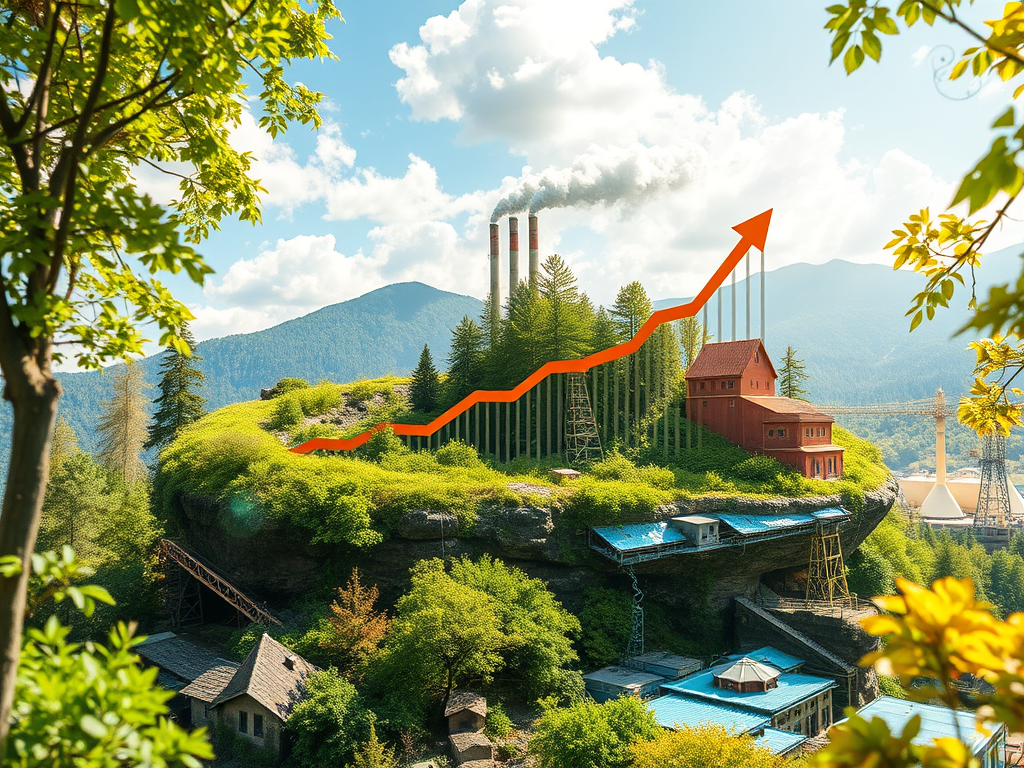
Economic growth often produces negative effects on environmental welfare. The use of resources and the production of goods generate pollution, resulting in a net welfare loss to society while imposing no direct costs on the producer. In addition, economic growth may increase the consumption of non-renewable resources, elevate pollution levels, accelerate global warming, and contribute to the loss of natural habitats. The central challenge for countries is to achieve economic development—particularly to lift the poorest out of poverty—while ensuring that such development is sustainable.
Polluter-pays principle
The polluter-pays principle is a widely accepted concept stating that those who generate pollution should bear the costs of managing it to prevent damage to human health and the environment. For example, a factory producing a hazardous by-product is generally required to dispose of it safely. Principle 16 of the 1992 Rio Declaration on Environment and Development codifies this principle in international environmental law.
Environmental economics has developed policy tools to ensure that polluters bear these costs. Such tools include quotas, fines, taxes, tradable permits, and carbon-neutral certification. These mechanisms reduce the burden on society by aligning the costs of pollution with the activities of polluters.
How carbon market works
A carbon market is an economic mechanism designed to reduce greenhouse gas (GHG) emissions by attaching a monetary value to carbon. It operates on the principle that market-based instruments can provide efficient and cost-effective pathways for emission reduction, thereby internalising the external costs of climate change. Within this system, entities are incentivised to either decrease their own emissions or to finance activities elsewhere that achieve equivalent reductions. In general, carbon market works using this mechanism:
- A regulatory authority sets an emissions cap or, in the case of voluntary systems, project-based credits are generated.
- Emission allowances or credits are distributed and become tradable assets.
- Market participants buy and sell these permits in response to their emission performance and financial considerations.
- The price of carbon is determined by supply and demand, thereby creating an economic signal for emission reduction.
- Firms are incentivised to innovate and invest in cleaner technologies in order to minimise compliance costs or generate revenue through surplus allowance sales.
5 Concepts of Environmental Economics

Sustainable development
The United Nations Environment Programme (UNEP) defines sustainable development as “development that meets the needs of the present without compromising the ability of future generations to meet their own needs.” The concept highlights the interaction between economic growth and sustainability, with four key components: economic growth, environmental protection, social equity, and institutional capacity.
Market failure
Market failure arises when the allocation of goods and services by the free market has adverse environmental consequences. In an efficient market, supply and demand forces balance each other, but in the case of market failure, this balance is disrupted. For example, a factory that pollutes while producing goods imposes welfare losses on society without incurring any direct costs.
Environmental goods, such as clean oceans, are difficult to price, as no markets exist for trading based on their quality. This constitutes a standard case of market failure. In such cases, corrective measures such as the polluter-pays principle are required.
Externalities
Externalities are unintended consequences of economic activity that affect individuals not directly involved. They represent another form of market failure.
- Negative externalities are harmful outcomes, such as industrial pollution leading to unclean air and water. Here, polluters often avoid costs, despite harming the environment and surrounding communities.
- Positive externalities are beneficial outcomes, such as community parks that also serve visitors from outside the community. Those who benefit without contributing financially are termed “free riders.”
Valuation
Environmental valuation seeks to assign economic value to natural resources and their depletion. Reaching consensus is difficult, but valuation is vital for managing environmental challenges.
- Use value is derived from the direct consumption or use of resources. Methods include opportunity cost pricing, replacement cost, and consumer willingness-to-pay approaches.
- Non-use value arises when individuals assign value to resources they do not directly use, such as endangered species or cultural landmarks. The contingent valuation method is commonly used, involving surveys of people’s willingness to pay for preservation or compensation for loss.
Valuation is complex, especially for resources offering multiple benefits, such as mountains that regulate water flow, provide fertile soils, and offer scenic beauty. Nonetheless, it is essential for evaluating management strategies and policy options.
Cost-benefit analysis
Economic decisions occur under scarcity, meaning resources allocated to one use cannot be used for another. Cost-benefit analysis (CBA) provides a method of weighing policy benefits against costs.
- Benefits are measured as improvements in human well-being.
- Costs are measured as reductions in human well-being.
- The most desirable policy is one that maximises the net surplus of benefits over costs.
CBA begins with a baseline scenario in which no change is made to existing conditions, and policy impacts are then compared against this reference point.
Greenwashing
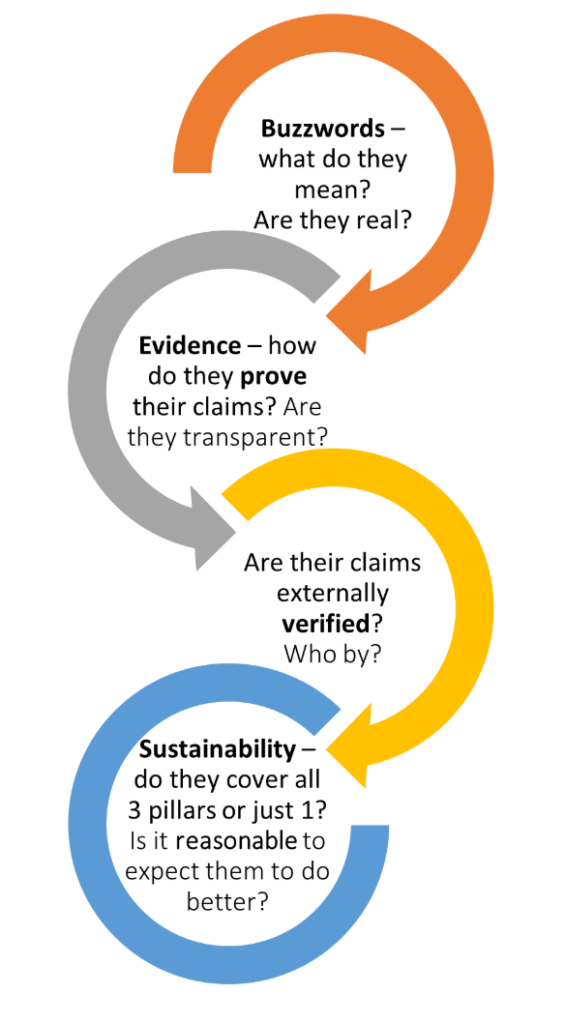
Spotting Greenwashing
Greenwashing refers to the dissemination of misleading information in which companies or organizations invest resources in portraying themselves as sustainable or environmentally responsible, rather than implementing substantive changes to achieve sustainability. A common example is found in oil companies that advertise transitions toward clean energy while continuing to rely heavily on fossil fuel production.
A 2020 survey conducted in the European Union revealed that 53% of environmental claims made for ‘green’ products were vague, misleading, or unfounded. In the same year, authorities found that 42% of corporate green marketing strategies were potentially false or deceptive. Environmental, Social, and Corporate Governance (ESG) frameworks aim to evaluate a company’s sustainability and ethical practices by considering its environmental impact, treatment of employees and customers, and governance structures. Since 2020, the United Nations has increasingly promoted the integration of ESG data with the Sustainable Development Goals (SDGs). However, critics argue that ESG-linked products have neither achieved nor are likely to achieve their intended purpose of raising the cost of capital for polluting firms. As a result, the ESG movement has faced accusations of greenwashing.

Activity 2
- Write your initial thoughts about sustainable practice one of the following companies
- Nestlé
- Starbucks
- Plastic Bottle Water Companies
- Zara
- Read this article:
- Reflect on your initial thoughts and the current thoughts
- Were your brainwashed? or were you aware of them greenwashing? How did you come to the conclusion/thoughts?

Carbon Offsetting
- Polluting companies/countries buy carbon credits to compensate for GHG emissions.
- Funds go to projects that remove carbon from the atmosphere or prevent new emissions.
- Measured in tonnes of CO₂-equivalent.
- Traded globally via brokers, online retailers, and trading platforms.
- Only effective if projects are:
- Additional → would not have happened without the funding.
- Permanent → carbon removal must last long-term.
- Often just shifts responsibility rather than cutting emissions at source.
- Risk of “greenwashing” → companies continue polluting while claiming climate action.
- Some projects (e.g., tree planting) may take decades to deliver real benefits.
- Outsourcing issue → emissions may just move elsewhere instead of being reduced.
Key problems in carbon offsetting
| Problem | Explanation |
| Carbon offsetting is not sustainable | Environmentally: Does not address the core issue of reducing CO₂ emissions; there are not enough offsets available for all emissions, and not all projects are realized. Economically: Increases the gap between rich and poor countries. Socially: Often used for greenwashing and maintains inequality between rich and poor. |
| Carbon offsetting is not ethical | Does not truly reduce CO₂ emissions; poorer countries are paid to offset while richer countries continue polluting. Often used as greenwashing. |
| Carbon offsetting is not good for the environment | Does not effectively reduce climate change; insufficient offsets exist to cover all global emissions. |
| Different projects have different effectiveness rates | Direct CO₂ removal is most effective, followed by renewable energy, energy efficiency, and finally carbon sequestration. |
Podcast: Economics Vs Environmental Economics
A free-market economy, when left unregulated, is unlikely to provide the level of environmental quality that society demands. In such systems, firms may pollute and consumers may make decisions without accounting for environmental consequences, leading to market failures (Baumol & Oates, 1988). To address these shortcomings, some degree of regulatory intervention is required to ensure that private actions reflect the broader social interest (Tietenberg & Lewis, 2018).
This challenge is central to the field of environmental economics, which focuses on determining the socially optimal level of environmental quality and identifying the most cost-effective means of achieving it (Hanley, Shogren, & White, 2013). Rather than a rigid doctrine, environmental economics functions as a flexible analytical framework for evaluating trade-offs in environmental policy, applicable at both local and global scales. For example, it provides tools for addressing issues ranging from localized industrial pollution to global challenges such as climate change (Kolstad, 2010).
The complete elimination of pollution is neither feasible nor necessarily desirable, as some level of emissions may be compatible with economic and social objectives. Instead, environmental economics emphasizes the evaluation of costs and benefits to determine an efficient balance between economic activity and environmental protection (Perman et al., 2011).
Traditional “command-and-control” regulatory approaches, based on prescriptive legal standards, are often criticized by environmental economists for their inflexibility and high costs (Cropper & Oates, 1992). Market-based instruments, such as pollution taxes and tradable permits, are generally considered more effective in achieving pollution reduction at lower economic cost (Stavins, 2003). A key example is the European Union Emissions Trading System (EU ETS), which sets a cap on carbon dioxide emissions while allowing firms to trade allowances. This system ensures that reductions are achieved where they are cheapest, minimizing the total cost of compliance (Ellerman, Convery, & de Perthuis, 2010).
Beyond firm-level costs, environmental economics also incorporates broader societal concerns, recognizing the social value of environmental quality and the benefits it provides beyond monetary measures (Hanemann, 1991).
Climate change, in particular, underscores the necessity of international cooperation. Because greenhouse gas concentrations are a global externality, unilateral action by individual countries is insufficient and often disproportionately costly. Effective mitigation therefore requires coordinated global agreements (Nordhaus, 2015). Furthermore, achieving significant reductions in emissions will require systemic changes in patterns of energy production, consumption, and economic activity. Economists argue that these transformations can be achieved more efficiently, with lower disruption, through the use of market-based mechanisms rather than prescriptive regulations (Stern, 2007).
References
- Baumol, W. J., & Oates, W. E. (1988). The Theory of Environmental Policy (2nd ed.). Cambridge University Press.
- Cropper, M. L., & Oates, W. E. (1992). Environmental economics: A survey. Journal of Economic Literature, 30(2), 675–740.
- Ellerman, A. D., Convery, F. J., & de Perthuis, C. (2010). Pricing Carbon: The European Union Emissions Trading Scheme. Cambridge University Press.
- Hanemann, W. M. (1991). Willingness to pay and willingness to accept: How much can they differ? The American Economic Review, 81(3), 635–647.
- Hanley, N., Shogren, J. F., & White, B. (2013). Introduction to Environmental Economics (2nd ed.). Oxford University Press.
- Kolstad, C. D. (2010). Environmental Economics (2nd ed.). Oxford University Press.
- Nordhaus, W. D. (2015). Climate clubs: Overcoming free-riding in international climate policy. American Economic Review, 105(4), 1339–1370.
- Perman, R., Ma, Y., McGilvray, J., & Common, M. (2011). Natural Resource and Environmental Economics (4th ed.). Pearson Education.
- Stavins, R. N. (2003). Experience with market-based environmental policy instruments. Handbook of Environmental Economics, 1, 355–435.
- Stern, N. (2007). The Economics of Climate Change: The Stern Review. Cambridge University Press.
- Tietenberg, T., & Lewis, L. (2018). Environmental and Natural Resource Economics (11th ed.). Routledge.
![ESS 8.1.3 [AHL] Biocapacity and Environmental Migration](https://mypytrclass.com/wp-content/uploads/2025/12/image-4.png?w=1024)



![ESS 8.3.4 [AHL] Photochemical Smogs and Tropospheric Ozone](https://mypytrclass.com/wp-content/uploads/2025/12/image-1.png?w=1024)
 PYTR Class