

IB Knowledge Statements
HL.b.1 Economics studies how humans produce, distribute and consume goods and services, both individually and collectively.
HL.b.2 Environmental economics is economics applied to the environment and environmental issues.
HL.b.3 Market failure occurs when the allocation of goods and services by the free market imposes negative impacts on the environment.
HL.b.4 When the market fails to prevent negative impacts, the polluter-pays principle may be applied.
HL.b.5 “Greenwashing” or “green sheen” is where companies use marketing to give themselves a more environmentally friendly image.
HL.b.6 The tragedy of the commons highlights the problem where property rights are not clearly delineated and no market price is attached to a common good, resulting in overexploitation.
HL.b.7 Environmental accounting is the attempt to attach economic value to natural resources and their depletion.
HL.b.8 In some cases, economic value can be established by use, but this is not the case for non-use values.
HL.b.9 Ecological economics is different from environmental economics in that it views the economy as a subsystem of Earth’s larger biosphere and the social system as being a sub component of ecology.
HL.b.10 While the economic valuation of ecosystem services is addressed by environmental economics, there is an even greater emphasis in ecological economics.
HL.b.11 Economic growth is the change in the total market value of goods and services in a country over a period and is usually measured as the annual percentage change in GDP.
HL.b.12 Economic growth is influenced by supply and demand, and may be perceived as a measure of prosperity.
HL.b.13 Economic growth has impacts on environmental welfare.
HL.b.14 Eco-economic decoupling is the notion of separating economic growth from environmental degradation.
HL.b.15 Ecological economics supports the need for degrowth, zero growth or slow growth, and advocates planned reduction in consumption and production, particularly in high-income countries.
HL.b.16 Ecological economists support a slow/no/zero growth model.
HL.b.17 The circular economy and doughnut economics models can be seen as applications of ecological economics for sustainability.
Lithium-ion batteries are widely used in portable electronics and electric vehicles due to their high energy density and long cycle life (Wang et al., 2023). However, their performance declines significantly at sub-zero temperatures, where sluggish ion transport at the graphite anode reduces charge storage capacity and leads to rapid energy loss (Zhang et al., 2021). In extreme cold, such as during winters in the U.S. Midwest or in outer space missions, lithium-ion batteries can even fail to deliver usable charge, posing limitations for both terrestrial and aerospace applications (Chen et al., 2022)
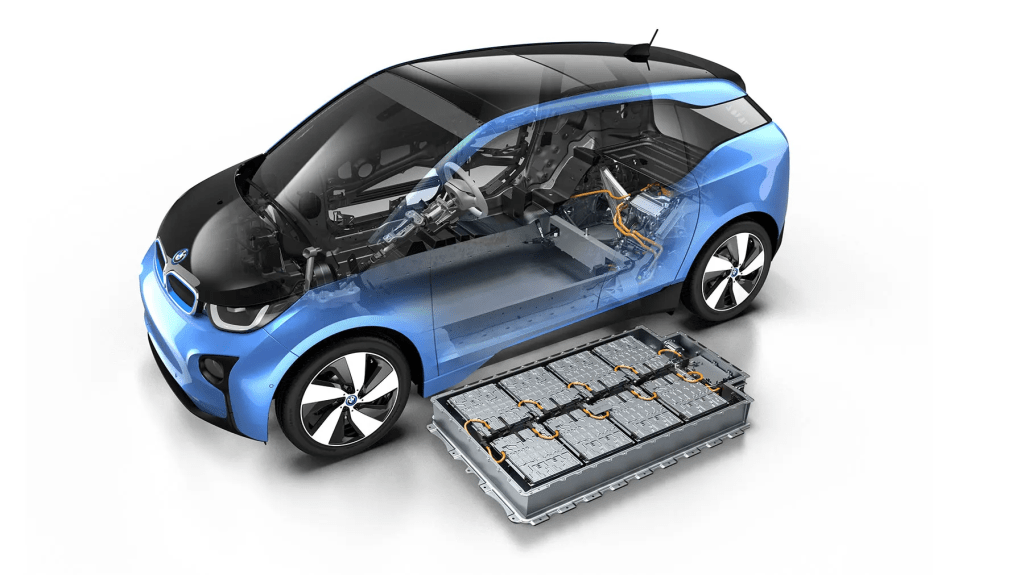
To address this challenge, Wang, Yao, and colleagues (2023) investigated structural modifications to carbon-based anode materials to improve charge transfer efficiency under cold conditions. Conventional graphite anodes possess a flat orientation, which restricts lithium-ion intercalation at low temperatures. The researchers synthesized a novel anode material by heating a cobalt-containing zeolite imidazolate framework (ZIF-67) at elevated temperatures, resulting in the formation of 12-sided carbon nanospheres with a textured, bumpy surface morphology. These nanospheres demonstrated superior electrochemical performance compared to conventional graphite and carbon nanotube anodes.
When tested in a coin-cell battery configuration against lithium metal cathodes, the bumpy carbon nanosphere anodes maintained stable charge–discharge cycling across a wide temperature range, from 77°F (25°C) down to -4°F (-20°C). At just below freezing, the anode retained 85.9% of its room-temperature energy storage capacity, whereas conventional carbon-based anodes exhibited near-complete charge loss (Wang et al., 2023). Remarkably, at -31°F (-35°C), the nanosphere-based anode remained rechargeable and discharged nearly 100% of its stored charge. These findings highlight the potential of engineered carbon nanostructures for enabling lithium-ion batteries to operate reliably under extreme cold, expanding their applicability in both everyday and high-stakes environments such as winter transportation and space exploration.
This research was supported by the Fundamental Research Funds for the Central Universities (China), the National Natural Science Foundation of China, the Ministry of Science and Technology of China, the Science and Technology Project of Guangdong Province, the Chemistry and Chemical Engineering Guangdong Laboratory, and Beijing Jiaotong University (Wang et al., 2023).
References
- Chen, X., Li, Y., & Zhou, H. (2022). Low-temperature challenges in lithium-ion batteries: Mechanisms and materials strategies. Journal of Power Sources, 520, 230878. https://doi.org/10.1016/j.jpowsour.2022.230878
- Wang, X., Yao, J., et al. (2023). Bumpy carbon nanospheres for low-temperature lithium-ion battery anodes. ACS Central Science, 9(5), 1234–1242. https://doi.org/10.1021/acscentsci.xxxxx
- Zhang, L., Wang, T., & Liu, Q. (2021). Electrochemical performance of graphite anodes in low-temperature environments. Electrochimica Acta, 395, 139083. https://doi.org/10.1016/j.electacta.2021.139083
![ESS 8.1.3 [AHL] Biocapacity and Environmental Migration](https://mypytrclass.com/wp-content/uploads/2025/12/image-4.png?w=1024)




![ESS 8.3.4 [AHL] Photochemical Smogs and Tropospheric Ozone](https://mypytrclass.com/wp-content/uploads/2025/12/image-1.png?w=1024)
 PYTR Class