
Learning Objectives
- Explain the change in Earth’s atmospheric composition over the geological timeline
- Describe the potential of global warming of GHGs
- Describe Milankovitch cycle and how it influences then atmospheric temperature
- Explain the dynamic nature of the atmosphere using contrails and clouds
Even when the Earth is conceptualized as a closed system, its atmosphere is influenced by a wide range of factors, including:
- Milankovitch cycles
- Latitude
- Altitude
- Proximity to the sea
- Atmospheric circulation and pressure systems
- Ocean currents
- Ice sheets and glaciers
- Topographic aspect
- Tectonic processes and geothermal energy
- Natural hazards
- Vegetation changes
- Anthropogenic activities
hysical Processes
Atmospheric physical processes encompass air circulation and the greenhouse effect. Variations in air pressure represent the fundamental driver of atmospheric motion. Beyond pressure gradient forces, wind and ocean current dynamics are strongly influenced by the Coriolis effect, which arises from the Earth’s rotation. The intensity of this force increases with distance from the equator, causing a deflection of moving air masses: to the right of their trajectory in the Northern Hemisphere and to the left in the Southern Hemisphere.
Chemical Processes
Chemical processes within the atmosphere include the photochemical reactions that sustain stratospheric ozone. In the stratosphere, high-energy ultraviolet (UV) radiation dissociates molecular oxygen (O₂) into individual oxygen atoms. These free oxygen atoms may subsequently combine wiPth O₂ molecules to form ozone (O₃), a process referred to as the ozone–oxygen cycle. Stratospheric ozone plays a critical role in absorbing a portion of the Sun’s high-energy UV radiation, thereby providing essential protection for life on Earth.
The Earth’s Atmosphere – Then
Geological Timescale Changes
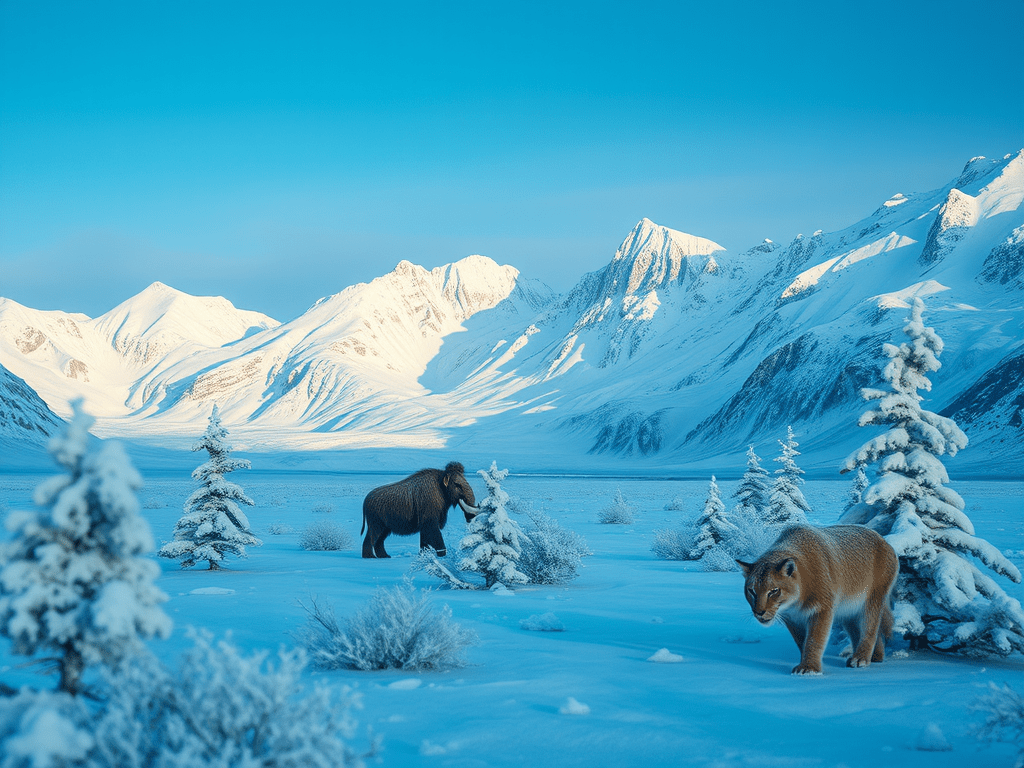
Throughout Earth’s geological history, the planet has experienced at least five major glaciations during which vast ice sheets expanded and global sea levels declined. Each of these glacial eras extended over hundreds of millions of years. The Earth is presently within the most recent of these, the Quaternary glaciation, which began approximately 2.5 million years ago. Despite its apparent duration, this period constitutes less than 0.1% of the total span of geological time.
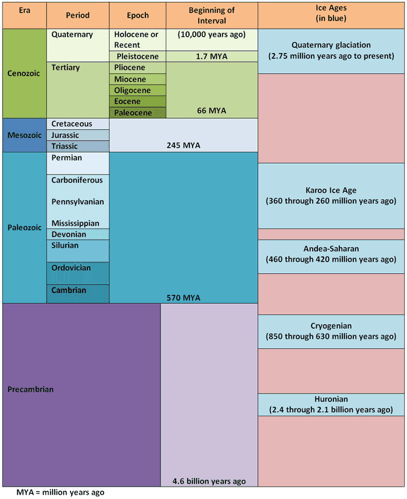
Within each major glaciation, alternating climatic intervals occur. Interglacial phases are characterised by relatively elevated temperatures, during which ice sheets persist but remain restricted, as exemplified by the contemporary Greenland and Antarctic ice sheets. Conversely, glacial phases (often colloquially termed “ice ages”) involve significant expansion of glacial coverage. The most recent glacial maximum occurred around 18,000 years ago, followed by the onset of the Holocene epoch roughly 11,700 years ago. The Earth remains in this comparatively warm interglacial interval of the Quaternary.
Although climate variability has long been a natural feature of Earth’s history, the present trajectory of climate change is distinguished by its unprecedented rapidity. Many scholars now propose that a new epoch, the Anthropocene, has emerged. The Anthropocene is widely considered to have commenced during the mid-19th century, coinciding with the Industrial Revolution, when human activity began exerting a profound influence on global climate systems and ecological processes. The term “Anthropocene” derives from the Greek anthropo (“human”) and cene (“new”). Anthropogenic global warming is now driving a departure from the glacial–interglacial cycles that have defined the Quaternary, pushing Earth’s climate toward novel, substantially warmer conditions.
Past Atmospheric Changes
Earth’s atmosphere and climate have undergone continual transformation throughout its history. Biological evolution has played a pivotal role in altering atmospheric composition, which in turn has influenced evolutionary pathways. Climate itself is inherently dynamic, subject to substantial fluctuations over time, driven by abiotic factors such as temperature and precipitation, as well as biotic interactions involving flora and fauna.
While direct measurements of precipitation in the geological past are not possible, paleoclimate reconstructions allow temperature estimation through both direct and proxy methods. Atmospheric gas concentrations can be inferred from analyses of air bubbles preserved in ice cores, while sediment records and fossilized shells provide additional, albeit sometimes uncertain, data regarding past climatic and atmospheric conditions.
The composition of the Earth’s atmosphere in its pre-biotic state diverged markedly from its present form. Prior to the emergence of photosynthetic organisms, free oxygen was absent from the atmosphere. The advent of photosynthesis led to a decline in atmospheric carbon dioxide concentrations and a concomitant increase in oxygen levels. This oxygenation facilitated the development of stratospheric ozone and the oxidation of metals, such as in the formation of iron ore deposits. Oxygen concentrations eventually rose to approximately 35% by the end of the Carboniferous period, around 300 million years ago.
During the Early Carboniferous (approximately 350 million years ago), average global temperatures were about 20°C, cooling to roughly 12°C later in the same period, slightly below today’s average of 15°C. At the warmer stage, atmospheric carbon dioxide levels are estimated to have been around 1,500 ppm, decreasing to approximately 350 ppm as temperatures declined. In comparison, the current atmospheric carbon dioxide concentration is about 417 ppm (0.04%). This level is lower than at almost any point in the past 600 million years, with the notable exception of the Late Carboniferous period.
Potential of Global Warming
Greenhouse gases (GHGs) differ substantially in their capacity to trap heat in the atmosphere, a property measured as global warming potential (GWP). By convention, carbon dioxide (CO₂) is assigned a GWP of 1. Methane (CH₄), in comparison, has a GWP of approximately 27–30 over a 100-year timescale, meaning it retains 27–30 times more heat per unit mass than CO₂. However, methane remains in the atmosphere for only about a decade, significantly less than the persistence of CO₂. In addition, methane acts as a precursor to ozone (O₃), thereby contributing indirectly to tropospheric ozone formation.
| Greenhouse Gas | Pre-industrial Concentration (ppm) | Present Concentration (ppm) | 100-year GWP | % Contribution to Enhanced Greenhouse Effect | Atmospheric Lifetime (years) |
|---|---|---|---|---|---|
| Carbon dioxide (CO₂) | 270 | 400 | 1 | 75 | 50–200 |
| Methane (CH₄) | 0.7 | 1.774 | 27–30 | 18 | 12 |
| Nitrous oxide (N₂O) | 0.27 | 0.31 | 273 | 4 | 140 |
| Fluorinated gases | 0 | 0.00025 | varies | 4 | 45 |
| Tropospheric ozone | not known | variable | 2,000 | variable | few weeks |
Ozone plays different roles depending on its atmospheric location. In the stratosphere, ozone forms a protective layer that absorbs much of the Sun’s ultraviolet radiation and thereby cools the Earth’s surface. In contrast, in the troposphere, ozone functions as a potent greenhouse gas. Although there is no direct causal relationship between global warming and stratospheric ozone depletion, complex indirect interactions exist. Thinning of the ozone layer allows greater penetration of ultraviolet radiation to the Earth’s surface, but this accounts for less than 1% of incoming solar energy and is not a significant driver of global warming.
Chlorofluorocarbons (CFCs), entirely anthropogenic in origin, represent another important category of GHGs. These compounds are absent from natural atmospheric processes. Upon reaching the stratosphere, CFCs catalyze the breakdown of ozone, while in the troposphere they act as greenhouse gases. Despite their very low concentrations—measured in parts per trillion—CFCs (including compounds such as CFC-11, CFC-12, and hydrochlorofluorocarbons, HCFCs) contribute significantly to the enhanced greenhouse effect due to their extremely high GWP and long atmospheric lifetimes. Some CFC molecules exhibit GWPs thousands of times greater than CO₂, with estimates reaching up to 10,000 times more effective at trapping outgoing longwave radiation.
When evaluating greenhouse gas contributions, the role of water vapor requires careful consideration. Water vapor is the most effective greenhouse gas in terms of heat retention, responsible for an estimated 36–66% of the natural greenhouse effect. However, its concentration is highly variable, as it continuously condenses into liquid water, snow, and ice, thereby limiting its persistence in the atmosphere. For this reason, the Intergovernmental Panel on Climate Change (IPCC) and most climate scientists typically exclude water vapor from anthropogenic GHG accounting, though the IPCC estimates its average contribution at around 50%. Clouds, depending on type and altitude, may add up to 25%, while the remainder of the effect arises from other GHGs, with carbon dioxide being the most influential.
The majority of greenhouse gases occur naturally; however, CFCs and HCFCs are entirely synthetic. The central concern lies not in the natural presence of GHGs but in the accelerated increase in their atmospheric concentrations due to human activities. Atmospheric CO₂ levels are now likely higher than at any point in the last 160,000 years, with the recent rate of increase unprecedented in geological records.
According to IPCC data, anthropogenic emissions have added approximately 3.2 to 4.1 gigatonnes of carbon (GtC) annually in the form of CO₂ over the last 25 years. One gigatonne equals one billion tonnes, meaning this represents an excess of up to 4.1 billion tonnes of carbon above the natural carbon cycle each year, excluding methane contributions. Natural carbon sinks, such as oceans and vegetation, absorb roughly half of these anthropogenic emissions annually, leaving a significant surplus in the atmosphere that drives global warming.
Carbon Dioxide Levels
Analyses of air bubbles preserved in ice cores from past glacial periods demonstrate that atmospheric carbon dioxide concentrations fluctuated between approximately 180 and 280 parts per million (ppm). These variations were primarily associated with Milankovitch cycle–driven changes in Earth’s climate. Carbon dioxide acted as a significant feedback mechanism during these cycles: lower atmospheric concentrations reinforced cooling and glaciation, while higher concentrations amplified warming during interglacial intervals. Such cycles unfolded over timescales of tens of thousands of years and, therefore, cannot account for the rapid climatic changes currently observed.
In contrast, anthropogenic climate change, largely attributable to fossil fuel combustion, has progressed at an unprecedented pace. Large-scale burning of coal, oil, and gas began around 1850 with the Industrial Revolution. Since then, Milankovitch cycles have remained relatively stable, and solar radiation reaching Earth has, in fact, slightly declined over the past four decades. The sharp increase in atmospheric carbon dioxide during this period is thus attributable to human activity rather than natural orbital cycles.
Milankovitch Cycles
Milankovitch cycles describe long-term variations in Earth’s orbital geometry that alter the distribution of solar radiation received at the planet’s surface, thereby influencing climatic patterns on timescales of tens to hundreds of thousands of years. These cycles, first investigated in the early 20th century by Serbian astrophysicist Milutin Milankovitch, are recognized as a principal driver of Earth’s historic ice ages.
The three primary components of Milankovitch cycles are:
- Eccentricity: the periodic change in the shape of Earth’s orbit around the Sun, ranging from more circular to more elliptical.
- Obliquity: the variation in the tilt angle of Earth’s rotational axis relative to its orbital plane.
- Precession: the gradual wobble in the orientation of Earth’s rotational axis.
These orbital variations regulate long-term climatic phenomena such as glacial–interglacial cycles and seasonal intensity. However, they cannot account for the rapid warming observed since the onset of industrialization, which is primarily attributable to anthropogenic greenhouse gas emissions.
The Dynamic Nature of the Atmosphere
Unlike outer space, which is devoid of an atmosphere, Earth possesses a multilayered atmosphere whose boundaries are not sharply defined and vary slightly with latitude and season. The majority of weather phenomena occur within the troposphere, the lowest layer, which also sustains terrestrial life. Atmospheric layers are continually mixed through both physical and chemical processes. Physical processes include global warming and the movement of air masses driven by temperature and pressure gradients, while chemical processes involve reactions such as the photochemical production of ozone from oxygen.
Earth’s atmosphere is held in place by gravity, which exerts a force on atmospheric molecules, preventing them from escaping into space. Since gravitational force decreases with distance from Earth’s surface, the atmosphere is densest at lower altitudes and progressively thins with increasing height. This explains why mountaineers at high elevations often require supplemental oxygen, and why aircraft cabins must be pressurised. Temperature also decreases with altitude, following a standard lapse rate of approximately 1°C per 100 meters. This decline is due to the reduced density of air at higher altitudes, where fewer molecules are present, resulting in lower total heat content.
Contrails

Above the troposphere lies the stratosphere, a region favorable for aviation due to its strong horizontal winds and relatively low turbulence. This layer also contains the jet stream, which flows predominantly from west to east or along meridional directions. Aircraft flying with the jet stream experience reduced travel times, whereas flying against it can significantly increase journey duration.
Aircraft contrails—the linear cloud-like trails produced behind airplanes—represent an important anthropogenic influence on climate. Jet fuel combustion generates water vapor as the primary emission, along with carbon dioxide, unburnt hydrocarbons, nitrogen oxides, soot particles, and carbon monoxide. The expelled water vapor rapidly freezes into ice crystals, and under favorable atmospheric conditions, these crystals stimulate the development of larger cloud structures.
Contrail formation depends heavily on localised atmospheric humidity. Although two aircraft may appear to fly at similar altitudes, a difference of as little as 300 meters can determine whether a contrail forms. Engine efficiency also influences contrail formation: modern engines with cooler exhausts can produce contrails at lower altitudes compared to older, less efficient engines. Persistent contrail cirrus can significantly alter Earth’s radiation balance. By trapping outgoing longwave radiation, these artificial clouds contribute to radiative forcing that may surpass the total climate effect of all carbon dioxide emissions from aviation.
Clouds and Climate Change
Clouds play a complex role in Earth’s climate system. While they are inherently reflective and tend to exert a cooling effect by scattering incoming solar radiation, certain types also act as an insulating blanket by trapping heat, thereby enhancing global warming. The net impact of clouds depends on their physical properties and distribution.
Clouds consist of water droplets and, in some cases, ice crystals that form around aerosol particles such as sea salt, desert dust, soot from fossil fuel combustion, or sulfuric acid. Variations in aerosol concentration influence cloud microphysics: an increase in available particles typically results in more droplets or ice crystals within a cloud, thereby modifying its radiative properties and climatic impact.
Notes
Subscribe to get access
Read more of this content when you subscribe today.
![ESS 8.1.3 [AHL] Biocapacity and Environmental Migration](https://mypytrclass.com/wp-content/uploads/2025/12/image-4.png?w=1024)



![ESS 8.3.4 [AHL] Photochemical Smogs and Tropospheric Ozone](https://mypytrclass.com/wp-content/uploads/2025/12/image-1.png?w=1024)
 PYTR Class