
Learning Objectives
- Evaluate SDW management strategies using named examples
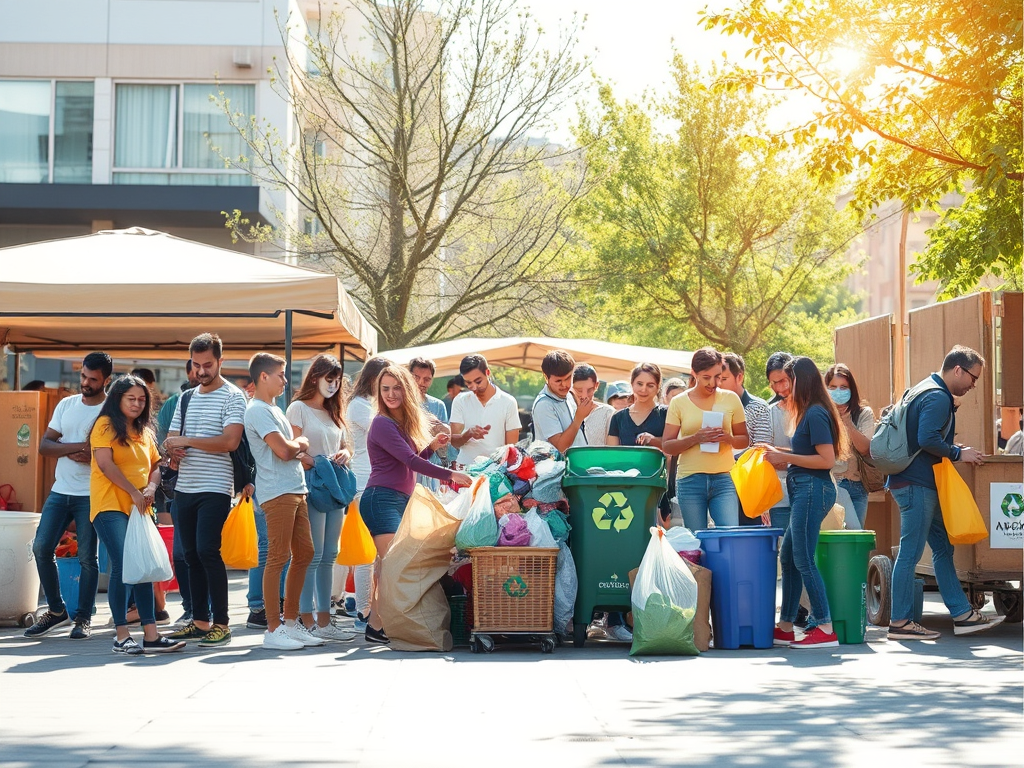
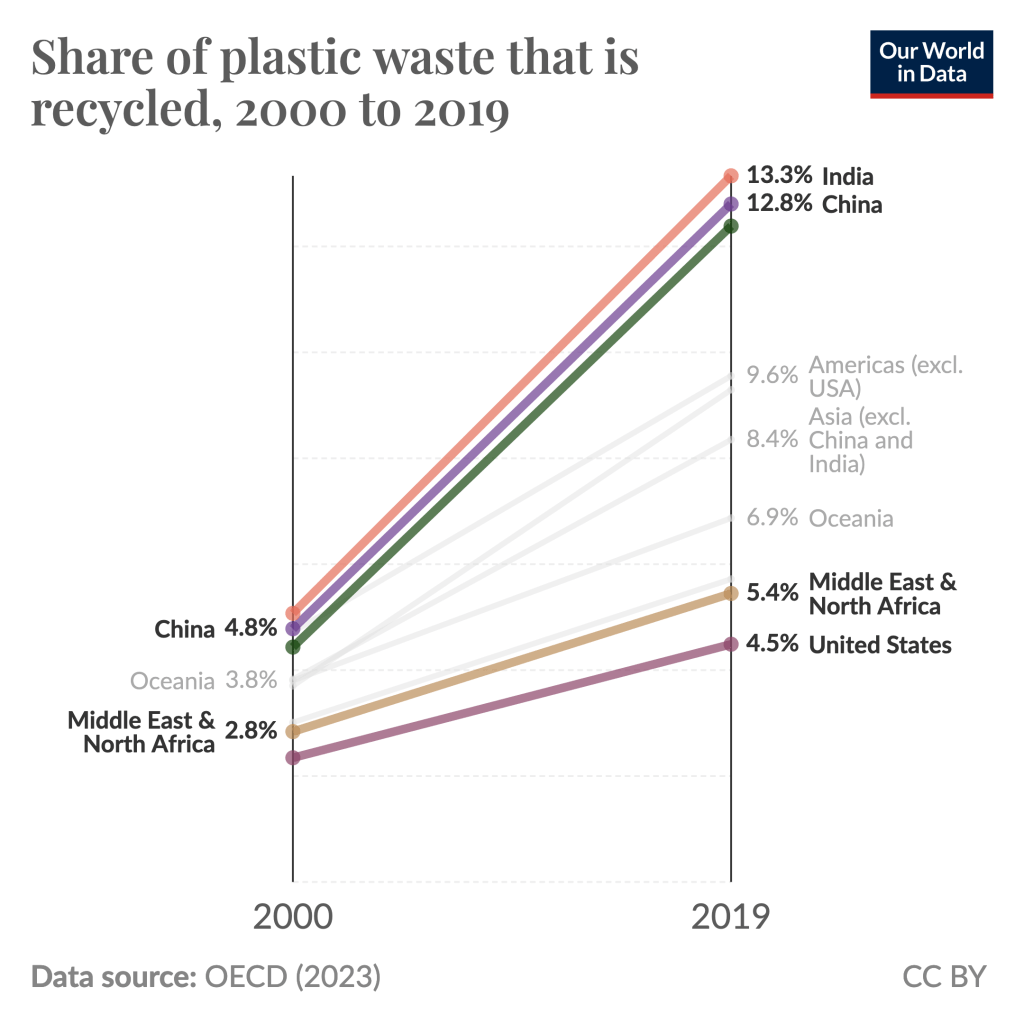
- Discuss the recycling of plastics as a strategy in minimising SDW
Minimising SDW Strategies
Prevention and reduce consumption
Preventing waste is the most effective strategy because it eliminates pollution at the source, as demonstrated by Japan’s packaging-minimisation policies and the EU’s single-use plastics restrictions (European Commission, 2019). Its key success lies in reducing resource extraction and emissions; however, its limitations include dependence on long-term behavioural change and industry willingness to redesign products, which remains uneven globally.
Reducing consumption through bans, taxes, and behaviour-change campaigns—such as Denmark’s early plastic bag tax, Kenya’s stringent ban on single-use bags (2017), and India’s phased plastic restrictions—has significantly reduced plastic waste and influenced consumer norms (UNEP, 2020). Nevertheless, its success depends heavily on enforcement capacity, public acceptance, and the availability of affordable alternatives, meaning that in lower-income regions it may create unintended socio-economic burdens. Overall, while each strategy contributes to sustainability, their combined implementation—with prevention and consumption reduction prioritised—provides the most effective long-term pathway for reducing global waste and environmental impacts.
Reduce & Reuse
Reducing the amount of waste through eco-design and consumer awareness, such as South Korea’s product stewardship laws and Germany’s eco-label regulations, has reduced material throughput and increased product lifespan. Yet, these approaches are limited by higher upfront costs for producers and consumer preference for convenience, which can undermine adoption (OECD, 2022).
Reusing goods—through repair cafés, refurbishing schemes, and second-hand markets—has succeeded in Sweden, Rwanda, and New Zealand by extending product lifespans and supporting local economies (World Bank, 2022). Its limitations include labour-intensive processes, uneven access to repair skills, and the challenge of scaling reuse systems in countries with weak waste-management infrastructure. Recovering value through recycling, composting, or waste-to-energy provides significant environmental benefits: for example, the Netherlands and Belgium have achieved high recycling rates, while Singapore and Denmark efficiently convert non-recyclable waste to electricity. Nonetheless, recycling systems struggle with contamination, fluctuating market prices for recyclables, and the risk that energy-from-waste may discourage higher-level waste-avoidance strategies (UNEP, 2020).
Disposal & Clean Up
Disposing of waste in landfills remains necessary for residual waste, and modern engineered landfills in Canada, Malaysia, and South Africa reduce groundwater contamination and capture methane for energy. However, landfills still require large land areas, pose long-term pollution risks, and disproportionately affect low-income communities, illustrating their limitations as a sustainable long-term strategy.
Clean-up initiatives, such as The Ocean Cleanup in the Pacific gyres or river-barrier systems in Indonesia and Thailand, have successfully removed large quantities of plastic waste and raised global awareness. Yet, critics argue that clean-up does not address the root causes of pollution and is extremely costly, technically complex, and slow relative to the scale of global plastic discharge (OECD, 2022). Restoring damaged ecosystems, as shown by the Kissimmee River restoration in the USA, the Rhine revitalisation in Europe, and Yangtze wetland rehabilitation in China, has improved biodiversity, water quality, and ecosystem services. While highly effective ecologically, such efforts are expensive, require decades to implement, and cannot fully reverse severe or long-term damage.
Recycling Plastics

Global consumption of plastic materials has risen dramatically, increasing from approximately 5 million tonnes in the 1950s to nearly 100 million tonnes today. Of this total, about 10% ultimately enters the world’s oceans. Up to 8% of global oil production is estimated to be used in the manufacture of plastics, most of which is discarded after a single use, particularly in the form of packaging.
Recycling plastics presents significant challenges. The wide variety of plastic types combined with their low density and bulkiness, make collection and processing inefficient. Although some plastics have higher economic value for recyclers, they must be separated from lower-value materials, adding further complexity. Nonetheless, plastic recycling is undertaken to a limited extent.
A study examining carrier bags produced from recycled rather than virgin polyethene reported several environmental benefits associated with the use of recycled plastic materials, including:
- a two-thirds reduction in energy consumption;
- production of only one-third of the sulfur dioxide and half of the nitrous oxide emissions;
- a reduction in water use of nearly 90%;
- carbon dioxide emissions reduced by a factor of 2.5.
Another study estimated that 1.8 tonnes of oil are saved for every tonne of recycled polyethene produced.
Recycled plastic can be repurposed into products such as fleeces and anoraks, cassette cases, window frames, bin bags, seed trays, and numerous other items. For example, approximately 25 two-litre plastic beverage bottles are required to manufacture a single fleece garment. Despite these possibilities, the majority of plastic is used only once before being disposed of in landfill sites. In many low-income countries, recycling activities are conducted primarily by an informal sector.
The Widespread Use of Plastic Bags
Plastic bags have become ubiquitous only since the late 1980s, when they rapidly replaced reusable shopping bags. They have gained popularity due to being lightweight, hygienic, waterproof, inexpensive to manufacture, and convenient for consumers. Producing a single plastic bag costs approximately one US cent, compared with around four cents for a paper bag. Their low cost has historically encouraged retailers to distribute them free of charge.
Globally, an estimated 500 billion to 1 trillion plastic bags are produced each year. Most are used only once due to their thinness, giving them an average functional lifespan of around 15 minutes. Manufactured predominantly from oil, they require between 200 and 1,000 years to decompose. Some biodegradable alternatives degrade more rapidly when exposed to sunlight, particularly those incorporating starch-based polymers. Discarded plastic bags accumulate in landfills, oceans, trees, and even the stomachs of marine animals such as turtles, contributing significantly to environmental degradation. When incinerated, plastic bags release harmful toxins.
A variety of strategies have been proposed to mitigate the negative impacts of plastic bag use. One such approach is the introduction of a plastic bag tax, or “plastax.” Governments in South Africa, Ireland, Australia, Taiwan, and Bangladesh have implemented measures to either tax or ban plastic bags. For example:
- Ireland’s plastic bag tax resulted in a 95% reduction in usage.
- South Africa banned thin plastic bags; thicker, reusable bags must now be purchased and do not easily become windblown litter.
- China banned the distribution of free plastic bags in supermarkets in 2008, followed by a ban on non-biodegradable bags in 2020 and a ban on non-degradable plastic straws in January 2021.
Notes and Class Activity
Subscribe to get access
Read more of this content when you subscribe today.
![ESS 8.1.3 [AHL] Biocapacity and Environmental Migration](https://mypytrclass.com/wp-content/uploads/2025/12/image-4.png?w=1024)



![ESS 8.3.4 [AHL] Photochemical Smogs and Tropospheric Ozone](https://mypytrclass.com/wp-content/uploads/2025/12/image-1.png?w=1024)
 PYTR Class