
Learning Objectives
- Discuss the global energy security
- Evaluate the use of nuclear power and batteries
Our Energy Security
Energy security constitutes a significant strategic concern for national governments, which must determine how best to utilise available resources to ensure reliable energy generation while safeguarding national stability. Although importing energy may be economically advantageous, reliance on external suppliers introduces geopolitical vulnerabilities; diplomatic tensions or political conflict can disrupt energy flows and threaten domestic supply (IEA, 2023). Rising fuel prices further raise questions about the extent to which populations will tolerate sustained cost increases without political or social unrest.
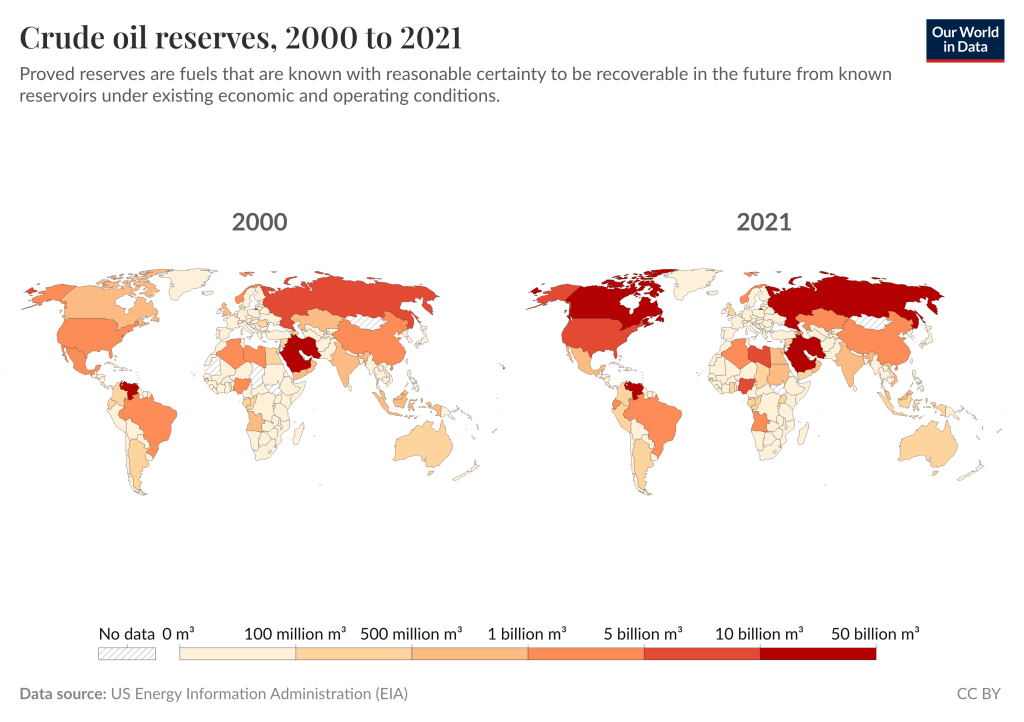
The 2022 European energy crisis illustrates these vulnerabilities. The cessation of natural gas deliveries through the Nord Stream pipelines compelled European states to secure alternative energy sources rapidly, while Russia was simultaneously required to identify new markets for its gas exports (Smith, 2023). Qatar, which possesses the world’s third-largest proven natural gas reserves, responded to global demand by continuing to supply liquefied natural gas via large-scale tanker shipments to international customers (US EIA, 2022). In an integrated global energy market, the sudden need to replace established energy sources led to supply disruptions and higher consumer prices.
To enhance energy security, countries increasingly employ measures such as improving energy efficiency, reducing dependence on imported fuels, and diversifying energy portfolios (IEA, 2022). Expanding renewable energy capacity, along with developing energy-storage technologies, represents a widely adopted strategic approach.
Patterns of household energy use also reflect broader socioeconomic disparities. Higher-income populations are more likely to rely on gas or electricity for domestic heating and cooking. By contrast, approximately 40 per cent of the global population continues to depend directly on biomass or fossil fuels for cooking, frequently using open fires or rudimentary stoves. The resulting indoor air pollution often exceeds levels recorded in the world’s most polluted urban environments (World Bank, 2021).
Fossil Fuel Security
The global economy remains predominantly reliant on finite reserves of fossil fuels. Although many governments have declared their intention to achieve net-zero carbon emissions by 2050, and although technological capacity exists to expand the use of renewable energy sources, global energy demand continues to increase. As a result, several nations are returning to fossil fuels to meet immediate energy needs. In 2018, more than 70 percent of the growth in global energy demand was supplied by oil, natural gas, and coal, leading to a 1.7 percent rise in energy-related carbon emissions. If fossil fuels continue to be consumed at current rates, and no significant new reserves are discovered, existing stocks will eventually be exhausted. One projection estimates that known reserves may be depleted by approximately 2052 for oil, 2060 for gas, and 2090 for coal, the latter being the most environmentally damaging of the major fossil fuels.
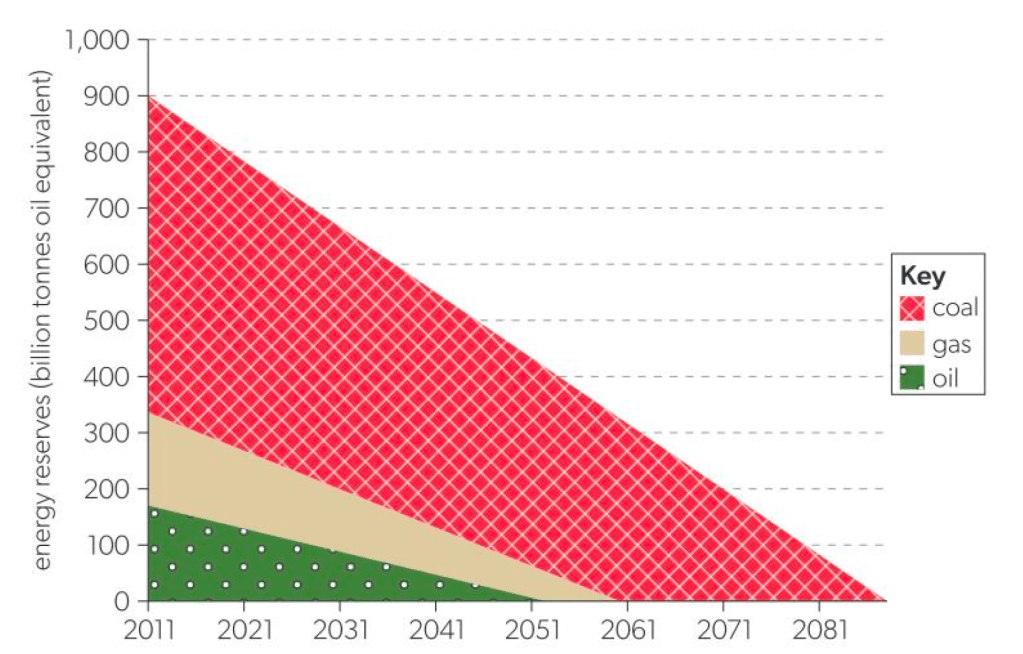
Concerns related to climate change, pressure from environmental advocacy groups, and the need to strengthen energy security are increasingly shaping governmental policies. The gradual depletion of fossil fuel reserves also compels states to plan for long-term alternatives, as no country can afford to risk energy scarcity. Estimates for the eventual exhaustion of fossil fuels depend on several factors, including the rate of consumption—potentially slowed by improved energy efficiency and conservation—ongoing discoveries of new deposits, advancements in extraction technologies such as those used in tar sands or oil sands in Canada and Venezuela, and the expansion of renewable or nuclear energy sources that can substitute for fossil fuels.
Nuclear Power
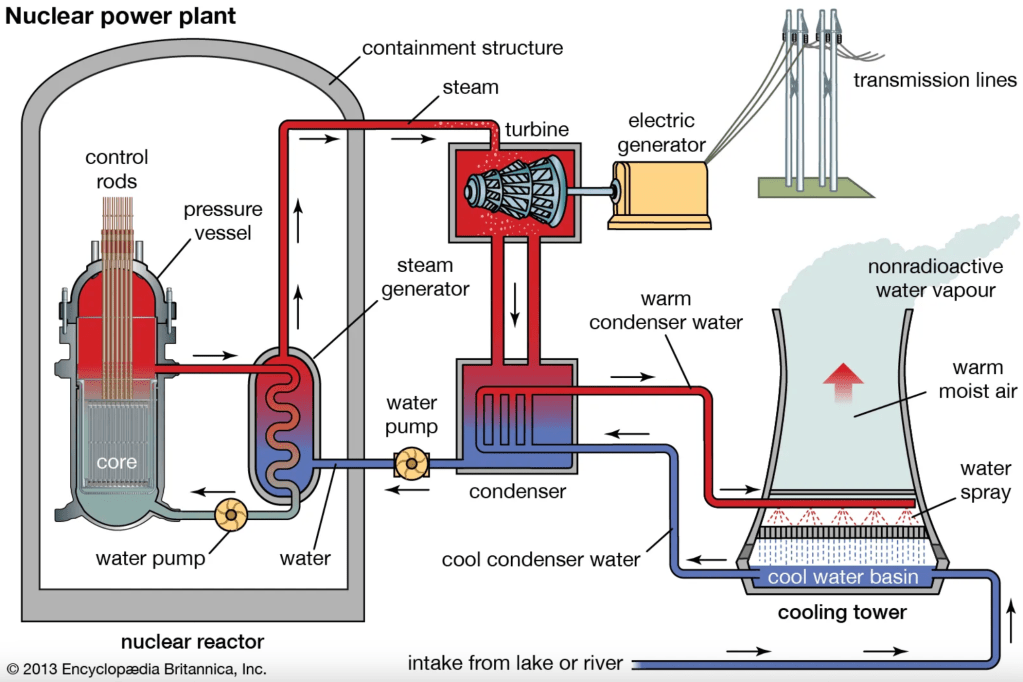
Nuclear energy is primarily generated through the fission of uranium or plutonium in most commercial nuclear power plants. The heat released during fission is transferred to a working fluid—typically water—which is converted into steam to drive turbines and produce electricity. Although the initial capital investment required to build a nuclear power facility is substantial, operational costs are relatively low, and nuclear fission yields energy at a level approximately 8,000 times greater than that produced by fossil fuels.
The benefits of nuclear power include the provision of low-cost, zero-carbon electricity, a continuous and non-intermittent energy supply, the potential to recycle up to 90 percent of nuclear fuel, and comparatively low maintenance requirements once a plant is operational. However, several drawbacks accompany its use. These include the high financial cost of construction, the safety hazards associated with potential nuclear accidents and radiation exposure, the possibility that nuclear materials may be diverted for weapons production, and the challenge of managing spent fuel, which remains hazardous for up to 10,000 years and must be securely stored. Additional concerns involve the environmental effects of uranium mining and thermal pollution caused by the discharge of heated cooling water into nearby marine environments, which can alter local water chemistry.
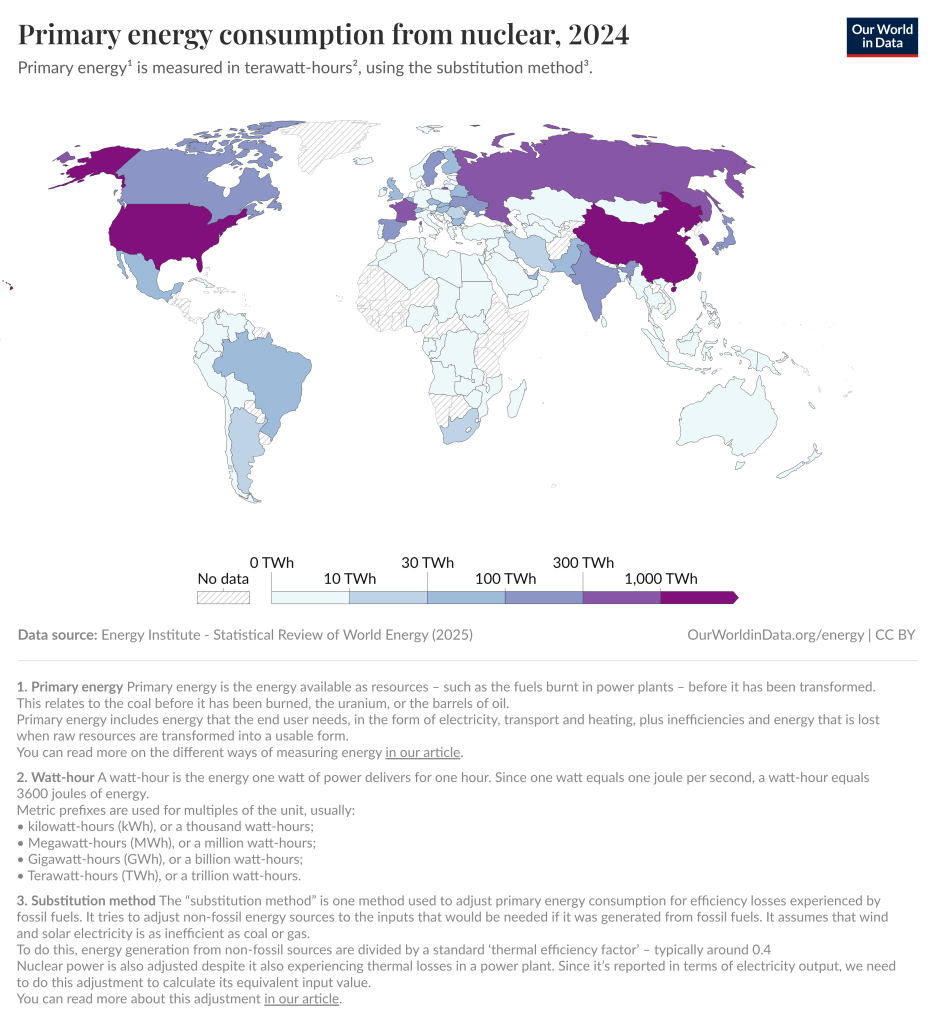
In short, nuclear power….
| Aspect | Summary |
|---|---|
| Energy Source | Generated through fission of uranium or plutonium; heat produces steam to drive turbines. |
| Efficiency | Fission produces energy approximately 8,000 times more efficiently than fossil fuels. |
| Costs | High construction costs; low operational and maintenance costs once built. |
| Advantages | – Low-cost, zero -carbon electricity – Continuous, non -intermittent supply – Up to 90% of fuel recyclable – Low maintenance after construction |
| Disadvantages | – High initial capital cost – Risk of accidents and radiation exposure – Potential diversion of materials for weapons – Long-term hazardous waste requiring secure storage – Known and potential environmental impacts from uranium mining – Thermal pollution from warmed cooling water affecting marine environments |
Batteries
Battery storage has become essential due to the intermittent nature of many renewable energy sources such as solar, wind, and tidal power. To ensure a stable and reliable energy supply, large-scale storage systems are required, and batteries currently represent the dominant technological solution. However, battery production entails significant environmental and social costs. The minerals required—primarily lithium, cobalt, graphite, and various rare earth elements—must be mined, transported, and processed. These activities consume energy, generate emissions, and create pollution, while also raising concerns about long-term recycling and material recovery. Mining operations often produce toxic waste, and failures of tailings dams have contributed to land and marine contamination. Because the necessary minerals are concentrated in relatively few countries while global demand continues to rise, geopolitical tensions and resource competition have intensified.
The broader transition to low-carbon technologies further increases the demand for rare earth elements (REEs) and other critical minerals. Achieving a sustainable global economy requires decoupling economic growth from carbon emissions, a process that increasingly depends on international mineral extraction. Shifts in domestic energy resources can also alter global power dynamics; for example, the development of U.S. oil sands has reduced reliance on foreign oil imports and weakened the influence of the Organization of the Petroleum Exporting Countries (OPEC) on global prices.
REEs and associated minerals are vital for a wide range of high-technology products, including mobile phones, computer components, electric and hybrid vehicles, flat-screen displays, high-performance magnets, catalytic converters, wind turbines, electronics, ceramics, glass, and specialised alloys. They also play a crucial role in national defence systems. Lithium is particularly important for lithium-ion batteries, with each electric vehicle (EV) requiring roughly 8 kilograms. Bolivia holds the world’s largest identified lithium resources, while Chile and Australia also possess substantial reserves.
Nickel, which serves as a cathode material in lithium-ion batteries, is another essential resource. A single Tesla EV battery contains approximately 50 kilograms of nickel. Indonesia is currently the world’s leading producer, followed by the Philippines and Russia. Cobalt is used in high-strength alloys for aircraft and gas turbines, as well as in EV batteries, which may contain up to 14 kilograms per vehicle. The Democratic Republic of Congo (DRC) accounted for more than two-thirds of global cobalt production in 2022, making cobalt the DRC’s most significant export commodity.
Graphite represents the largest material component of lithium-ion batteries, making up more than half of total battery mass and over 95 percent of the anode. Up to 70 kilograms of graphite may be used in a single EV. China dominates global production, accounting for about 79 percent of output in 2021.
Rare earth elements comprise 17 metals, including the 15 lanthanides plus scandium and yttrium. Although not inherently scarce, they rarely occur in concentrations high enough for economically viable mining. Major deposits are located in China—especially Inner Mongolia—as well as Russia, Kyrgyzstan, Kazakhstan, the United States, and Australia. Additional resources exist in India, Vietnam, Malaysia, Thailand, Indonesia, South Africa, Namibia, Mauritania, Burundi, Malawi, Greenland, Canada, and Brazil. Extracting and separating REEs from ore is energy-intensive and generates pollution through the use of chemical reagents.
Global production patterns have shifted significantly over time. In 1993, China accounted for 38 percent of world REE output, the United States for 33 percent, Australia for 12 percent, and Malaysia and India for 5 percent each. By 2008, China produced more than 90 percent of global REEs, rising to approximately 97 percent by 2011. Although other countries have since expanded production, China still produced around 60 percent of the world’s REEs in 2021 and continued to dominate processing activities.
The scale of mineral extraction required to support full global electrification is substantial. If all vehicles worldwide were electric, total mineral demand for batteries would need to increase from approximately 400 kilotonnes in 2021 to an estimated 11,800 kilotonnes by 2040, according to the International Energy Agency.
| Summary of Points | Key Knowledge |
|---|---|
| Need for Battery Storage | Renewable sources such as solar, wind, and tidal are intermittent, requiring large-scale storage to provide stable energy supply. |
| Environmental and Social Costs | Mining, transport, and processing of minerals consume energy, produce emissions, generate pollution, and raise recycling challenges; tailings dam failures have caused environmental damage. |
| Key Battery Materials | Lithium, cobalt, graphite, and rare earth elements (REEs) are essential for modern battery technologies. |
| Geopolitical Implications | Mineral resources are geographically concentrated; global demand creates geopolitical tensions and competition. |
| Role in Decarbonisation | Transition to low-carbon technologies depends on critical minerals; decoupling economic growth from carbon emissions requires international mineral extraction. |
| High-Tech Uses of REEs and Metals | Used in mobile phones, computers, EVs, flat-screen displays, high-performance magnets, catalysts, electronics, wind turbines, ceramics, glass, alloys, and defence systems. |
| Lithium | ~8 kg needed per EV; largest resources in Bolivia, with major reserves in Chile and Australia. |
| Nickel | Essential for lithium-ion cathodes; ~50 kg in a Tesla EV battery; leading producers: Indonesia, Philippines, Russia. |
| Cobalt | Used in alloys and EV batteries (up to 14 kg per EV); DRC produces over two-thirds of global supply. |
| Graphite | Over 50% of each battery and >95% of the anode; up to 70 kg per EV; China produces ~79% globally. |
| Rare Earth Elements (REEs) | 17 elements (lanthanides + scandium, yttrium); major deposits in China, Russia, USA, Australia, and others; extraction and separation are energy-intensive and polluting. |
| Shifts in Global Production | China’s share rose from 38% in 1993 to 97% in 2011; by 2021 China produced ~60% but dominated processing. |
| Projected Mineral Demand | Battery mineral demand must rise from 400 kilotonnes (2021) to ~11,800 kilotonnes by 2040 if all vehicles become electric. |
![ESS 8.1.3 [AHL] Biocapacity and Environmental Migration](https://mypytrclass.com/wp-content/uploads/2025/12/image-4.png?w=1024)



![ESS 8.3.4 [AHL] Photochemical Smogs and Tropospheric Ozone](https://mypytrclass.com/wp-content/uploads/2025/12/image-1.png?w=1024)
 PYTR Class