

Learning Objectives
- Discuss the SDW disposal strategies
- Incineration
- Composting
- Anaerobic digestion
- Landfills
Incineration
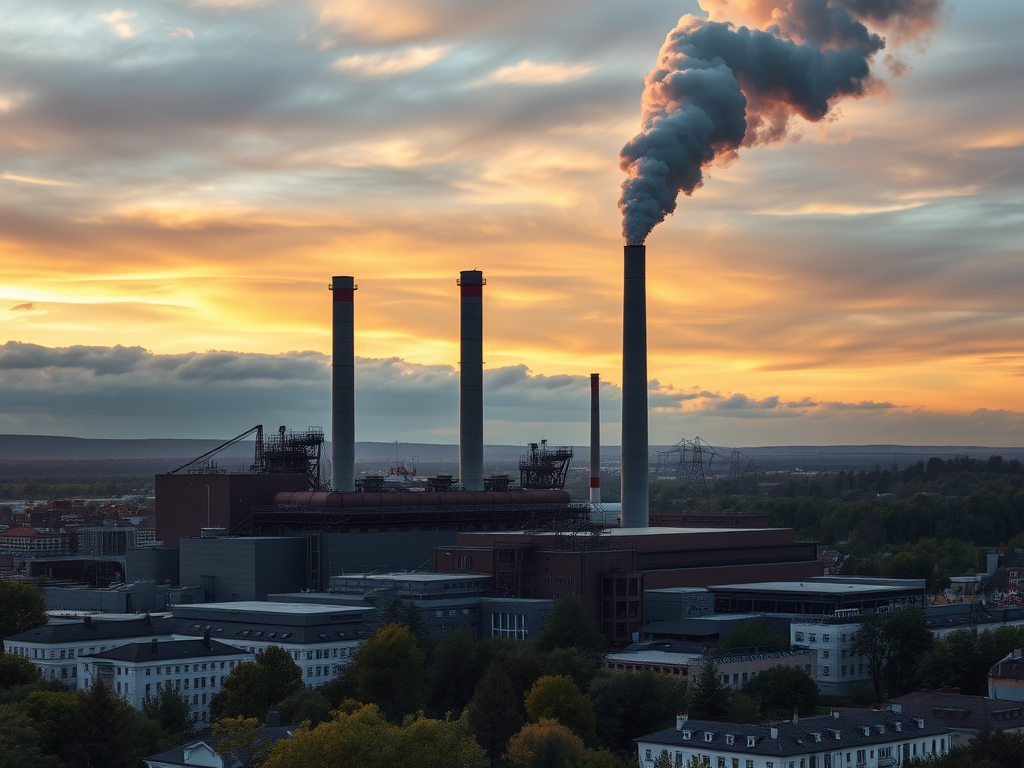
Incinerators operate at very high temperatures, often reaching up to 2,000°C. In some systems, waste is pre-sorted to remove non-combustible or recyclable materials prior to combustion. The heat generated during the process is frequently used to produce steam for electricity generation or to provide direct heating for buildings, a practice commonly referred to as waste-to-energy incineration. In facilities where unsorted waste is burned, emissions can contribute to air pollution, particularly through the release of dioxins (from the combustion of plastics), heavy metals such as lead and cadmium (from items like batteries), and nitrogen oxides. The residual ash can be utilised in construction, such as road building, and the volume of waste remaining after incineration is significantly lower than that requiring disposal in landfill. However, incineration plants are costly to construct and require a consistent supply of waste, which may reduce incentives for waste-minimisation efforts.
Incineration offers several advantages. It substantially reduces the volume of waste—by as much as 95 percent—thereby reducing the land area required for disposal, which is particularly beneficial for countries with limited space, such as Japan. Compared with landfill, incineration produces fewer greenhouse gas emissions and avoids contamination of water supplies. It also facilitates waste-to-energy schemes; for example, Sweden meets nearly 10 percent of its heating demand through incineration. Modern facilities incorporate filtration systems to reduce harmful emissions before release. Incinerators can be located close to waste sources, lowering transportation costs, and they offer improved control over noise, odour, and visual impacts because waste does not accumulate and decompose. Furthermore, the absence of decomposition prevents methane generation, and the high temperatures effectively destroy pathogens, making incineration suitable for clinical waste. Metals can often be recovered afterwards because the temperatures involved are insufficient to melt them, and automated operation reduces the likelihood of human error. The remaining ash may be used in construction or disposed of in landfill sites.
Despite these benefits, incineration has some notable disadvantages. Construction and maintenance costs are substantial, and despite filtration systems, incinerators still emit pollutants, including carcinogenic dioxins, particulates, and nitrogen oxides. Additionally, reliance on incineration may discourage recycling initiatives and perpetuate linear waste-management models.
Evaluation
Advantages of Incineration
- Reduces waste volume by up to 95%, lowering the need for landfill space.
- Produces fewer greenhouse gas emissions and avoids water contamination compared with landfill.
- Enables waste-to-energy production; for example, Sweden obtains nearly 10% of its heating from incineration.
- Modern incinerators include filtration systems to reduce harmful emissions.
- Can be located close to waste sources, reducing transportation costs.
- Minimises noise, odour, and visual pollution because waste does not accumulate or decompose.
- Prevents methane generation since no decomposition occurs.
- High combustion temperatures destroy pathogens, making it effective for clinical waste.
- Allows recovery of metals that do not melt during the process.
- Automated operations reduce human error.
- Produces ash that can be used in construction or sent to landfill with reduced volume.
Disadvantages of Incineration
- High construction and maintenance costs.
- Emission of pollutants such as carcinogenic dioxins, particulates, and nitrogen oxides.
- Does not encourage recycling and may reinforce the linear economy.
- Requires a continuous supply of waste to operate efficiently.
Composting
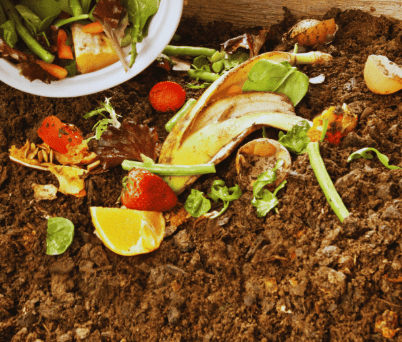
Composting is a biological process through which domestic organic waste is converted into a nutrient-rich fertiliser. It can be carried out on a small scale within households or implemented on a larger scale by local authorities, who may collect organic waste, process it, and subsequently sell the resulting compost to the public.
The advantages of composting include:
- It reduces reliance on costly inorganic fertilisers.
- Compost is non-toxic and enhances soil quality in an environmentally sustainable manner by supplying trace minerals and nutrients, improving soil structure and aeration, enhancing drainage, and introducing beneficial microorganisms.
- It can be undertaken indoors and is generally straightforward to implement at the household level.
- It contributes to lower carbon emissions by diverting organic waste from landfills.
However, several disadvantages are associated with composting:
- There are initial set-up costs for households that choose to compost their organic waste.
- The process can be time-consuming, physically demanding, space-intensive, and may produce unpleasant odours.
- Diseased plant material may transmit pathogens if composted improperly.
Anaerobic digestion
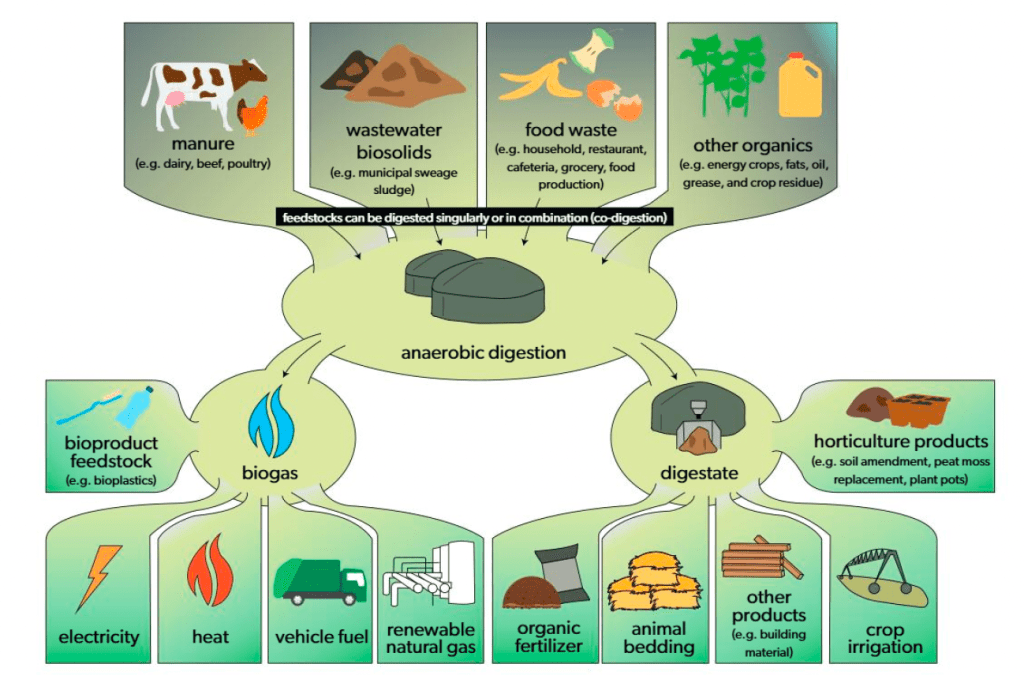
Anaerobic digestion (AD) is a biological process in which biodegradable organic material is decomposed by microorganisms in the absence of oxygen. Typical feedstocks include food waste, crop residues, and animal manure. These materials are placed in an enclosed reactor where microbial activity breaks them down and produces biogas—a mixture primarily composed of methane, along with carbon dioxide, hydrogen sulfide, and water vapour. The process also generates a residual digestate, which exists in both liquid and solid forms.
The advantages of anaerobic digestion include:
- Biogas can be upgraded to renewable natural gas suitable for use as a low-carbon energy source.
- The liquid digestate produced is a nutrient-rich fertiliser, while the solid digestate can be used as fertiliser, animal bedding, or compost.
However, several disadvantages are associated with AD:
- The process releases carbon dioxide and other pollutants such as carbon monoxide, sulfur dioxide, and nitrogen oxides.
- There is a risk of spills involving liquid digestate, which can be environmentally harmful.
- Odour emissions may pose a nuisance to nearby communities.
- Food waste must be collected and transported to the AD facility, adding logistical and environmental costs.
- The system requires a steady and continuous supply of organic waste to operate efficiently.
- Installation and operational expenses are relatively high.
Landfills
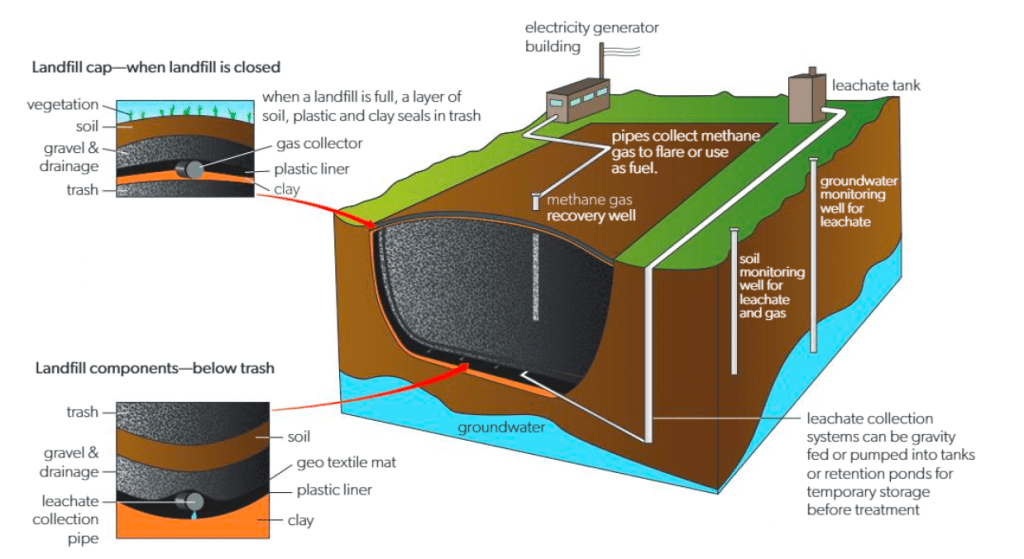
Landfill remains the predominant method of waste disposal. In this approach, waste is transported to a designated site and subsequently buried. Although the initial costs are comparatively low, hazardous materials may be disposed of alongside general waste. Modern landfill facilities are not simply excavated pits; rather, they are carefully located to avoid proximity to densely populated areas, watercourses, and aquifers. These sites are engineered with specialised plastic liners designed to prevent the migration of leachate—liquid produced from decomposing waste—into the surrounding environment. The leachate is collected through an integrated pipe network.
Organic waste within the landfill undergoes fermentation, producing methane gas. This methane is either captured and utilised for electricity generation or released into the atmosphere through controlled venting. To minimise odour and deter pests, layers of soil are applied daily over newly deposited waste. However, identifying suitable new landfill locations is becoming increasingly difficult, as existing sites are reaching capacity at an accelerating pace.
| Advantages | Disadvantages |
|---|---|
| Modern landfill facilities are considered more environmentally responsible due to strict regulatory standards governing their design and operation. | Landfills contribute to climate change; for example, 1 kg of non-recycled waste generates approximately 700 g of CO₂. One tonne of biodegradable waste can produce 400–500 m³ of gas, including methane. |
| Removes waste from urban and suburban environments. | Wildlife is negatively affected, particularly through the ingestion of plastic. |
| Hazardous waste can be segregated, as modern sites designate specific areas for hazardous materials, reducing public exposure. | Dioxin emissions can occur and are harmful to the environment and human health. |
| Landfills are relatively inexpensive, as waste typically travels only a short distance for disposal, reducing transportation-related pollution. | Landfill collapses can occur due to heavy rainfall or excessive dumping, as seen in the 2017 Meethotamulla disaster in Sri Lanka, which caused 30 deaths and destroyed 140 homes. |
| Supports local employment and businesses, as solid domestic waste must be properly managed and processed. | Methane is highly flammable, even at concentrations as low as 5–15% of air volume. |
| Landfills can serve as sites for waste-to-energy schemes in which gases such as carbon dioxide and methane, generated through decomposition, are captured and used for energy production. | Water and soil contamination may occur if protective liners fail, releasing hazardous chemicals into the environment and polluting groundwater. |
| Land can be repurposed once a landfill is closed, although ground settlement may present challenges. | Long-term residential proximity to landfill sites has been associated with increased risks of cancer, respiratory illnesses, and developmental defects in children. |
![ESS 8.1.3 [AHL] Biocapacity and Environmental Migration](https://mypytrclass.com/wp-content/uploads/2025/12/image-4.png?w=1024)



![ESS 8.3.4 [AHL] Photochemical Smogs and Tropospheric Ozone](https://mypytrclass.com/wp-content/uploads/2025/12/image-1.png?w=1024)
 PYTR Class