

Learning Objectives
- Describe acid deposition i terms of wet and dry deposition
- Explain the causes and effects of acid deposition
- Describe the toxic impacts of acid deposition
- Describe the mitigation of acid deposition
What is Acid Deposition?
Acid Deposition
Acid deposition, commonly known as acid rain, refers to all forms of precipitation that contain acidic components such as sulfuric or nitric acid. It encompasses two main forms:
- Wet deposition: the transfer of acids to the Earth’s surface through rain, snow, fog or hail.
- Dry deposition: the settling of acidic particles or gases, including ash and dry particulates.
Acidity and the pH Scale
Acids are chemical substances capable of releasing hydrogen ions (H⁺) in solution. Acidity is quantified using the pH scale, where a value of 7 represents neutrality (pure water). Values below 7 denote acidic conditions, while values above 7 indicate basic or alkaline solutions. The pH scale is logarithmic; hence, a solution with pH 2 is ten times more acidic than one with pH 3. Naturally occurring, unpolluted rainwater exhibits a slightly acidic pH of approximately 5.6 due to dissolved carbon dioxide. Precipitation is classified as acidic when its pH falls below 5.6, with heavily polluted rain occasionally reaching values lower than pH 2.
Sources of Acid Deposition
Major Pollutants and Their Sources
Pollutants responsible for acid deposition can be categorized as primary or secondary:
- Primary pollutants are emitted directly from anthropogenic sources such as industrial chimneys or vehicle exhausts. Key examples include sulfur dioxide (SO₂) and nitrogen oxides (NOₓ).
- Secondary pollutants are produced when primary pollutants react with atmospheric water, forming strong acids such as sulfuric and nitric acids. Carbon dioxide also contributes to acidification by forming weak carbonic acid.
Natural sources of SO₂ include volcanic activity, while lightning generates NOₓ. However, the predominant sources are human activities, particularly the combustion of fossil fuels in motor vehicles, industrial processes and power stations. Sulfur dioxide forms when sulfur-rich fuels such as coal and oil are burned; natural gas usually lacks sulfur. Nitrogen oxides arise both from nitrogen compounds within fuels and from atmospheric nitrogen reacting with oxygen at high combustion temperatures.
Prolonged residence of primary pollutants in the atmosphere facilitates the formation of secondary pollutants. SO₂ can oxidize to sulfur trioxide (SO₃), and both gases react with water to form sulfurous acid (H₂SO₃) or sulfuric acid (H₂SO₄). Similarly, nitrogen oxides produce nitric acid (HNO₃). These acids are highly soluble and are removed from the atmosphere through wet deposition.
Historical Context
Concerns about acid deposition gained prominence in the early 1970s when widespread forest decline, or Waldsterben, was observed in Germany’s Black Forest. Nonetheless, acid precipitation had been noted earlier during the Industrial Revolution, beginning in 1750, with the term “acid rain” first used in 1872.
Effects of Acid Deposition
Acid deposition affects terrestrial and aquatic environments through both direct and indirect mechanisms:
- Direct effects include reduced tree growth due to acidic precipitation on forests, and lowered pH in lakes and ponds, which harms aquatic life.
- Indirect effects involve increased solubility of toxic metal ions such as aluminium, and leaching of essential soil nutrients.
Impacts on Coniferous Forests
Acid deposition impacts coniferous forests through several pathways:
- Leaves and buds exhibit chlorosis (yellowing), lesions and degradation of wax cuticles.
- These changes inhibit growth, promote nutrient loss and increase vulnerability to pathogens and insects.
- Symbiotic root microorganisms are damaged, reducing nutrient availability and further limiting growth.
- Soil particles lose their capacity to retain key nutrients such as calcium, magnesium and potassium, resulting in leaching.
- Toxic aluminium ions are released from soils, damaging root hairs and weakening trees, potentially leading to mortality.
Toxic Effects
- Aluminium toxicity in aquatic ecosystems
Acidified soils release aluminium into waterways, where it severely affects fish. At low concentrations, aluminium disrupts osmoregulation and oxygen uptake. At higher concentrations, aluminium precipitates onto gills, causing suffocation. Other toxic metals may also become mobilized under acidic conditions. - Lichens as indicators of air pollution
Lichens, symbiotic associations between algae and fungi, are highly sensitive to gaseous pollutants such as SO₂. Species diversity decreases in proximity to industrial regions, making lichens valuable bioindicators of air quality. - Soil nutrient depletion
Acid deposition reduces soil fertility by leaching essential nutrients and inhibiting nitrogen-fixing bacteria, thereby diminishing nitrate availability. - Damage to buildings and cultural heritage
Acid rain corrodes materials such as limestone, marble and steel. Structures and statues made of carbonate rocks are particularly susceptible, leading to deterioration of historically significant architecture. - Impacts on peat bogs
Acid deposition can reduce methane emissions from peat bogs by up to 40%, as sulfate-utilizing bacteria outcompete methane-producing microbes. This decreases atmospheric methane, an important greenhouse gas. - Human health effects
Dry deposition produces fine particulate matter containing sulfates and nitrates, which can infiltrate indoor spaces and the respiratory system. Exposure increases the risk of premature mortality from respiratory diseases such as asthma and bronchitis.
Regional Distribution of Effects
Unlike global phenomena such as climate change or ozone depletion, acid deposition has primarily regional impacts. Pollutants generally return to the surface before dispersing over long distances. Dry deposition occurs close to emission sources, whereas wet deposition affects downwind regions at greater distances. For example, Scandinavian ecosystems are influenced by emissions from the United Kingdom, Poland and Germany, while Canadian forests experience impacts from U.S. industrial pollution. Southeast Asia is similarly affected by emissions from rapidly industrializing regions of China.
Environmental impacts depend strongly on local geology. Calcareous soils derived from limestone or chalk are naturally alkaline and can neutralise acidic inputs. In contrast, soils formed from acidic bedrock lack buffering capacity, making them highly vulnerable to nutrient leaching and loss of biodiversity.
Mitigating the Impacts of Acid Deposition
1. Liming of Lakes to Neutralize Acidity
By 1990, more than 400 Scandinavian lakes had become nearly devoid of life, with the decline of numerous fish and invertebrate species attributed to elevated acidity levels. During the 1980s, Sweden implemented experimental programs involving the addition of powdered limestone to acidified lakes and rivers. Although liming rapidly increases pH, the effect is temporary because inflowing water often remains acidic; thus, liming addresses the symptoms rather than the underlying causes of acid deposition. Furthermore, biodiversity is not immediately recover, as alterations in nutrient balance occurred—calcium levels increased while other essential nutrients remained limited.
2. Reducing Emissions
A more sustainable method of mitigating acid deposition involves decreasing emissions of sulfur dioxide (SO₂) and nitrogen oxides (NOₓ), primarily through reducing the combustion of fossil fuels. Strategies include:
- lowering overall electricity demand,
- reducing reliance on private vehicles and promoting efficient or electric-powered transportation,
- transitioning to renewable energy sources such as wind and solar power,
- adopting biofuels, though this may reduce agricultural land available for food production and exacerbate malnutrition (see subtopic 5.2), and
- expanding the use of nuclear power, which significantly decreases SO₂ and NOₓ emissions during electricity generation.
3. Pre-combustion Techniques
Pre-combustion methods aim to reduce SO₂ emissions by removing sulfur from fuels prior to combustion. The extracted sulfur can be repurposed in several valuable forms, including:
- elemental sulfur for chemical manufacturing,
- gypsum for construction applications, and
- sulfur dioxide for the production of sulfuric acid, one of the most widely used industrial chemicals.
4. End-of-pipe Measures
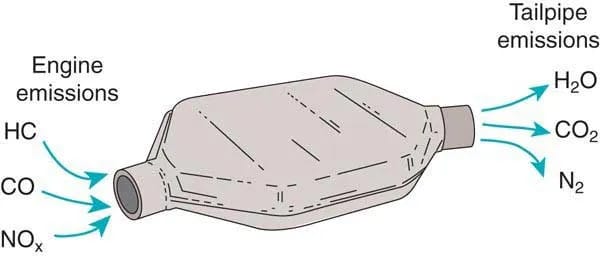
End-of-pipe technologies remove sulfur dioxide and nitrogen oxides from exhaust gases after combustion has occurred. Examples include flue-gas scrubbers installed in power plants to remove sulfur dioxide, and catalytic converters in vehicle exhaust systems, which eliminate nitrogen oxides along with other harmful pollutants.
![ESS 8.1.3 [AHL] Biocapacity and Environmental Migration](https://mypytrclass.com/wp-content/uploads/2025/12/image-4.png?w=1024)



![ESS 8.3.4 [AHL] Photochemical Smogs and Tropospheric Ozone](https://mypytrclass.com/wp-content/uploads/2025/12/image-1.png?w=1024)
 PYTR Class