
Author: Peter M.K.H JAMAL
-

ESS 4.3.2 Sustainability of Aquatic Food Production Systems
Learning Objectives Part 1: Unsustainable Harvesting The rising global demand for seafood has driven the adoption of unsustainable fishing practices, leading to overexploitation of marine resources. These harmful methods include bottom trawling, ghost fishing, and the use of poisons and explosives. Bottom TrawlingBottom trawling involves dragging a net across the ocean floor. There are two…
-

ESS 4.3.1 Productivity of Aquatic Systems
Learning Objectives Part 1: Aquatic Producers Phytoplankton Aquaculture Macrophytes (Aquatic Plants) Part 2: [AHL] Thermal Stratification and Nutrient Cycling Production Rates of Productivity Geographic and Seasonal Variations in Productivity Part 3: How we consume aquatic food? Fauna (Animals in Aquatic Food Production) Flora (Aquatic Plants & Seaweed Use) Rising Demand for Aquatic Foods
-
![ESS 4.2.4 [AHL] Measure of Water Use and Sustainability](https://mypytrclass.com/wp-content/uploads/2025/03/image-12.png?w=1024)
ESS 4.2.4 [AHL] Measure of Water Use and Sustainability
Learning Objectives Part 1: Water Footprint Water Footprint: A Measure of Water Use and Sustainability Global Water Footprint Statistics Challenges and Misinterpretations of Water Footprint Part 2: The Roles of Citizen Science in Water Systems Citizen Science and Water Quality Monitoring Example: Citizen Science in Killarney, Ireland Relevance to Global Water Quality Monitoring Findings from…
-
![ESS 4.2 [AHL] Uneven Access and Sanitation](https://mypytrclass.com/wp-content/uploads/2025/03/image-11.png?w=1024)
ESS 4.2 [AHL] Uneven Access and Sanitation
Unequal access to clean water and sanitation poses risks to human health and sustainable development, disproportionately affecting marginalised groups like Indigenous communities and low-income households. Water and Sanitation Challenges in South Africa Household Access to Water Household Access to Sanitation Inequality in Water and Sanitation Access Historical and Racial Disparities Provincial Disparities – Eastern Cape
-
![ESS 4.2 [AHL] The Need for Desalination](https://mypytrclass.com/wp-content/uploads/2025/03/image-10.png?w=1024)
ESS 4.2 [AHL] The Need for Desalination
Water Crisis in the Arab World: The Rising Dependence on Desalination The Arab world faces a critical water scarcity crisis, with limited freshwater resources to support its growing population of 400 million. As a result, desalination has become a lifeline for many countries in the region, despite its heavy dependence on fossil fuels and significant…
-
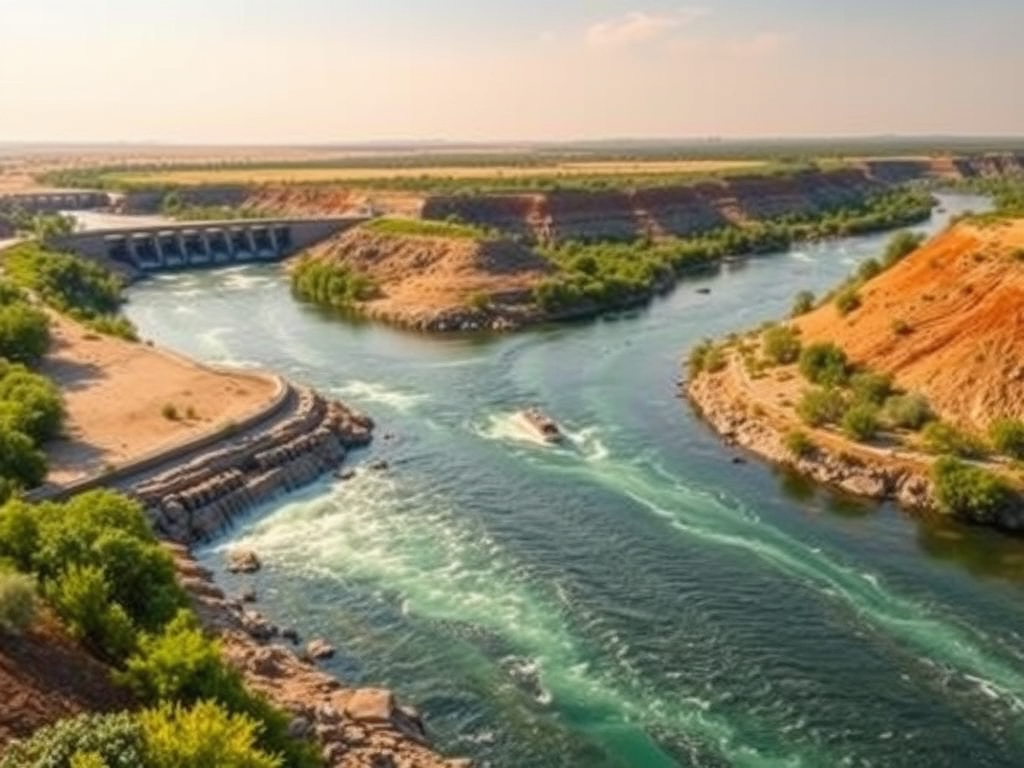
ESS 4.2.3 Water Stress
Learning Objectives Part 1: Global Water Stress Part 2: Addressing Water Stress at an Industrial Level Water stress can be managed at an industrial level through various strategies, each with its own advantages and disadvantages. Dams One of the most common methods is the construction of dams, which are barriers built across rivers or valleys…
-

ESS 4.2.2 Water Scarcity and Conservation
Learning Objectives Part 1: Water Scarcity Part 2: Domestic Conservation Part 3: Industrial Conservation Greenhouses Water recycling in greenhouses is common, but the extent varies based on size. Example – Metrolina Greenhouses in Huntersville, North Carolina, USA Aquaponics Aquaponics combines aquaculture (raising aquatic animals like fish or prawns in tanks) with hydroponic farming (growing plants…
-
![ESS 4.2.3 [AHL] Water Stress](https://mypytrclass.com/wp-content/uploads/2025/03/image-7.png?w=1024)
ESS 4.2.3 [AHL] Water Stress
Learning Objectives Part 1: Global Water Stress Part 2: Factors Increasing Water Stress Human Factors Natural Factors The causes of increasing water stress vary depending on the socioeconomic context: Other contributing factors include: Case Study: Water Stress and the Indian Textile Industry Part 3: Transboundary Dispute River or Aquifer Countries Involved in the Dispute Subject…
-

ESS 4.2.1 Water Access and Uses
Learning Objectives Part 1: Water Security Part 2: Factors of Freshwater Availability & Access Social Factors Economic Factors Cultural Factors Political Factors Part 3: How We Use Water General Use of Water Unsustainable Demands Future Water Scarcity Trends Water Consumption by Region Key Factors Driving Increased Water Demand Based on the above projection, Part 4:…
-

Chemistry S3.1.8 Ionisation Energies
Learning Objectives Part 1: Patterns of First Ionisation Energy The first ionisation energy is the energy required to remove one mole of electrons from one mole of gaseous atoms to form one mole of gaseous 1+ ions. It is measured in kilojoules per mole (kJ/mol). It is generally easier to remove an electron from a…
-
![ESS 4.1.3 [AHL] Properties of Water](https://mypytrclass.com/wp-content/uploads/2025/03/image-5.png?w=1024)
ESS 4.1.3 [AHL] Properties of Water
Learning Objectives Part 1: Properties of Water Structure & Properties Part 2: Water as C Sink Carbon in Oceans & Seabed Sediments Oceans as a Carbon Sink Ocean Acidification Effects of CO₂ Absorption in Oceans Part 3: Water Stratification Water Stratification Seasonal Stratification Changes Stratification Zones in Lakes Factors Affecting Stratification Stability Permanent Stratification (Meromictic…
-

ESS 4.1.2 Human Impacts on the Hydrological Cycle
Learning Objectives Part 1: Human Activities Agriculture Table 1: Influence of ground cover on infiltration rates Ground cover Infiltration rate (mm h⁻¹) Old permanent pasture 57 Permanent pasture: moderately grazed 19 Permanent pasture: heavily grazed 13 Strip-cropped 10 Weeds or grain 9 Clean-tilled 7 Bare, crusted ground 6 Deforestation Urbanization Part 2: Steady State of…
-

ESS 4.1.1 The Hydrological Cycle
Learning Objectives Part 1: Hydrological Cycle Part 2: Hydrological Cycle as a System Recall that a system would have an input, process and storage, and an output. Inflows and Outflows of a Lake Inflows: Outflows: Part 3: Transfer & Transformation Water Cycle Transfers Water Cycle Transformations Part 4: Stores in the Hydrological Cycle Major Stores…
-
![Chemistry S3.1.7 [AHL] Chemical Properties of Transition Metals](https://mypytrclass.com/wp-content/uploads/2025/02/image-37.png?w=1024)
Chemistry S3.1.7 [AHL] Chemical Properties of Transition Metals
Learning Objectives Chemical Properties of Transition Metals Transition metals exhibit distinct chemical behaviors that set them apart from s-block metals. They: Part 1: Variable Oxidation State A key characteristic of transition metals is their ability to exist in multiple oxidation states, unlike s-block metals, which typically display a single oxidation state corresponding to their group…
-
![ESS 2.5.3 [AHL]Productivity and Factors of Succession](https://mypytrclass.com/wp-content/uploads/2025/03/image.png?w=1024)
ESS 2.5.3 [AHL]Productivity and Factors of Succession
Learning Objectives Part 1: Influences on the type of community that develops in a succession Influenced by bottom-up and top-down factors Part 2: Changes in net productivity and gross productivity in a community undergoing succession Part 3: K-strategist and r-strategist Species [Recall] r-Strategist Species r-strategists are species that focus on high reproductive rates and rapid…
 PYTR Class