
Category: ESS Topic 5 Land
-
![ESS 5.2.5 [AHL] The Environmental Impact of Dietary Choices](https://mypytrclass.com/wp-content/uploads/2025/09/image-16.png?w=1024)
ESS 5.2.5 [AHL] The Environmental Impact of Dietary Choices
Learning Objectives Dietary choices significantly influence environmental sustainability due to variations in production practices, supply chain efficiencies, transportation distances, and resource inputs. While plant-based diets are generally more environmentally sustainable than those rich in animal products, their overall impact depends on multiple factors, including: For instance, in Sweden, a diet consisting of imported avocados, soft…
-
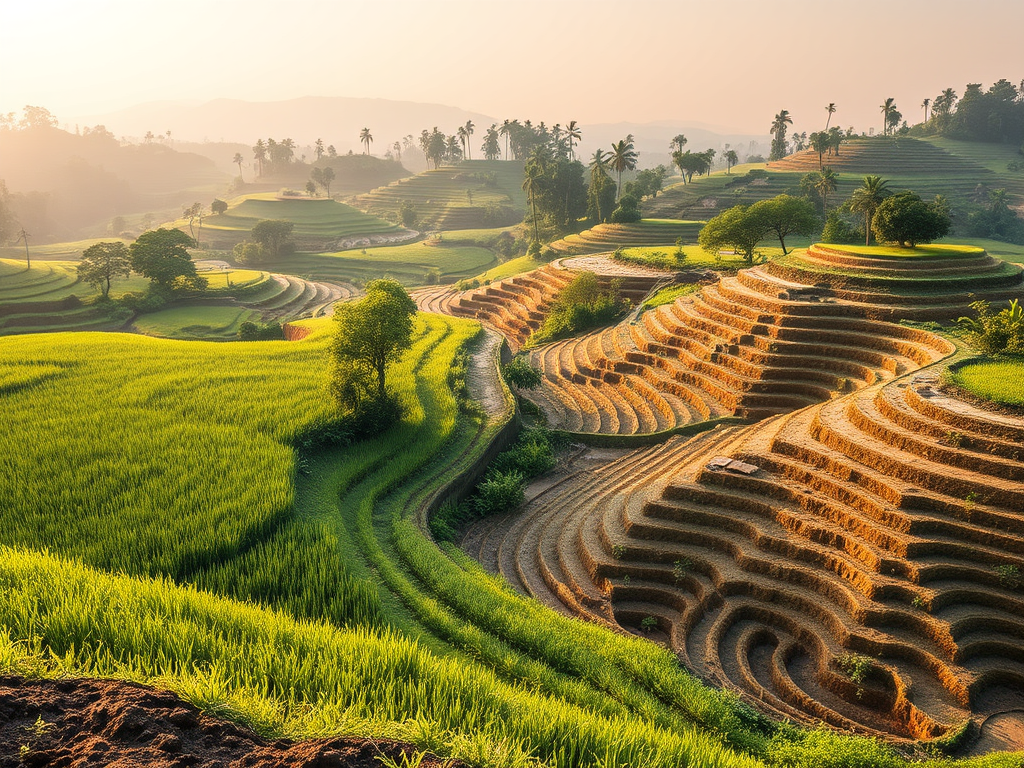
ESS 5.2.3 Making Agricultural Sustainable
Learning Objectives Agricultural Systems and Soil Degradation Agricultural systems can be understood as simplified ecosystems in which farmers cultivate selected crops while deliberately suppressing competing plant species and pests in order to maximise yields. This simplification extends to soil processes: the continuous removal of organic matter through harvesting reduces fertility, while the reliance on inorganic…
-

ESS 5.2.2 Agricultural Systems
Learning Objectives Class Activity: Part 1: Agricultural Systems The suitability of land for agricultural production is determined by various physical and environmental factors, including land aspect, altitude, latitude, and slope. The presence of large rocks near the surface may hinder cultivation, while soils with low nutrient levels, contamination, high irrigation demands, or susceptibility to flooding…
-
![ESS 5.2.4 [AHL] Soil degradation and solutions](https://mypytrclass.com/wp-content/uploads/2025/09/amazon-deforestation.png?w=1024)
ESS 5.2.4 [AHL] Soil degradation and solutions
Learning Objectives What is soil degradation? Soil is a fundamental natural resource, often described as “black gold,” due to its critical role in sustaining ecosystems, agricultural productivity, and human societies. However, soil degradation—defined as the decline in soil’s natural productivity due to human activities—has emerged as one of the most pressing global environmental and social…
-

ESS 5.2.1 Food Security
Learning Objectives Part 1: Facts about food and agriculture Part 2: Factors influencing sustainability of agriculture Activity: Discuss with peers, which one is more sustainable? – Commercial farming or subsistence agriculture Part 3: Food Security The four dimensions of food security according to Word Bank Group includes: For a more detailed analysis, reference can be…
-
![ESS 5.1.3 [Skills] Soil Texture Investigation](https://mypytrclass.com/wp-content/uploads/2025/08/image-6.png?w=1024)
ESS 5.1.3 [Skills] Soil Texture Investigation
Learning Objectives Part 1: The Research Question How does soil texture get affected in soil along a transect line from a river bank towards uphill? Part 2: Experimental Safety Precautions Procedure Sampling using transect Soil Sedimentation Test Part 3: Analysis and Conclusion Use your data in this section. The following data is provided in case…
-
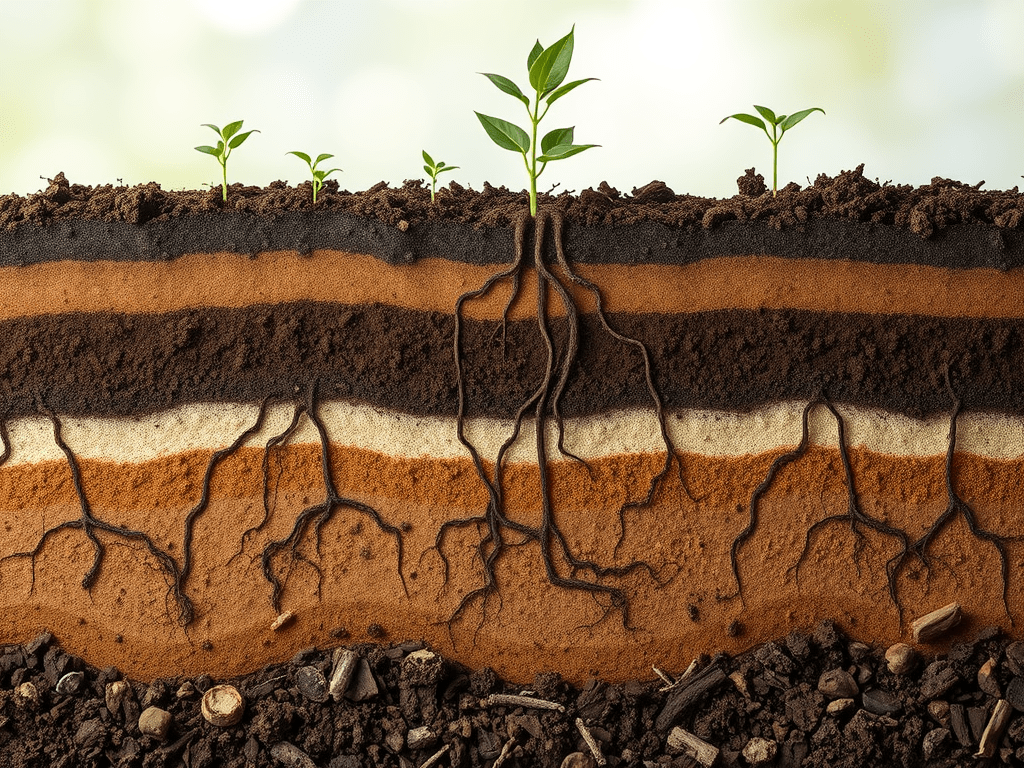
ESS 5.1.1 Soil Profile and Texture
Learning Objectives AHL Part 1: What is Soil? Soil constitutes a dynamic and complex system within terrestrial ecosystems, functioning simultaneously as a storage medium, a regulator of biogeochemical cycles, and a foundation for ecological productivity. As a system, soil interacts with its surrounding environment through a range of inputs, outputs, storages, and transfers. Inputs include…
-
![ESS 5.1.2 [AHL] Soil Formation and Sustainability](https://mypytrclass.com/wp-content/uploads/2025/06/clay-silt-and-sand.png?w=1024)
ESS 5.1.2 [AHL] Soil Formation and Sustainability
Learning Objectives Part 1: Factors of Soil Formation Soil formation is a complex and lengthy process that can take anywhere from decades to thousands of years, depending on various interacting factors. Among these, climate plays a dominant role, as both precipitation and temperature influence the rates of chemical reactions involved in soil development. Climate also…
 PYTR Class