

Learning Objectives
- Explain the nature and formation of ionic bonds
- Calculate effective nuclear charge
- Explain why noble gasses are inert
- Predict the charge of an ion from the electron configuration of the atom.
Part 1: The Nature of Ionic Bond
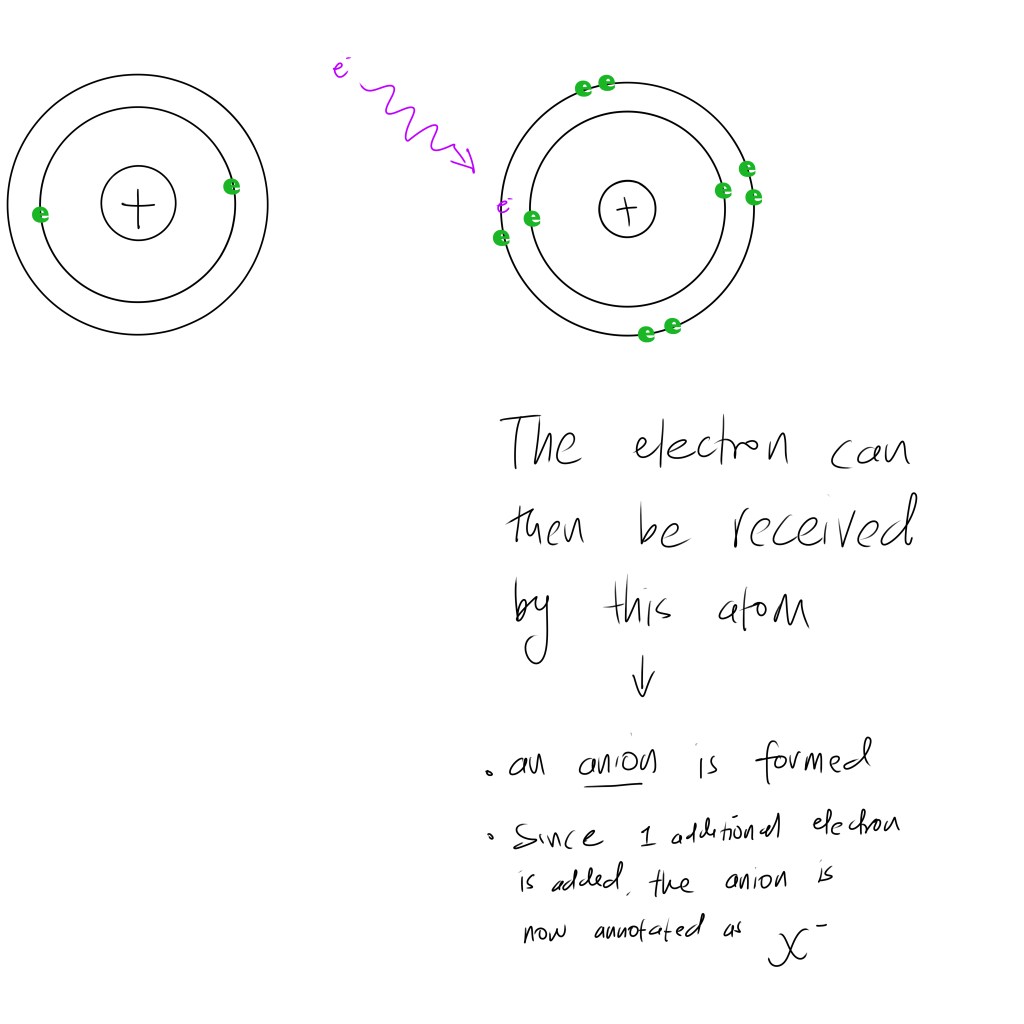
- Definition of ionic bond: an electrostatic attraction between positively charged ion (cation) and negatively charged ion (anion).
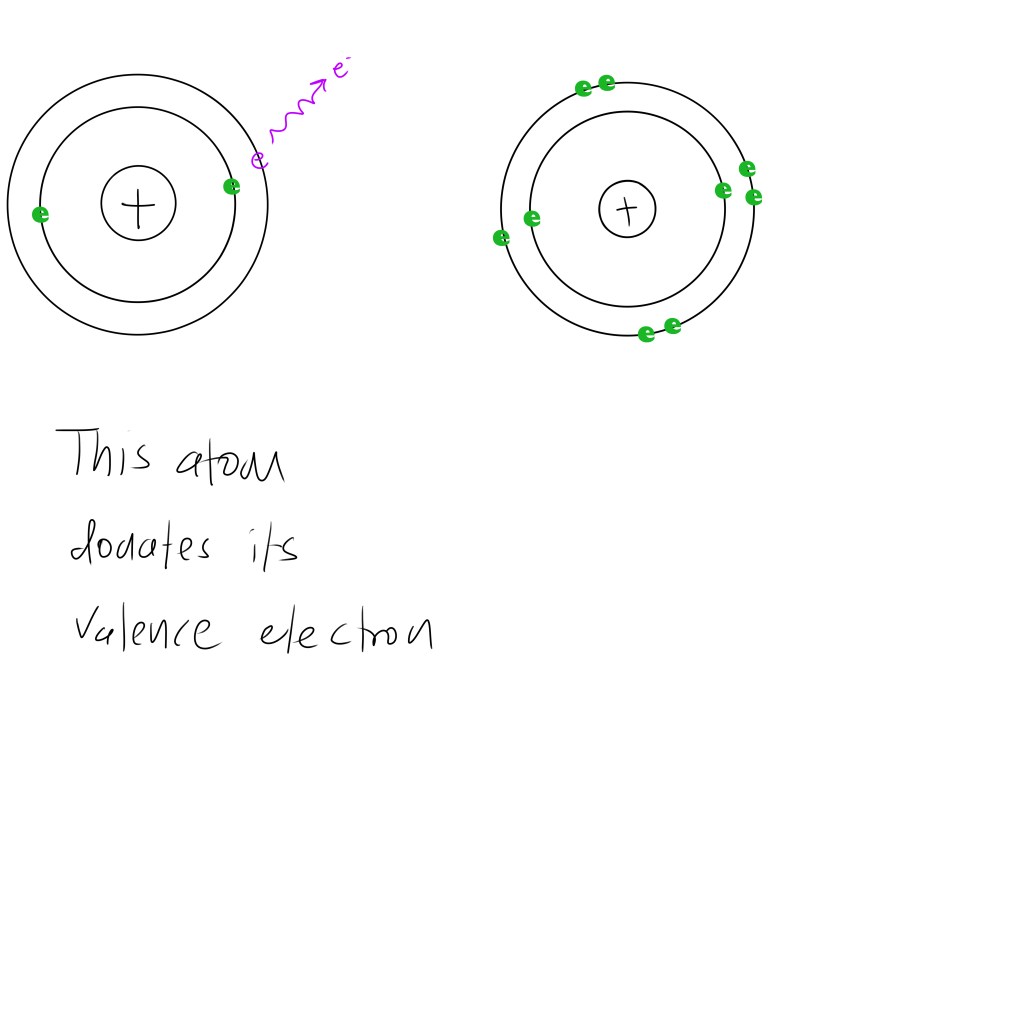
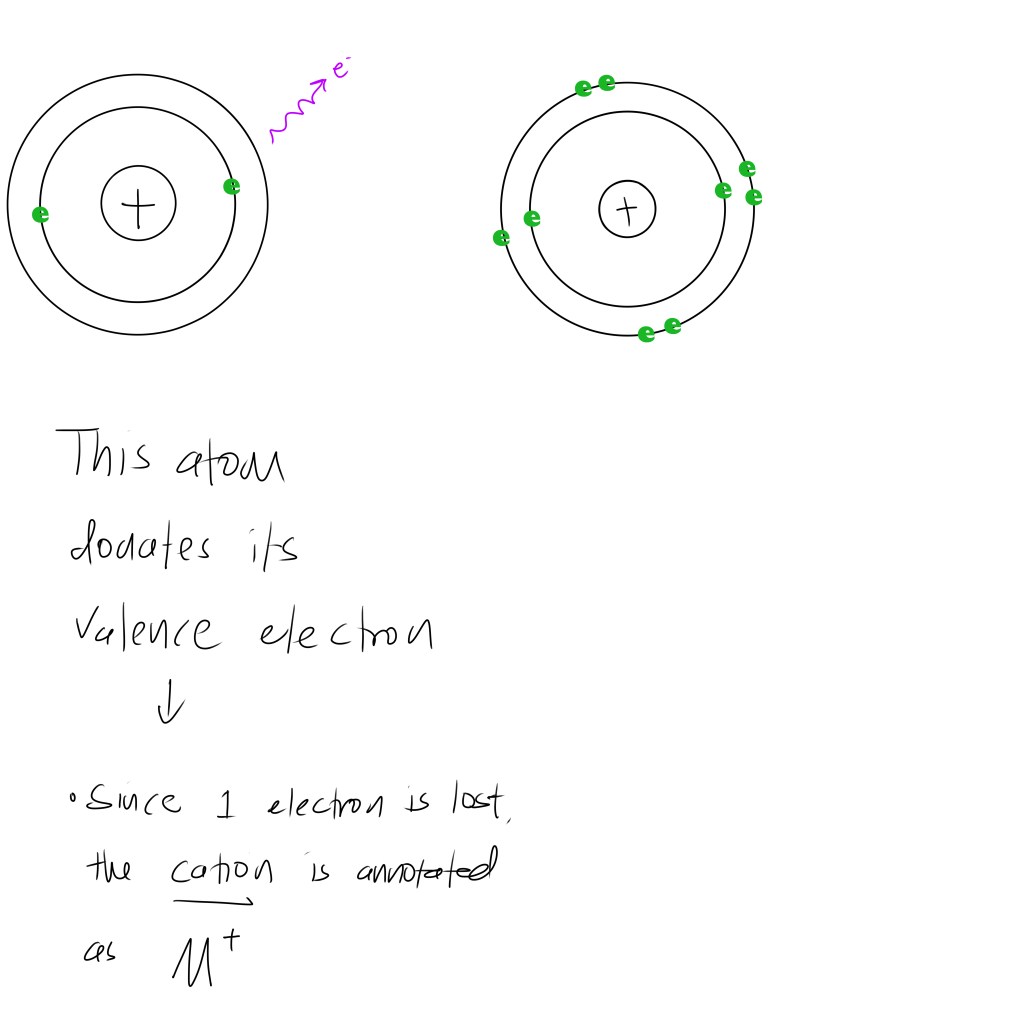
- Mechanism: transfer of electron(s). Cation donates its electron(s) and anion receives the electron(s)
Explanation of the formation of ionic bond
- Electron can escape the nuclear attraction due to two main factors
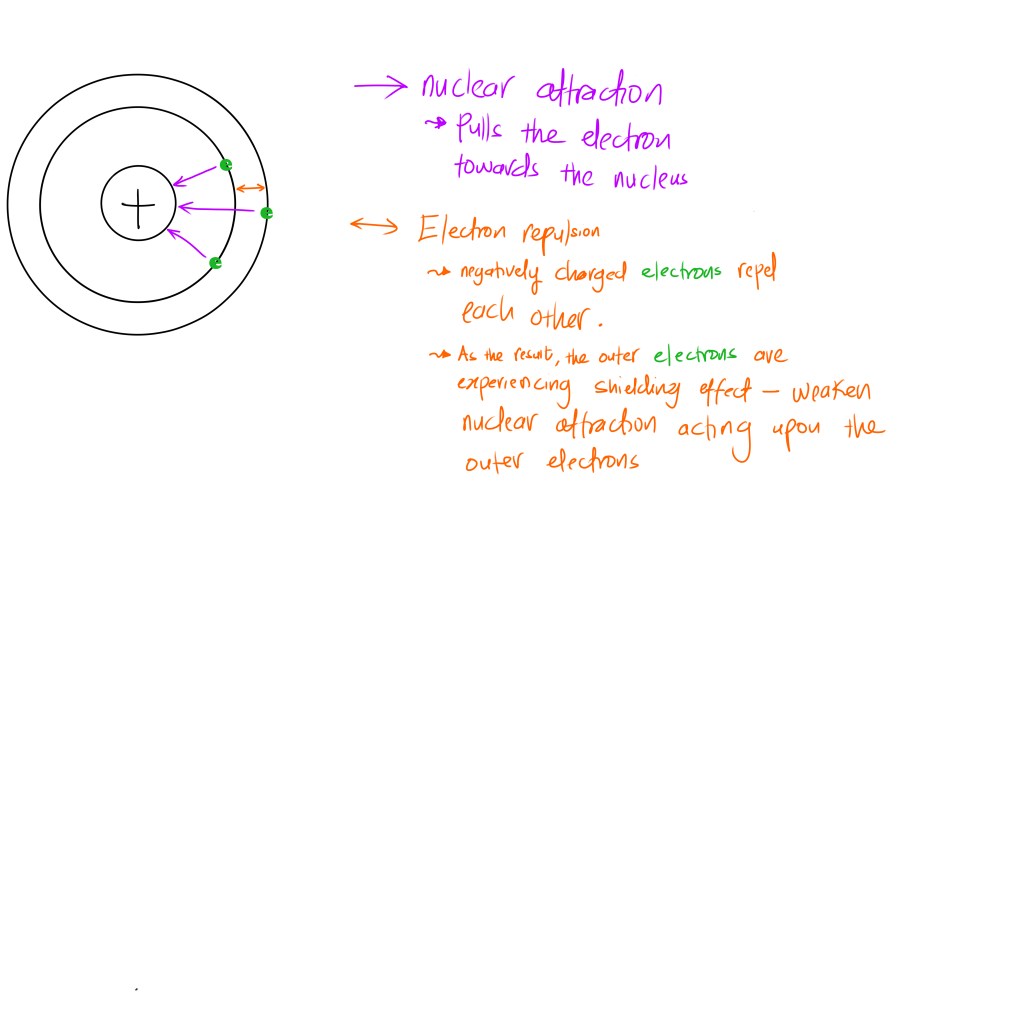
- Effective nuclear charge (Zeff)
- This is influenced by shielding effect
- Low nuclear attraction will result in low ionisation energy to remove an electron. Therefore a low effective nuclear chrage will usually result in formation of positively charged ions (cations)
- In contrast, high effective nuclear charge (with small atomic radius) will often result in the formation of negatively charged ions (anions)
- Size of atom (atomic radius)
- Larger atoms with low effective nuclear charge would usually donate their electrons. For example metals such as sodium, lithium, aluminium etc
- Smaller atomic radius with high effective nuclear charge would result in electron being received for example non-metal in the right side of the periodic table
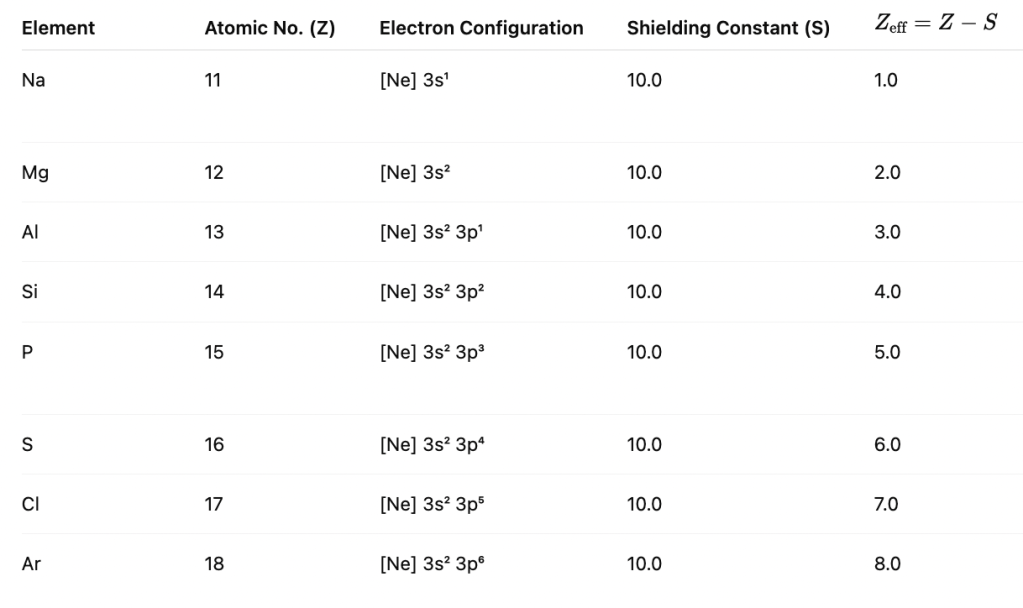
- Effective nuclear charge (Zeff)
How to calculate effective nuclear charge
- Identify which electron and its location in the energy level (shell)
- Count how many electrons are there in the inner shell(s)
- Subtract the number of proton (nuclear charge) with the number of electrons in the inner shell(s)
For example:
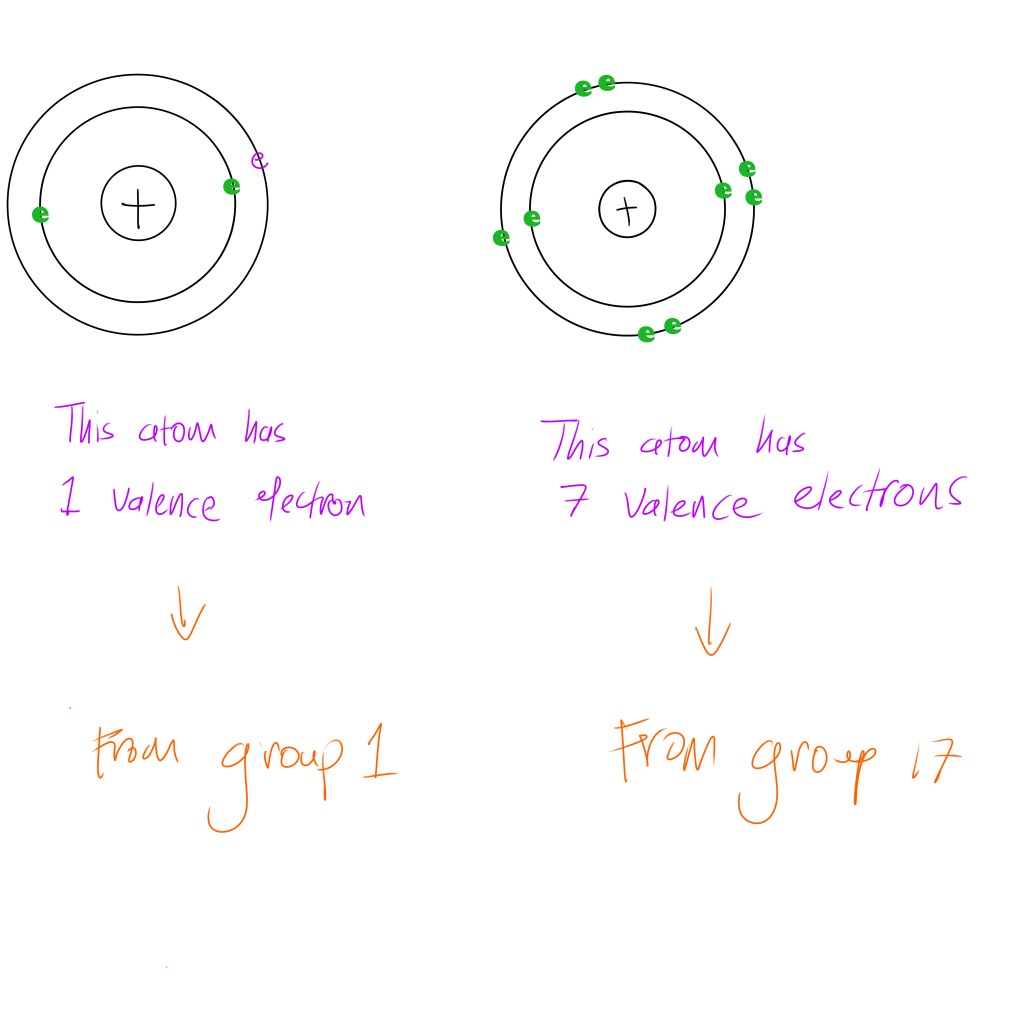
Lithium has 1 valence electron and 2 inner electron. The nuclear charge is +3. Therefore the effective nuclear charge experienced by the valence electron is +3 – 2 = +1
Part 2: Why Noble Gasses Are Inert?
- Noble gases have very high first ionisation energies, meaning their nuclei hold tightly to their outer electrons.
- These outer electrons are unavailable for chemical reactions due to the strong attraction from the nucleus.
- Noble gases possess complete outer electron shells with no vacancies to accept extra electrons.
- Any additional electron would have to enter a new, empty outer energy level, where it would experience almost zero effective nuclear charge.
- These factors make noble gases chemically un-reactive.
- The full outer energy level of noble gases represents the “ultimate goal” of electron configuration for all atoms.
- Metal atoms lose electrons to achieve the stable electron configuration of the preceding noble gas.
- Non-metal atoms gain electrons to achieve the stable electron configuration of the succeeding noble gas.
Example:
- Sodium loses one electron to achieve the electron configuration of neon.
- Chloride gains one electron to achieve the electron configuration of argon.
Part 3: Predicting the Charges of Ions

You can see jump to post Chemistry S3.1.8 Ionisation Energies to discover further about ionisation energy patterns and anomalies
![ESS 8.1.3 [AHL] Biocapacity and Environmental Migration](https://mypytrclass.com/wp-content/uploads/2025/12/image-4.png?w=1024)




![ESS 8.3.4 [AHL] Photochemical Smogs and Tropospheric Ozone](https://mypytrclass.com/wp-content/uploads/2025/12/image-1.png?w=1024)

 PYTR Class