
Learning Objectives
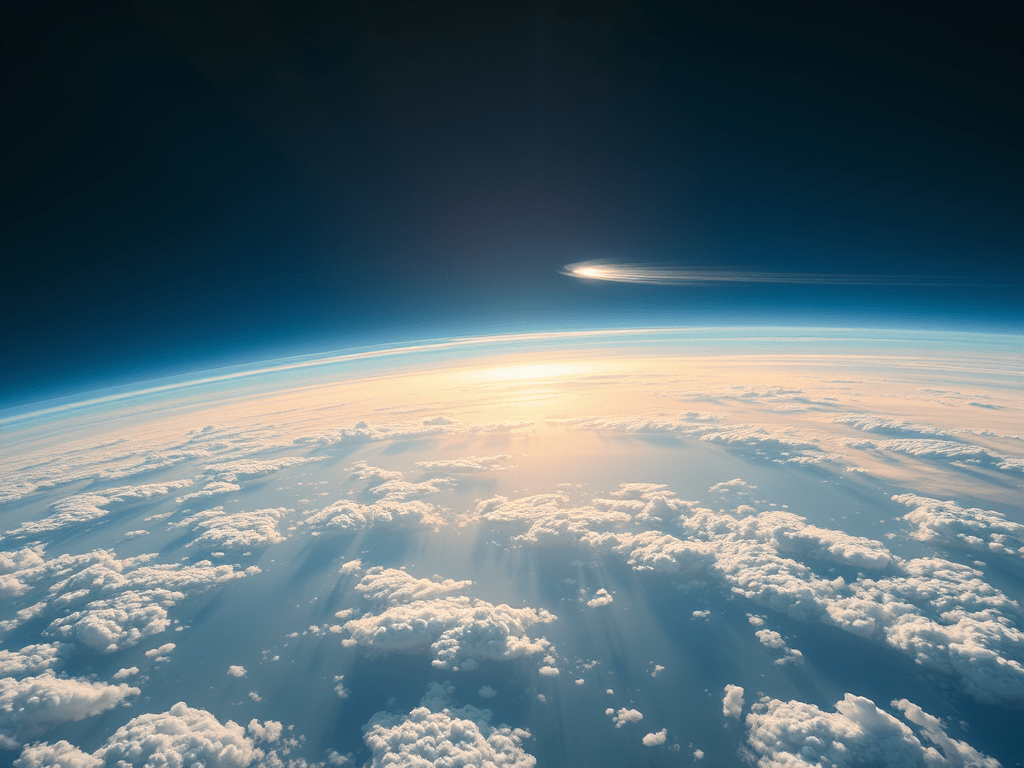
- Describe the atmosphere as a boundary between Earth and space. It is the outer limit of the biosphere and its composition and processes support life on Earth.
- Explain the differential heating of the atmosphere that creates the tricellular model of atmospheric circulation that redistributes the heat from the equator to the poles.
- Explain how GHGs and aerosols in the atmosphere cause warming effect and the cooling effect
- Explain the mechanism of greenhouse effect
The Earth’s Vertical Atmospheric Structure
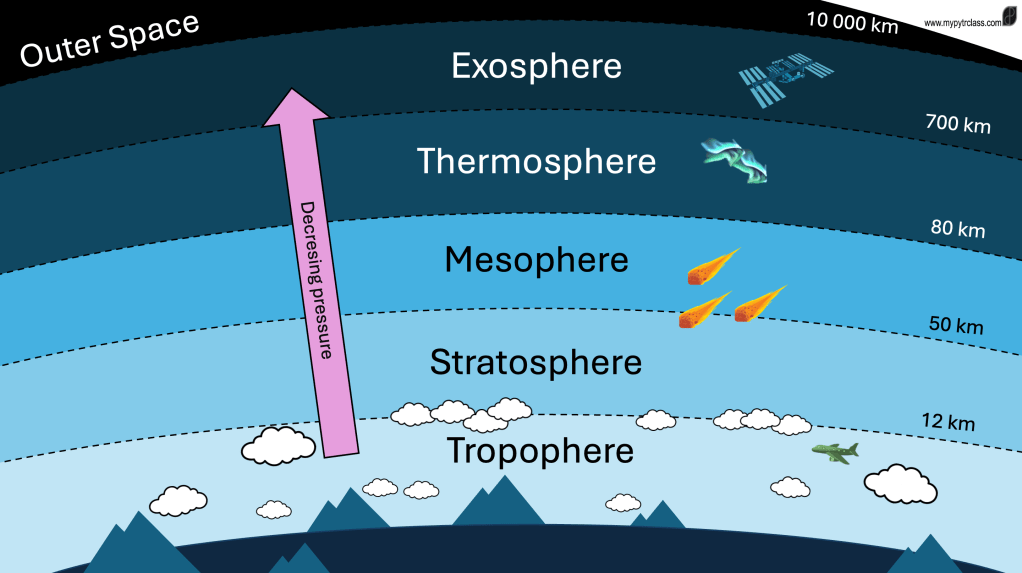
The atmosphere represents the transitional boundary between the Earth and outer space and plays a critical role as the outermost limit of the biosphere. Its composition and dynamic processes are fundamental to sustaining life. It is composed predominantly of nitrogen (78%) and oxygen (21%), with the remaining 1% consisting of trace gases such as carbon dioxide, argon, neon, hydrogen, ozone, and variable amounts of water vapour.
The Atmosphere is a dynamic system
Functioning as a dynamic system, the atmosphere contains inputs, outputs, storages, and flows that regulate energy and matter. Heat and pollutants are transported globally by atmospheric circulation, while water vapour content—measured as relative humidity—varies spatially and temporally, influencing weather systems. Heat redistribution occurs through the tricellular circulation model and the interaction of atmospheric and oceanic circulation. This global circulation is powered by uneven solar radiation, with the equator receiving maximum energy due to the high angle of solar incidence and the poles receiving less, compounded by the reflective properties of ice and snow. Without this circulation, equatorial regions would be uninhabitably hot and polar regions uninhabitably cold.
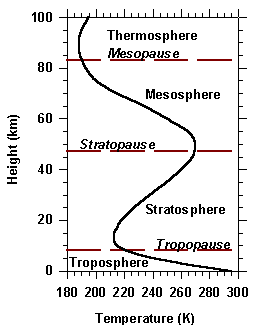
Although carbon dioxide accounts for only 0.04% of atmospheric gases, its role as a greenhouse gas (GHG) is critical. Anthropogenic activities have significantly increased concentrations of carbon dioxide and other GHGs, altering the global climate system. While the atmosphere extends approximately 1,100 km above Earth’s surface, most processes relevant to life occur in the troposphere (0–10 km) and stratosphere (10–50 km), such as ozone formation and cloud development. Over geological timescales, atmospheric composition has undergone major fluctuations, influencing ecosystems and living organisms.
Redistribution of Gasses and Heat
The primary source of energy for the Earth is solar radiation, commonly referred to as insolation. In addition to solar input, certain regions also experience significant local sources of energy. For example, urban heat islands generate localized warming, while geothermal heat contributes energy in tectonically active areas, particularly near plate boundaries or where the lithosphere is sufficiently thin to allow heat to rise to the surface.
The principal driver of atmospheric circulation is the unequal distribution of solar heating across latitudes. Between approximately 38°S and 38°N, there is an energy surplus, whereas at higher latitudes there is an energy deficit. To restore equilibrium, energy is transported from low to high latitudes.
Air circulations are closely linked to variations in atmospheric pressure. At the surface, air converges into regions of low pressure, ascends, and subsequently diverges upon reaching the tropopause. Conversely, where air converges at higher altitudes, it descends, producing areas of high pressure at the surface before diverging outward. Thus, the global wind system is fundamentally structured by the spatial distribution of pressure systems, although it also exhibits seasonal variability influenced by the apparent movement of the Sun.
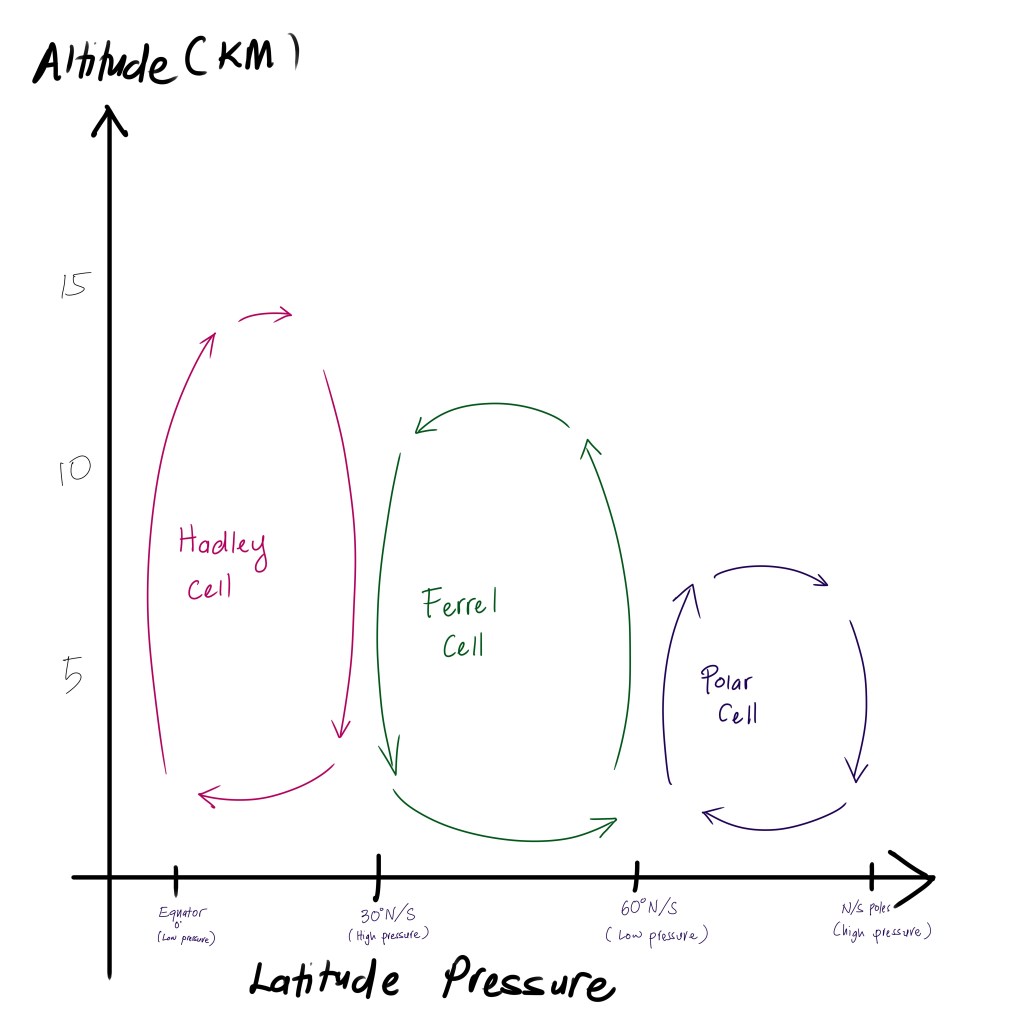
At the equator, intense solar heating causes air to rise, creating a zone of low pressure. This air then moves poleward, but as it cools and becomes denser, it subsides in the subtropics (around 20–30° N and S), forming high-pressure zones. Some of this air returns equatorward at the surface to replace the rising air, establishing a convectional circulation cell known as the Hadley cell.
At higher latitudes, the Polar cell forms as cold, dense air sinks over the poles (polar high pressure) and flows equatorward toward the mid-latitudes. Between the Hadley and Polar cells lies the Ferrel cell, which operates indirectly, driven by the dynamical interactions of the adjacent circulation systems. Together, these three cells—the Hadley, Ferrel, and Polar—constitute the tricellular model of atmospheric circulation, which provides a conceptual framework for understanding the large-scale movement of energy and air across the globe.
The Earth’s Energy Budget
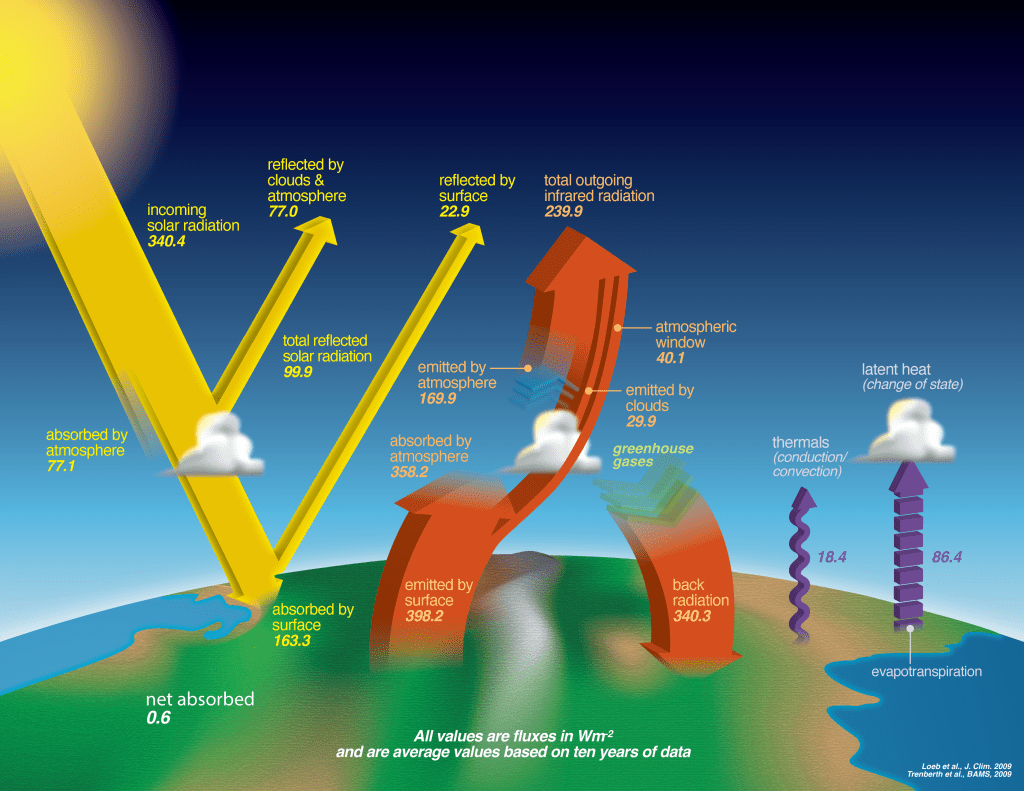
The Earth sustains an equilibrium between the total incoming and outgoing energy at the top of the atmosphere, a balance referred to as the Earth’s energy budget or the radiation budget. Incoming solar energy primarily consists of shortwave radiation, while the Earth re-emits energy to space in the form of longwave radiation. For global temperatures to remain stable over extended timescales, the fluxes of incoming and outgoing energy must be equal. An imbalance—where incoming energy exceeds outgoing energy—results in planetary warming, whereas the reverse leads to cooling.

Solar radiation reaching Earth is composed mainly of visible light, with smaller contributions from ultraviolet and infrared wavelengths. Approximately 30% of this incoming energy is reflected back into space by clouds, aerosols, and surface reflectivity (albedo), while the remaining 70% is absorbed by the Earth’s surface and atmosphere. The absorbed energy drives a range of processes, including photosynthesis, the heating of land and oceans, and evaporation. As the surface warms, the absorbed shortwave radiation is converted into infrared (longwave) radiation, which is then emitted back toward space.
However, a portion of this outgoing longwave radiation is absorbed and re-emitted toward the surface by greenhouse gases (GHGs) in the atmosphere, a process known as back radiation. This mechanism enhances surface warming and contributes to the greenhouse effect, which plays a critical role in regulating Earth’s climate system.
Greenhouse Gasses (GHG) and Aerosols
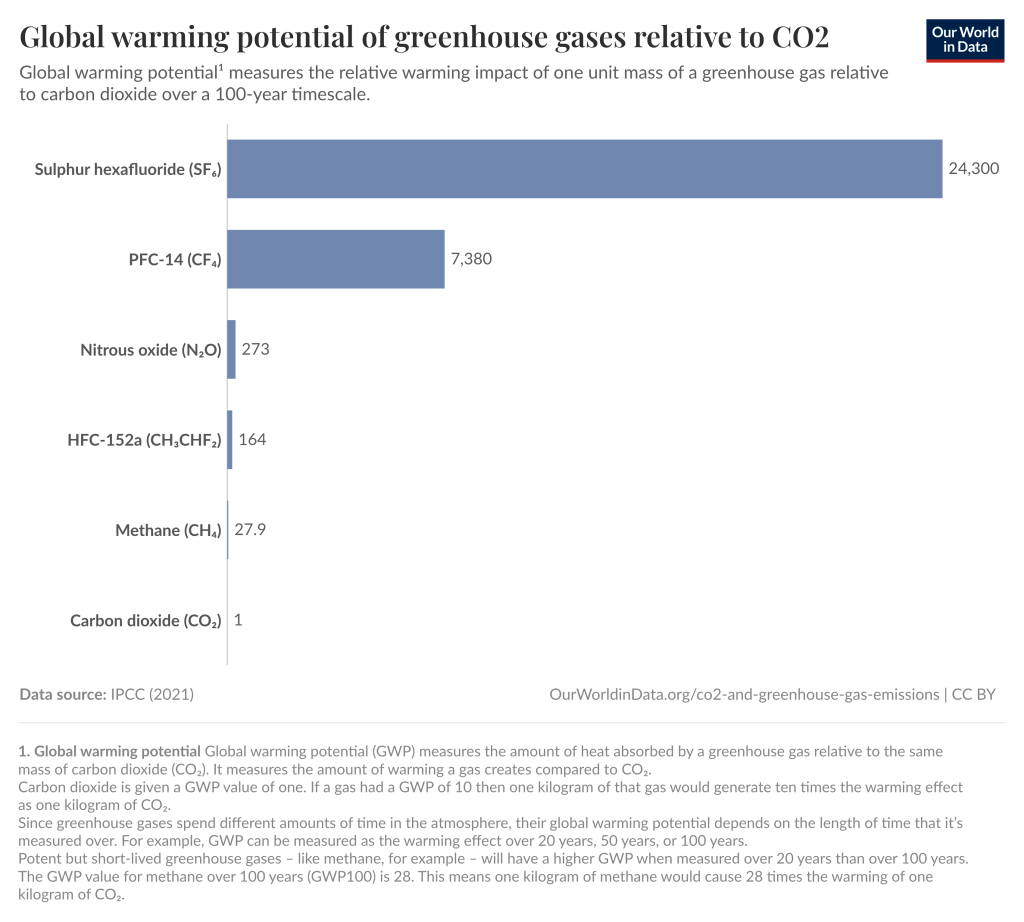
The principal greenhouse gases (GHGs) present in the atmosphere include water vapour, carbon dioxide (CO₂), tropospheric ozone (O₃), methane (CH₄), and nitrous oxide (N₂O). In addition to these gases, black carbon is present in the atmosphere in the form of an aerosol. Greenhouse gases allow the transmission of incoming short-wave solar radiation but absorb outgoing long-wave radiation, owing to differences in wavelength between the two processes. While most greenhouse gases contribute to atmospheric warming, certain components can exert a cooling effect. This occurs primarily due to aerosols, many of which—such as sulphur emissions—originate from anthropogenic activities. Aerosols influence the proportion of solar radiation that reaches the Earth’s surface, thereby exerting local or regional effects on temperature. For example, some industrial regions have experienced less warming than expected despite rising GHG concentrations. This phenomenon, referred to as global dimming or regional dimming, arises partly from increased aerosol loading and partly from enhanced water vapour, both of which can augment cloud cover and reflect substantial amounts of solar radiation away from the Earth’s surface.
Black Carbon (Aerosol)
Black carbon is produced by the incomplete combustion of fossil fuels, biofuels, and biomass. Approximately 20% of global black carbon emissions originate from biofuels, 40% from fossil fuels, and the remaining 40% from open biomass burning, such as that occurring in savannahs and rainforests. Black carbon consists of fine particulate matter with diameters smaller than 2.5 μm, although it remains in the atmosphere only for a short duration (days to weeks) before being removed by precipitation.
Black carbon influences the climate through several mechanisms:
- Direct effects
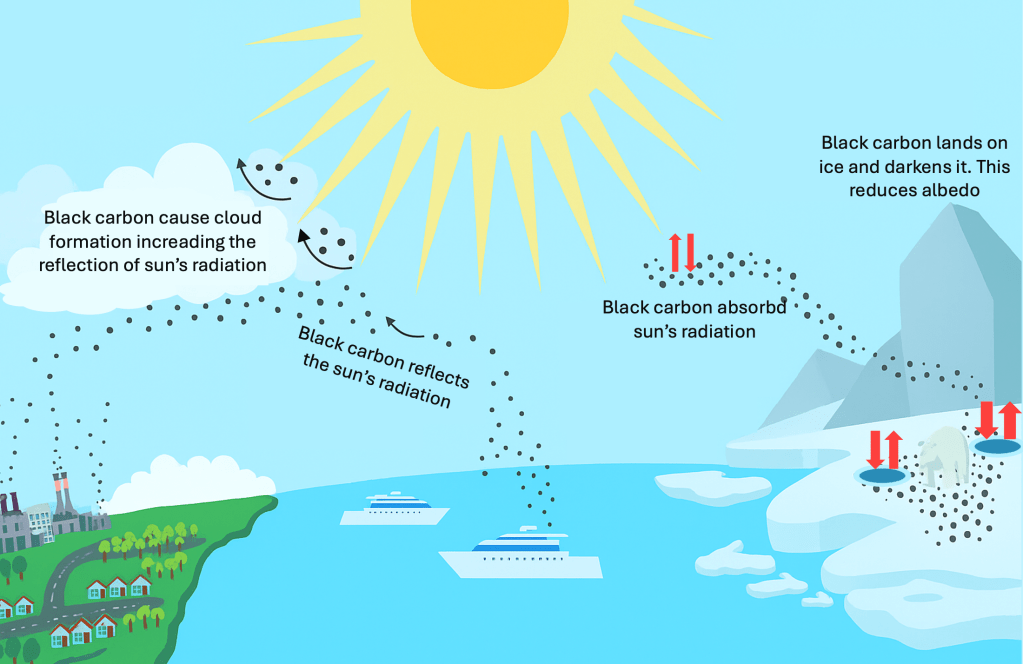
- when airborne, black carbon absorbs sunlight and reduces the albedo.
- Semi-direct effects
- absorption of incoming solar radiation alters atmospheric stability and cloud cover.
- Snow and ice albedo effects
- deposition on snow and ice decreases albedo, triggering a positive feedback loop in which surface warming accelerates ice melt, further reducing albedo.
- Indirect effects
- changes in cloud properties influence the absorption and reflection of solar radiation.
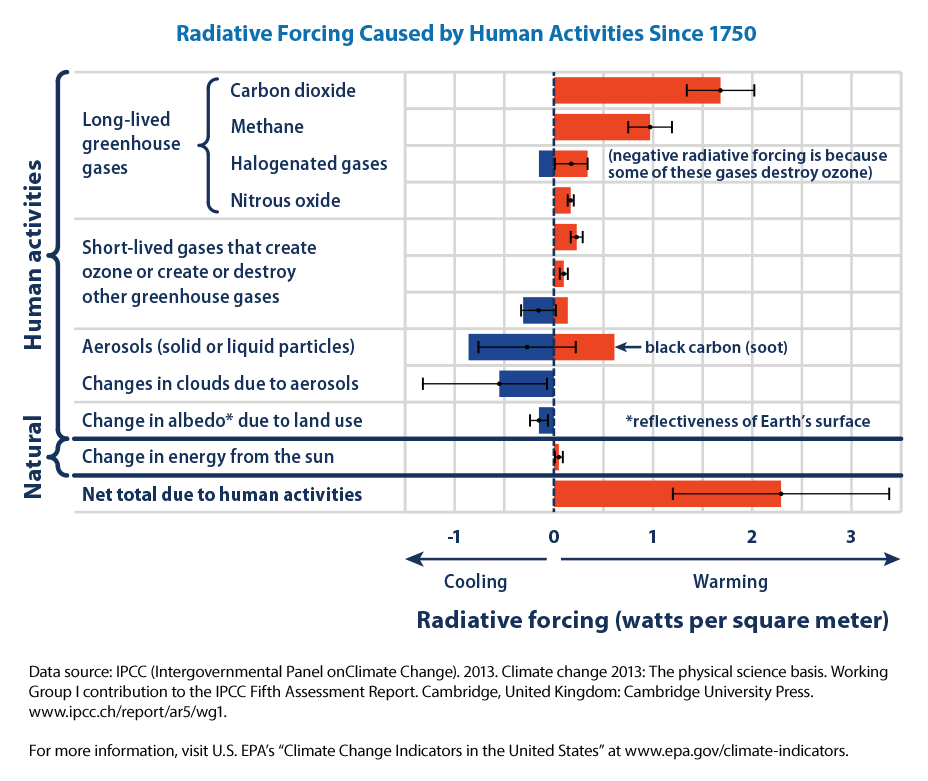
According to the Intergovernmental Panel on Climate Change (IPCC), the combined direct and indirect snow–albedo effects make black carbon the third largest contributor to positive radiative forcing since pre-industrial times. It is also considered a key driver of Arctic ice melt. The IPCC estimates that reductions in snow albedo caused by soot deposition may account for up to 25% of observed global warming.
Radiative Forcing
Radiative forcing refers to the net balance between incoming solar radiation and outgoing long-wave radiation. Positive radiative forcing indicates that the Earth absorbs more energy than it emits back into space. The magnitude of radiative forcing depends on variations in insolation, surface albedo, and atmospheric concentrations of greenhouse gases.
The Greenhouse Effect
The greenhouse effect is a natural atmospheric process in which greenhouse gases and aerosols absorb and re-emit long-wave infrared (IR) radiation emitted from the Earth’s surface. This process traps heat within the atmosphere, thereby warming the planet. The greenhouse effect is essential for sustaining life, as without it the Earth’s average surface temperature would be approximately –18 °C rather than the current global mean of around 15 °C, rendering the planet largely uninhabitable.
Although molecular oxygen (O₂) and nitrogen (N₂) comprise the majority of the atmosphere, they do not absorb or emit long-wave radiation. In contrast, water vapour and trace gases such as carbon dioxide (CO₂), methane (CH₄), nitrous oxide (N₂O), and ozone (O₃) act as greenhouse gases. By absorbing and re-radiating terrestrial radiation, they function as a thermal blanket, producing what is termed the natural greenhouse effect. This phenomenon has been a persistent feature of the Earth’s climate system throughout much of its atmospheric history.
The enhanced greenhouse effect refers to the anthropogenically driven increase in greenhouse gas concentrations, primarily from fossil fuel combustion, industrial processes, and land-use change. This intensification raises global temperatures above their natural baseline, contributing to phenomena collectively referred to as global warming, climate change, or climate crisis. While CO₂ is the most significant greenhouse gas due to its concentration and persistence, other gases—including CH₄, N₂O, and tropospheric O₃—also play critical roles. Collectively, the warming effect of these non-CO₂ gases is estimated to be equivalent to approximately 60% of the radiative forcing attributable to CO₂.
Class Materials
Subscribe to get access
Read more of this content when you subscribe today.
![ESS 8.1.3 [AHL] Biocapacity and Environmental Migration](https://mypytrclass.com/wp-content/uploads/2025/12/image-4.png?w=1024)



![ESS 8.3.4 [AHL] Photochemical Smogs and Tropospheric Ozone](https://mypytrclass.com/wp-content/uploads/2025/12/image-1.png?w=1024)
 PYTR Class