
Learning Objectives
- Outline primary and secondary pollutants of photochemical smog
- Describe the formation of photochemical smog and tropospheric ozone
- Explain the impacts of tropospheric ozone on biological systems and materials
- Outline the adaptation strategies in response to increasing tropospheric ozone concentration
Photochemical Smog
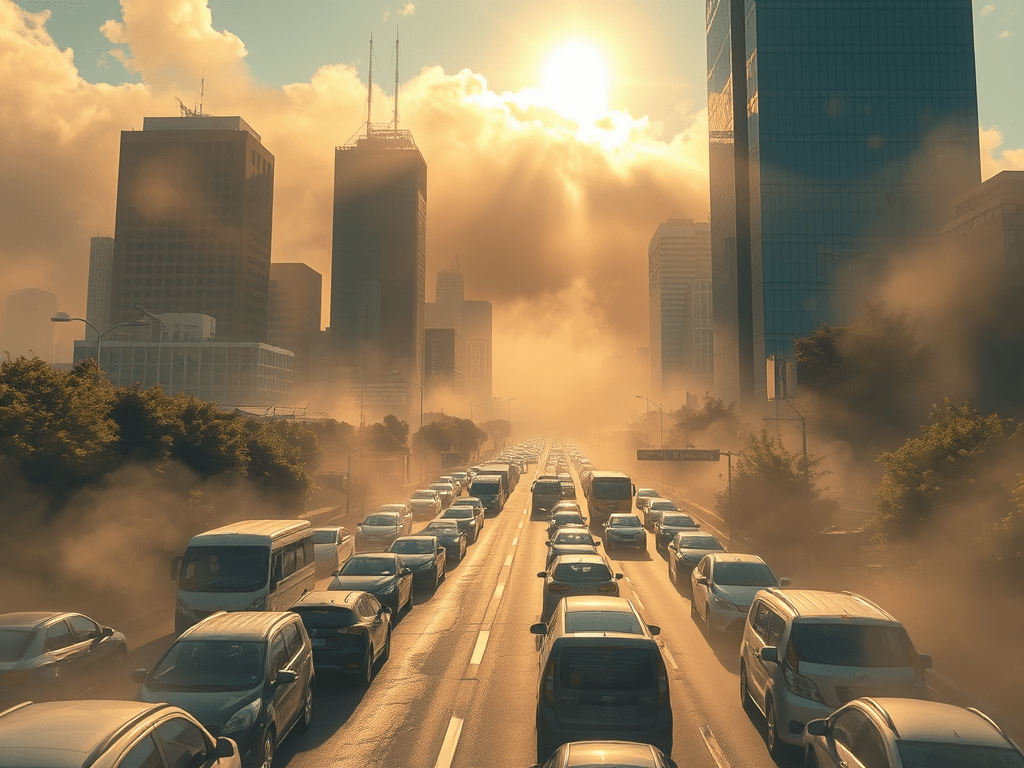
Photochemical smog is a brownish atmospheric haze frequently observed in urban environments. It forms when ozone, nitrogen oxides, and volatile organic compounds (VOCs) derived from the combustion of fossil fuels undergo photochemical reactions in sunlight, producing a toxic mixture that includes ozone, nitric acid, aldehydes, and peroxyacyl nitrates (PANs). Although primarily composed of nitrogen dioxide and ozone, photochemical smog consists of a complex assemblage of approximately one hundred primary and secondary air pollutants. Motor vehicle emissions represent the largest single contributor in most cities.
Formation of photochemical smog
Photochemical smog typically develops over cities on warm, sunny days with heavy traffic. Although commonly associated with fossil fuel combustion, biomass burning, including forest fires, can also generate significant quantities of smog-forming pollutants. In regions such as Kalimantan, Indonesia, large-scale forest fires have repeatedly produced widespread smog across Southeast Asia, with particularly severe episodes in 1997 and 2019; such events occur most frequently during El Niño years.
The formation of photochemical smog involves complex atmospheric reactions that generate VOCs, PANs, ozone, aldehydes, carbon monoxide, and nitrogen oxides. Highly reactive VOCs oxidise nitric oxide to nitrogen dioxide without promoting ozone degradation, resulting in an accumulation of ozone near the surface. Because nitrogen dioxide is a key component of the mixture, smog often appears as a brownish haze above urban areas. The oxidising nature of these pollutants enables them to damage both living organisms and materials. At elevated concentrations, smog can impair respiratory function, cause coughing, and reduce cognitive performance. Although the concentrations of primary pollutants such as nitrogen oxides and hydrocarbons peak during morning and evening traffic periods, photochemical smog typically reaches maximum intensity in the early afternoon when sunlight-driven reactions are strongest.
Because this form of pollution was first identified in Los Angeles, it is often referred to as Los Angeles–type smog. Cities such as Santiago, Mexico City, Rio de Janeiro, São Paulo, Beijing, and Athens also frequently experience this phenomenon. Its occurrence is influenced by topography, climate, population density, and fossil fuel consumption. Large, low-lying cities situated in valleys are particularly vulnerable because surrounding mountains limit air circulation. Under warm and calm conditions, severe smog episodes may develop. Thermal inversions exacerbate these conditions by trapping pollutants near the ground when a layer of warmer air overlays cooler, polluted air. Rainfall can remove pollutants from the atmosphere, while winds disperse smog. When these mitigating factors are absent, pollutant concentrations may reach harmful or even lethal levels. Smog can also be transported long distances, causing environmental damage up to 150 km from its point of origin.
Tropospheric Ozone
While stratospheric ozone is beneficial due to its role in absorbing ultraviolet radiation, tropospheric ozone—representing roughly 10% of total atmospheric ozone—is harmful to human health and the environment. The United States Environmental Protection Agency identifies ozone concentrations above 0.7 ppm over an eight-hour period as hazardous. Tropospheric ozone also acts as a greenhouse gas, with a global warming potential approximately 2,000 times greater than that of carbon dioxide.
Formation of tropospheric ozone
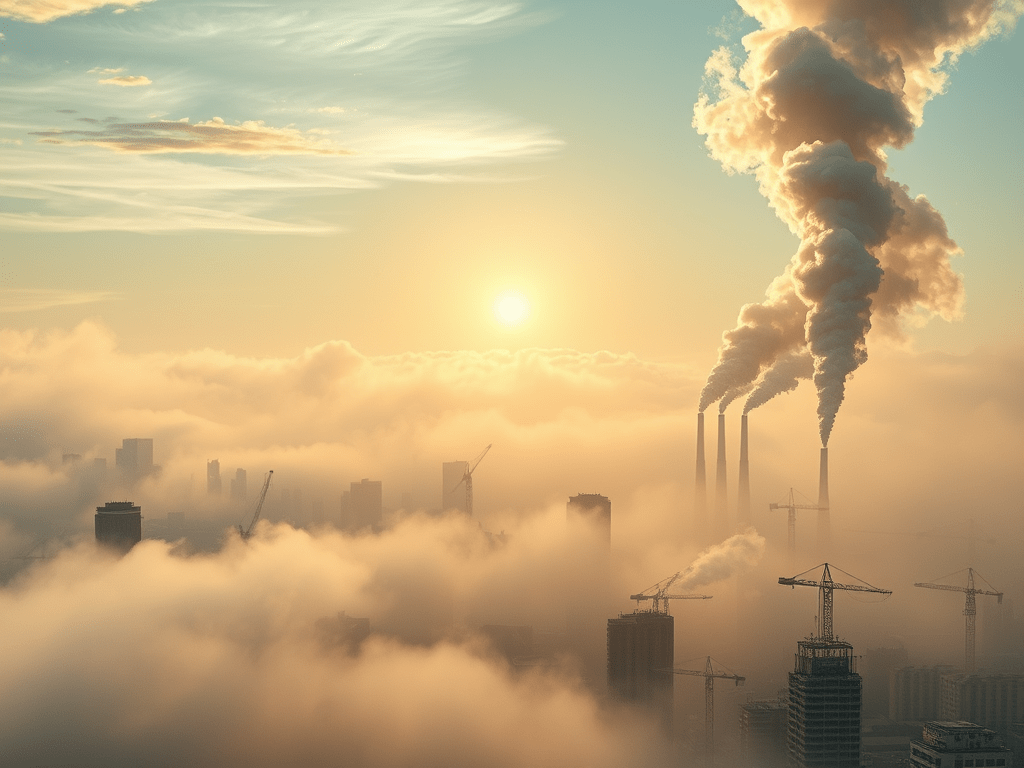
Combustion of fossil fuels releases hydrocarbons (due to incomplete combustion) and nitrogen oxides, the latter produced when atmospheric nitrogen and oxygen react under high temperatures. These nitrogen oxides contribute to the formation of tropospheric ozone. Nitric oxide reacts with oxygen to form nitrogen dioxide, a brown gas that contributes to urban haze. Hydrocarbons and carbon monoxide accelerate this conversion. When nitrogen dioxide absorbs sunlight, it photodissociates into nitric oxide and oxygen atoms, which subsequently react with molecular oxygen to produce ozone. Under unpolluted conditions, ozone is rapidly consumed as it oxidises nitric oxide back to nitrogen dioxide, resulting in only modest ozone accumulation near the surface.
Impacts of tropospheric ozone
Tropospheric ozone is a principal component of photochemical smog and is both toxic and strongly oxidizing. Ozone and particulate matter exert biological, social, and economic impacts. Biological impacts include irritation of the respiratory tract, coughing, wheezing, sore throat, asthma exacerbation, pulmonary disease, and potentially increased risk of lung cancer. Ozone exposure reduces lung function by constricting respiratory muscles, thereby limiting physical activity. It also increases susceptibility to infections such as bronchitis and emphysema, causes eye irritation, and weakens the immune system.
Ozone negatively affects plant physiology, inhibiting growth by degrading chlorophyll and reducing or halting photosynthesis. It damages cuticles and cell membranes, with crops such as tobacco, tomato, and spinach exhibiting particular sensitivity. Visible necrosis may develop on leaves, diminishing plant productivity. In addition, ozone degrades inorganic materials such as rubber, cellulose, paint, plastics, fabrics, and metals. These impacts reduce material durability, elasticity, and aesthetic appearance, shorten the lifespan of automobile tires, and accelerate the deterioration of textiles. These material and ecological effects carry economic costs related to maintenance, repair, and replacement.
Reducing the impacts of tropospheric ozone
Mitigation strategies parallel those used for other pollutants and include modifying human activities that produce ozone precursors, regulating emissions at their source, and implementing remediation and restoration measures.
Individuals may reduce personal exposure by monitoring local air quality indices and taking actions such as remaining indoors during periods of high ozone levels, avoiding strenuous outdoor activities, using indoor air filtration, wearing respirators when necessary, avoiding burning wood, candles, or incense, and refraining from smoking.
![ESS 8.1.3 [AHL] Biocapacity and Environmental Migration](https://mypytrclass.com/wp-content/uploads/2025/12/image-4.png?w=1024)


 PYTR Class