Learning Objectives
- Outline the meaning of the term “urban areas” and how they work as a system
- Explain the pull and push factors they result in migrations
- Outline the process of suburbanisation
- Outline the consequences of expansion of urban and suburban areas
Urban Areas are Systems
Urban areas are typically characterised by high densities of buildings and populations, concentrated for residential, cultural, economic, commercial, and social functions. Examples include cities, towns, and suburbs. In contrast, rural areas exhibit low population densities and more dispersed settlement patterns.
Urban areas can be understood as systems comprising both a human system, as outlined above, and an urban ecosystem. Urban habitats are highly diverse, encompassing a wide range of microhabitats that include both biotic and abiotic components. These ecosystems vary considerably in scale and biodiversity. At least ten distinct types of urban ecosystem can be identified: residential gardens, industrial sites, inner-city derelict land, green areas and open spaces, cemeteries, transport corridors, waste disposal sites, forests, fields, and water bodies.
Some older cities possess well-established ecosystems and habitats that may resemble those found in rural environments, whereas rapidly developing cities tend to exhibit dynamic and changing ecosystems. Furthermore, certain urban habitats are highly unstable due to significant human disturbance. Much of the flora and fauna in urban areas has been introduced relatively recently, resulting in a limited proportion of indigenous species. Urban environments are often attractive to immigrant species due to the availability of diverse microhabitats, reduced competition, and the creation of novel ecological niches. A substantial proportion of urban fauna consists of scavengers and opportunistic generalists. Species that are omnivorous, surface-feeding, nocturnal, or crepuscular tend to have a competitive advantage. Urban biodiversity is further enhanced by hybridisation and deliberate species introductions, and urban areas frequently exhibit distinctive microclimates.
The City Centre
For many organisms, the city centre represents a harsh and stressful environment. This is due to the predominance of hard, impermeable surfaces, the presence of tall structures resembling cliffs (such as high-rise buildings), minimal soil availability, and extreme variations in temperature, shade, and shelter. Open spaces are often limited, although some cities incorporate features such as tree-lined avenues and large parks. Additionally, numerous small-scale habitats exist, including rooftop gardens, window boxes, street trees, and areas where dust and debris accumulate sufficiently to form rudimentary soils.
Despite these challenges, certain species find city centres highly suitable. Cliff-dwelling species are particularly well adapted, and bird populations such as gulls, pigeons, sparrows, and kestrels have expanded by adapting to urban conditions. This adaptation has often involved dietary shifts to include refuse, smaller birds, and insects. In contrast, most mammals adapt less readily, with notable exceptions including rats, mice, and grey squirrels. Grey squirrels are generally associated with tree-rich areas, whereas rats and mice are widely distributed across buildings.
Residential Suburbs
Residential areas contain a variety of managed and semi-natural ecosystems, including domestic gardens, school grounds, allotments, sports fields, and cemeteries. Compared with city centres, these environments offer a greater diversity of habitats, increased food availability, more extensive vegetation cover, and improved soil development. Consequently, residential suburbs support a wider range of animal species, including increased numbers of breeding birds and mammals such as foxes, hedgehogs, and squirrels.
Wasteland
Urban areas often include significant expanses of derelict and unused land. These areas may exhibit considerable variation in microrelief, hard and impermeable surfaces, mixed substrates (including building rubble), and elevated chemical loads. Such environments are typically colonised first by ruderal plant species, which are adapted to disturbed conditions and can tolerate waste and debris. Ecological succession in these areas is generally rapid. Fast-growing annual plants are gradually replaced by perennial grasses, and in the UK, this often leads to the development of dense thickets of bramble, hawthorn, and elder over time.
Urban environments provide valuable opportunities to observe ecological succession. In derelict areas, weeds such as dandelions may establish within a year, initiating the successional process. Within approximately five years, grasses and clover may dominate level surfaces. After a decade, soil accumulation allows deeper-rooted shrubs and trees to establish. Reduced maintenance of drainage systems may increase flooding, facilitating the formation of marshes and ponds. Over a period of around thirty years, birch woodland may develop in open spaces between buildings, accompanied by a significant increase in animal diversity. However, not all species persist under these conditions; for example, sewer-dwelling rats may decline in the absence of human activity to sustain them.
Activity 1
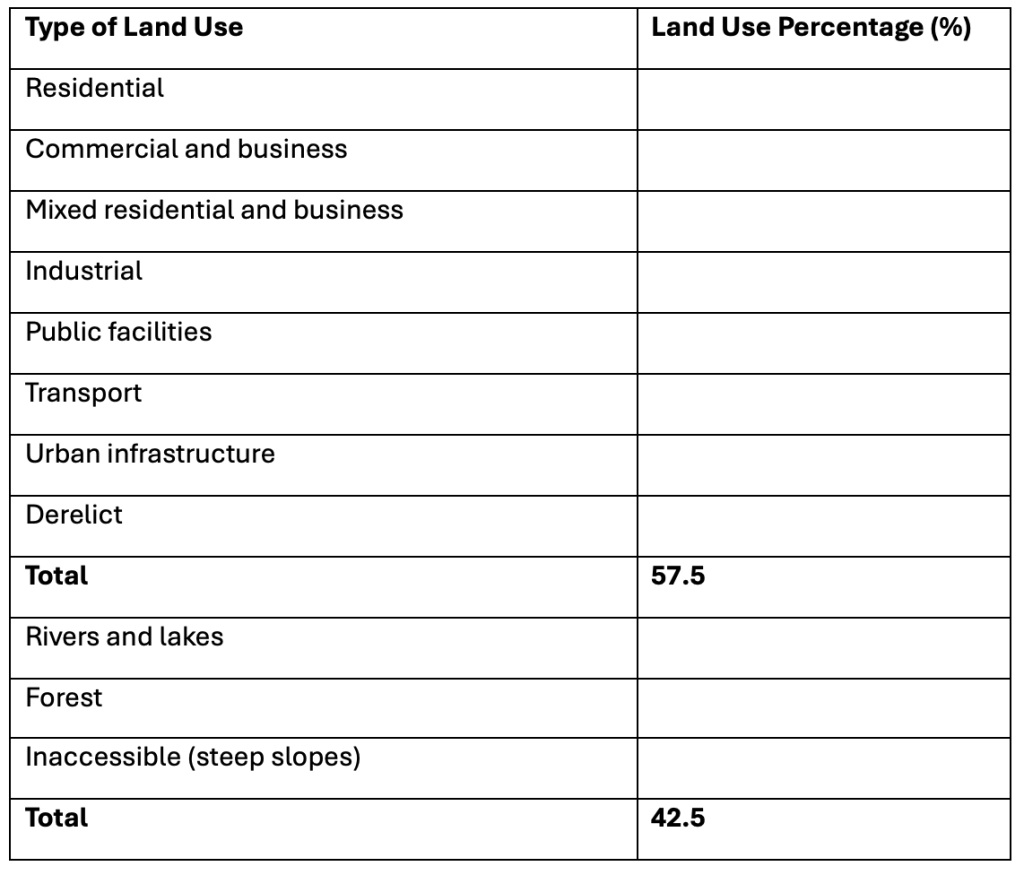
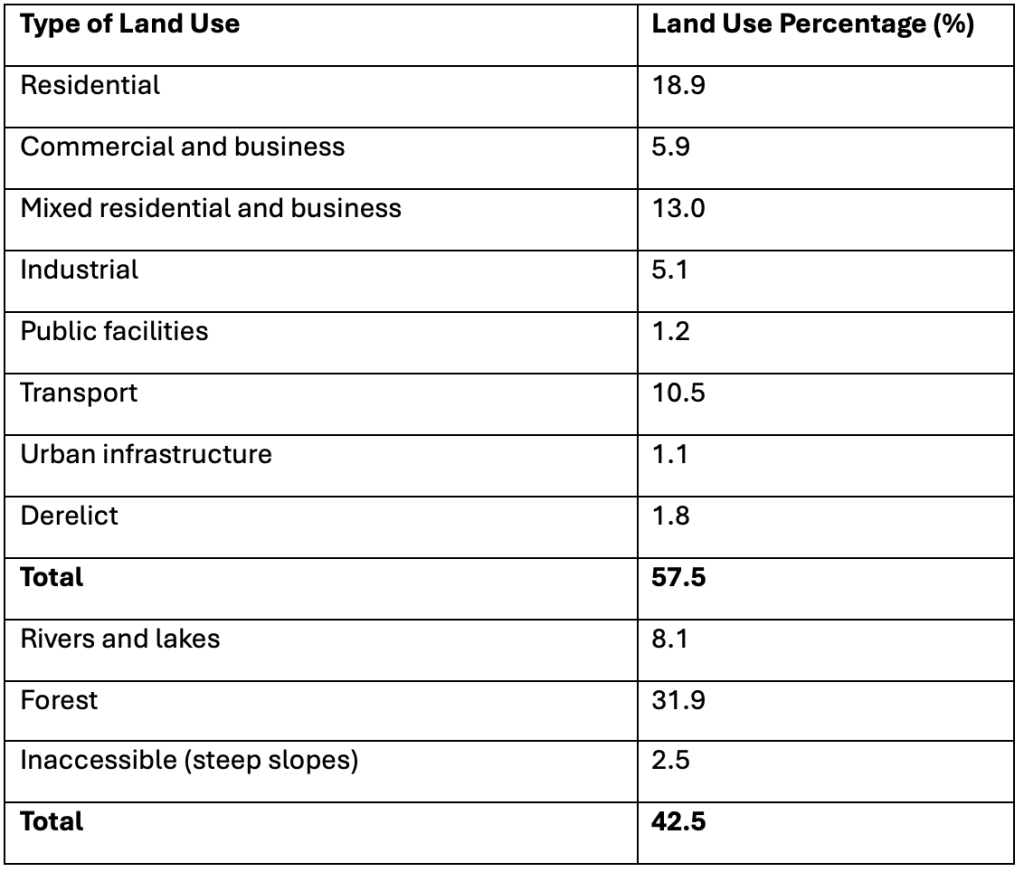
Take a look at the following map Seoul. It shows land use of Seoul. Estimate the land use of Seoul using the template below
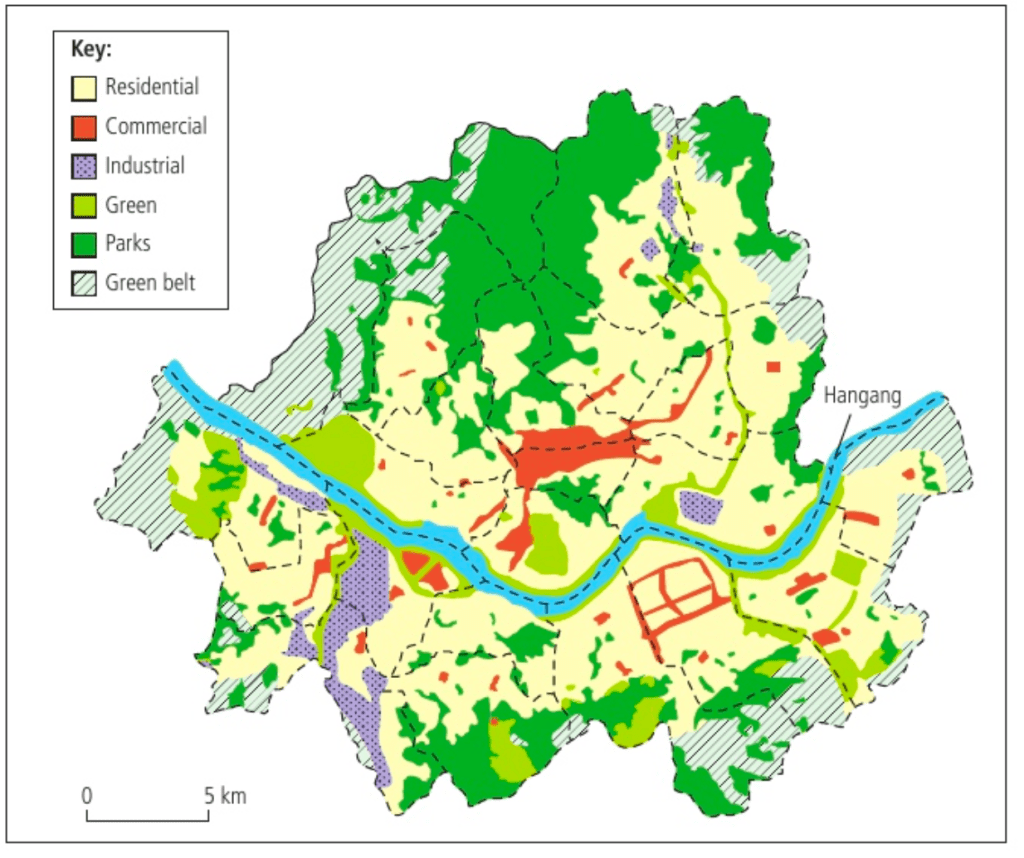
An urban area functions as a complex system. An urban system may be defined as an interconnected network comprising buildings, microclimates, transport systems, flows of goods and services, energy supply, water and sewage infrastructure, as well as human, plant, and animal populations.
For urban areas to operate successfully, they must provide essential services and infrastructure, including employment opportunities, adequate housing, access to clean water, effective sanitation, waste management systems, transport networks, and telecommunications. In the absence of these provisions, the capacity of a city to attract and sustain economic activity is significantly constrained. The inclusion of green spaces is also of considerable importance, as these contribute to the physical and psychological wellbeing of urban populations.
In recent years, increasing emphasis has been placed on the need for businesses to adopt environmentally sustainable practices, particularly in the design and operation of buildings. However, in many rapidly growing cities, challenges such as traffic congestion, air pollution, inadequate water quality, and insufficient telecommunications infrastructure highlight a mismatch between population growth and the development of supporting infrastructure. The example of Shanghai illustrates how both population and infrastructure have expanded as the city consolidates its position as one of the world’s leading urban centres.
Push and Pull Drive Migrations
Urbanisation refers to the shift of population from rural to urban areas and encompasses the process by which land becomes increasingly built-up, industrialised, and dominated by dense and continuous human settlement and infrastructure. More specifically, it describes the process through which a growing proportion of a country’s population resides in towns and cities. This process may result from rural–urban migration, natural population increase, and the reclassification of rural settlements as they are absorbed into expanding urban areas.
In the early stages of development, rates of urbanisation in low-income countries (LICs) tend to be relatively low. However, as industrialisation and economic development progress, urbanisation typically accelerates. As this process unfolds, land use shifts from predominantly agricultural activities to industrial, commercial, and residential functions. Consequently, building density increases, structures become taller, and infrastructure becomes more extensive and complex.
The concept of the rural–urban continuum describes the spectrum of settlement types, ranging from remote rural areas, through accessible rural regions and the rural–urban fringe, to suburban zones, inner-city areas, and ultimately the commercial core of a city, commonly referred to as the central business district (CBD). In high-income countries (HICs), it is increasingly difficult to draw clear distinctions between urban and rural areas. While extremes remain evident, it is often more appropriate to conceptualise settlements along this continuum rather than as discrete categories.
As a result of rural–urban migration, a greater proportion of the global population now resides in urban rather than rural areas, and the share of people living in rural regions continues to decline. This migration is largely driven by push and pull factors, including the perceived economic and social advantages of urban living, and is predominantly internal in nature. However, in many HICs, migration patterns are evolving, with some urban residents seeking the perceived tranquillity and improved quality of life associated with smaller settlements. This trend intensified during the COVID-19 pandemic, when large urban centres were often viewed as less safe than less densely populated areas. Such movement from urban to rural or less urbanised areas is referred to as counter-urbanisation or de-urbanisation.
Activity 2
Explain pull and push factors using case study, then summarise the pull and push factors
| Push Factors (Reasons to Leave) | Pull Factors (Reasons to Move To) |
| Extreme weather events | Favourable climate and natural environment |
| Natural hazards | ‘Safe’ environments |
| Social unrest | High quality of life |
| Social intolerance | Social tolerance |
| Limited employment opportunities | Good and varied job opportunities |
| Poor pay and working conditions | Good pay and working conditions |
| Lack of quality housing | Good availability of a range of housing |
What is Suburbanisation?
Suburbanisation refers to the expansion of urban areas at their peripheries, commonly known as suburbs. It involves both the outward movement of populations from inner-city areas to suburban locations and the inward migration of individuals from other cities and rural areas into these peripheral zones. Suburbanisation is often associated with urban sprawl, as lower-density developments require more extensive land use.
This process has occurred for a variety of reasons. In the early twentieth century, many cities in high-income countries (HICs) were characterised by widespread poverty, overcrowded slum conditions, and poor public health. In response, governments and industrialists sought to improve living standards and workforce productivity. Public policies, including housing subsidies, facilitated the construction of new residential developments. Concurrently, advances in transport infrastructure enabled workers to reside at greater distances from their places of employment. Land availability on the urban fringe, combined with shifts in global trade that reduced the reliance on certain agricultural lands, further supported suburban expansion. As a result, suburban housing developed rapidly, offering improved living conditions, including access to clean water, sanitation, electricity, private gardens, and increased living space.
In some regions, such as Phoenix, Arizona in the United States, suburban growth has resulted in uncontrolled urban sprawl, generating a range of environmental impacts. These include reduced biodiversity, diminished green space, alterations in land use, increased surface impermeability, heightened flood risk, and rising transport and congestion costs, as well as pressures on agricultural land.
However, suburban development has not benefited all populations equally. In many HICs, particularly in North America and Europe, lower-income groups have faced rising mortgage and transport costs, contributing to increased financial burdens and debt. Suburban areas have also been criticised for weaker community cohesion compared with inner-city neighbourhoods. Additionally, concerns have been raised regarding the excessive expansion of cities and the associated degradation of natural landscapes. In response, planning strategies have been implemented to limit urban sprawl, including the establishment of green belts (areas where development is restricted), the construction of new towns and planned cities, the regeneration and redevelopment of inner-city areas, and the utilisation of both greenfield (previously undeveloped) and brownfield (derelict) sites.
Consequences of Urban and Suburban Expansion
The expansion of urban and suburban systems generates significant environmental change, including the loss of agricultural land, forests, and other natural ecosystems, as well as alterations to water quality, river regimes, and air quality. Although cities occupy only approximately 2–3% of the Earth’s land surface and accommodate just over half of the global population, they consume around 75% of the world’s resources. The spatial footprint of major urban and suburban areas has increased substantially as a result of urban sprawl, characterised by low-density development extending outward from urban centres. This process contributes to habitat fragmentation, increased water and air pollution, rising infrastructure costs (such as the construction of additional roads), and greater social homogeneity.
Urban sprawl is typically characterised by low-density, single-family housing, a high dependence on private vehicles even for short journeys, and street layouts such as cul-de-sacs that limit connectivity. Development often occurs linearly along major transport routes, and the boundaries between urban and rural areas become increasingly indistinct.
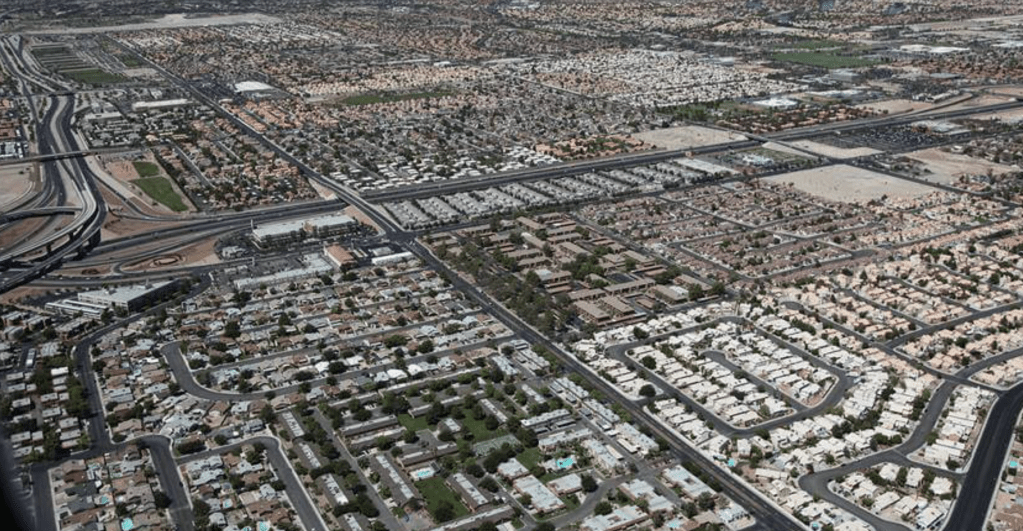
The principal drivers of urban sprawl include lower land values at the rural–urban fringe, which make development more economically attractive. Population growth increases the demand for housing, while rising incomes enable more households to afford suburban properties. Improvements in transport infrastructure reduce commuting times, allowing more individuals to reside further from city centres. Many households relocating to suburban areas are younger and seek larger living spaces, particularly for family life. In some contexts, particularly in the United States, socio-economic and racial factors have also influenced suburbanisation, exemplified by patterns of ‘white flight’ from cities such as Los Angeles and Detroit. For instance, in Chicago, the population grew by approximately 40% between 1950 and 1995, whereas the population in built-up areas increased by 165%, illustrating the spatial expansion associated with urban sprawl.
The consequences of urban sprawl are extensive. Increased reliance on private vehicles contributes to higher levels of air pollution, while the proliferation of impermeable surfaces, such as roads and pavements, leads to greater surface runoff and water pollution. Natural environments, including wetlands and wildlife corridors, are often diminished. Nevertheless, urban green spaces such as gardens, parks, allotments, and public green areas, provide important ecological functions. These include the removal of air pollutants, noise reduction, health and wellbeing benefits, support for biodiversity, carbon sequestration, mitigation of the urban heat island effect, and reduction of flood risk. As urban populations become denser, these benefits are experienced by larger numbers of people, although habitats within cities are often fragmented and degraded.
Urban water systems are particularly vulnerable to pollution. Contaminants include hydrocarbons, nutrients, solid waste, heavy metals, thermal pollution, and untreated sewage. In the United Kingdom, it is estimated that approximately 68,000 tonnes of microplastics are generated annually from tyre wear, of which around 19,000 tonnes enter surface waters. In 2020, approximately 18% of water bodies in England were classified as being adversely affected by pollution from urban areas and transport. Major sources of urban water pollution include runoff from roads, pavements, car parks, industrial zones, and contaminated land; leakage from damaged pipes and domestic systems; inappropriate disposal of substances such as fats, sanitary products, and wet wipes; and discharges from sewage treatment facilities.
Air quality in urban areas represents a major environmental and public health concern. Air pollution is widely regarded as the most significant environmental threat to human health in many cities, including Delhi, London, and Tehran, where it contributes to reduced life expectancy. Urban areas concentrate sources of emissions, including vehicles, industrial activities, commercial operations, and residential energy use, all of which release greenhouse gases and particulate matter. Trends in air pollution have been mixed: improvements in vehicle emissions standards and the decline in coal use have contributed to reductions in some pollutants, and temporary decreases were observed during the COVID-19 pandemic. However, post-pandemic behavioural changes, such as reduced use of public transport, have in some cases led to increased reliance on private vehicles.
Urban areas also generate significant resource waste. Much of the food consumed in cities is produced elsewhere, often internationally, while water consumption is typically high due to dense populations, although agriculture remains the largest overall consumer of water. Recycling rates in urban areas can be relatively low, particularly in high-density or economically deprived communities, due to constraints such as limited space, high population mobility, and reduced levels of household engagement.
Finally, urban areas are major consumers of energy, required to sustain domestic, commercial, industrial, and transport activities. The total greenhouse gas emissions associated with urban areas arise both from direct activities within the city such as residential energy use, industry, and transport and from indirect emissions embedded in the production, transportation, and consumption of goods, energy, and water imported into the urban system.
Exercise
Describe the main characteristics of urban ecosystems.
Explain how urban areas work as systems.
Outline the main characteristics of suburban areas.
Distinguish between push and pull factors.
Subscribe to get access
Read more of this content when you subscribe today.


Leave a Reply