Learning Objectives
- Outline how denaturation of protein affects enzyme activity
- Explain the factors affecting enzyme activity
- Describe laboratory methods in measuring enzyme activity
Does denaturation affect enzyme?
Yes! denaturation will affect enzyme and its activity or ability to catalyse a metabolic reaction. The question is, how exactly denaturation causes enzyme to stop working?
Recall that enzymes are globular protein (tertiary structure) with 3D shapes. This 3D structure is formed when a single polypeptide chain undergone certain twists and turns, held together by intermolecular forces between amino acids along the chain. Denaturation is when these intermolecular forces break making the enzyme lose its 3D structure. As the result, the active site (the specific pocket for the substrate) is also lost during denaturation of protein. This is the reason why the enzyme can no longer catalyse the same metabolic reaction.
During denaturation, the peptide bonds between amino acids along the chain are not broken down or hydrolysed.
There are two factors that can cause denaturation of protein: pH and temperature
How temperature affects enzyme activity?
As temperature increases, molecules gain kinetic energy, resulting in more frequent and energetic collisions between them. Consequently, the rate of chemical reactions generally increases. In many enzyme-catalysed reactions, an increase in temperature by 10°C approximately doubles the reaction rate. This can be represented as: Q₁₀ = 2. This seems beneficial but at the cost of protein denaturation.
The effect of temperature on enzyme-catalysed reactions is more complex because enzymes are proteins that can be denatured by heat. Above the optimum temperature, the rate of denaturation increases, causing the enzyme’s 3D structure and active site to become progressively altered. As a result, the concentration of functional enzyme decreases, leading to a reduction in the reaction rate.
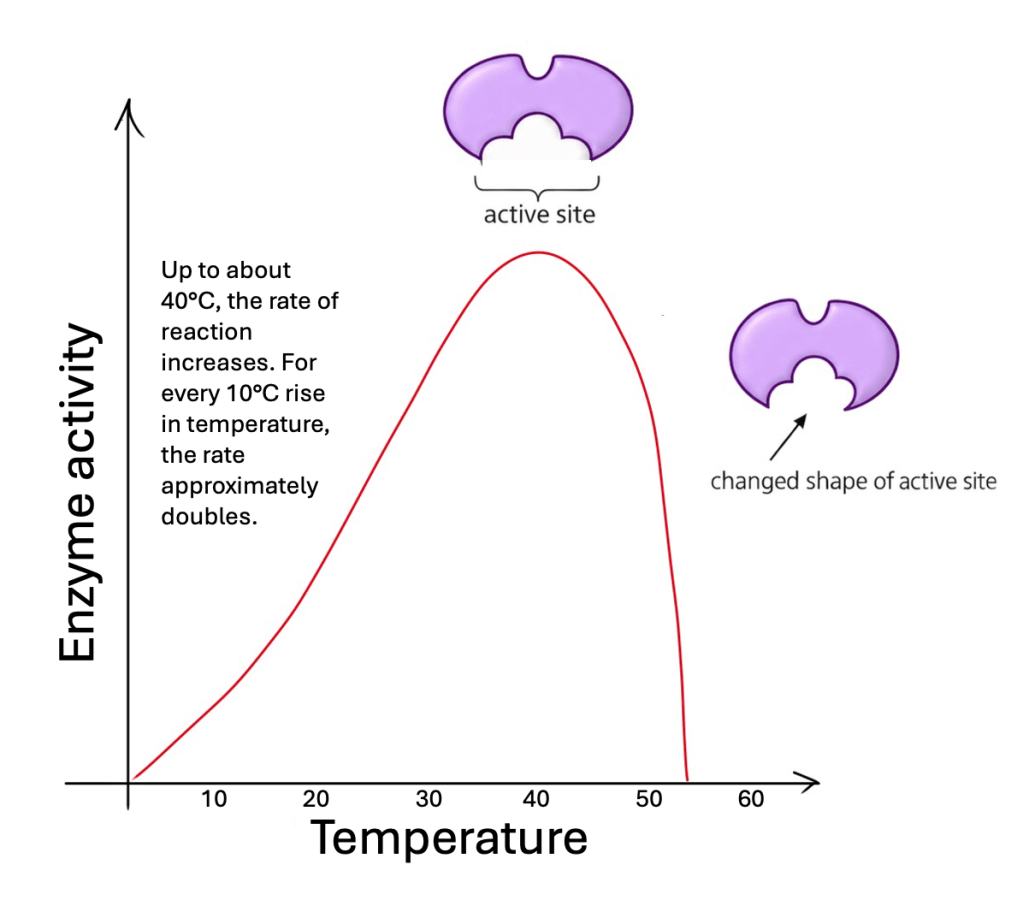
Therefore, the combined effects of increased molecular kinetic energy and enzyme denaturation produce an apparent optimum temperature at which enzyme activity is greatest. In humans, most enzymes have an optimum temperature close to normal body temperature.
Laboratory Activity
Subscribe to get access
Read more of this content when you subscribe today.
How pH affects enzyme activity?
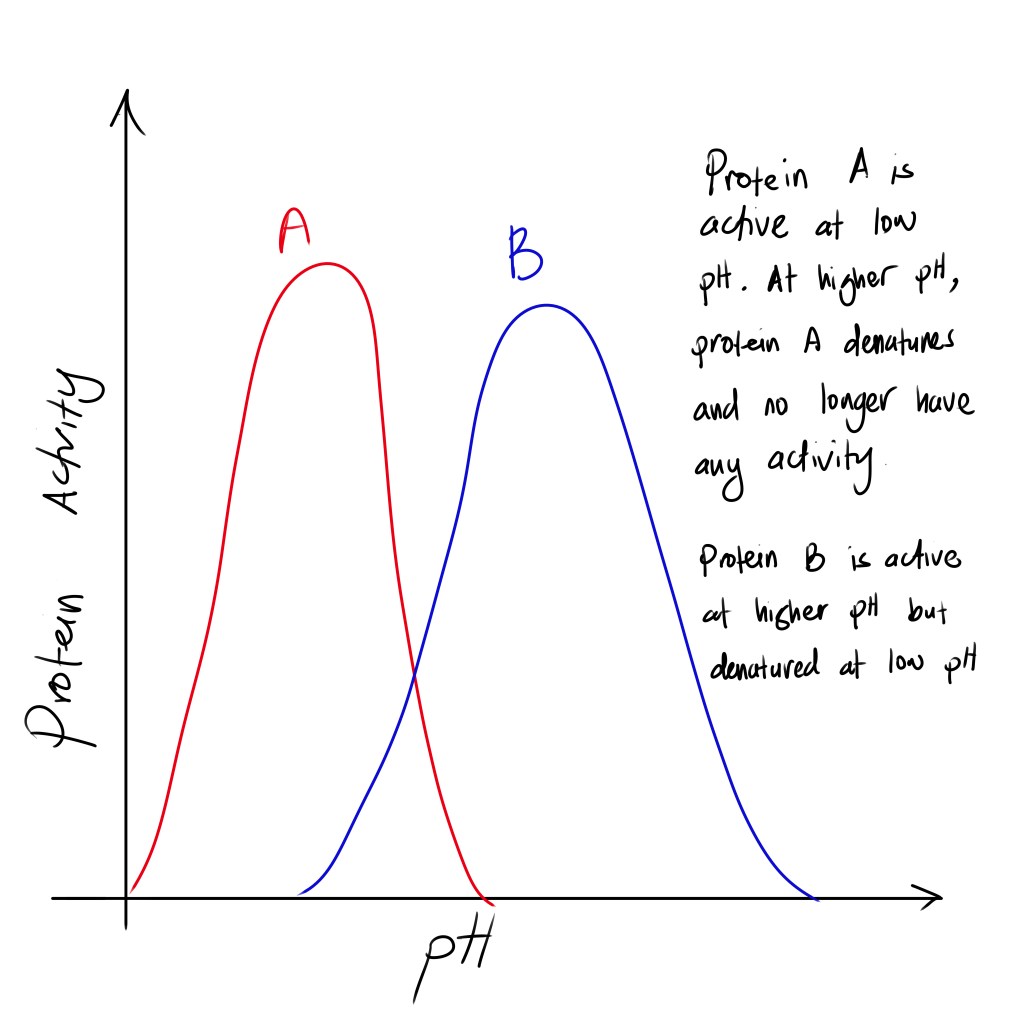
Every enzyme has its down pH range to become active and a certain optimum pH point to become most active. When the pH becomes too acidic or too alkaline, it permanently changes the shape of the enzyme’s active site. Once this happens, the enzyme can no longer bind to its substrate or speed up chemical reactions. How does pH denature the enzyme?
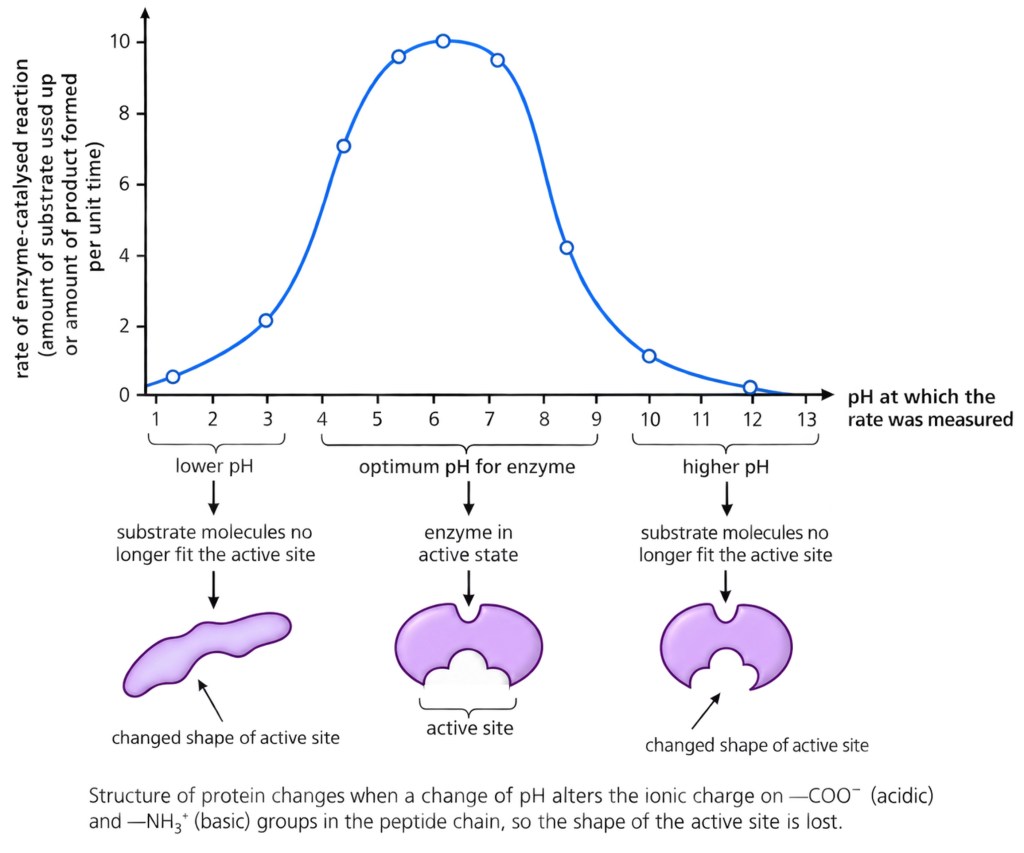
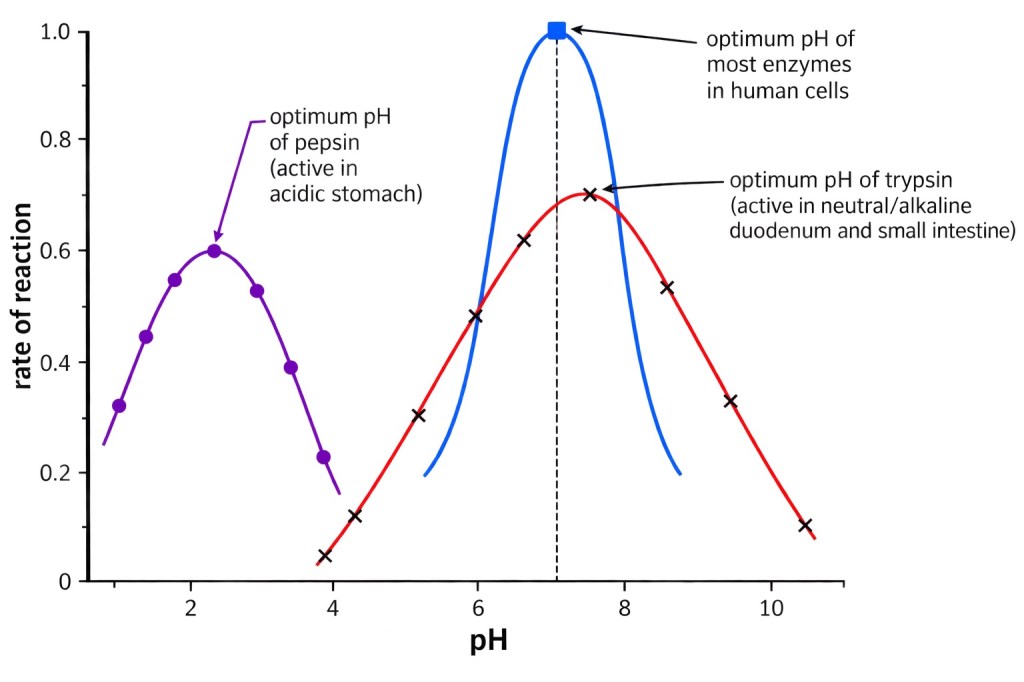
A change in pH alters the bond patterns of the intermolecular forces between amino acids along the polypeptide chain. This ultimately changes the 3D shape and hence denatures the protein. Unlike temperature, a small change in pH causes reversible denaturation but if the change is too extreme, the enzyme is permanently denatured. For example salivary amylase is permanently broken down in stomach due to the extreme acidity in the stomach. Instead, other enzymes work well in this extreme acidity and in contrast will denature when exposed to the alkaline bile juice later in the alimentary canal.
How substrate concentration affects enzyme activity?
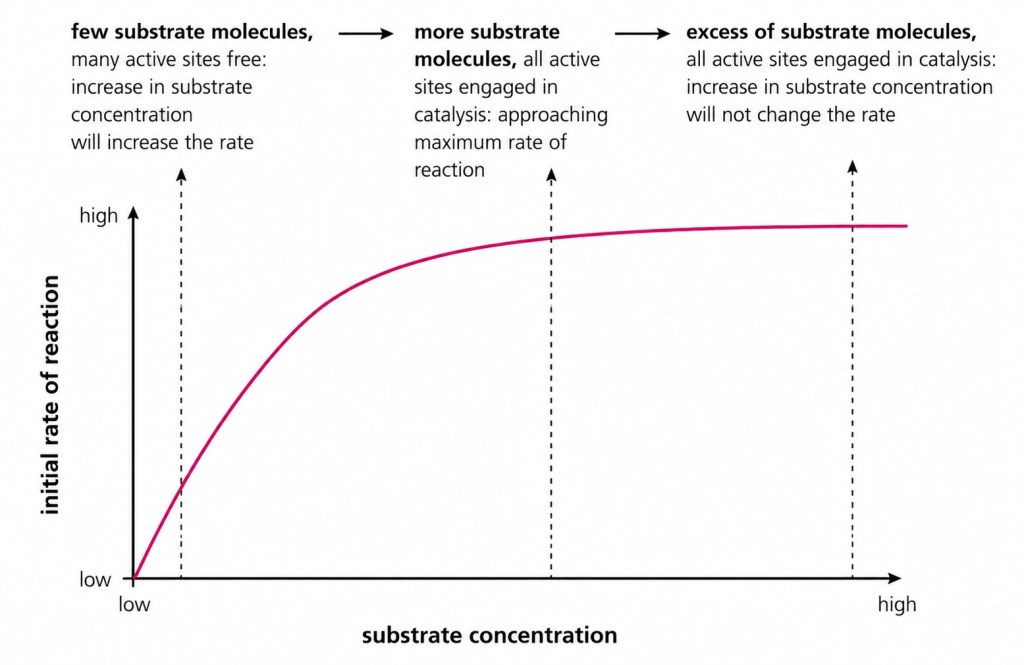
Laboratory Activity
Subscribe to get access
Read more of this content when you subscribe today.


Leave a Reply