Learning Objectives
- Describe, using named examples, the negative and positive feedback loops
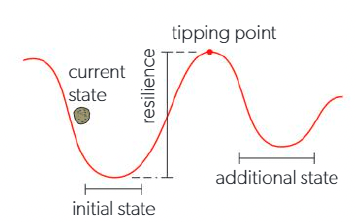
- Outline the meaning of system’s tipping point
- Describe the factors affecting a system’s resilience
Part 1: Feedback Loop Mechanisms
Systems are influenced by both internal and external information, leading to responses:
- Example 1: Feeling cold (information) → putting on clothes or turning on heating (response).
- Example 2: Feeling hungry (information) → eating or not eating (response).
Negative Feedback
Helps maintain stability by counteracting changes.
- Rising global temperatures → ice caps melt → more water vapour forms clouds → more reflection of sunlight → cooling effect.
- Predator-prey dynamics (Lotka–Volterra model): prey populations increase → predator numbers rise → prey decline → predator numbers fall → prey recover.
Positive Feedback
Reinforces changes, often leading to instability.
- Hypothermia: body cooling reduces metabolism, leading to further cooling until death.
- Global warming: melting ice exposes darker ground, lowering albedo, causing more heat absorption and further warming.
Learning Activity 1 – Feedback Loop
Construct a positive feedback loop model and a negative feedback loop model using named examples
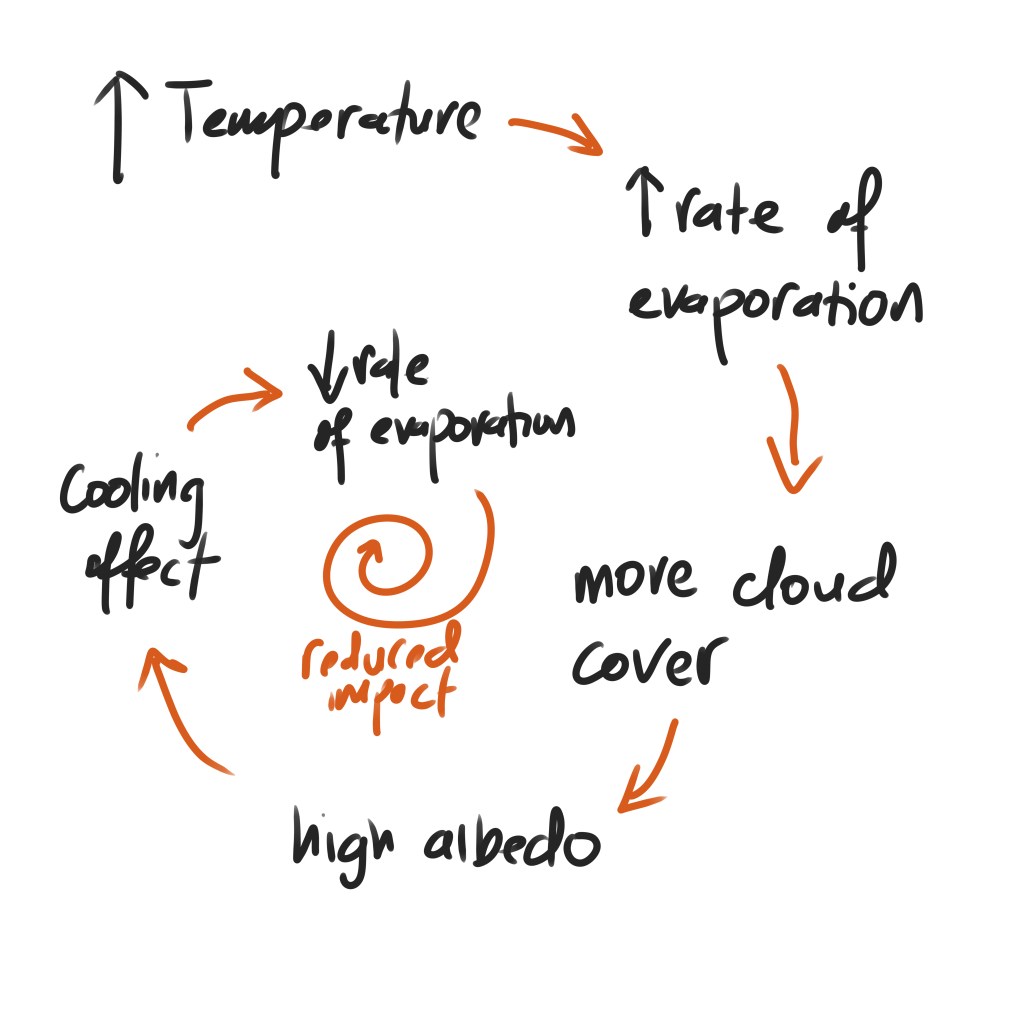
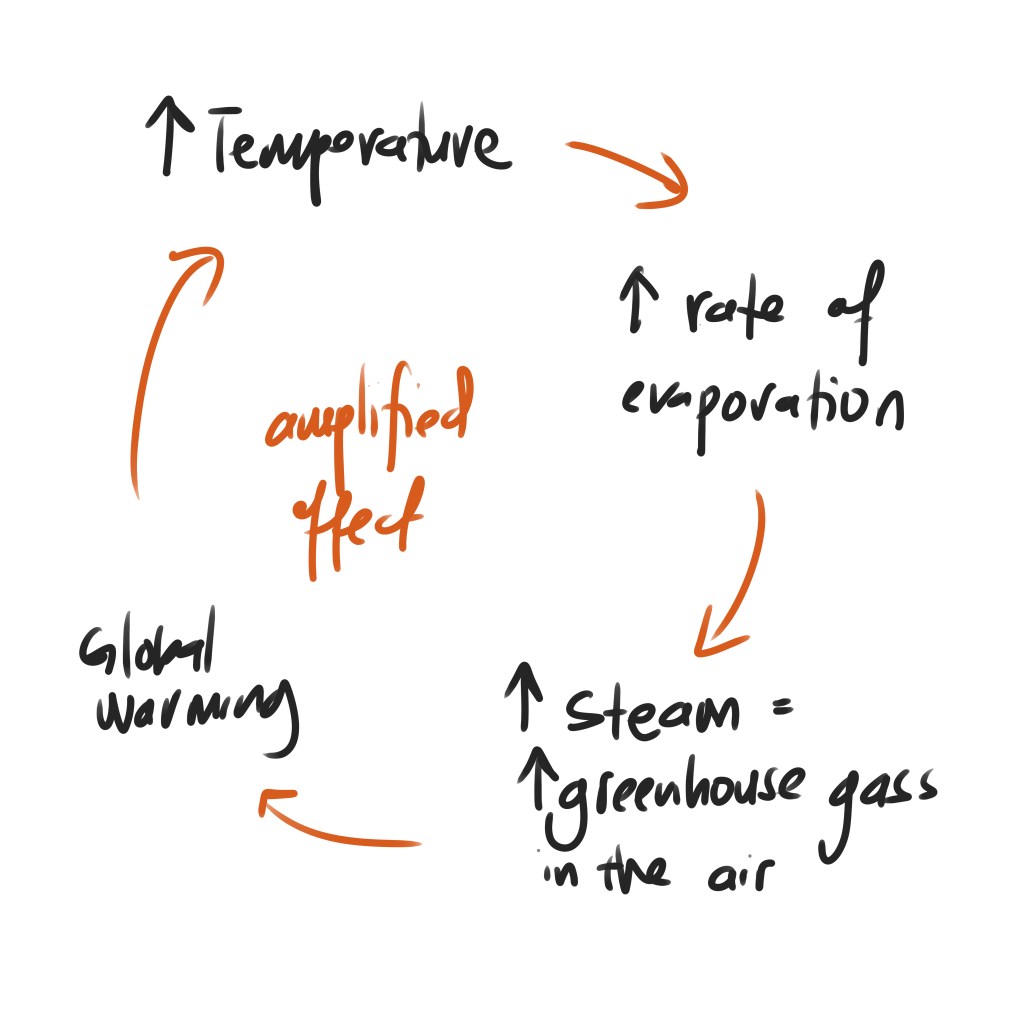
Activity 1 – State of each situation is a negative or positive feedback loop
Part 2: Tipping Point
In many systems, small changes may appear insignificant at first. However, once these changes push the system beyond a critical threshold—called a tipping point —the system can shift into a very different state. Positive feedback loops then reinforce the transformation, driving the system toward a new equilibrium.
Key features of tipping points:
There is often a time lag between the pressures driving change and the visible impacts, making ecological management challenging. They involve positive feedback that makes changes self-reinforcing (e.g., deforestation reduces rainfall, increasing fire risk, which further accelerates forest loss). Once the threshold is crossed, ecological states can shift rapidly. The exact point at which this happens cannot be predicted with precision. Such changes are usually long-lasting and difficult to reverse.
Examples of tipping points:

Coral reef collapse – Rising ocean acidity can kill coral reefs, preventing regeneration. 
Loss of a keystone species – Removing a keystone species can irreversibly transform an ecosystem into a different state. 
Lake eutrophication – Adding nutrients to a lake may have little effect at first, but once a threshold is crossed, plant growth explodes, oxygen levels drop, and aquatic life dies. Restoring the lake is extremely difficult.
While local and regional tipping points are well documented, debate continues over whether global tipping points exist. Some argue human-driven climate change could push Earth into a much warmer state, possibly up to 8°C hotter. However, climate patterns vary—some regions warm, others cool; some become wetter, others drier. The global system is highly complex, and ecosystems respond differently.
If global tipping points exist, the implications for policymakers are enormous. Some may mistakenly assume that nothing changes until the threshold is reached, after which recovery is impossible—leading to paralysis or despair (“What’s the point? It’s too late to act”). A more responsible approach is precautionary: even with uncertainty, we should act to reduce risks. This is the essence of sound risk management.
Complexity and Stability
Ecosystems are typically complex, with many feedback loops, flows, and storages. Greater complexity often contributes to stability, as multiple pathways can compensate if one fails.
- Analogy: In a road system, if one route is blocked, traffic can take alternative roads.
- Example: If one predator species is lost, others may increase in number, keeping prey populations stable.
In contrast, simple ecosystems are more vulnerable. Tundra systems, for instance, often show wide population fluctuations. Agricultural monocultures are also fragile: a single pest or disease can devastate them, as seen in the Irish potato famine of 1845–48.
Part 3: Resilience of a system
Resilience describes how well a system recovers after disturbance. A resilient system returns to its original state, while a less resilient one shifts into a new state.
The “ball in a bowl” model:
- A ball pushed up the side of a bowl rolls back—resilience.
- If pushed over the edge, it settles elsewhere—a new state.
- The higher the bowl’s walls, the more resilient the system.
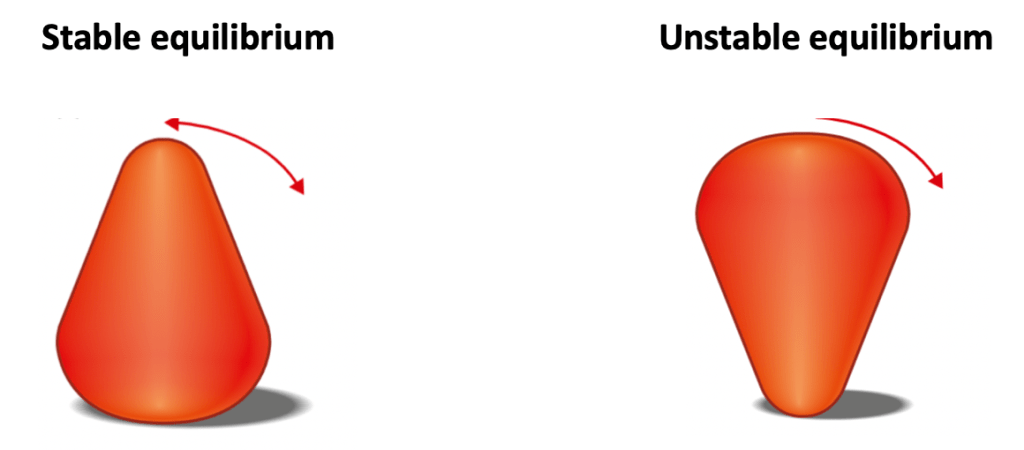
Resilience is generally desirable: it maintains stability in societies, individuals, and ecosystems. For example, Australian eucalypt forests, though fire-prone, are resilient. Their flammable oils and litter promote fire, but the trees regenerate quickly due to protected buds, while competitors are eliminated. However, if non-fire-adapted species replace eucalypts, the outcome can be devastating.
In managed systems like agriculture, stability and resilience are crucial for consistent yields. Failures, such as the Irish potato famine or East Africa’s 2022 drought, show how lack of resilience can have catastrophic consequences.
Yet resilience is not always beneficial. For example, antibiotic-resistant bacteria are highly resilient, making infections harder to control.
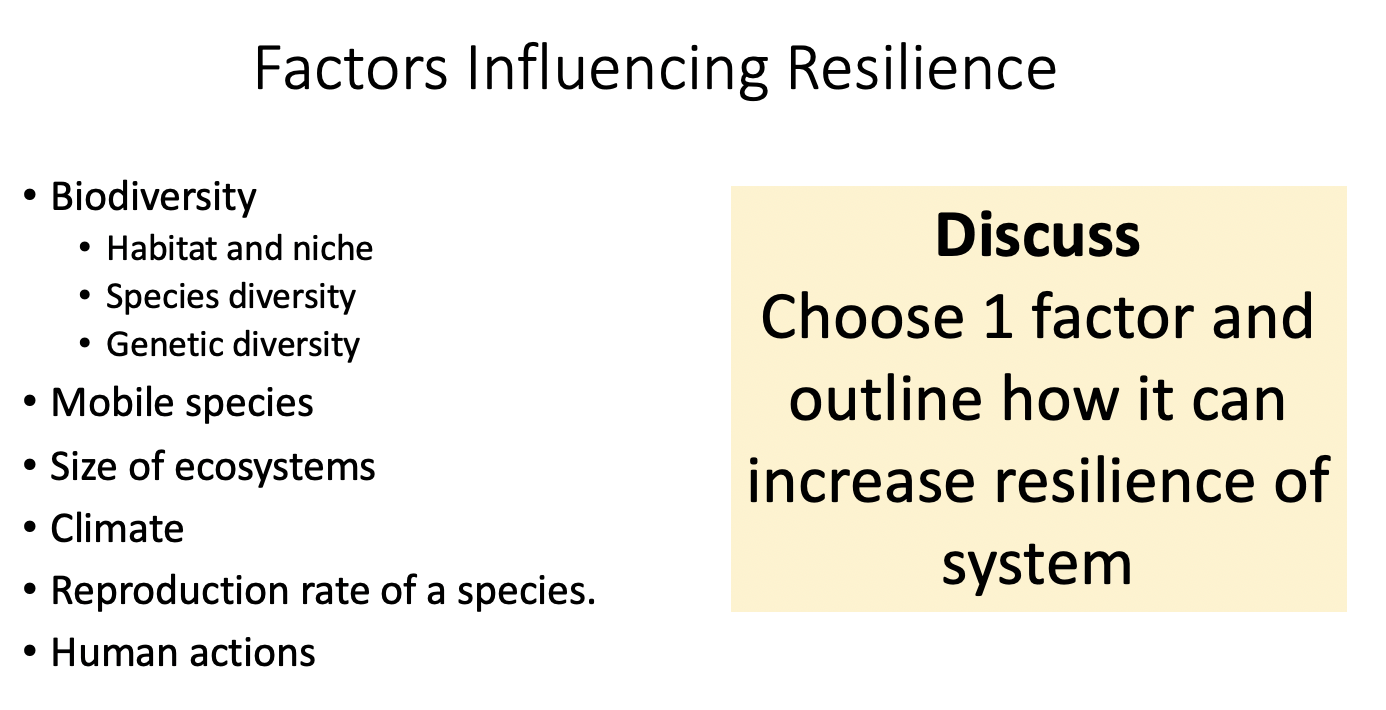
Activity 2: Factors influencing ecosystem resilience:
Notes and Classwork
Subscribe to get access to the activity 2 sheet, exam worksheet and its marking scheme
Read more of this content when you subscribe today.


Leave a Reply